
Zhu Yuanzhang and the Unification of the Country
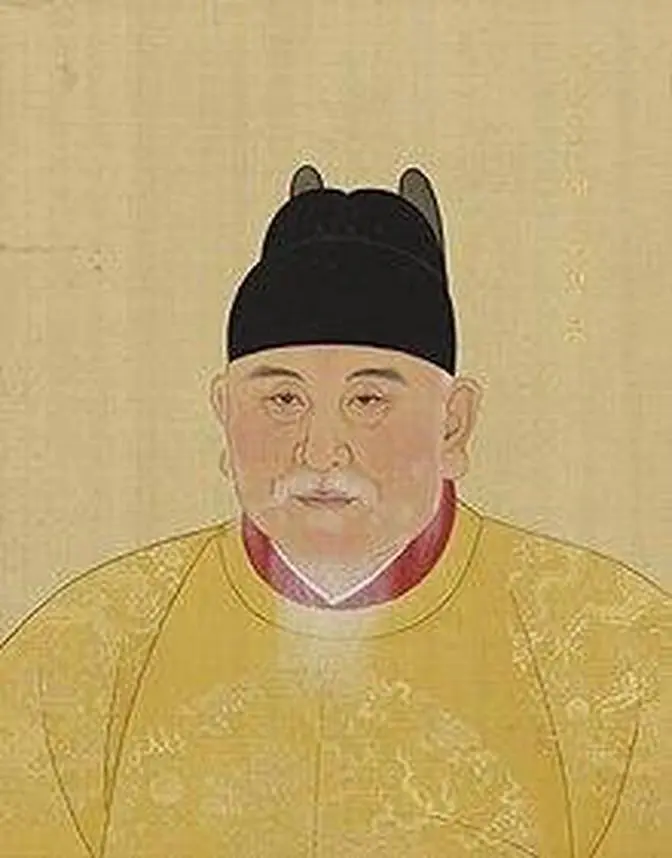
At the age of 25, Zhu Yuanzhang joined the Red Scarf army led by Guo Zixin
to revolt against the rule of Yuan Dynasty. Because of his bravery and resourcefulness,
he soon became Guo's confidant. But there were fierce fights for power among the Red Scarf
leaders. Zhu felt disappointed and decided to go back to his hometown to recruit helpers.
He recruited over 700 soldiers, among whom were later well-known generals like Xu Da,
Zhou Dexing, and Guo Ying. Zhu Yuanzhang led his army back to Haozhou and rejoined the Red Scarf
army. After continuous battles, the army became larger and larger. In 1355, when Zhu Yuanzhang
was 28, the Red Scarf army leader Guo Zixin died of illness. Since then, Zhu became the
de facto leader of the Red Scarf army. In the following year, when the Yuan army got into
fierce battles with other rebel armies, Zhu seized the opportunity and concentrated his
superior forces to attack Jiqun, Yuan's most important city in the south. In less than 10
days, his army conquered the city and renamed it Yingtianfu, making it his headquarter.
In Chinese, Yingtian means follow God's will, that is, Zhu Yuanzhang was supported by God.
Later, Zhu made Yingtianfu the capital of Ming Dynasty. At that time, Zhu Yuanzhang already had
100,000 soldiers, and his strength was comparable to the other two main rebel forces led by Zhang
Shicheng and Xu Shaohui respectively. He was finally capable of fighting against the Yuan
dynasty and vying for the throne. Although Zhu Yuanzhang's strength had been growing rapidly,
he was by no means a certain winner. He followed the advice of his aide, Zhu Sheng. Zhu Sheng was
a well-known scholar who once worked as an official for Yuan dynasty. Then he resigned
and lived in seclusion in the countryside. Zhu Yuanzhang paid a visit to his home and asked for
his advice on how to unify the country. Zhu Sheng said he chose heightened fortification,
increased store of provision, and delayed coronation. Heightened fortification means
building up high city walls, which was to improve defense and consolidate the rear area.
Increased store of provision means developing economy, promoting agriculture, and storing
food. Zhu Yuanzhang was fully aware of the importance of food supply. He cared a lot
about local agricultural production wherever he went. He would encourage farmers to grow crops
to ensure food supply for his army. Delayed coronation means not to claim to be emperor
prematurely. Hastening to be an emperor would make Zhu Yuanzhang a target for all forces.
Zhu Yuanzhang followed this advice and put it into practice. After he conquered Jicheng,
he didn't claim to be an emperor like other rebel leaders. Instead, he expanded his strength
widely. It's fair to say Zhu Sheng made an indispensable contribution towards Zhu Yuanzhang's
establishment of Ming dynasty. After sufficient preparation, Zhu Yuanzhang began to unify China.
One of his aides, Liu Bowen, told him that the army led by Chen Youliang was the most dangerous
among all the rebel armies, and if he wanted to reunify the whole country, the first step
should be to destroy Chen's army. Zhu Yuanzhang followed his advice and set up a trap. When
Chen Youliang was lured into the ambush, Zhu Yuanzhang launched a sudden raid. Chen's army
was defeated. Later Chen launched a counterattack on Zhu. The two armies began a life and death
confrontation near Boyang Lake in central China. The war lasted for 36 days and ended in a victory
for Zhu's army. Chen Youliang was shot to death by arrows. Not that Zhu Yuanzhang had superior
strength, he no longer needed to depend on the Dasong regime established by the Red Scarf army.
When Han Linyar, Dasong regime's leader, was on his way back to Yingtianfu, Zhu ordered his men to
turn over the boat and Chen was drawn to death. There was another saying that it was actually an
accident. Dasong regime collapsed following this incident. After Chen Youliang's death, the next
target for Zhu Yuanzhang was Zhang Shicheng, leader of another important rebel army. Zhu led his army
to attack Zhang and Zhang led his force to Suzhou to avoid the attack. Zhu's army surrounded Suzhou,
during which Zhang tried to break out several times but failed in all his attempts. Zhang's
food supply soon ran out. His troops and citizens in Suzhou had to eat rats, bugs, and grass roots.
During this period, Zhu Yuanzhang persuaded Zhang Shicheng to surrender repeatedly,
but Zhang never gave up. At last, Zhu's army conquered Suzhou and Zhang Shicheng was captured.
Zhang was not at all afraid but repeatedly insulted Zhu Yuanzhang, so he was put to death by Zhu.
Till now, Zhu Yuanzhang has control over most of central and southeast China.
He studied and assessed the situation, appointed Xu Da as commander-in-chief,
Chang Yuchun as vice chief, and started a large-scale northern expedition.
His army triumphed all the way to the north, and in 1368, Dadu, the capital of Yuan dynasty, was
conquered. Yuan's emperor, empress, and the crown prince all ran away in a hurry. Yuan dynasty
ended after 98 years of rule over China. Before that, Zhu Yuanzhang had declared himself emperor.
In early 1368, Zhu ascended the throne and announced the Yingtianfu as the capital,
thus establishing Ming dynasty. After that, the Ming army conquered the southwest area
and destroyed the remaining forces of Yuan dynasty in northeast China. The country was at last
reunified.