
Egypt: Gods, Pharaohs, and Timeless Wonders
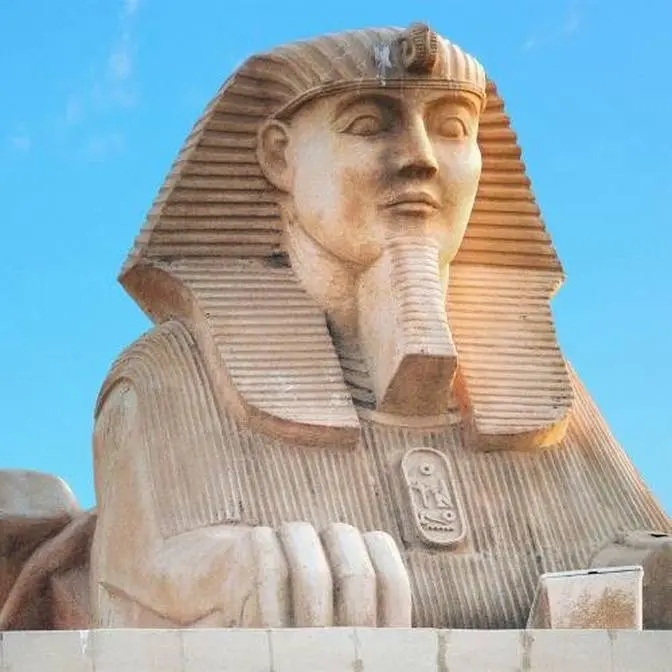
Egypt. The name conjures up images of ancient tombs, towering pyramids and mysterious hieroglyphics.
These symbols of a bygone era stand as a testament to the ingenuity
and spiritual depth of an ancient civilization.
This land of pharaohs and pyramids has captivated the world for centuries.
The sheer scale and grandeur of these structures leave visitors in awe,
wondering how such feats were accomplished thousands of years ago.
Its ancient civilization, dating back thousands of years,
left behind an incredible legacy of art, science and mythology.
The artefacts and ruins we see today offer a glimpse into a world
that was both advanced and deeply spiritual.
Architecture and culture.
The intricate designs and monumental structures
reflect a society that valued both beauty and functionality.
From the bustling cities to the serene banks of the Nile,
Egypt is a land of contrasts.
The modernity of Cairo juxtaposes with the timeless flow of the Nile,
creating a unique blend of past and present.
Egypt offers a journey through time,
inviting us to explore its wonders and unravel its secrets.
Whether you're wandering through ancient ruins or sailing down the Nile,
every moment is a step back into history.
The ancient Egyptians believed in a world beyond our own,
a realm of gods and goddesses who influenced their daily lives.
These deities were integral to their understanding of the universe
and their place within it,
a realm of gods and goddesses who influenced their daily lives.
Their religious practices and beliefs
were deeply intertwined with their daily activities.
From agriculture to governance,
their beliefs shaped their culture,
their art and their monumental architecture.
The temples and pyramids were not just structures,
they were sacred spaces designed to honor the gods
and ensure the prosperity of the land.
Join me as we delve into the wonders of Egypt,
a land where every stone has a story to tell
and every artifact holds a piece of the past.
A land where history comes alive.
From the grandeur of the pyramids
to the mysteries of the Valley of the Kings,
Egypt is a timeless journey waiting to be explored.
No trip to Egypt is complete without a visit
to the iconic pyramids of Giza.
These ancient wonders have fascinated travelers
and historians alike for centuries.
These colossal structures, built as tombs for the pharaohs,
stand as a testament to the ingenuity
and engineering prowess of the ancient Egyptians.
Each stone was meticulously placed
showcasing their advanced understanding
of mathematics and architecture.
The Great Pyramid of Giza, built for the pharaoh Khufu,
is the oldest and largest of the three main pyramids.
It originally stood at 146.6 meters tall
and was the tallest man-made structure in the world
for over 3,800 years.
Imagine the effort it took
to construct these massive structures
with millions of limestone blocks,
each weighing several tons.
The workforce, consisting of skilled laborers and slaves,
worked tirelessly for decades
to complete these monumental projects.
The pyramids were more than just tombs.
They were symbols of the pharaoh's power
and a connection to the divine.
They represented the pharaoh's ability
to communicate with the gods
and ensure the prosperity of the land.
The intricate internal passages and chambers
were designed to guide the pharaoh's soul
on its journey to the afterlife.
These chambers were filled with treasures,
food, and other items the pharaoh would need
in the next world,
reflecting their beliefs in life after death.
Standing guard over the Giza Plateau
is the enigmatic sphinx,
a mythical creature with the body of a lion
and the head of a human.
Carved from a single block of limestone,
the sphinx is a masterpiece of ancient Egyptian art.
Its exact purpose remains shrouded in mystery,
adding to its allure.
Some believe it was meant to represent the pharaoh Khafre,
while others see it as a symbol of royal power
and protection.
Over the centuries,
the sphinx has endured the ravages of time
and the elements,
its nose famously missing,
lending it an even more mysterious aura.
Flowing through the heart of Egypt
is the majestic Nile River,
the lifeblood of this ancient civilization.
The Nile's annual floods deposited fertile silt
along its banks,
making agriculture possible
in an otherwise arid land.
The Egyptians revered the Nile as a god,
recognizing its vital importance to their survival.
The Nile was not only a source of water and fertile land,
but also a major transportation route,
connecting the different parts of the kingdom.
The Egyptians became skilled boat builders and navigators,
using the Nile to transport goods,
people,
and even massive stone blocks
for their monumental constructions.
Section 5, Pharaohs, Gods on Earth
The pharaohs were the absolute rulers of ancient Egypt,
believed to be both gods and kings.
They held supreme power
and were responsible for maintaining order,
justice,
and prosperity in the kingdom.
Some pharaohs are particularly famous,
their names echoing through history.
Tutankhamun, the boy king,
is perhaps the most well-known pharaoh,
thanks to the discovery of his nearly intact tomb in 1917.
Ramses II, known for his military prowess
and ambitious building projects,
is another iconic figure.
Cleopatra VII, the last active ruler of the Ptolemaic Kingdom of Egypt,
is remembered for her intelligence,
political acumen,
and her relationships with Julius Caesar and Mark Antony.
Section 6, Daily Life in Ancient Egypt
A glimpse into the past.
While we often marvel at the grandeur of pyramids and temples,
these monumental structures
are just one aspect of ancient Egyptian civilization.
Daily life in ancient Egypt
was a mixture of hard work and simple pleasures,
a balance that defined their existence.
Farmers toiled in the fields from dawn till dusk,
ensuring the community had enough food.
Craftsmen honed their skills,
creating beautiful artifacts that have stood the test of time.
Scribes meticulously recorded events on papyrus scrolls,
preserving history for future generations.
Families gathered for meals,
played games,
and told stories,
passing down traditions and wisdom.
The ancient Egyptians valued family,
education,
and the nurturing of young minds.
Children were taught the ways of their ancestors,
ensuring the continuity of their culture.
They also maintained a deep connection to the divine,
participating in religious ceremonies
and praying to a pantheon of gods.
They believed in an afterlife,
a journey that began after death.
They prepared for it meticulously,
with elaborate burial practices and rituals.
Burying their dead
with provisions for their journey to the underworld,
they ensured that the deceased would have everything they needed.
Their beliefs and customs
offer a fascinating glimpse into a world
both familiar and profoundly different from our own,
a testament to the enduring legacy of ancient Egypt.
Section 7
Beyond the Pyramids
Exploring Other Architectural Marvels
While the pyramids are undoubtedly iconic,
Egypt boasts a wealth of other architectural marvels
that are equally impressive.
The Temple of Karnak,
a vast complex of temples, chapels, and monuments,
is a testament to the Egyptians' religious fervor
and architectural skill.
The Valley of the Kings,
located on the west bank of the Nile,
served as the burial ground for many pharaohs of the New Kingdom.
Its elaborately decorated tombs,
filled with treasures and guarded by curses,
continue to fascinate and intrigue.
Section 8
Egypt's Enduring Legacy
Ancient Egypt's influence extended far beyond its borders,
leaving an indelible mark on the ancient world.
The Egyptians made significant contributions
to mathematics, astronomy, medicine, and art.
Their knowledge and innovations
spread throughout the Mediterranean region,
influencing the Greeks and Romans.
The Egyptians' development of a writing system, hieroglyphics,
was a crucial step in the development of human civilization.
Their art, with its distinctive style and symbolism,
continues to inspire artists and art lovers today.
Section 9
Conclusion
Egypt's Timeless Allure
Egypt, with its ancient wonders, enigmatic history,
and enduring legacy, continues to captivate the world.
From the towering pyramids to the intricate hieroglyphics,
this land of pharaohs and gods invites us to step back in time
and explore the achievements of one of the world's oldest
and most influential civilizations.
Whether you're drawn to its ancient mysteries,
its architectural marvels, or its rich cultural heritage,
Egypt offers a journey of discovery
that will stay with you long after you've left its shores.