
Exploring our Mind-Blowing Universe | BBC Earth Science
31 Video Views·Oct 25, 2024
Embark on a fascinating journey through the wonders of our universe in this mind-expanding exploration of celestial marvels and cosmic mysteries.
Best of Earth Science: http://bit.ly/EarthLabOriginals
Best of BBC Earth: http://bit.ly/TheBestOfBBCEarthVideos
This is a channel from BBC Studios who help fund new BBC programmes. Service information and feedback: http://bbcworldwide.com/vod-feedback--contact-details.aspx
[Music]
the James web Space Telescope is
revealing the universe like never before
our
planets the furthest
galaxies and the strangest phenomena and
what you can see is actually material
falling into a black hole and that's
only in the first few weeks there's
going to be a lot more discoveries to
come the James web Space Telescope is a
product of Decades of hard work from
scientists around the world
I have been waiting my entire astronomy
career for jwst it is absolutely
revolutionary compared to what was
available it's very very rare in science
that you make a big step forward in your
measurement capability in the way that
jwst has done for astronomy and it's
just it just doesn't happen very often
in the history of Science and that's
really exciting and significant one of
the things that makes James Webb so
special is its gigantic mirror so that
there are various things that make the
primary mirror on James web special and
incredible I mean the first is the sheer
size of the mirror it's the largest one
ever launched the web mirror is around 6
and 1 half m in size so if you can
imagine that that's bigger than most
houses you're walking by it's so large
it wouldn't fit in the rocket so they
had to devise a way of folding it up so
that it would fit inside the um the top
of the rocket it's absolutely humongous
and that makes a really big difference
in terms of the sensitivity of the
telescope well it's thousands of times
more sensitive than Hubble it's a step
forward of factors of a thousand or more
factors of several thousand in fact I'm
creating myself the bigger the mirror
the more light you collect the bigger
the collecting area the more sensitive
you are and the further you can see the
other thing that makes it absolutely
incredible is um the the the Precision
with which it's been made if the mirror
was stretched to be the size of the
United States and and you were to
measure the size of the biggest bumps
and dips on the mirror you're only
looking looking at a bump or a dip of
order 1 cm in size it's it's absolutely
incredible and that's what generates the
the near perfect images from the primary
mirror but it's not just the mirror that
makes the images from James web so
incredible it's also the type of light
that it detects the James web Space
Telescope detects infrared light which
is a wavelength of light that we can't
see but the unique properties of
infrared make it incredible for
exploration so with the infrared light
you can see the atmospheres of
exoplanets there's molecules in Star
formation regions things like caffeine
and alcohol and water ice the signatures
of life around other planets so just a
few things then infrared opens up the
possibilities for astronomers like
Olivia and allows them to capture images
that would previously be impossible in
the optical
range but even within the infrared
Spectrum there are multiple different
wavelengths on board web there are three
instruments that observe near infrared
this is closer to the visible Spectrum
but the instrument that's garnering the
world's attention is the mid infrared
instrument on board
jwst known as Mir mirie is essential for
jwst without it you can't see the cooler
phenomena in the universe you can't peer
back as into the earlier stages of star
formation as you would like so so Mar is
an incredibly significant and important
instrument the image is um contains far
more detail than has ever been done
before when we look at it in a new wav
of light we find things that we hadn't
expected to see and that's a really
important part of how you discover
things about the universe Miri allows us
to see further along the infrared
spectrum and this in turn allows us to
see through dust cloud and further back
in time than ever before that's because
as galaxies move away from us the color
they emit shifts further into the
infrared so the longer the wavelength we
can observe the further back in time we
can
see but despite the capabilities and M
it very nearly didn't make it on board
James web so mie wasn't initially part
of those plans because it seemed
technically very complicated and I think
people were thinking about the science
in a slightly different way and so I
started making the case that really we
needed to add a mid infrared facility to
the telescope Jillian Wright is the
European principal investigator for Mir
and the director of the UK astronomy
Technology Center and was instrumental
in pitching to get Mary on board web
when when I found out it was confirmed
that maray was going to be on board I
remember being very happy and also
knowing that I was going to be very busy
for a large number of years Jillian
wasn't wrong construction of James Webb
Space Telescope started in 2004 and 17
years of work later on Christmas Day
2021 with Mary securely on board the
telescope finally
launched and
offage lift off from a tropical
rainforest to the Edge of Time itself
James web begins a voyage back to the
birth of the
universe I've been looking forward for
the web launch for many many years and
as it got closer to Christmas day I was
extremely nervous I don't think my
family enjoyed Christmas morning with me
because I had on the TV um the web
launch playing and I was I was quite
nervous I had my pillows ready in case I
needed to hide everything went perfectly
it was it was an incredible launch it
was a pleasure pleasure to watch so it
was a very good Christmas present it was
a lovely Christmas present it really was
over the next few months the James Webb
Space Telescope traveled over 1.5
million km away from Earth to its new
home gradually turning on the
instruments along the way so then it was
getting really exciting cuz we we've
been from Christmas day all the way
through through until um the late the
late spring when Miry finally gets
turned on as the instruments are being
turned on it's both exciting and and
it's nerve-wracking because you you know
that there could be things wrong after
Decades of work the James web Space
Telescope was finally operational and it
wasn't long before the images started
coming
in
I knew when web was going to take its
first images they were going to be
spectacular what had not prepared me was
just how spectacular they going they
were going to be the first images were
just incredible just so beautiful it was
amazing and then when the first images
came back I was just absolutely
astounded at how good everything
performed and I've been smiling ever
since it's almost
emotional
the images are spectacular and the only
thing more spectacular than the images
are the discoveries that lie within
them so one of the things I think that's
really exciting about the early images
is the way they show how Mary really
adds information I can see details in
there that I knew existed but I never
thought I'd be able to see with a
scientific instrument some of the first
web images released were of the Southern
ring nebula this is a planetary nebula
which is a star at the very end of its
life in the mirror image we see actually
a second star so we can see a red star
and a white star so these are actually a
binary system in and that's the very
first time we've seen this binary
compion in the southern Ring Nebula this
is an image of Stefan's quintet five
galaxies that are interacting with each
other and what you can see in this
galaxy up here is actually material
falling into a black ho hole in an
active Galactic nuclei you can see the
material in the galaxy is actually
orbiting and falling into the Galaxy
itself this is 13 times further than
what we've been able to see before in
the infrared I mean jwst has already
found the furthest galaxies we've ever
seen the highest red shift ones the
closest and that's only in the first few
weeks of operation and that's really
exciting and I think it's an indication
that there's going to be a lot more
discoveries to come with web we've
designed it to answer many of the
questions we already know about the
universe but as with all new telescopes
there's a realm of new discoveries the
Mysteries that will arise I think
they're really exciting new questions to
answer the questions we don't know how
to ask just now and I think that's
really exciting to see something that
nobody not only has nobody ever seen it
before but nobody expected to see it I
feel very privileged to be part of this
I'm proud to be part of
jwst it's been an amazing journey and a
fantastic privilege really to be part of
it I I think it's just incredible I had
a I helped make that instrument and and
when I see these images I'm just full of
[Music]
smiles very first data we got from Paro
Pro
for maybe 15 minutes we were thinking
there is something wrong with the
instrument only to realize that now the
instrument is working perfectly and
actually what we are seeing is physics
it's physics that we have not seen
before the sun is the most important
Celestial body in space at least to us
here on Earth it drives weather ocean
currents Seasons the climate and without
the sun's heat and light life on Earth
would not exist but we don't understand
it as well as you might think that's
where Park solar probe comes in NASA's
first ever mission to touch the sun it's
a voyage of Discovery it's a
groundbreaking Mission it is steeped in
history this is Nicola Fox the director
of heliophysics at Nasa so the concept
of Parker solar probe has been around
for over 60 years and so you know it's
been the most high priority science for
us to do but it was always so
challenging technically and then you
know finally the technology catches up
with the scientist dreams and we're able
to really achieve the mission but
nothing about parasola probe was easy
not only has the probe traveled nearly
90 million miles closer to the Sun than
Earth but it's had to withstand
temperatures of over,
1400° keeping it cool is a job of
thermal engineer Betsy Kon how hard
could it be so the task of Designing a
heat shield for something that's going
to the sun is immense anytime you're
trying to do something that has never
been done before um while it is really
exciting it is also very stressful
one of the things when you're designing
something for space uh as an engineer is
you actually want to keep things quite
simple the Parker heat shield is about 4
and 1/2 in thick yeah just 4 and 1/2 in
is protecting this probe from thousands
of degrees
C the Parker heat shield is about 4 and
1/2 in thick um and on both sides there
is a material called carbon carbon it's
a lot like the graphite epoxy that you
might find in your golf clubs or and
tennis racket and then in between is
carbon foam and so that together as a
basically just a big sandwich uh is what
protects the probe from the Sun as a
Parker solar probe approaches the Sun
and it's in its last approach and
closest approach the front side of the
heat shield will be at, 1400° C but the
probe itself the spacecraft where all
the electronics are will be at room
temperature like in the 20s de cus and
so it's almost like it doesn't even know
it's at the sun and it can do this
amazing science so thanks to Betsy and a
team par solo probe will be traveling
closer to the Sun than anything before
but remain around the same temperature
as the average swimming pool there's one
more detail that made this historic
moment extra nerve-wracking for the
scientist the Parker solar probe is
fully automated meaning that once the
little probe was fired into space
there'd be nothing the scientists could
do to control it except there are these
little sensors that are the farthest
things uh that stick out behind the heat
shield uh called solar limb sensors and
they're designed that if they light up
the spacecraft knows that it's going off
a little track uh off track a little bit
and it needs to write itself and so it
will write itself without any commanding
from Earth we don't have that kind of uh
time to actually write itself it has to
do all that on its own so all they could
do was Hope on the 12th of August 2018
after over 60 years of planning Parker
Sola probe finally
launched every single member of the
Parker solar probe team you know you
know when we watched the launch really
felt like we were losing a member of the
team I worked on Parker solar probe for
10 years and at launch I cried I like it
was it was a very emotional moment and I
still when I see the launch videos I
still get emotional about it there was
separation anxiety there's the feeling
that this this this you know thing that
you've worked on for so long um is going
to leave and not come back and really
she is the part of the team that's
actually doing the exploration parka
solar probe has had one extra helper out
in space though
Venus rather than flying in a straight
line towards the sun Parker solar probe
uses the gravity of Venus as a giant
slingshot catapulting it into closer and
closer orbits of the Sun the first Venus
flyby I think was the really key one for
everybody once that maneuver was done um
we were we were go for the Sun at that
point the First Solar pan pass was um
really emotional but amazing of course
when it was actually in the Solar pass
then that's Terror we can't actually
talk to the probe while it's going in so
until the spacecraft came back out from
the other side of the Sun and everything
was healthy when you get that uh green
Beacon that everything is looking good
after a solar pass it it is just an
amazing feeling my God we've done it so
after having launched Parker towards the
sun on its eighth flyby in April of 2021
parka Sola probe finally entered the
atmosphere of the sun it reminds me of
um uh 1969 every time I see the movie
when Neil Armstrong touches the surface
of the Moon that's one small step for
man that was
Monumental in a way it's a parallel with
to Parker solar probe when you fly
through the solar Corona for the very
first time nobody has done that
before it was so so exciting and also so
uh
humbling to have launched this Mission
throw it basically toward the Sun and
returns you some data that you never
seen the like like of it before just eye
opening nor rui has been working on
parka Sola probe for over 14 years and
in case you're wondering if he still
enjoyed it it's better by the day but
the thing that's been exciting no more
than anything before is the incredible
discoveries coming from Parker solar
probe uh the amount of discoveries it's
Way Way Beyond uh any of us uh could
have imagined it's just mind bugling um
we are discovering by the day new
phenomena in in the data that Parco Sol
prob is sending us well the the the very
first data we got from par solo probe
when we got this data from the uh Fields
instrument we were looking at the
magnetic field measurements and for
maybe 15 minutes we were thinking there
is something wrong with the instrument
only to realize that now the instrument
is working perfectly and actually what
we are seeing is physics it's physics
that we have not seen before and it is
this Which packs basically the magnetic
field will flip over itself making a
rotation of 180° and out again and it
does that in a matter of seconds to
minutes and uh it is just fascinating
what is really important about these uh
switchbacks is that they carry a lot of
energy with them and that energy will
dissipate it into the solar wind in the
form of heat and speed two of the three
goals of the of the mission is to
explain the coronal Heating and the
acceleration of the solar wind so the
switchbacks could be the Smoking Gun
that actually leads to the give us the
answer to those questions by
understanding switchbacks we could
unlock the secrets of solar wind and how
it's formed and accelerated towards
Earth solar wind is not trivial it
reaches speeds of over a million miles
per hour traveling Way Beyond Pluto and
it affects our everyday lives in 1989 a
large solar flare caused the entire grid
of cubec Canada to fail leaving them
without power for over 12 hours so think
what it could do to a rocket or a
satellite and as well as solving
Mysteries par solo probe is also
creating puzzles for no and his team to
try and solve parol probe like any other
um missions and uh uh answer questions
but by answering a question it it
actually poses many more other questions
in a way that's the essence of
exploration we come to this world as
Explorer and we believe it as
Explorer on the eve of um Christmas of
2024 we will reach the closest approach
to the sun ever that will be at 3.8
million miles from the solar surface
it's so so close to it and after that we
do two more orbits and that's the end of
the Prime mission even after this
Mission ends the discoveries made during
this epic Mission will live on forever
in the science and in the
scientists it is the highlight of my
career and it will be the highlight of
my career uh uh definitely being
involved in in Parco solar probe it's an
honor we are really rewriting the
textbooks about the Sun and it's amazing
to have played a small part in that I am
incredibly proud to have been part of
the Parker solar Pro Mission parur probe
changed me forever parur probe is an
enabler in many respects it EMB Bolden
us now to go after very challenging um
ideas and concepts for future missions
so we are not stopping
here right now the two Voyager
spacecrafts are hustling through
Interstellar space at 35,000 000 mph the
space is so far away that it took 35
years to get there and now we need new
signs to understand it I couldn't
believe how nature was fooling us it
made us rethink everything we knew about
the shape of our solar system I think I
discovered that the tail is has a Coran
shape and even where the edge of our
solar system actually is there was a lot
of confusion actually the confusion
lasted almost a year even just to
understand what Voyager is trying to say
requires a very special set of skills
it's really like a SS watch maker it
need to be a trained eye to tell me can
I trust this data or not what's even
more extraordinary is how Voyager the
old spacecraft from 1977 with 64 KOB of
memory was able to make this journey at
all 3 2 1 we have ignition and we have
liftoff both Voyager 1 and Voyager 2
were launched in
1977 and it had to be then thanks to an
extremely rare planetary alignment it
happens once every 175 years where we
could fly past Jupiter get a gravity
kick and go to Saturn get a gravity kick
and get to Uranus and another gravity
kick and go past Neptune within just two
years Voyager one had reached Jupiter
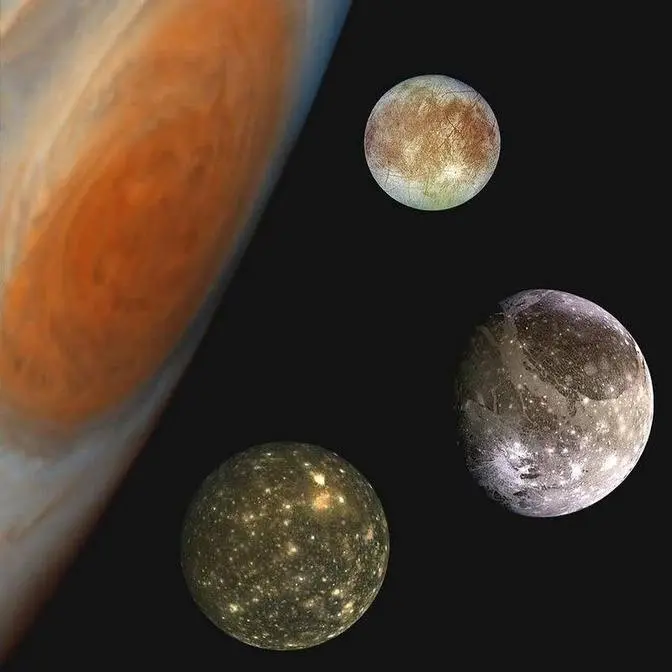
Voyer showed us a planet which looks so
Serene through a telescope was actually
rocked by hundreds of raging hurricans a
glowing Aurora at the North Pole and
three thin Rings Voyer took 33,000
images of Jupiter and its major moons
that captured the world and we'd get to
see these pictures and go whoa look at
that what's this what's going on it was
[Music]
fantastic and a night like
tonight our eyes our minds our our our
souls our blood are moving out through
the
universe we're part of history and that
means that we have to replace the old
myths with new
ones just one year later and Voyager one
had already sped past Saturn spying
intricate details in the planet's rings
from earth scientists could only see
five or six Saturn's rings Voyer showed
us that there were more than a
100 and I can remember those first
pictures as we flew away looking back at
that system and seeing the reflected
sunlight in that structured ring system
was just so beautiful then the voyagers
parted ways Voyager One headed straight
for the edge of our solar
system Voyager 2 took a more scenic
route reaching Uranus in
1986 and eventually Neptune in 1989
showing us yet more outstanding views of
the green and blue planets and spotted
gas on Neptune's large Moon
Triton and that was the main mission the
first human made object to reach the
distant world of our solar system but
the Voyages weren't done yet they were
about to embark on the journey to search
for the edge of our solar system and
before they left there was one last
thing to do colan convinced NASA to turn
the cameras um towards Earth and take
that very famous picture the um pale
blue dot on that blue dot that's where
everyone you know and everyone you ever
heard of and every human being whoever
lived lived out there
lives it's a very small stage in a great
Cosmic
Arena these images were the last of
67,000 images taken by the two Voyager
spacecrafts their cameras were then
turned off to save power as They carried
on their Journey towards Interstellar
space the boundary where our Sun's solar
wind ends and the rest of our universe
begins problem was nobody actually knew
where it really was scientists thought
that sooner or later the charged
particles that create solar wind were
going to run out and Voyager would enter
a pristine environment of interstellar
space we thought that would happen oh
maybe just beyond Neptune but no that
didn't happen well we said to NASA give
us a bit more money another 5 years well
this kept happening year after year NASA
please give us a little bit more money a
little bit longer we'll soon we'll be
there as voyages 1 and two continueed to
move out into the outer reaches of the
solar system they remarkably continue to
send very faint signals back to Earth
and this what makes it so interesting
and so fragile the whole instrumentation
of Voyager was designed to visit the
outer planets that are that have very
strong magnetic fields so now we are
dealing with a signal that is almost at
the noise of the instrument and because
Voyager was not designed for that it's
Miracle fit that all this Steam is able
to go mine the data and pull out the
signal and tell us what's going on just
five instruments were still operating on
the spacecraft and in 2012 more than 35
years since Voyager 1 left earth
scientists started to see the first
signs that they were crossing into
Interstellar space through the boundary
known as the helops think about the
helops as your walls of your house this
is what separate environment that is
dominated by the solar wind from from
environment that is dominated from other
winds from other stars outside of our
bubble the
heliosphere the expectation was that
there would be a sudden shock a burst of
activity that would make it obvious we'd
finally reach this sharp
boundary but the reality was much
stranger all of the detectors on Voyager
were seeing particles suddenly appear
and then disappear then appear and then
disappear and nobody had a clue why
these strange particles seem to be
coming from elsewhere in the galaxy galy
did we Cross or not the data was so
confusing on one hand Voyager was still
being affected by the sun's magnetic
field but the particles were suggesting
we had crossed and turns out what really
tipped the scale in the team was the
Radio Data the data was stored on the
spacecraft using a tape
recorder so ancient technology it's
extraordinary but it
worked um uh and the data were gathered
and sent back bit by bit and 6 months
later we
played we turn to the radio station of
Voyager and guess what we
heard these plasma waves converted into
sound that we can hear with the final
proof that we had crossed the boundary
into Interstellar space the first
human-made object to venture into
Interstellar
space even more extraordinary than
crossing the boundary into Interstellar
space was what the data said about the
shape of the solar system I was tasked
to create a computer model with all the
physics that we know to kind of predict
this shape of the heliosphere it turned
out that the Solar System's heliosphere
is not round like you think but has a
tail from whizzing around the Galaxy and
more than that I was finding that has a
CO Sun shape two horns with a void in
the
Middle with just a shock to realize that
something such basic as the shape of our
home is completely different and all of
this was discovered by a small extremely
low Tech probe more than 10 billion
miles away and they're still
going in 2018 NASA's Voyager 2
spacecraft crossed the boundary finally
both Voyager spacecrafts with their
1970s technology had reached where No
human-made Object had ever been before
Interstellar space there's very little
material very empty space can be very
very empty the environment out there is
colder and denser and of course it's
dark there's not a lot of light you're
far away from the
Sun Voyager has also discovered that our
Solar System's impact is much bigger
than we thought before we would have
liked to get to a region where the
heliosphere doesn't influence anymore
the interstellar medium what we call a
pristine interstellar medium what we're
measuring now is a medium highly
disturbed by the Sun the voyagers are
still sending us ever fainter signals
still teaching us new things about
Interstellar space but they're running
out of time we probably have two three
maybe four more years of power to
communicate with voyager but there are
still so many Mysteries left to be
solved what is the environment outside
what's happening the nearby stars that
are influencing our system and so on so
one of the beauties of the Voyager
mission that it started as a planetary
Mission gave us the first images of our
planets discover volcanoes in the solar
system and then it's went to discover
our heliosphere our vast you know
regions of our solar system and enter
into the Galaxy long after their power
has gone the Voyages will continue to
rush away from us monuments to human
endeavor and exploration heading out
towards the Stars Voyager will continue
its little journey in the interstellar
space way past when we maybe as a
species will cease to exist when we
might move to a different planet it'll
keep going and going and going and going
and going
forever
[Music]
we used to seeing NASA fire up its
rockets and launch billions of dollars
of equipment into space but what happens
when it messes up the Hubble Space
Telescope project has suffered yet
another setback and how do you fix a
billion doll mistake up in space I did
not have a line item that says NASA put
wrong mirror in telescope with Engineers
needing to fix it not once but twice so
our the the the summer 2021 event um is
a um was a pretty intense anomaly this
is a story of how the Hubble Space
Telescope nearly destroyed NASA's
reputation and the retired engineer that
helped bring the telescope back from the
brink both times when I received the
call I was honored that they would think
of me to try and help them uh resolve
this this is electrical engineer Ron
barish I started working on uh Hubble in
1987 approximately 2 years before launch
Hubble was one of the most ambitious
space projects the world had ever seen
NASA had spent hundreds of millions
designing a massive mirror in the
telescope to get the sharpest pictures
of the universe ever seen expectations
were high it promised to catapult space
science into a radical new era and all
eyes were on it and liftoff of the Space
Shuttle Discovery with the Hubble Space
Telescope our window on the universe it
was very exciting to uh to watch the
launch when it was turned on in orbit uh
very exciting NASA was quick to Champion
it as the greatest advance in astronomy
since Galileo but then disaster struck
the Hubble Space Telescope project has
suffered yet another setback Engineers
have discovered that the the giant
telescope has a warped mirror which
means the images sent back to NASA are
distorted the pictures are little better
than those from groundbased telescopes
we found out that there was Distortion
in in the image uh well the images I saw
were uh blurry the uh they called it
spherical aberration when light enters
the telescope it's reflected first by a
large 8ft mirror onto a smaller
secondary mirror which concentrates the
light onto the cameras if either the
mirror is slightly out of true the
picture becomes distorted and that's
exactly what had happened the mirror
hadn't been tested with the rest of
Hubble had it been tested the scientists
would have seen that the mirror was
ground incorrectly by just 150th of a
human hair tiny but enough to ruin
everything everyone on the project was
very
disappointed uh and it was an
embarrassment that we had spent so much
time on the uh program and that there
was uh a significant flaw the news was
not very uh kind to the project well the
American taxpayer they're not going to
be happy well look you launched this $2
billion white elephant what are you
going to do and the bad news kept coming
as NASA's reputation received blow after
blow after
blow but despite the setback there were
still some that had hope for
so do not write off the Hubble telescope
it merely means it's not going to be
quite so good as expected until the
repairs are carried out replacing the
mirror wasn't practical so instead Ron
and the rest of the team created an
instrument called co-star which would
act almost like a pair of glasses
redirecting the light to account for the
floor in the mirror my job was to
provide uh an Electronics interface box
called the remote interface unit co-star
3 years after Hubble's embarrassing
start they finally had the parts needed
to fix the broken Hubble Space Telescope
all that was needed now was a team of
astronauts bold enough and daring enough
to attempt a mission of this magnitude
there weren't very many of us in the
office at that time who had done space
walks and so that's how I got kind of a
quick turnaround from one flight to the
next you know in all the failes the
hundreds and hundreds of failes I came
up with that I had to accommodate I did
not have a line item that says NASA put
wrong mirror in telescope Catherine
Thornton and story Musgrave were two of
the astronauts that were selected for
the mission and in 1993 they set
off the world held its breath as the
astronauts carried out five back-to-back
space walks in an attempt to bring
Hubble back from the brink the first
space walk on Hubble
um did the dance when the music starts
what you going to do well you got a
power tool and you unbolt the thing you
undo the connection Zip Zip stick it in
the Box hang it over there get the new
one out slide the new one in it's
fingertips baby fingertips that's what's
so awesome about Hubble it's almost like
plug and play we installed co-star we
installed a co-processor on the computer
to give it more memory added a new
magnetometer and um other cats and dogs
as we called
it it is
easy you've got to make it easy around
the world astronomers anxiously awaited
the first pictures from hub new camera
on the 18th of December
1993 the results came
[Applause]
in right
there did it when an image hit the
monitor everyone screamed it just got
it's fixed okay that is better than any
decompostion you
those are actually Stars I think you got
it yep yep sir a little premature but
I'll shake your
hand when the images first came back and
I saw them made me be feel proud that I
was part of that mission and that we had
brought the telescope back to what it
was supposed to be as a matter of fact
uh my understanding is the images were
clearer than uh what they had ever
expected to the relief of Ron NASA and
the entire world Hubble was finally
fixed and it immediately began to
deliver on its original promise allowing
us to see the universe in ways we could
previously only dream
about Hubble was only supposed to last
15 years instead it continued to make
groundbreaking discoveries for more than
30 but then in
2021 it suddenly shut
down and the team at Nasa once again had
to fight for Hubble survival so our the
the the summer 2021 event um is a um was
a pretty intense anomaly probably one of
the more dramatic ones that we've had
and Zinga is the anomaly response
manager for Hubble and it was her job to
figure out why Hubble's computer had
shut down and ultimately find a way to
get it back up and running but that was
Far easier said than done so Zinger had
to think outside the box after the first
few days and it wasn't immediately
apparent um that we could get a path
forward to resume science uh we knew
we'd have to pull in um a lot more folks
with Hubble still showing no signs of
life and Zinga knew she needed some very
Niche expertise to try and help fix
Hubble so she called upon Hubble's
original Architects to come back and get
stuck
in when I received the call I was
honored that they would think of me to
try and help them uh resolve this uh
anytime time you work on a system like
this it's part of you it's uh if there's
ever a problem with a spacecraft in
orbit uh everyone jumps in and works on
it even if you're retired a lot of
people were concerned that we would not
be able to uh to fix the Hubble it was
very stressful the last thing I wanted
was to have the uh system that I spent
18 years of my life on to be the cause
of the end of the mission and so so I
was under a lot of stress but undeterred
by the challenge the team set to work to
identify what went wrong and get HBL
back online the telescope uh was down
for approximately 4 weeks um I think the
first couple of weeks was probably the
most frustrating and the most anxiety
producing uh we put together what's
known as a uh fishbone
diagram
uh everything that could possibly cause
the problem was written down and we
eliminated them one by one until we
zeroed in on the uh the exact cause it
was amazing how everything came back to
me on July 15th inzinga and her team
successfully powered up the backup
computer onboard Hubble and over the
next few days the team gradually brought
the science instruments back online once
we realized that we had solved the
problem and the telescope was back up
and running it was quite a relief mainly
relief a lot of relief how did it feel
compared to 93 in my case it was even
better uh this was my system that had
stopped uh that had halted the telescope
and to be able to get it back up and
running was very proud I I was very
proud when after the first servicing
mission that we got the telescope up and
running but this was more personal if
another problem comes up I'd be very
proud to work on the with this team
again to uh resolve any future issues it
would be an honor and a privilege for me
to be called back to support Hubble at
any point in time I will always be a
Hubble
hugger
it's
it'sing you waited years for this I
waited years this was almost the perfect
day almost Rosetta was and is a unique
space mission it's a travel not just in
space it's also a travel back in time to
the very early days of the solar system
this is the story of the Epic ambitious
mission to land a spacecraft on a comet
hurtling through
space nothing like it had ever been
attempted before or since Rosetta
completely transformed our view of
comets it was a mission 25 years in the
making that all came down to a few
frantic
hours fer was not anchored it bounced we
don't know where it
is but let's go back a bit to
2004 the Rosetta spacecraft with its
little F Lander tucked away inside is
about to
launch uh well the the actual launch
took place on 2nd of March in
2004 the first part of the mission was
just to catch up with the mysterious
Comet known as
67p that took 10 years during which time
everything on board Rosetta was powered
down only to be woken up as it neared
the comet it was quite a nervous time
when Rosetta was coming out of
hybernation because if it didn't wake up
that that was curtains really billion
euros of Kit out in space and if it
didn't call home at the expected time um
there was very little that could be done
about it and then it got this it got
this signal wake up Rosetta and it's
just
like hasn't woken up all right send the
signal again switch it off and switch it
on again T it's woken up which was just
so so much of a relief hle one out the
way when Rosetta woke up that that was
really the point where everybody got
excited again we had no idea how the
comet would look like we don't know what
shape it is it's probably spherical is
we didn't immediately see the high uh
quality images we saw better and better
ones the closer and closer uh Rosetta
came
then
wow what shape is that the shape is not
potato shaped as we expected not
roundish it's it's the comet has this
kind of rubber duct shape it's like one
of those yellow plastic ducks and that
made hurdle too that extra bit
harder Landing F safely on top of it
there was no area on this Comet which is
nice and smooth as we have hoped for the
terrain was was rough everywhere um so
there was a risk uh but that also made
it fascinating and and interesting filet
was equipped with little harpoons to
fire off to help it cling to the comet
once it made contact and the Landing
site had to be meticulously chosen to
allow Fila to recharge its solar
batteries in the glow of the Sun the
stakes were huge this was a lifetime's
work for most of the scientists on the
Rosetta Mission the team already knew
there may be a problem with the
thrusters that were supposed to slow
down fil's approach but the time had
come to deploy F and on the 12th of
November
2014 off it went one could see the fer
Lander as it moves away from the main
space craft getting smaller and smaller
with the landing gear successfully uh
deployed I found this already very
emotional to see the baby go after 10
years attached to the spacecraft you now
see it in in Freedom uh on its way the
last 22 kilom uh to the surface of the
Comet and then fer was Free Falling for
almost exactly 7 hours to the surface of
the Comet everybody was you know jittery
and just waiting and waiting and waiting
for for for the signal to say it had
landed and
[Applause]
then I just went absolutely hey he's
landed he's landed I'm so excited it's
landed it's
landed you it was it was just the the
tension that had wound up and and the
release of that tension and the releas
you waited years for this I waited years
I'm so so excited I'm going to cry I'm
sorry it's fantastic it's and of course
everywhere in the world in the control
rooms in the scientific teams people
started to open the champagne and
started to celebrate it landed it was
fantastic it was wonderful everybody was
really really really happy in the
control room we thought yeah great we
are landing we have to touch down signal
but the mood in the control room was
suddenly very different something wasn't
quite right within a few minutes we
realized that although we have landed
and although we still got radio contact
which was positive we did not anchor and
the Lander was moving again and then uh
the principal investigators came out of
their little cocoon and Ian came up to
me and he gave me a big hug and I gave
him a big hug and I said oh you know
it's fantastic isn't it is really great
you know you must be so so proud and
pleased and he said
no has gone wrong he bounced we don't
know where it is I said what do you mean
he said well it hasn't been announced
yet but it will be announced in a minute
that actually feel it feel I did land
but the the Harpoon didn't anchor it and
the little crampons on the on the legs
couldn't get a grip and so it's bounced
and we had no idea what's going on where
we would jump and how we would land and
when we would land
oh dear Phil had crashed off the face of
the Comet and bounced about 1 km back
into
space any further and it risked escaping
the comet's weak gravitational pool and
drifting off into space forever
anxiously they waited we had no idea
whether this would be a successful
Mission or would be just a touch and and
we would never again hear from the
Landers and then the news came in so we
did land somewhere uh and we still had
radio contact we still received signals
and this was the moment of great relief
because that was the moment where we
knew we are at the surface and we can
still communicate with the Lander but
the good news didn't last long it landed
in the shade not great for something
reliant on solar power this meant they
had l Le than 72 hours of battery time
to undertake months worth of scientific
collection the Clock Was ticking so it's
one of those things it's like okay let's
just throw away 10 years worth of
calculations and let's just redo them
all over the space of five
hours which is what they did we also
optimized the sequence in a way to get
the maximum science out of the energy
available once they knew they only got
70 hours and and it was just going to
seep away it's like it wasn't if you
turned all the instruments off the
battery would stay at that particular
level no because it was so cold it was
having to maintain it was having to keep
heaters on as well you know to make sure
that the instruments kept working so you
just knew you'd got 70 hours full stop
all right so you worked for 70 hours you
you just did it you just barreled
through get as much data as we can and
amazingly almost all of the instruments
on filet had survived the impact it was
go time we were very lucky I mean we
ended up in an orientation that the
antenna were pointing uh well upward so
to say that we could establish the radio
link uh with the main spacecraft and
again we were also lucky uh because we
could switch on the instruments we could
do fantastic signs from the surface of
the common about 80% of the science
goals of the the the feli Lander were
achieved so it was an absolute fantastic
success you know the fact that crash
landed got around that it was a amazing
success this was of course a bit sad to
see the voltage of the pety drop and and
knowing that fer will go into a
hibernation and eventually that's what
happened
even in those few hours Phil had
unveiled a world full of
surprises of dust and debris gases
erupted from deep within the
comet even the crash landing threw up
interesting discoveries even by
analyzing the bounce itself uh we got
information on what's what's the surface
made of and it was a bit surprising that
the surface was rather hard but perhaps
most exciting of all was what this Comet
was able to teach us
about us the Rosetta Mission had as one
of its goals to understand the building
blocks of life because Comet 67p was
rich in organic compounds like
phosphorus carbon oxygen nitrogen and
the amino acid glycine all essential for
the origins of life and offering
tantalizing Clues as to how these
compounds may have arrived on Earth in
the first
place so the the original building
blocks of life came from
Comet while F had gone into eternal
hibernation the mothership Rosetta
continued to fly around the comet
collecting data for two more years but
then Rosetta's time had to
come in a last ditch effort to get as
much out of the mission as possible the
team decided to crash land Rosetta into
the
comet collecting data along the way and
allowing the scientists to get one last
look at their old friend F took this
sort of shallow dive onto the surface of
the Comet and and then sort of Crash
landed and its camera was going the
whole time so we saw these last pictures
of the of the the the surface rushing up
to greet
Rosetta and then the signal died and you
got this little sort of osilloscope
scope thing with nothing on it just like
you know like somebody when they die and
you see the the signal die on the heart
thing and it was just like it was it was
so devastating people were in tears I
cried and it's just hell's teeth it's a
robot you know but it's been part of
your life for so long and so important
so that was it that was the end of the
Rosetta Mission there is still many many
Publications done using the data from
Rosetta that's still the most relevant
and best um scientific information we
have uh from a comet Wasa completely
transformed our view of comets to some
extent what we know about the uh
evolution of the solar system what we
believe about the formation of Life uh
all of this is is triggered by Rosetta
and this is not often in lifetime you
get a chance to get involved in in such
a project