
The History of the Gypsies (Roma)
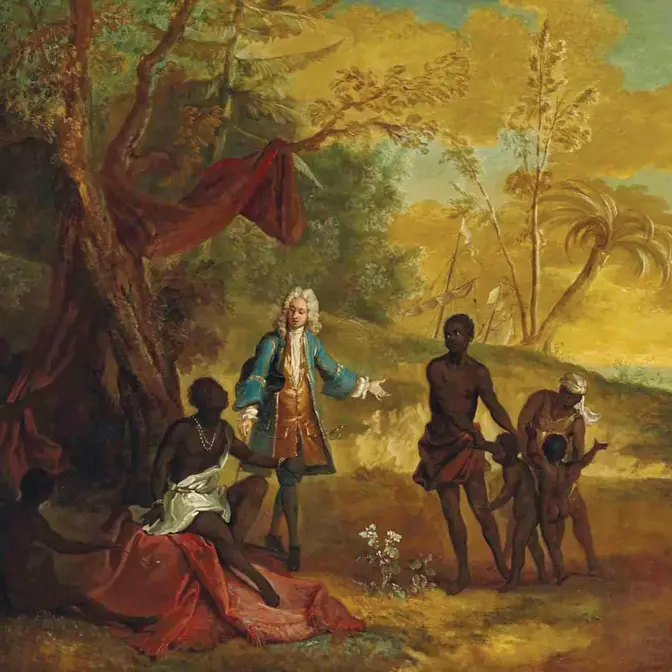
#Roma #SilkRoad #Balkans #Gypsies"✏️Description: Known across the world by many names such as: "Gypsies", "Roma", "Romani", "Sinti", etc... ; the Gypsies played a crucial role in the development of the Balkans & the history of many of the countries that inhabit the region today such as: Serbia, Bulgaria, Romania, Hungary, Greece, Bosnia, Albania, Macedonia, and many others outside of the region. Yet, when talking about history, very rarely are the Roma mentioned or talked about. In this video we go over the origin of the Roma in India, their migration across the Silk Road and into the Balkans, their life in the Balkans & under the Ottoman Empire, the 20th century, their life under communism & finally modern times.
When talking about the Balkans, ethnic hate between group is not an uncommon topic.
However, there is seldom a group of people hated more than the
Gypsies. Arguably, the Gypsies, also known as the Roma, have also been an inseparable part of
Balkan culture and its history. However, due to generational stigma, prejudice, and more importantly,
lack of research, very little is known about them. As a result, even though they've more
or less developed parallel to the other peoples in the region and played an equally important
role in its history and its development, the vast majority of people have been left stigmatized
and shunned from the spotlight and labeled as unwanted nuisances. Yet, if you dig a bit deeper
past the stereotypes of thieves and black magic casters, you can discover a fascinating, colorful,
and quite tragic history of Europe's most hated group.
For the longest of times, the origin of the Gypsies has been shrouded in mystery,
even though they've been very much present in the Balkans and in Europe since the 13th century.
Most Balkanoids weren't even aware that they were a separate ethnic group. The Gypsies'
migration to the continent coincided with a series of wars between the Seljuk Turks and the Byzantines.
As a result, the first Gypsy arrivals were mistaken and dismissed by the Byzantines as just
more Turks. As the wars between the Christian forces of Europe and Muslim forces of the Turks
continued, crusading Germans and the French named the people Saracen, meaning heathens.
As the years passed by, the Europeans eventually became aware of them being separate from the Turks,
so the Greeks named them Atsingani, which carried a similar meaning to the one imposed by the
Crusaders. Yet, it roughly translated to Don't Touch, marking the Gypsies as the Untouchables.
Yet, even though the original word Atsingani has lost its meaning a long time ago, today most of
the Balkan and Eastern European languages' word for the Gypsies still comes from this word,
taking various forms such as Cygani, Cyganjok, Cygani, and Cygojna. Nonetheless, after the Roma
became a constant presence throughout the continent, more theories about their origin sprung
up throughout medieval Europe. Many could be found in particular around the coastal areas of the
Adriatic, and had quite darker skin than the locals. I know, quite difficult to believe when
the average Greek looks like this. Because of this, a new theory came up being that they originated
from Egypt. The theory became further popularized as the Gypsies themselves were unaware of their
origin either. Due to being a nomadic people and lacking a written language, they also started to
believe that their actual homeland was Egypt, and began to refer to themselves as Egyptians.
As a result, the term Gypsy, meaning Egyptian, was born from this theory, with many other European
countries adopting a similar word to their language, such as Gypsy, Gitano, and Gyptos.
So, for the next 400 years, practically everyone in Europe, including the Gypsies themselves,
assumed that the land of the Nile was their true land of origin. It wasn't up until the
Enlightenment when people actually started to put this theory to the test. What's even more ironic,
the study of Gypsiology, aka Romani Studies, came about because of an accident, when in 1760,
a Hungarian student in Holland, who knew a couple of words in Gypsy he learned from his servant back
at his estate in Győr, noticed similarities to the language being spoken between two Indian
exchange students. He told this to his friend and acquaintance as an interesting anecdote,
which started to spread through bars and cafes until a German journalist took interest in the
story. He published it in an Austrian newspaper in 1776, from which various linguists across the
continent then became interested, and subsequently started a new field of study just because of some
student's story. Practically overnight, the myth of Egypt that was believed for over the past 400
years was dispelled and the first connection to India was made. So, uh, if you haven't thanked
your town's local Hungarian for his contribution to society, now's the time. Since the late 1700s,
various origin theories have come about the Gypsies. In Germany, popular theories arose that
because of their Greek name, Atsingani, the Gypsies were actually Grecian heretics that
came from the African provinces of Zoiketana. Others speculated that the Bible already gave
the answer of their origin, as they were the cursed descendants of Cain, condemned to wander
the earth for eternity as God has cursed the soil they plowed so nothing would grow from it. A little
less spectacular than the theory of how Yakub created white people, but still, it has a similar
vibe. This theory was also believed because the Roma didn't have a religion of their own, so with
Europe being the prime breeding ground of religious zealotism, a ton of mythical speculations on the
Gypsies' origin came to life. One of my personal favorite legends comes from the Romanians and Serbs.
The Romanians stipulated that in the beginning, the Gypsies and Romanians built two churches.
The Gypsies made theirs out of stone, while the Romanians made theirs out of ham. The Gypsies
then persisted and haggled with the Romanians to trade, until the Romanians finally agreed.
Once getting the ham church, the Gypsies subsequently ate it, which forced them to become
eternal godless wanderers. The Serbs' version is practically the same, but says that the church was
built out of cheese instead, and adds on to the explanation of their begging being that they beg
from the Serbs because they still owe the money for their church. However, unsurprisingly, the
true origin of the Roma is much less schizophrenic. Through linguistic and later on genetic analysis,
it was found that their first origin was in northwestern India, in the region known today
as Punjab. Up until the 11th century, the Gypsies were indistinguishable from many other peoples
that inhabited the different kingdoms of this region. However, around the year 1000, the Ghaznavid
empire rose to prominence and began to encroach on the territories of the regional kingdoms in
northern India. As the Ghaznavids seek to expand, the other kingdoms and principalities within the
subcontinent resisted, which sparked hundreds of bloody battles, which resulted in enormous
casualties and rendered the regions caught in the fighting as a cesspool of violence and destruction.
Many who were lucky enough to escape death weren't lucky enough to be taken as prisoners of war.
These prisoners were then tasked to tend to the Ghaznavid warriors on and off the battlefield.
This bloodshed continued for the next couple of centuries as the Ghaznavids and their successors
continued expanding east through India with limited success, bringing death and devastation
as they went. Eventually, many from the region had enough and decided to embark west in search
for better lands to settle away from the cruelty of the Ghaznavid empire. Joined by the war prisoners,
many embarked on an epic journey through the Hindu Kush mountains to leave India. It is estimated that
the first gypsies took the route through the Swat River Valley or Khagan Valley, where they would
then follow the Silk Road, which would lead them through Khorsan, today Afghanistan, Uzbekistan,
Turkmenistan, and Iran, where they then continue along the south of the Caspian Sea through the
mountains of Georgia and Armenia, all the way to Trebizond, Mordor, aka today's Turkey.
In a relatively short time, the gypsies traversed the Silk Road through Persia with few clans here
and there, choosing to stay in the lands they traversed up until they arrived in Anatolia. By
the time that Rome arrived in the region, it was heavily contested between the weakening Byzantine
empire and the expanding Muslim Turks. In the late 11th century, many gypsies entered the eastern
parts of Byzantium, where they acquired a variety of trade jobs in towns and settlements. As they
were seen as outsiders, they weren't allowed ownership over land, thus overwhelmingly flocked
to jobs of blacksmiths, metal workers, carpenters, and entertainers, basically having to resort to
the medieval version of door dashing and being glover couriers. It is estimated that the Romani
didn't get to mainland Europe for another 200 something years, as the first mention of them
came in the late 13th century, where several Egyptians were noted as tax collectors. As the
Turks pushed westwards, the gypsies increasingly fell under their jurisdiction. They continued
having many of the same jobs they had in Byzantium, but also started being used within the military.
As many gypsies were used as prisoners of war, and even had warrior ancestry fighting the Gaznavids,
the Turks utilized them in their armies. Now, it's not known to what extent this was consensual
service, and to which it was slave labor, as the gypsies didn't convert to Islam,
and there is a lack of documentation of the earlier relationship between the Turks and gypsies.
However, what is known is that a lot of gypsies entered Europe in the 14th century via military
campaigns, and as slave labor employed by the Ottomans into the Balkans, and from there on,
they found their way further up the continent. By the time Constantinople fell under the Ottomans
and Byzantium's existence was only left in our hearts, the gypsies became a widespread presence
in the Balkans. The kingdoms, principalities, and then subsequently the provinces of the Ottoman
Empire that resided on the peninsula were mostly agricultural-based societies. As a result,
not a lot of artisan products were present throughout the realm. However, as the Roma
became ever so present in the region, the local nobility and aristocracy quickly found use of them
because of their craftsmanship skills. Gypsy-made items rapidly filled the demand for these
products. The goods they could produce were seen as extremely useful in trade and commerce,
and gave an edge to any noble who could possess an excess of them. So, although they did not own
any land, they were taken in as serfs by the local lords, and exploited by being forced to produce
baskets, textiles, tools, weapons, and anything in between. Because they were seen as quite valuable,
the gypsies would become linked to certain estates and property. So, when a nobility would trade land
or give it as a gift to one another, they would also give away the gypsies on that land. As a
nobility would be given land and subsequently the gypsies on it, so would the clergy and many
monasteries as well. Soon, gypsy labor became quite coveted, and the demand for the goods they would
produce in the Balkans only rose as no one could get enough of it. As a result, the legislature
regarding servitude and gypsies became increasingly stricter in a way to keep them on that land.
This rapidly transformed from a subset of feudalism to straight-up slavery, as lords in
possession of gypsies were given full unrestricted rights and control over what was to be done with
the life of his gypsies. Within the Balkans, slavery over gypsies became ever more enshrined
within the Ottoman institutions, as the Islamic worldview at the time dictated that Muslims had
the right to fully treat any conquered non-Muslim subjects as property. As you can imagine, the Roma
weren't the only ones affected by this view, as were the Serbs, Greeks, Romanians, Bulgarians,
and any other Christians within the empire. However, they were impacted the most due to their
already low social status. In particular, the Romanian predecessors, the principalities of
Wallachia and Moldavia, eagerly jumped onto this nasty institution. Vlad Țepeș, also known as the
inspiration for Dracula and a highly esteemed shish kebab maker, is also credited for bringing
the gypsy slaves to Romania. In 1445, after several incursions into Ottoman Bulgaria by the Wallachian
army, Țepeș brought back around 12,000 gypsies with him to use as slaves. Stefan the Great, deemed
by the Pope, athlete of Christ, Moldova's favorite person to name things after today, and another
highly esteemed ruler in Romanian history, was the second notable Romanian to bring in a large
batch of gypsy slave labor. In 1471, after a battle against the Turks with the Wallachians,
Moldavian forces captured and transported over 17,000 gypsies back to the principality. Vlad
Dracula was also quite fond of using them in his army as well. Țepeș held a belief that the gypsies
were a fearless class of warriors who would give him a fighting edge against the Turks. Their
participation in Wallachia's war on the Ottomans was also described in the first ever epic poem
written in Romanian in the early 1800s, the Țiganiada. I know, it sounds like something to
come out of Two Balkans for you, but it's real. Țiganiada's writer, Buda Ideleanu, tells how
the brave Vlad Țepeș led his army of gypsies into battle against the Turks, where the gypsy
warriors fought along angels for the glory of Christendom. Anyways, by the time all of the
fell under the Muslims and went into economic and cultural decay, Wallachia and Moldavia were
able to prosper. In part, this was due to them never being fully controlled by the Ottomans,
but also due to them heavily relying on slave labor of the gypsies, who they exploited for
their economic gain. The principalities were so dependent on them economically that they had to
start importing more and more gypsies to keep up with demand, practically becoming the confederacy
way before the confederacy was even a thing. Because of this, Romania to this day has the
largest number of gypsies in any country in the world. By the 1500s, the institution of gypsy
slavery in the Balkans came to resemble that of African slavery in America, 100 years before the
first black slaves even touched the continent. Much like slavery in the New World, slavery in
the Balkans was also divided into different categories. Some of the more prominent categories
were house slaves, field slaves, slaves of the crown, and slaves of the church. The ones with
the hardest jobs and worst treatment were field slaves, who were condemned to work hard labor and
forced to live in mud huts on the outskirts of the estate. Church slaves, on the other hand,
had more service-based jobs such as cooks and coachmen, while house slaves were tasked with
taking care of the household. The male house slaves would also majority of the time be castrated as to
possess a threat to the female members of the household, while female house slaves were very
often used for sexual entertainment of the guests and hosts. Children born out of this
entertainment were then also condemned to the fate of slavery and put into bondage within the estate
or sold off. In 16th century Wallachia, the exchange rates for gypsy slaves were as follows.
One gypsy for one pig, a team of gypsies for a team of oxen or horses, a newlywed couple for
a few barrels of wine, a gypsy girl for a pair of copper pots, and a gypsy with a disability was
worth a jar of honey. It was also possible to purchase half a gypsy, which entitled a pregnant
woman and a child she would bear. If a gypsy was topped by a government official, they had to state
the name of their master. If they couldn't, they would be considered automatically as property of
the crown. Thus, gypsies in passing, who wandered from region to region, would often get rounded up
and taken into bondage, which is why many tended to avoid highly populated areas and stick to the
outskirts of society. As a result, not all gypsies became slaves and many managed to remain free by
doing this. As you can imagine, the life of an enslaved gypsy was not easy. To make it even
harder, their overseers, known as vatavs, would more often than not be extremely cruel and torture
was prevalent. Although Ottoman law stipulated that killing your slave was forbidden, many did
not follow this and rarely, if ever, faced punishment for breaking it. As a result, many
gypsies fled and went into hiding into the Carpathian Mountains, where they formed hidden
settlements along other escapees. By the early 1800s, the Ottomans tried to regulate the institution
of slavery more by enshrining stricter laws regarding ownership and treatment of gypsy slaves.
However, in 1826, the Ottomans were defeated by the Russians in one of their many wars, and the
two Romanian principalities fell outside of Turkish influence. Soon after, a staunch anti-slavery
government called Kisilev was appointed as governor in the region, who aimed to abolish
the practice. However, due to the institution being extremely popular with the Romanian nobility,
Kisilev was only able to pass stricter laws regarding the regulation of the trade
and treatment of gypsies, but was never able to outright ban the practice. Now, despite the Balkans
being the epicenter of gypsy bondage, this barbaric oppression of the Roma wasn't only present
there, nor just in the Ottoman realm. As the gypsies made their way into the Balkans,
thousands continued north and west, deeper into Europe. Soon, much of the same laws came about
in Western European countries as well, and gypsies were automatically assumed of as property. In
England, captured gypsies were to be branded with the letter V and be put into slavery for two years.
If they escaped and were then recaptured, they were to be rebranded with the letter S
and made slaves for the rest of their lives. In Iberia, both the Spanish and Portuguese enslaved
the gypsies as well, and exported them to their colonies in the New World, where they would be
used as slave labor on cash crop plantations. In a dark ironic twist, the Portuguese even exported
them back to their colonies in India, where they had left as free men, but returned as individuals
in bondage. While in colder and rougher climate regions such as in Scotland and Russia, they were
subject to work in the mines. There was practically no place on the continent where the gypsies could
wander risk-free, and their mere presence in any city would entail enslavement for the rest of
their lives. By the mid-19th century, the Industrial Revolution was starting to take good hold of
Europe, and with it, it brought numerous new machines and inventions, such as the spinning
mule and cotton gin, that made the use of large number of labors obsolete. Thus, throughout Western
Europe, slavery overall started to be abolished, and within the remaining principalities, who wished
to prove their Europeaness and establish stronger ties with France, their long-lost brothers, the
practice of holding gypsy slaves started to be seen as barbaric, backwards, and most importantly,
inhumane. In 1837, Alexandru Gica, the then governor of the territories, passed a law to
Although it was a small step, it set the ball rolling. Moldavia in 1842 abolished slavery,
and five years later, the Wallachian Church criminalized the practice as well. In 1848,
as the Hungarians were fighting the revolution against the Habsburgs, students in Bucharest
protested the practice and tore down statues in the capital relating to the institution,
and voted for its abolition in the same year. This newly found freedom of the gypsies was
short-lived however, as the two principalities were pushed back into direct foreign influence
by the Russian-Turkish convention, which also brought back old laws, including that of slavery.
It wasn't until 1855, when more political events came to fruition, and Moldavia unanimously passed
a bill banning the practice, and Wallachia doing the same one year later, in 1856.
Slavery wasn't fully stamped out until the first Romanian unification of 1864,
when Prince Ioan Cuza restored the gypsies to their former estates, and proclaimed them
as free people under them. Although abolition had set the gypsies finally free after over four
centuries of bondage, no programs nor institutions were set in place to help the newly free population
acclimate into society. The gypsies were still greatly discriminated against, and had no ways
of securing any sort of land which pushed them to the fringes of society. Many as a result returned
back to the nomadic way of life, traversing the continent from country to country, working as
entertainers, musicians, fortune tellers, and traders. However, between the late 19th century
and the mid 20th century, race realism became an ever more popular pseudoscience that over the years
took a greater and tighter grip over Europe, and the world as a whole. In particular, in the late
1800s, Germany became a major hub for these ideas. Many German authors and experts in the topic
referred to both the Jews and gypsies as excrement of humanity. Even highly esteemed English scientist
Charles Darwin, responsible for introducing and popularizing the theory of evolution,
and being the bane of existence for American evangelical parents in school, described the
gypsies in his writing as, not being culturally advanced, like territorially settled peoples.
As a result, a series of anti-gypsy laws were being passed that continually worsened the lives
of the Roma all over Europe and drove them to even further fringes of society. Hanseatic laws
within Germany criminalized many gypsies due to prohibiting the lack of having a permanent home
or job and not being on the taxpayer register. In the 1880s, German Chancellor von Bismarck
reinforced and introduced stricter discriminatory laws against the Roma, stating that the gypsies
are to be dealt with especially severely if apprehended. Ten years later, in 1890, the
Zigeunergeschmeiß aka Gypsy Scum Conference was held in Swabia, where the nation's military was
given explicit authorization to keep the gypsies on the move. At the turn of the century in 1899,
the Gypsy Information Agency was set up in Munich, which cataloged data on all gypsies registered in
Germany. Six years later, in 1905, this data was published in the Zigeunerbuch, the Gypsy Book,
which in 350 pages described the gypsies as a plague the German people must defend themselves
against via the use of ruthless punishments, and which condemned race mixing and the dilution of
the country's gene pool. Alongside this, the book also contained a registry of every single
gypsy known in Germany, their genealogical details, criminal records, and photographs.
In 1920, the legal oppression of gypsies became worse, as they became forbidden to enter public
spaces such as parks and public baths. In 1925, a series of laws were passed that required all
unemployed gypsies to be sent to work camps for security reasons. Two years later, all Romanis
had to be registered with the police, and every gypsy individual, children included, had to carry
an ID card with their photo and fingerprints. In the same year, the central office for the fight
against the gypsies in Germany was established, and in 1933, before the Nazis even held power in
Austria, the country called for the withdrawal of all civil rights from the Romanis. In the same
decade, more laws were passed where marriage between gypsies and non-gypsies was strictly
prohibited, and forced sterilization of Romani women was introduced as well. By 1938, the final
solution for the gypsies was first mentioned by the Nazis, and soon became quite popular,
and plans started to be prepared. By the time World War II officially started, several massacres
and pogroms of gypsies took place all throughout Germany and German-occupied territory, and then
in 1942, it was ordered for all Romanis to be deported to Auschwitz-Birkenau, where they would
be exterminated. Much like the Jews, and many others who were barbarically put into these camps,
the gypsies too suffered tremendous torturous conditions and torture by the Nazis. They were
also prime targets of medical experiments, with Joseph Mengele, a dreaded Nazi scientist, taking
a special interest in brutally experimenting on them. Because of YouTube's policies, I won't go
further into detail on what went on in this camp. However, I implore you to do your reading on this
chapter of history, as it is quite often forgotten. The treatment of the gypsies in the Holocaust was
disregarded, so much so that even the Nazis did not track the exact numbers of the Roma they
murdered, often writing their casualties as Jews or Russians. As a result, it is estimated that between
500,000 and 1.5 million gypsies were brutally murdered in a variety of ways during this
gruesome part of history. So, unfortunately, we will never know the exact number of their victims.
After Germany was defeated, the imprisoned gypsies were once again free. Even though they went to
hell and back, neither support nor help was given to the victims after they were freed by the allies.
During the Nuremberg trials, the gypsies didn't even receive a delegation in the prosecution of
the perpetrators. Nevertheless, they were at least free to go back to their homes, or so they thought.
As one nasty ideology was slain, another popped its ugly head, communism. Even though the communists
aimed to free the average laborer from his chains, they did the exact opposite to the gypsies. One of
the first laws they passed throughout the socialist world was that of prohibiting wandering as a way
to outlaw gypsies from being nomads like they were. Many were forcibly assigned to industrial towns
and cities, where they were forced to go back to work at factories or farms as a way of assimilating
their population into the workforce and nation. In Bulgaria, for example, the gypsy identity was
banned outright. Declaring yourself as a gypsy in the national census was not allowed, and the Roma
were forced to declare themselves as either Bulgarian or Turkish, and subsequently even
forced to adopt Bulgarian or Turkish names. However, not all was bad. Because of these
authoritarian governments and the severe penalties for breaking the laws they enacted, hate crimes and
ethnic targeting of gypsies was almost non-existent. Many were given state-managed apartments and homes
for the first time ever. But to be fair, in many cases, these homes were known to be subpar, and
although they had to live in different bonds, they weren't targeted for their ethnicity, which allowed
them to live semi-normal lives. As a result, in Romania, the only group of people that ever had
anything positive to say about the Ceaușescu's, Romania's communist dictatorial power couple,
are the Roma. Nevertheless, with the fall of communism, so fell the protection many gypsies
enjoyed by the state. In the early 90s, a series of pogroms against the gypsies took place throughout
Transylvania and Romania, as both the Hungarians and Romanians living there collaborated together
on kicking out the gypsies from their villages. Usually, one person from the gypsy community would
commit a terrible crime, which then prompted all of the other villagers to band together and burn
down the houses of the other gypsies and expel all of them from their village, as a way of
collective punishment. More often than not, the police would be in on it, or just simply not care
at the injustice taking place. A lot of the time, the crimes someone from the Roma community would
commit would be fictional even. As the gypsies always had to adapt to survive, when capitalism
started to be embraced, many quickly jumped on board and opened up their own businesses such as
Many gypsy families, especially in rural villages, quickly became sort of rich from such endeavors,
which then prompted their neighbors to assume that they got rich via theft from the community.
Thus, sometimes it only took one person to accuse them of a crime, an entire village would then jump
on the witch hunt and deal out vigilante justice. These incidents also happened in other parts of
Eastern Europe, which prompted many Romanis to abandon their countries and migrate west into
Germany and other Western European states. Throughout the 90s, tens of thousands of gypsies
from all over the Eastern Bloc flocked to Western Poland where they attempted to cross into Germany
and seek refuge. Many would get rid of their papers along the way to make their case for asylum
more likely to pass. However, this rarely ever worked. The majority of gypsies fleeing into
Germany would be allowed to stay only two years in a refugee camp while their application was being
processed. During their stay, they'd find some sort of low-paying work either in the camp itself
or the towns nearby and afterwards they would be kicked back home while also having their finances
taken from them due to them being obtained via illegal work in the country. Often enough,
savings these gypsies brought would also be taken under that pretense and basically leave them with
no money whatsoever. Upon being deported back to their countries of origin, in many cases the
countries would refuse to take them back as they didn't have any papers and because the Germans
took their money, many were left without a cent nor passport to their name. Later on, Germany would
pay Romania millions of marks at the time to take back its citizens and build housing but as the
government of Romania at the time was severely corrupt, you can imagine how the story ended.
Today, the situation of many gypsies has improved since the dreaded 90s but it is still far away
from perfect. Many programs and NGOs have sprung up to assist Roma communities throughout Europe.
However, many still live as outcasts of society and often do not have adequate infrastructure
nor facilities for a normal life. Even in one of Romania's most well-developed cities, Cluj-Pătărât,
an infamous gypsy neighborhood known for its favela-like conditions, is allowed to exist
virtually ignored by the government despite the city's booming IT sector. However, it is also
important to note that many gypsies also aren't thrilled to jump into cooperating with a society
that has oppressed them for centuries and only recently let up on their brutal treatment. While
systematic issues exist when it comes to the treatment of the Roma communities in Eastern
Europe, so do trust issues amongst the Romani who sometimes willfully refuse attempts of
normalization efforts. But hopefully, both will change as more progress takes place and brighter
chapters become written in the history of the gypsies. Thank you for watching. This has been
quite a brutal video to research in, right? As gypsy history is characterized by bondage and
expulsion. Please let me know what you think in the comments and if I should do more of these types
of videos in the future. My name is Janos and you've watched Living Ironically in Europe.
don't tell me that you are gay