
Ming Dynasty Emperors - 001 Emperor Hongwu
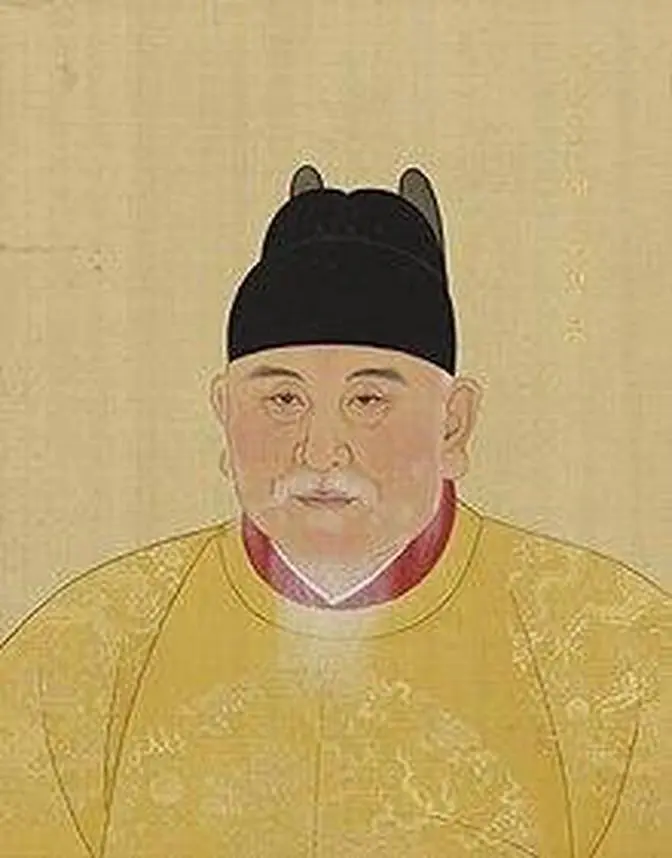
The Emperor Hongwu, also known as the Emperor Taizu of Ming, was the founding emperor of Ming dynasty.
His original name was Zhu Chongba, which means the eighth kid of Zhu family. Zhu Chongba was
born in a really poor family during the late Yuan dynasty. When he was a kid, he had to work
as a cowboy to support the family. During this time, he made many friends.
In future, most of them became his helper. In 1344, Zhu Chongba was 16 years old.
A serious drought happened in his hometown. Zhu Chongba lost his parents and one of his big
brothers. To survive, Zhu Chongba had to become a monk in Huangjue Temple. Unfortunately,
at that time, the temple didn't have enough food to support everyone. Zhu Chongba was asked
to leave the temple and beg alms. In the next four years, Zhu Chongba lived as a beggar.
In 1348, Zhu Chongba came back to Huangjue Temple and started to learn reading and writing.
In 1352, Zhu Chongba was 24 years old. He joined in Guo Zixing's army to rebel the Yuan dynasty.
Although Zhu Chongba didn't get many formal education, he had talent on military.
His talent was recognized by Guo Zixing. Guo Zixing gave him a formal name,
called Zhu Yuanzhang, and arranged for Zhu Yuanzhang to marry his foster daughter Ma Shi,
who was loved and respected by Zhu Yuanzhang until death.
Depending on his distinguished military capabilities, Zhu Yuanzhang finally organized
his own army. In 1356, Zhu Yuanzhang leading his army conquered Nanjing, which became Zhu
Yuanzhang's operations base and the first capital of Ming dynasty. During the next several years,
Zhu Yuanzhang personally went to the war and conquered many cities. In 1364, Zhu Yuanzhang
crowned himself as the King of Wu and organized his own management team. By 1366,
Zhu Yuanzhang's army conquered and controlled the southern area and ready to attack the Yuan
government, which controlled the northern area. In January 23, 1368, Zhu Yuanzhang became the
Emperor of the Ming and promoted his wife Ma Shi as the Empress. Their first son Zhu Biao
became the Crown Prince. In the August of the same year, Ming army conquered Dadu,
which was the capital of Yuan dynasty. The Yuan dynasty officially finished.
After becoming the Emperor, Zhu Yuanzhang used many radical methods to consolidate
his political powers. Started in Han dynasty, a leader of the Ming ministers,
called the Consular, helped the Emperor govern the court. The power of the Consular
limited the power of the Emperor. Zhu Yuanzhang thought Consular's power was a threat.
In 1380, Hu Weiyong case happened. Zhu Yuanzhang took this chance and cancelled the Consular's
position. From this point, political powers were highly centralized under Emperor's control.
Both Ming and Qing dynasties followed this rule.
Zhu Yuanzhang also created an intelligence agency called Jinyiwei. Jinyiwei secretly watched
everyone in the country, from the Ming ministers to average people, and they directly reported to
Zhu Yuanzhang. In Ming history, there was a story happened between Zhu Yuanzhang and Song Lian.
Song Lian was a well-known gentleman and had great reputation in the court. One day, Zhu Yuanzhang
asked him what he did last night. Song Lian answered, he had a dinner with his friends.
Then Zhu Yuanzhang asked the detail of their dinner, like who showed in the dinner,
what they ate. Song Lian answered exactly as what happened. Zhu Yuanzhang satisfied with his answers
and showed him some pictures, which draw the airy details about yesterday's dinner.
Zhu Yuanzhang also published detailed regulations to control every aspect of people's life.
For example, Zhu Yuanzhang required different class people to wear different clothes.
Average people could wear clothes made by stain, yarn, spun silk, and fabric. Well,
businessmen as the lower class in Ming dynasty only was allowed to wear clothes made by yarn
and spun silk. If people obeyed these regulations, they would be seriously punished.
According to a history record, a group of soldiers played ball on the street.
Some of them rolled up their pants-like openings, which was not allowed.
Some of these soldiers were arrested and their feet were cut off.
Started from Ming dynasty, ancient Chinese women gradually lost their confidence,
wildness, and independence. Before Ming dynasty, widows could remarry without many limitations.
Zhu Yuanzhang strongly opposed this. In Da Ming Lv, the laws of Ming created by Zhu Yuanzhang,
noble women were not allowed to remarry. If they did, they must divorce, give up the noble title,
and be punished. For average women, Zhu Yuanzhang publicly encouraged widows to keep single.
If a woman lost her husband before 30 and kept single until 50, her husband's family
could get high-level honor, and her original family also got many benefits. Because sacrificing
a woman could exchange huge benefits for both sides' family, more and more families required
widows to keep single. All women bending feet also started from Zhu Yuanzhang's age.
Before Ming dynasty, bending feet only were popular during upper-class women, and it was not
required. When Ming was found, Zhu Yuanzhang required all women bend feet. Bending feet
highly limited women's activities. So, Ming rules fewer required women, except let a married girl
stay at home. Zhu Yuanzhang also revived the human sacrifice,
which was rarely happened after Han dynasty. In 1395, Zhu Yuanzhang's second son, the Prince Qin,
suddenly died. His wife and two concubines were required to be sacrificed. When Zhu Yuanzhang
passed away in 1398, all his consorts, totally about 40, were sacrificed. Human sacrifice in
Ming royal family was banned by Emperor Yingzong of Ming in 1464. But in whole Ming dynasty,
widows' voluntary sacrifice was always encouraged. In 1398, Zhu Yuanzhang passed away at 69.
He was buried with his Emperor Ma in Nanjing, Ming Xiaoming. If Zhu Yuanzhang's story
stop here, he looks like a monster. Actually, in Chinese history, Zhu Yuanzhang's reputation was
not bad. So, let's see other side of Zhu Yuanzhang in Emperor Jianwen's video.