

Matthaus Nagiller (1815-1874) - Ouverture 'Herzog Friedrich von Tirol' (1860)
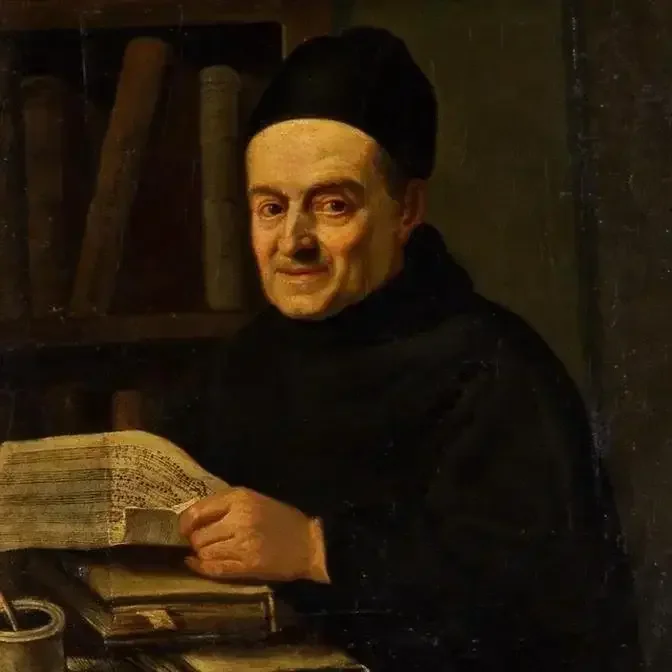
Alles Gute zum Geburtstag Matthaus Nagiller! 🍻🎁
Composer: Matthaus Nagiller (1815-1874)
Work: Ouverture 'Herzog Friedrich von Tirol' (1860)
Performers: Orchester der Akademie St. Blаsіus; Karlheinz Sіеssl (conductor)
Painting: Inoue Tankei 井上探景 (1864-1889) - Military Review Attended by His Majesty the Emperor (1885)
HD image: https://flic.kr/p/2qpJo5k
Further info: https://shop.tiroler-landesmuseen.at/products/klingende-kostbarkeiten-aus-tirol-96
Listen free: No available
---
Matthäus (Matthias) Nagiller
(Münster, 24 October 1815 - Innsbruck, 8 July 1874)
Austrian composer and conductor. He received his first musical instruction at Schwaz, from the choirmaster Georg Benedikt Pichler, and continued his studies under Martin Goller at Innsbruck and then at the Vienna Conservatory under Simon Sechter and Gottfried Preyer. From 1842 to 1848 he lived in Paris. He lectured at the Conservatory, and from 1843 he taught Thomas Tellefsen composition who stated about his teacher: “I've begun taking lessons in theory from a student of Simon Sechter, a famous Viennese contrapuntist, whose name is Nagiller, and who is a great composer and has a solid knowledge from Johann Philipp Kirnberger, as Sechter belongs to the circle of Kirnberger and Bach; you would not imagine how happy he was when I showed him my treasures of Israel Gottlieb Wernicke, Ole Andreas Lindeman and the Bachs; he was extremely happy and found in 'Die Kunst des reinen Satzes' an appendix which he could not get in Vienna in a great music library.” Also in Paris, Matthäus Nagiller premiered his best-known instrumental score, the Symphony No.1 (1845), considered his masterwork. In 1847 he began an extensive concert tour through Germany with remarkable success. In 1848 he returned to Austria, settling in Bozen. In 1854 he was in Munich where he lived until 1861, premiering several masses, songs and a concert overture. In 1865 he returned to Bozen as the city's music director before moving permanently to Innsbruck where he assumed the director post of the Musikverein. As a composer his output is almost enterely vocal (operas, masses, songs, lieder, hymns et al.) but he also left a symphony, several overtures and keyboard pieces. His style is close to his Tyrolean fellows Johann Baptist Gänsbacher, Josef Netzer and Johann Rufinatscha and its very representative of the Tyrol music.