
Zhu Yuanzhang: From Humble Beggar to Founding Emperor of the Ming Dynasty
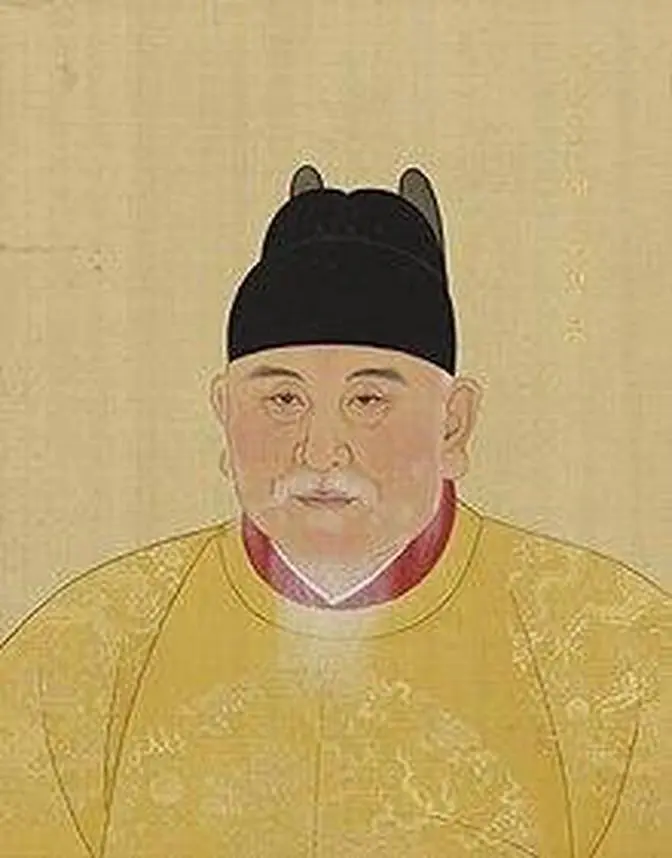
Childhood. Let's start with a record.
Name, Zhu Yuanzhong aliases, Zhu Chongba, Zhu Guorui.
Gender, male. Ethnicity, Han.
Blood type. Education, no formal education,
self-taught later. Profession, emperor.
Family background, impoverished farmers for at least three generations.
Born-died, 1328-1398.
Favorite color, yellow, apparently, he didn't have much choice.
Family. Father, Zhu Wuxi, a farmer.
Mother, Mrs. Chen, a farmer, sorry, historical records don't mention her first name.
Motto, what's yours is mine, and what's mine is still mine.
Main experiences. 1328-1344, a herd in cattle.
1344-1347, being a monk, mainly begging, yes, really.
1347-1352, serving as a monk, primarily ringing bells.
1352-1368, leading a rebellion, quite a shift.
1368-1398, reigning as the emperor.
Everything began on a night in 1328, when a peasant named Zhu Wuxi and his wife Mrs.
Chen welcomed a baby boy into the world. That boy was none other than Zhu Yuanzhong.
Emperor's births in history often come with strange phenomena recorded in later history books.
For example, storms, heavy rain, mysterious fragrances,
twinkling stars, and even areas bathed in red light.
All to suggest that this person was extraordinary.
Zhu Yuanzhong's birth was no exception. His house was filled with a strange light,
making neighbors think there was a fire, and they rushed to help, according to the Ming Shilu.
However, Zhu Wuxi wasn't in the same mood as anxious yet joyful fathers outside modern
delivery rooms. Already a father of three sons and two daughters, his main concern
was providing food. Zhu Wuxi's work was twofold,
he ran a tofu shop but mainly depended on farming someone else's land.
As a member of a working class family, survival meant non-stop labor.
A month after his birth, Zhu Yuanzhong was named Yu Chongba, also known as Zhu Babai.
His family had a unique naming tradition.
Great Great Grandfather, Zhu Baiyu, Great Grandfather, Zhu Sijiu, Grandfather, Zhu Chuyi,
Father, Zhu Wuxi. These names weren't because the Zhu family were mathematicians,
but due to a rule in the Yuan dynasty where commoners who couldn't study or hold office
had no names, and were instead named after parents' ages or their birth dates,
quite confusing for census takers. Zhu Chongba's childhood was spent in a modest,
well-ventilated thatched cottage. His main job was herding cattle for a landlord named Liu De.
Zhu yearned to study, but Zhu Wuxi couldn't afford the fees.
Without the luxury of hanging books on ox horns like Li Emai or a patron like Yang Su to recognize
his talents, Zhu diligently herded cattle for Liu De for 12 years because he needed to eat.
At this time, Zhu Chongba's dream was simple, survive.
At 16, he hoped to marry a hard-working girl through the matchmaking efforts of an old lady
in the village, have children possibly named Zhu Soni or Zhu Seling, and later have them
herd cattle for Liu De's son. This was 16-year-old Zhu Chongba's vision of a happy future.
Meanwhile, China was suffering under the extremely corrupt rule of the Yuan dynasty.
The Mongolian conquerors didn't seem to consider their subjects human,
even contemplating exterminating them to use their lands for grazing.
From taxes to labor, any conceivable method was employed to extract money, holiday taxes,
work taxes, legal dispute fees, and even absurd charges like flower scattering fees.
After ruling China for over 60 years, the Yuan dynasty was like a heavily burdened camel
just waiting for the final straw. That straw arrived in 1344. This was a significant year.
Finally, heaven seemed ready to abandon the Yuan, bringing two disasters to China and digging a
grave for the Yuan. With the epitaph reading, a stone man with one eye stirs the yellow river
and the world rebels. Heaven even had someone in mind to fill the grave, Zhu Chongba.
Of course, Zhu Chongba could never have imagined being chosen for such an important task.
At 17, a disaster was about to befall him, but also, a great venture awaited him.
Like a phoenix in legends, he needed to endure hardships, immerse in fire,
and undergo countless trials to be reborn in brilliance. Zhu Chongba, destiny awaits you!
Catastrophe
The year was 1344, a pivotal one for the Yuan dynasty. Two major events marked the beginning
of this year, the overflowing of the Yellow River, leaving hundreds of thousands in Shandong
and Henan provinces homeless and a severe epidemic coupled with drought along the Huai River.
Despite their general disregard for the populace, the Yuan leaders had to repair
the river dikes to prevent rebellion. Surprisingly, the Yuan government was divided
on this issue. Some insisted on repairing the dikes, while others opposed it. This dilemma
wasn't just a matter of loyalty or treachery, the true complexity would only be revealed
seven years later. Advocating for the repairs was Tuo Tuo, the dynasty's last notable chancellor
known for his integrity and competence. He even supervised the compilation of the history of the
Song. Unbeknownst to him, his advocacy was inadvertently setting up a ticking time bomb
for the Yuan dynasty. Meanwhile, the emperor and senior officials made a show of relief efforts
for the plague and drought victims. Yet, by the time these supplies trickled down through various
bureaucratic levels, little more than husks reached the common people. The officials,
meanwhile, barfed in gratitude and self-congratulation. But the commoners were
far from satisfied, Zhu Qiongba among them. Disaster struck his family hard. Within days,
his father, elder brother, nephew, and mother succumbed to starvation. If this period of Zhu
Qiongba's life were a diary, it would be one of the most heartbreaking ever written.
His only wish had been a simple, peaceful life for his hard-working,
honest parents and a family of his own. Now, everything was gone. Zhu Qiongba, now 17,
helplessly watched his loved ones die. The deepest human agony is to witness such loss
and feel utterly powerless. His only outlet was to weep. But even in mourning, he faced a grim
reality. No coffins, no burial clothes, no grave for his parents. He begged the landlord Liu De,
who coldly refused, indifferent to the plight of his lifelong tenant. With no other choice,
Zhu Qiongba and his second brother covered their parents' bodies with straw mats,
hoping to find a resting place for them. Despite the vastness of the land, none was theirs to use.
Eventually, a kind soul offered a burial spot. A soul in search of parents finds none,
a spirit aimlessly wanders, Zhu Qiongba later reflected as emperor,
having seen his parents toil a lifetime without a piece of land to call their own.
In his desperation, Zhu Qiongba prayed to every deity he knew, from Taoist immortals to Buddhist
figures. But his prayers went unanswered. His young heart grew cold with the realization that
only he could save himself. A flame of vengeance began to smolder within him.
From this anguish, he transformed from vulnerability to strength. To survive,
he decided to become a monk. Monkhood. Zhu Qiongba found refuge in Huangjue Temple,
where he worked like a laborer. There, he realized that these monks, who owned lands
and could even marry, a practice in Yuan Dynasty, weren't much kinder than Liu De.
As a novice, Zhu Qiongba was relegated to menial tasks like cleaning and maintaining
the temple's oil lamps. Despite this, he was grateful for the meals. However,
his resilience was soon tested again. Due to the famine, the monks were sent to beg for food.
Zhu Qiongba was assigned the poorest regions, facing scorn and ridicule at every door.
Yet, he persevered, losing his last shred of dignity but gaining a profound understanding
of the region and its people. This challenging journey was not without its rewards.
Zhu Qiongba broadened his horizons, met many noteworthy individuals, also beggars,
and developed a belief in the Mingjiao, bright sect, seeing himself as a future savior in a
land shrouded in darkness. Through these trials, Zhu Qiongba transformed from a helpless youth
into a resilient warrior, armed with an indomitable spirit. He understood that true
strength came not from physical prowess or material wealth, but from an unyielding heart.
When Zhu Qiongba finally left to return to Huangjue Temple, he reflected on his experiences.
Though he had lost much, he had also gained invaluable insights and an inner fortitude
that would shape his destiny. Yes, I might return, he thought, stepping onto the path
that would eventually lead him to greatness. Asterisk Asterisk setting out on the journey
Asterisk Asterisk. The year 1351 marked the final straw for the Yuan Dynasty.
This was the beginning of their end. Now, we see why Tuo Tuo's well-intentioned
insistence on repairing the Yellow River was a mistake. He failed to understand the corrupt
officials of the Yuan and their motives. His plan inadvertently set the stage for rebellion.
The Yuan Dynasty's order to conscript 170,000 laborers for the dyke repairs was a golden
opportunity for corrupt officials. They embezzled funds, withheld rations, and forcibly conscripted
men. Poor Tuo Tuo, a great theorist, was not a practical man. As laborers dug near Shandong,
they unearthed a one-eyed stone figure with an inscription predicting rebellion.
This discovery stirred the hearts of the workers, echoing a prophecy they had been
singing about for years. Then, in Yingzhou, present-day Fuyang, Anhui, where Yu Chongba
had once begged, and Shantong and Liu Fotong rebelled. They declared connections to royal
lineages, with Han claiming descent from the Song Dynasty and Liu from a great general.
Their rebellion followed the familiar pattern, rise, suppression, and paving the way for others.
Their uprising, though not unique in form, was monumental, marking the first organized
resistance against the Yuan. Toppling a dynasty is easier than establishing one.
The Yuan's policy of categorizing people into four classes, with Mongols at the top and southern
Chinese at the bottom, fueled resentment. A Mongol killing a southern Chinese only had
to compensate with a donkey, such was the value placed on life. But the oppressed were ready to
fight back. When survival becomes a luxury, rebellion becomes the only option. The fire
of rebellion spread rapidly. Within a year, numerous uprisings involved millions, even
overwhelming the once formidable Mongol cavalry. The Yuan dynasty was like a crumbling wall,
just needing one final push. Meanwhile, Zhu Chongba was still in the temple,
seemingly uninvolved in the uprisings. He harbored deep resentment towards the Yuan,
but understood the risks of rebellion. Many narratives paint Zhu as a natural-born hero,
but I believe he was a normal human, cautious and fearful, weighing the risks of a decision
that could cost him his life. It was a letter from an old friend, Tang He, now a rebel leader,
that changed Zhu's fate. Tang invited Zhu to join the rebellion.
Zhu burned the letter, still unprepared for such a step. But that night, he learned someone planned
to betray him for reading the letter. Zhu faced a dire choice, stay in the temple, flee, or rebel.
Unable to decide, he consulted Zhu Dexing, who advised divination. The result was clear,
fleeing or staying promised misfortune, while rebellion offered a chance of survival.
Zhu understood there was no turning back. He had sought a simple life, toiling for his family,
but even that was denied to him. Now, even seeking refuge in the temple threatened his life.
There was nothing left to endure. So, he chose to rebel.
This was the reality of the feudal era for impoverished peasants.
Who willingly risks their life in war? Yet, in desperate times, these farmers were forced to
drive societal change with their blood and lives. Tang He thus became Zhu's first comrade-in-arms,
embarking on a challenging journey that only he would see through to the end with Yu.
This was the true beginning of Yu's ascent, a journey that would eventually lead to the
beginning of a dynasty. It was 1352 in Haozhou city, where Yu Yuanzhang's journey as a military
leader would truly begin. Guo Zixing, the city's defender, was in a quandary.
Haozhou had been besieged by Yuan forces for a long time, and the situation was becoming dire.
One day, he was informed of the capture of a spy. Curiously, Guo decided to see this spy for
himself. At the city gate, Guo encountered an unusual-looking man, Zhu Chongba, soon to be known
as Zhu Yuanzhang. His distinct appearance, with a protruding chin and forehead, caught Guo's
attention. Guo asked Zhu directly if he was a spy. Zhu's calm response that he had come to join the
army struck Guo. He expected fear or panic, but Zhu's eye showed only resolve. Realizing Zhu was
sincere and influenced by Yu's unique demeanor, Guo decided not just to spare him but to enlist
him as a personal guard. Zhu quickly distinguished himself in the army, not only for his bravery but
for his strategic thinking and loyalty. Within two months, he rose to the rank of a squad leader,
his first official position. As Guo Zixing's close aide, Zhu proved himself an honest and
His talent for analysis and his self-taught literacy earned him Guo's trust,
elevating his status in the army. During this time, Zhu changed his name to Zhu Yuanzhang,
symbolizing his role as a sharp weapon destined to overthrow the Yuan dynasty.
It was a bold statement, one that would echo throughout the next two decades.
Tang He, who initially invited Zhu to join the rebellion, showed immense respect for Zhu despite
his higher rank. Zhu, confident in his destiny, accepted this deference as his Zhu. Zhu's strategic
mind and leadership skills were evident. He married a girl, an adopted daughter of Guo Zixing,
further cementing his position within the army. This marriage provided Zhu with a sense of family
and support that had long been missing from his life. Zhu rose to the position of an army general,
akin to a chief of staff for the rebel forces, where he demonstrated his integrity and principle.
However, tensions were rising between Guo Zixing, a landlord, and the other peasant
leaders in the army. A conflict erupted, leading to Guo being captured and beaten.
Zhu intervened, rescuing Guo and realizing that his future lay beyond following short-sighted leaders.
Guo, feeling threatened by Yu's growing influence, imprisoned him but eventually released him,
possibly due to Zhu's wife's intervention. A decisive departure, Zhu requested to lead an
expedition, which Guo eagerly granted, likely hoping to be rid of him. Zhu's military campaign
was a series of remarkable victories, enhancing his reputation and strength.
Back in his hometown of Zhongli, present-day Fengyang, Anhui, he recruited 24 men of
exceptional quality, including Tang He, Zhu Zixing, and the future legendary general, Xu Die.
These men, along with their relatives, quickly swelled Yu's direct forces to 700.
Upon his return to Haozhou, Zhu resigned from Guo's service, giving back all but his 24 key men.
Guo, surprised but relieved, accepted the remaining troops. Zhu's selection process was
rigorous, focusing on merit and loyalty. These 24 men would later become high-ranking officials
in the Ming dynasty. As Zhu Yuanzhong stood at Haozhou's gates with his 24 loyal followers,
he knew his next steps would lead to either his demise or the establishment of a dynasty.
He thought of his parents, his struggles, and the sacrifices that had brought him to this point.
Nothing can stop me now. Let it begin here.