
Rise of Userkaf
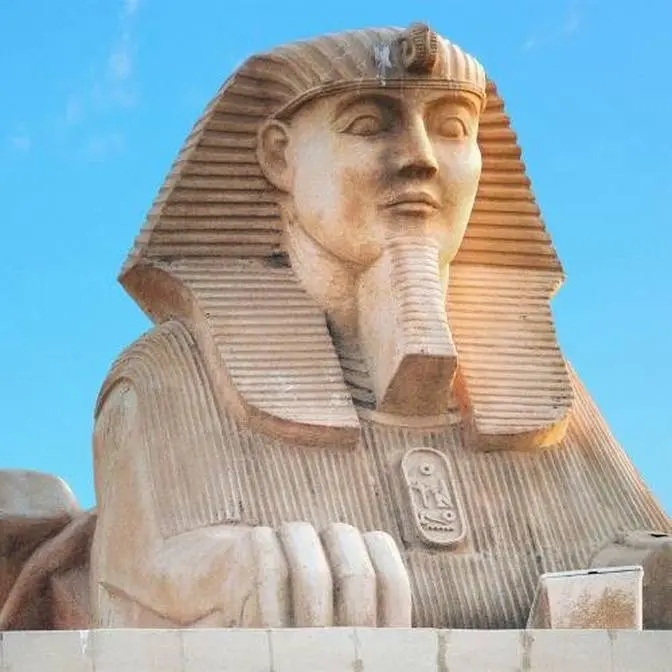
Oct 16, 2024 #AncientHumans
The sands of time hold many secrets, and the history of ancient Egypt is no exception.
This land, with its majestic pyramids and enigmatic ruins, has always been a cradle of
mystery and wonder. Dynasty after dynasty rose and fell, each leaving its mark on the land of the
pharaohs. These dynasties were not just rulers, but the architects of a civilization that has
fascinated the world for millennia. Among these, the fifth dynasty stands out as a period of
significant change and innovation. It was a time when the old ways were being redefined,
and new ideas were taking root. At the forefront of this era was Yusakhaf, the pharaoh who ushered
in a new chapter in Egyptian history. His vision and leadership set the stage for a transformative
period. Yusakhaf's reign, though relatively short, marked a turning point in ancient Egypt.
His policies and projects laid the groundwork for future generations. He was the founder of the
fifth dynasty, a period characterized by a shift in religious practices and a renewed focus on the
sun god Ra. This shift was not just a religious change, but a cultural revolution. His reign saw
the construction of magnificent sun temples, a testament to the growing importance of Ra in the
Egyptian pantheon. These temples were not only places of worship, but also symbols of the pharaoh's
divine connection. Yusakhaf's reign also witnessed a flourishing of the arts and a period of peace
and prosperity, solidifying his place as a pivotal figure in Egyptian history. The art from this
period reflects a society that was thriving and confident. Understanding Yusakhaf's reign requires
delving into his background, the circumstances of his ascension, and the key developments that
unfolded under his rule. His story is intertwined with the broader narrative of Egypt's evolution.
By examining his actions and achievements, we can begin to grasp the profound impact he had on the
course of ancient Egyptian civilization. His legacy is a testament to the enduring power of
visionary leadership. His story is a window into a fascinating period of transformation and innovation,
a time when the old and the new were in a delicate balance, a time when Egypt's religious
beliefs and political landscape were undergoing a profound shift. Yusakhaf's reign is a reminder of
how leadership can shape the destiny of a nation, leaving an indelible mark on history.
The lineage of pharaohs was a matter of paramount importance in ancient Egypt, legitimizing their
rule. The pharaohs were not just political leaders, they were seen as divine intermediaries
between the gods and the people. Their bloodline was believed to carry the essence of the gods
themselves, making the question of lineage a sacred and crucial matter. This divine connection was
often depicted in hieroglyphs and temple carvings, reinforcing the pharaoh's god-given right to rule.
However, in the case of Yusakhaf, his connection to the preceding fourth dynasty remains a subject
of debate among historians. Unlike other pharaohs whose lineage was clearly documented, Yusakhaf's
origins are somewhat enigmatic. The exact identity of his parents and his path to the throne are
shrouded in some mystery, adding an intriguing layer to his story. This mystery has led to various
theories and speculations among scholars and archaeologists. Some scholars propose that Yusakhaf
was a direct descendant of the fourth dynasty pharaohs, perhaps through a lesser-known branch
of the royal family. This theory is supported by certain hieroglyphic texts that suggest a familial
link. These texts hint at a complex and extended royal family tree, where lesser-known members
could ascend to power under specific circumstances. This theory suggests a degree of continuity
between the dynasties, with Yusakhaf inheriting a stable and prosperous kingdom. The smooth
transition would have been crucial for maintaining the kingdom's prosperity and the people's faith in
their divine rulers. With Yusakhaf inheriting a stable and prosperous kingdom, the continuity
would have ensured the ongoing development of thriving cities and agricultural advancements,
which were the backbone of ancient Egypt's economy. Others posit a more dramatic scenario,
suggesting that Yusakhaf might have been an official who seized power during a period of
This theory paints a picture of political intrigue and power struggles,
where ambitious officials could rise to the highest ranks. Adding to the intrigue, Yusakhaf
claimed a connection to the sun god Ra, a move that further solidified his claim to the throne
and ushered in a new era of religious focus. By aligning himself with Ra, Yusakhaf not only
legitimized his rule, but also shifted the religious landscape of ancient Egypt. This
alignment with Ra was more than a political maneuver, it was a profound religious statement.
Temples dedicated to Ra became central to worship and religious ceremonies increasingly focused on
solar deities. Whether through blood ties or shrewd political maneuvering, Yusakhaf's rise
to power marked a turning point in Egyptian history. His reign set the stage for significant
changes in both the political and religious spheres of ancient Egypt, paving the way for
Yusakhaf's reign was a period of transition and transformation. The artifacts and monuments from
this era reflect a blend of continuity and innovation, highlighting the dynamic nature
of ancient Egyptian civilization. The transition between dynasties in ancient Egypt was often a
tumultuous period, marked by power struggles and uncertainty. How Yusakhaf navigated this
political landscape and secured his position as the founder of the 5th dynasty remains a subject
of much speculation. The limited historical sources from this era offer tantalizing clues,
but no definitive answers, leaving room for various interpretations. One theory proposes
a peaceful transition, with Yusakhaf possibly marrying into the royal family of the 4th dynasty
to solidify his claim. This scenario suggests a strategic alliance that allowed for a smooth
handover of power, ensuring stability and continuity for the kingdom. However, the lack
of clear evidence supporting a direct familial link to his predecessors leaves the door open
for other possibilities. Another theory suggests a more assertive rise to power. Yusakhaf might have
been a high-ranking official or even a military leader who seized an opportunity during a period
of weakness or internal strife within the ruling dynasty. This scenario paints him as a shrewd and
ambitious figure, capable of capitalizing on circumstances to secure the throne for himself.
Section 4 The Sun God's Chosen – Yusakhaf's Religious Reforms
Yusakhaf's reign marked a significant shift in Egyptian religious practices,
with the sun god Ra taking center stage. This departure from the previous dynasty's emphasis
on the god Horus reflects a deliberate effort by Yusakhaf to reshape the religious landscape
and solidify his own legitimacy as pharaoh. By aligning himself closely with Ra, Yusakhaf
presented himself as the sun god's chosen representative on earth. This shift in religious
focus had far-reaching consequences. Yusakhaf's reign saw the construction of sun temples,
grand structures dedicated to the worship of Ra. These temples, often built on a massive scale,
served as centers for religious rituals and offerings, demonstrating the pharaoh's piety
and strengthening the connection between the king and the divine. Furthermore, Yusakhaf's
emphasis on Ra influenced the development of royal ideology. Pharaohs were increasingly seen
as the embodiment of Ra on earth, their authority further legitimized by their association with the
powerful sun god. This connection between the pharaoh and Ra would continue to shape
Egyptian religious beliefs and practices for centuries to come.
Section 5. Monuments in the Desert. Yusakhaf's Architectural Legacy
Yusakhaf's reign was not only marked by religious reforms but also by ambitious architectural
projects that left an enduring mark on the Egyptian landscape. His vision and dedication
to monumental construction were evident in the grand structures that have withstood the test of
time. The most prominent of these were the sun temples dedicated to Ra, the sun god, who was
becoming increasingly central to Egyptian religion during Yusakhaf's time. These magnificent
structures testify to the pharaoh's piety and the growing importance of the sun god in Egyptian
religion. The sun temples were not just places of worship but also symbols of the pharaoh's
divine connection and his role as the intermediary between the gods and the people. The most famous
of these temples, located at Abusir, was a marvel of ancient engineering and design.
It showcased the architectural prowess of the time with its grand scale and intricate details.
Built on a grand scale, the temple complex was a testament to the ingenuity and skill of ancient
Egyptian builders. The temple complex featured a massive obelisk, a symbol of Ra, which stood as
a beacon of the pharaoh's devotion to the sun god. The vast open courtyard was where rituals and
ceremonies would have taken place, bringing together priests, officials, and the people
in acts of worship and celebration. The walls of the temple were adorned with intricate reliefs
depicting Yusakhaf making offerings to Ra, scenes that illustrated the pharaoh's role in maintaining
the divine order. These reliefs further solidified the pharaoh's connection to the sun god,
emphasizing his divine right to rule. Beyond the sun temples, Yusakhaf also commissioned the
construction of pyramids, continuing the tradition established by his predecessors.
These pyramids were not just tombs, but also symbols of the pharaoh's power and his eternal
journey. The construction of these pyramids required immense resources and labor, reflecting
the pharaoh's ability to mobilize and command his people. While his own pyramid at Saqqara is smaller
than those of some earlier pharaohs, it nevertheless stands as a testament to his reign and the
continuity of royal burial practices. The pyramids design and construction techniques were a
continuation of the architectural advancements of the time. The pyramid complex with its surrounding
temples and causeways was a focal point for funerary rituals and offerings, ensuring the
pharaoh's safe passage into the afterlife. The temples and causeways were intricately designed
to guide the pharaoh's spirit and provide a place for ongoing worship and offerings. These structures
served as a focal point for funerary rituals and offerings, ensuring the pharaoh's safe passage
into the afterlife. The design and layout of the complex were carefully planned to reflect the
religious beliefs and practices of the time. Uzakhaf's architectural legacy, with its grand
temples and pyramids, stands as a lasting testament to his reign and the enduring power of ancient
Egyptian civilization. His contributions to architecture and religion have left an indelible
mark on history, inspiring awe and admiration to this day. If you enjoyed learning about Uzakhaf's
legacy, make sure to subscribe to our channel for more fascinating insights into ancient history.
Don't miss out on our upcoming videos filled with intriguing facts and stories from the past.