
FOUNDING THE MING DYNASTY: ZHU YUANZHANG, EMPEROR HONGWU
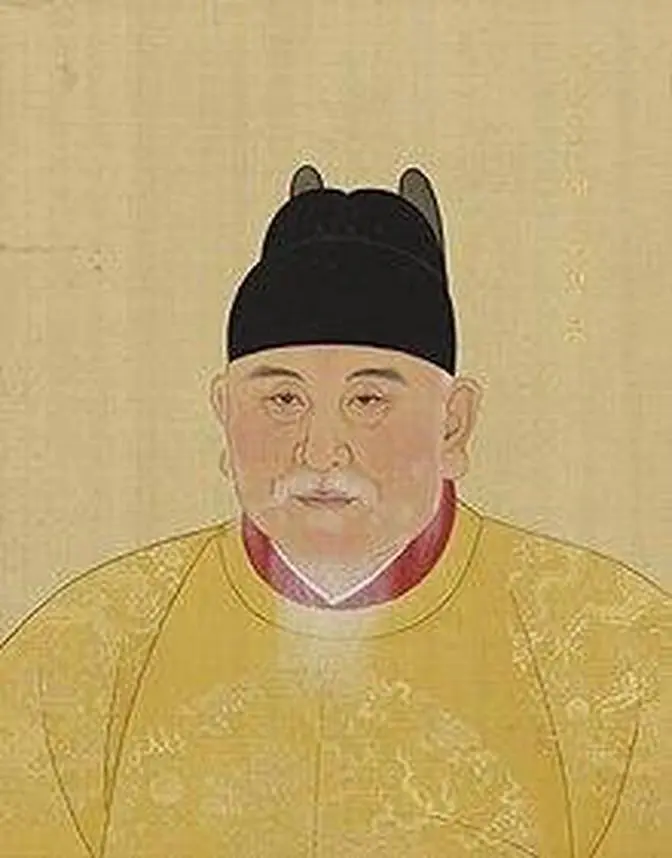
Through history, power dynamics are usually stable.
The powerful stay in charge and the powerless remain subjugated.
But sometimes all the conditions are met for exceptional events to occur.
This is the story of a man who rose from an illiterate orphaned peasant to the emperor of
China, Zhu Yuanzhang, the founder of the Ming dynasty.
14th century China.
For decades, the heirs of Chinggis Khan have ruled over the nation with an iron fist.
Despite its early prosperity, the Mongol Yuan dynasty they installed has gradually declined
due to political infighting and a series of natural disasters.
As a consequence, poverty has soared and famine has risen.
Starting in the mid-1330s, new harsh ethnic discrimination policies have been promulgated
against the Han Chinese, adding to their suffering.
The famished and destitute population is ready to take up arms
and reclaim from their Mongol overlords a Han Chinese empire.
The legacy of the man who would rise from the very bottom of society
to one day sit on the dragon throne began on the 21st of October 1328.
As the nation was plunged in a devastating civil war of succession,
the common people suffered.
Along the Huai River, in the small village of Zhongli,
a boy named Zhu Chongba was born to destitute peasants Zhu Shichen and his wife known as Mrs. Chen.
He was their fourth son.
In recent times, the Zhu family household had relocated repeatedly throughout the region
to escape poverty and debt and was now struggling to make a living in Zhongli.
Thus, education was out of the question
and it seemed as if young Zhu Chongba was destined to live and die as an illiterate peasant.
Growing up, he saw most of his siblings married off into other households
as his parents could not support them all.
Indeed, the region was frequently struck by natural disasters such as devastating droughts,
floods and locust invasions, leading to food shortages and occasional famines.
Relief efforts organized by the Yuan Dynasty proved insufficient,
triggering occasional uprisings by famished commoners or even at times local officials.
Both were additionally outraged by the strong ethnic discrimination
and immense inflation of the late Yuan Dynasty.
For now, they were subdued but resentment and unrest remained in the background.
In the Huai River valley, one unusual agitator would eventually tip the scale.
A former Buddhist monk named Peng Yingyu arrived in 1338,
preaching the doctrine of the illegal White Lotus sect.
This religious movement, inspired by Buddhism and Manichaeism,
prophesied that in the face of these injustices and growing chaos,
the reincarnation of the Buddha was to arrive at any hour to guide the righteous to harmony.
In this, Peng Yingyu was not at his first attempt.
He had already inspired an unsuccessful rebellion a few months prior,
after which he escaped and found refuge in the Huai River valley.
For the next few years, he would keep preaching his prophecy of apocalypse
and revolution to the local people. Events would give them a reason to revolt.
Around May or June 1344, raging storms and torrential rain erupted,
engorging the mighty Yellow River, which could no longer be contained.
The unleashed Huanghe broke its dikes and flooded the whole region,
causing widespread death and destruction.
Additionally, severe drought occurred in regions no longer irrigated due to the shift in the course.
As a final nail in the coffin, the crumbling Yuan Dynasty could not even afford to repair
the infrastructure, leaving the population to its demise.
The family of 15-year-old Zhu Chongba would be shattered from this one-too-many disaster.
In subsequent epidemic and famine, his father,
mother and eldest brother were all wiped out. With virtually nothing to their name,
Zhu and a surviving brother could not even afford to bury their relatives properly.
As he was evidently too young and vulnerable to fend for himself,
the teenager was entrusted to a local Buddhist monastery as a novice,
soon learning the basic practices and way of life of a monk.
The life of the future emperor of China had suddenly taken a very different path.
Zhu Chongba would however not settle down in the temple for long.
Given the generally disastrous situation, the teenager and the other novices were sent out
to beg for their food as mendicant monks a couple of months after arriving.
Thus, as from 1345, Zhu began roaming the Huai River valley as such.
Despite the hardships, he had a chance to discover the outside world and became very autonomous.
Zhu's adventure would end around 1347 or 1348 when he returned to the Buddhist monastery
after the situation likely improved. He was seemingly prepared to live the rest of his life
in the study of wisdom, acquiring basic literacy and studying Buddhism.
Fate however had much larger ambitions for him.
By 1351, the UN authorities, under the competent new chancellor,
were finally ready to subdue the Yellow River, which still ran wild.
Although this project was undertaken to appease and help the local population,
the means used would have the exact opposite effect.
For the grand endeavor, 150,000 local civilians were mobilized.
The workers would be digging and building from May to December in extremely harsh conditions
and with barely any pay. For an outraged and hungry population, agitated by fanatical sect
leaders, this was the breaking point. Donning a red turban on his forehead,
one Lotus sect disciple named Han Shantong organized a great uprising in Yangzhou.
Massing hundreds, he had the firm intent of overthrowing the local government.
The UN dynasty was fragile but still far from on its knees.
Reacting promptly, local authorities quickly identified, apprehended and executed Han Shantong
judging another ordinary riot had been put down.
However, his legacy would survive. The Red Turban Rebellion had begun.
Across the region, outraged youths flocked to the heir of the revolution,
the teenage son of Han Shantong, named Han Lin'er, and his guardian, the soon-to-be general Liu Futong.
Adopting the Red Turban, the rebels swarmed villages,
even capturing small towns and a few cities in an unbreakable momentum.
Before long, the revolution would come to Zhu.
In 1352, a Red Turban commander named Guo Zexing marched his forces into the region,
leading his men to capture Haozhou, the largest city in the rural area, on the 16th of February.
Amidst these chaotic times, Zhu's temple was plundered by either roaming bandits,
Red Turban rebels or rogue soldiers of the Yuan forces.
In any case, the young man found himself once more without a home or purpose.
With little to no prospects, Zhu eventually decided to join in the Red Turban Rebellion himself.
On the 15th of April 1352, at the age of 23, the ex-monk presented himself at the gates of Haozhou,
eager to join Guo Zexing's ranks. He then officially marked a new chapter in his life,
adopting the name of Zhu Yuanzhang, a name which would mark the course of history.
His ascension could begin. Zhu Yuanzhang turned out to be a good soldier and a natural leader.
Since he also had notions in literacy, the young rebel was rapidly selected to become an officer
in the growing Red Turban army. But evidently, Guo Zexing saw in him more than a simple
subordinate. The commander would take him into his own family, marrying him to an adoptive daughter
of his, named Ma. Now, Zhu Yuanzhang was someone. Despite its formidable start, the Red Turban
Rebellion's initial momentum would be cut down, as the Yuan authorities had now reorganized and
were ready to strike back. Led by the talented Chancellor Toktog, the Yuan began a severe
crackdown on the revolt. They would retake Xuzhou, a major rebel city, and clamp down the rebels
everywhere. By winter, the city of Haozhou would find itself encircled by the Yuan armies.
Locally commanded by Jia Lu, the official who had overseen the repairs of the Yellow River dikes.
Within the walls, local rebel leaders, under major pressure, felt a factionalism and internal strife.
It seemed like the rebellion was at an end. But fate had other plans for Zhu Yuanzhang,
whose story would not stop there. On the 17th of June 1353, as Haozhou was on the brink of
surrender, Commander Jia Lu died, leading to a retreat of the Yuan forces. This was the long
awaited opportunity for Zhu Yuanzhang to escape the quarreling of his superiors.
The young officer returned to his home village to raise troops of his own. His newfound fame and
prestige attracted reportedly 700 men. Among them were some of his soon-to-be best and most loyal
generals, such as one Xu Da, who was to one day capture the Yuan capital itself.
But for now, Zhu Yuanzhang and his men were far from independence. Evidently a great asset for
the cause, Red Turban commanders promoted him to higher and higher positions, as Zhu conquered
several towns and districts north of the Yangtze River, such as Chuzhou, in the months that followed.
These conquests allowed him to incorporate a staggering amount of soldiers into his force,
now commanding about 30,000 troops. However, military men were not the only ones to join him.
In these chaotic times, idol scholars and other literate men also sought out people to serve,
often being recruited by emerging warlords. In 1354, one such scholar named Li Shanchang,
neither destitute nor well-off, entered service under Zhu Yuanzhang. As the young officer's
constantly expanding forces and territories were now too large to manage personally,
Li Shanchang would become his main administrator and play a decisive role in army logistics.
More importantly, Li would teach him history and philosophy, encouraging his employer to
adhere to Confucian values. For example, he would advise him based on historical events,
such as the actions of Liu Bang, the founder of the Han dynasty,
who like Zhu came from a peasant family. Putting an emphasis on the Confucian doctrine of
benevolence, Li encouraged the future emperor of China to protect the people and show mercy
towards a defeated enemy. His teachings greatly encouraged the developing ambitions of the once
illiterate orphaned peasant, evidently contributing to his legendary path.
Strengthened by his new educated advisors, Zhu's conquests continued. In early 1355,
he victoriously entered Hezhou, reaching the Yangtze. But the Red Turban's operations would
be shaken by an unforeseen incident. In March, local commander Guo Zexing succumbed to illness.
The death of his mentor could have been the opportunity for Zhu Yuanzhang to inherit his
position and become a formal superior commander, but his growing ambition suffered a setback.
In Bozhou, seat of the northern branch of the Red Turbans, another event reshaped the rebellion
itself. Han Lian'er, the teenage figurehead of the movement, officially ascended the throne on
At the age of about 16, he received the name of Xiaomingwang, small king of brightness,
in reference to the White Lotus sect's beliefs, and became the nominal emperor of a revived Song
dynasty. This regime was however not the one which would reunite China.
Now on the throne, the symbolic teenage monarch designated late Guo Zexing's elder surviving son,
Guo Tianxu, to succeed as commander, as Zhu Yuanzhang was merely appointed as his second-in-command.
In spite of this, Zhu could count on his strong personal prestige to attract talented scholars,
soldiers and officers. During this period would flock to him Chang Yuchun,
who would be Zhu's greatest general alongside Xu Da. But more importantly for the short run,
river fleet commanders Liao Yong'an, his younger brother and soon-to-be successor Liao Yongzhong
and Yu Tonghai also joined Zhu. Their ships would become crucial for the Red Turbans' next ambitions,
Nanjing, known as the time as Jiqing, a jewel on the other side of the Yangtze river.
It was time to expand south. On the 10th of July 1355, the army crossed the Yangtze
using the newly acquired fleet. Although they were unable to capture Jiqing in this initial attack,
its surroundings were rapidly secured, forming a local base. Another unsuccessful attack in October
would serve the interests of the ambitious Zhu Yuanzhang, as his last superior,
late Guo Zexing's son, Guo Tianxu, perished in battle. Thus, he was now the official commander
in chief of the whole force. Within the space of three years, the young man had risen from a
begging Buddhist monk to a full-scale warlord. Adding to his delight, his wife Ma bore his first son,
Zhu Biao, on the 10th of October, the future crown prince of the Ming dynasty. Zhu's legacy was launched.
After some careful preparation and reorganization, Zhu Yuanzhang, now in full control of the army,
was ready for another attempt at Jiqing. On the 10th of April 1356, the city finally opened its
gates to the triumphant general, who promptly made it his personal capital and baptized it Yingtian,
responding to heaven. The future Nanjing would one day host the imperial throne.
In addition to its strategic resources, the city also hosted many talented scholars who would be
recruited to form a small government in all but name, slowly paving the road for the future Ming
dynasty. However, Zhu's rapid rise in fame also attracted the ire of some. A conspiration within
the Red Turban forces to assassinate him was uncovered, orchestrated by none other than his
second-in-command, Guo Tianjue, the last remaining son of his late mentor, Guo Zexing. The subordinate
likely felt wronged by this man who stood in what he believed to be his rightful position.
In any case, the conspirators' prompt execution confirmed the supremacy of Zhu Yuanzhang on this
front of the Song dynasty. However, the warlord would cunningly follow the advice of his scholars,
who told him not to claim independence yet, but rather consolidate his forces.
Famously, scholar Zhu Sheng would soon counsel him thusly,
build high walls, accumulate abundant provisions and ascend the throne slowly.
Thus, Zhu Yuanzhang remained loyal to the Red Turbans and the figurehead emperor Han Linar.
In this, Zhu Yuanzhang was a minority. Most other rebel leaders, emboldened and boastful,
were quick to officially establish their own kingdoms and dynasties. His very neighbours had
done so. To his east, Zhang Shichang, a sword smuggler turned bandit king, founded the state
of Dazhou. Zhang had nearly been crushed by the competent Yuan chancellor, Duoduo, during the
crackdown on the rebellions. But amidst course intrigue, Yuan emperor Duoduo banished the
official, which gave Zhang the opportunity to break the siege and recover. The kingdom of Dazhou
would become the richest and most powerful of the rebel factions. The clash was inevitable.
As Zhu Yuanzhang continuously expanded east, his capture of Changzhou by the summer of 1357
prompted Zhang Shichang to attack. Following a series of small victories, Zhu's talented
admiral Liao Yong'an ventured deep into enemy territory. Outstretching too much, he was captured
on the waters of Lake Tai. Although he would endure eight years of captivity until his death,
the admiral would never betray Zhu and agree to switch sides, earning the young warlord's
deepest respect. In the meantime, his rank would be inherited by his younger brother,
Liao Yongzhong, as Zhu held firm. In a brilliant maneuver, his forces captured the bandit king's
main general and brother, Zhang Shida, in turn, an inestimable prize. The commander, however,
preferred to take his own life rather than to serve as a hostage, and purposefully starved
to death. Fighting between the two rebels would soon quiet down. Zhang Shichang accepted nominal
surrender to the desperate Yuan dynasty in August, in exchange for titles and privileges. Zhu
Yuanzhang, not yet strong enough to challenge his neighbor fully, would turn his focus elsewhere.
To the south, another rebel faction emerged around pirate king Fang Guozhen, who ruled from the
coast and had crucial control over maritime transportation of grain to the capital.
For now, he also nominally surrendered to the Yuan dynasty with a dubious allegiance,
but would one day have to be taken care of. Could the Red Turban movement as a whole
converge its forces to defeat both rival rebels and the Yuan dynasty? Well, from the onset of
the rebellion, the Red Turbans had actually split into a northern and southern branch,
two opposite factions which would soon clash. The northern branch to which Zhu Yuanzhang
belonged was the so-called Song dynasty, nominally led by Han Linar. Protected by
his general Liu Futong, they would achieve great conquests in the north to the expense of the Yuan.
Marking a great symbolic victory, Liu Futong was able to capture the city of Bianyang,
today's Kaifeng, on the 11th of June 1358 and make it the dynasty's new capital.
This city had indeed been the capital of the previous Song dynasty,
the last Han Chinese dynasty before the Mongol invasion, from which they claimed succession.
Their momentum would have as soon be cut down by a new figure of the collapsing Yuan,
an autonomous Mongol commander named Tsagan Traumar, having raised troops of his own to
face the rebels, began a great reconquest of the north China plain. He would retake Bianyang by
the 10th of September 1359, compelling Han Linar and Liu Futong to re-base to the small city of
Anfang. The Red Turban southern branch had embraced a different path. After the failure
of Han Shantung's uprising, his old mentor Peng Yinyu, still preaching revolution, found another
disciple in Wenxu Shaohui. Originally a cloth vendor, Xu embraced the Red Turban as well,
and began his own autonomous rebellion. Leading the southern Red Turbans, the rebel declared
himself emperor, founding the state of Tianwang, which by the end of the decade had massively
expanded. But much like Han Linar in the north, Xu Shaohui of Tianwan was only a figurehead emperor.
His lack of true authority would lead to his untimely end in 1360, when he was assassinated
by his greatest general, Chen Youliang, soon to be Zhou Yuanzhang's great rival.
Having eliminated the figurehead, Chen then overthrew the state of Tianwan entirely.
The general founded in its place his own great Han dynasty, known as Chan Han, proclaiming himself
emperor. All southern Red Turban commanders would submit, except for one breakaway general,
named Min Yujun, who would play an important role later on. Thus, by the late 1350s,
a multitude of competing rebel factions quarrelled within the crumbling Yuan dynasty.
So where could the future emperor of China expand his domains? The north was secured by
friendly Song generals, the east was controlled by Zhang Shichang, who was for now in a clear
position of superiority. The west, upstream the Yangtze, was held by Chen Youliang, also too
powerful to be tackled for the moment. Thus, Zhou would march south to conquer regions still controlled
by isolated Yuan forces. If he wanted to become a respected leader, Zhou could not behave as any
other bandit king or ruthless warlord. Advised by his Confucian scholars, the future emperor of
China imposed strict discipline on his generals. He vowed not to be yet another pillaging commander,
but a defender of the people. No atrocities would be committed, no looting would take place,
enemies would be respected and the people protected. In this aim, Zhou ordered the
prompt execution of brutal commanders, however talented, found guilty of plundering and
slaughtering. Strengthened by this respectable policy, Zhou would relatively easily conquer
territory from the crumbling Yuan dynasty, encountering small resistance. A first wave
invasion in 1357 saw the conquest of Ningguo on the 12th of May, Huizhou in August and Quzhou
by the 13th of November. Another expedition was assembled in 1358, going further south. Jinhua
would fall in January 1359 and the campaign ended by December with the capture of Quzhou.
Zhou's expansion, however, attracted the ire of his western neighbour,
Chen Youliang, who now officially led the Southern Red Turbans. Initially inspired by the same man,
both rebel factions would enter war and their clash would culminate in the largest
freshwater naval battle in world history. Chen Youliang, emperor of the Chen Han dynasty,
evidently saw Zhou Yuanzhang's rise as a threat to be eliminated. Having amassed a formidable
river fleet, Chen sailed down the Yangtze in June 1360 to strike at his rival's heart,
the city of Yingtian. On his way, he planned to take the riverside citadels. Xu Da and Chang Yuchun
withstood an attack at Quzhou, leading an unfazed Chen Youliang to besiege Taiping instead.
Guarded by their tall walls, Yangtze river fortresses were difficult targets.
After three days of unsuccessful attack, the Han forces devised a new strategy,
using their huge ship's mast to go over the walls of the city and crush the small garrisons within.
Using this method, Chen Youliang began steamrolling down the river.
Zhou Yuanzhang was in trouble. His naval force was ten times smaller than his enemies
and more worryingly, Chen's fleet was now sailing directly to Yingtian.
To protect his capital, Zhou and his advisors promptly drafted a cunning battle plan.
Fortifications were hastily razed as double agents spread misinformation to guide Chen's
forces into traps, and ambush parties were hidden in the surroundings of the anticipated
landing grounds. By the 23rd of June, the Han ships were sighted on the horizon.
As the forces inevitably clashed, Zhou's meticulous strategy gradually unfolded perfectly.
By dusk, Chen Youliang's force was utterly defeated, losing 100 large ships,
20,000 dead and 7,000 captured. Not only was Zhou's domain saved,
but the future emperor of China had now gained mastery over the river.
A protracted war ensued both on the Yangtze front and on land, in which Zhou's troops
gained much ground. The Han emperor reconquered territory as far as Anqing,
although he was unable to retake inland areas from Zhou's generals.
By now, Zhou Yuanzhang had grown weary of his cumbersome neighbour.
Mounting a counter-attack, the ambitious warlord assembled a new naval force
for a grand expedition to beat Chen Youliang once and for all, pulling together most of his might.
The tens of thousands strong army set sail from Yingtian on the 10th of September 1361.
Bypassing the fortified river citadels, Zhou Yuanzhang sailed to meet his enemy head on.
Finally, both fleets clashed at Hukou on the 23rd of September. Chen Youliang was defeated
and fled to Wuchang, pursued by Xu Da, who would blockade him there.
Rather than a costly campaign of conquest, Zhou opted to wait the war out, as Han cities
gradually offered to surrender to the threatening force. Amidst these conquests,
Song emperor Han Linar bestowed upon Zhou Yuanzhang the prestigious title of Duke of Wu.
But the precious city of Nanchang was taking its time to defect.
Soon, troubling news would reach the vanguard of the invading force.
Back in the east, Zhang Shicheng seized the brilliant opportunity to attack his
undefended neighbour. Keeping his composure, Zhou decided to stay, entrusting Chang Yuchun
with the defence of the homeland. The commander's talent was evident,
as he brilliantly repelled Zhang Shicheng's forces, breaking his invasion.
Adding to his superior's relief, Nanchang finally opened its gates by the 10th of February 1362,
allowing Zhou Yuanzhang to triumphantly return to his capital the next month.
The path to supremacy was filled with perilous obstacles.
Another setback emerged when Zhou faced a new assassination plot against him.
For unclear reasons, the Miao ethnic minority garrison in Jinhua and Chuzhou rebelled in March
1362, assassinating esteemed general Hu Dahai in the process and defecting to Zhang Shicheng.
This treason demanded an immediate response. Zhou Yuanzhang appointed his nephew Li Wenzhong,
who had recently completed studies under esteemed scholars, emerging as Zhou's only educated relative,
and Shaorong, one of his earliest companions to march south and crush the rebels.
The region was successfully pacified, but true danger would come from within.
Shaorong, unsatisfied with Zhou's apparent lack of recognition,
grew resentful against his commander. As his frustration deepened, he eventually plotted
to assassinate him in early August, upon the victorious return of the expedition to Yingtian.
The plot was however uncovered barely in time. Shaorong and the other conspirators
were promptly executed, and once again, Zhou had cheated death.
As the warlord prepared for a decisive campaign to finish off Chen Youliang,
Zhang Shicheng moved his focus to the north, invading the vulnerable Song territories.
Undefeated in his momentum, the bandit king's forces eventually stormed Anfang on the 16th
February 1363, seat of Han Linar, the nominal emperor of the so-called Song dynasty.
In the chaos of the battle, the figurehead emperor was captured,
as his main general and protector Liu Futong died in battle. Since he had always claimed
allegiance to the Song regime, and as many of his forces requested a response,
Zhou Yuanzhang could not ignore the aggression. In March, a rescue expedition was launched to
retake Anfang and free Han Linar. Zhou's forces saw triumph once more, as the 24-year-old nominal
emperor was liberated and relocated to nearby Chuzhou for safety, or perhaps to exert better
control on him. In the meantime, Zhang Shicheng halted his expedition on former Song territory,
returning to his capital and proclaiming himself king of Wu, probably to provoke Zhou,
who held the title of duke of Wu. But before the latter could tackle him directly,
it was time to win the war with Chen Youliang once and for all.
Back in Wuchang, Chen Youliang was equally ready for an ultimate campaign,
amassing a formidable force of around 300,000 men. The immense fleet sailed south, through
Lake Poyang, and initiated a bitter and lengthy siege at Nanchang on the 5th of June 1363,
in which the defenders would heroically hold strong. Meanwhile, Zhou Yuanzhang's own 100,000-man
strong fleet left Yingtian with resolve, sailing upstream until it reached Hukou,
the mouth of Lake Poyang, on the 24th of August. Over the next four days,
Zhou would raise fortifications at Nanhuzui and Jingjiangkou, effectively securing the entrance
to the lake, before sailing down on the 28th. That same day, Chen Youliang lifted the siege
at Nanchang, entering Lake Poyang in turn to confront his enemy. Both sides had amassed
all their might and were now face to face. The following day, the largest freshwater
naval battle in history would unfold. Zhou's forces numbered only a third of his opponents,
but his ships were equipped with fully modernised weaponry, including bombs to be
held using naval trebuchets, hand cannons and an array of other pyrotechnic weapons.
In addition, bows and crossbows could rain down fire arrows on the enemy fleet.
Deploying his naval force in 11 squadrons, Zhou, Xu Da and Chang Yuchun commanded the heaviest
ships in the centre. The wings, formed by lighter ships, would be led by his admirals Liao Yongzhong
and Yu Tonghai. During the first day, Yu Tonghai's swift vessels were able to set many
Han ships ablaze, but the powerful Han heavy crafts greatly damaged Zhou's main ships,
forcing him to retract his fleet into a more defensible position.
The situation looked bad for the future Emperor of China, as Chong Youliang was at a definite
advantage. In the night, Xu Da was ordered back to retreat to Yingtian with the most damaged ships.
As the second day broke, Zhou took drastic action by executing reluctant officers,
ordering another attack on the Han fleet. Once more, his forces were repelled,
suffering more losses. Reassessing the situation, the Grand Commander and his staff convened to
adopt a new strategy. Since the great Han ships were tightly packed together, the council opted
for one of the oldest strategies in the art of war, attack by fire. A small fleet of fire
ships was quickly assembled and dispatched towards the bulk of Chong's fleet. The results
were immediate. Zhou's enemy suffered devastating losses. Many Han officers and even two of Chong's
brothers fell. As night descended on Lake Poyang, both sides disengaged for repairs.
The following day was marked by small skirmishes and indecisiveness on both sides.
Despite the fiery damage of the previous day, the Han fleet was still significantly more powerful
than Zhou Yuanzhang's, who would evidently lose a battle of attrition.
As the situation seemed bleak, fate intervened once more in favour of the future Emperor of China.
Land reinforcements under General Hu Daji had finally arrived from the east to garrison Nanchang.
As the city was now strongly protected, Zhou could adapt his strategy.
During the night, the warlord pulled his fleet out of the lake, stationing in Hukou. He was now
free to set up a great blockade and assemble a whole fleet of fire ships, knowing that Chong
eventually had to leave Poyang. For a month, the battle froze as both sides remained in their
positions. But eventually, the Han Emperor began his return to Wuchang, leaving the lake on the
3rd or 4th of October. This would be a fatal mistake. His ships sailed directly into Zhou's
incendiary trap. As the Han vessels reached Hukou, the fleet of fire ships rushed towards them,
unleashing a hell of panic and destruction on Chong's fleet, which completely scattered,
becoming easy prey for Zhou's forces. In the debacle, Chen Youliang himself was compelled
to switch flagships via a small boat, during which he was struck in the head by a stray arrow.
The Han Emperor was dead. Thus, his forces' morale collapsed. The following day,
most surviving sailors and officers would surrender, only a few escaping back to Wuchang.
The Battle of Lake Poyang was over. Although small remnants persisted,
the Han Dynasty was now essentially defeated. Its formal end would come in February 1364,
after a lengthy siege of Wuchang. In a symbolic gesture, Chen Youliang's 12-year-old son and
successor, Chen Li, abdicated and personally surrendered to the victorious Zhou.
In typical Confucian benevolence, not only did the triumphant commander spare him,
but he gave Chen Li the title of Marquis of Guida and invited him to stay in a lavish residence in
Yingtian. Over the next few months, the last Han territories were gradually incorporated
into Zhu Yuanzhang's domain with very little resistance. Thus, after a bitter four-year
struggle, the war had been won. Empowered by the subjugation of his western foe, Zhu Yuanzhang
assumed the title of King of Wu in turn, challenging Zhang Shichang who had adopted
the same title a year prior, another step on the path of imperial claim.
1365. Thirteen years after joining the Red Turban Rebellion, Zhu Yuanzhang, now King of Wu,
had slowly risen from a simple soldier to its champion. He now personally controlled a great
chunk of southern China, spanning over a thousand kilometers. With the absorption of the Han
territories, Zhu's domain now directly contacted another faction of the last years of the Yuan
dynasty. Beyond his western border stood the territory of Min Yuzhang. This one-eyed warlord,
once a general of the southern Red Turbans, had refused to recognize Chen Youliang's usurpation
of the movement and broke away seeking autonomy. Two years later, the ambitious man established
his own state, the great Xia dynasty, known as Min Xia, subsequently ascending the throne as
its emperor. Min Yuzhang, however, posed no real threats to Zhu Yuanzhang, having no ambitions of
expanding towards him. The real danger came from the east, the mighty Zhang Shichang.
Recently, Zhang's generals had launched several attacks on Zhu's domains and it was now time to
respond. In a decisive operation, Zhu sent his generals to break a siege at Xinchang in March
1365. But if Zhang were to be completely defeated, a long-term strategy and an elaborate campaign
would be needed. How could Zhu achieve total conquest? After lengthy deliberation with his
advisors, the strategy of clipping the wings before striking at the heart was agreed upon,
essentially severing and capturing the north and south branches of Zhang's territory
before smiting his capital of Suzhou. Xu Da was tasked with conquering the north and the
marched his forces to Taizhou, which was successfully taken in December.
After securing its surroundings, the army could then use the Grand Canal to its advantage.
Sailing up the waterway, Xu Da and his force stormed Gaoyou, which was captured by the 24th
of April of the following year. Zhu's war machine was unstoppable. By the time summer came,
all of Zhang's territory north of the Yangtze had fallen. However, his demise came to a standstill,
as with summer's onset, the campaign was paused. Indeed, feeding several hundred thousand fighting
men was no small task. To maintain his army without burdening the civilians, Zhu Yuanzhang
embraced the traditional system of military farms called Zhuntun. Widely employed in the history of
China, the practice of mobilizing troops to produce their own food supplies was brought to
an industrial scale by Zhu Yuanzhang. In fact, not only did his Zhuntun farms prevent additional
taxation and requisition on the people, but they eventually became an additional source of
prosperity and surplus. These annual halts in military campaigns were periods of weakness for
warlord and his forces, but neither the Yuan dynasty nor Zhang Shichang saw in them the
opportunity to counterattack. And so, as harvest came to an end, Zhu's armies were back on the
march. His main force of 200,000 men under Xu Da and Chang Yuchun soon battered at the walls of
which both fell in early December 1366. Thus, Zhang Shichang's wings had been clipped,
and it was now time to converge all forces to strike at the heart. By the end of the month,
they had arrived at Suzhou. Fully prepared and with its commanders making a last stand,
the city would hold firm for months despite heavy bombardment of Zhu's cannons.
In the meantime, for unknown reasons, Zhu Yuanzhang summoned the nominal 27-year-old
Emperor Han Linar still in Chuzhou to Yingtian in January 1367. However, in suspicious circumstances,
the ship carrying him across the Yangtze sunk, claiming the life of the Red Turban Emperor
in the process. Now, Zhu Yuanzhang answered to no one, not even in name. He was a single year away
from ascending the throne. With this imperial ambition, scholar officials including talented
bureaucrats, masters of ceremonies and architects started working tirelessly as Yingtian would
gradually be transformed from the seat of a warlord into a full-scale imperial capital.
With the advice of astrologers, the Grand Imperial City and the Forbidden City were
laid out to the east of the Old City and slowly erected by thousands of masons, carpenters,
stone carvers and engineers. Soon, elaborate palaces for the affairs of the state and the
imperial household, along with altars to heaven and earth, and an imperial ancestral shrine
worshipping Zhu Yuanzhang's forefathers were built. But the soon-to-be Emperor of China did
not forget the immense power of intellectual prowess. A Hanlin Academy was also founded to
host the elite of the literati, allowing the most talented scholars to advise the imperial court,
produce literary works and compile records. Military matters however shifted the focus
of Zhu Yuanzhang. On the 1st of October 1367, Suzhou finally fell to Zhu's forces.
Amidst the chaos of the breached city, Zhang Shichang was barely intercepted while attempting
to hang himself and taken captive to Yingtian. While Zhu expected him to formally surrender
and recognise his superiority, Zhang Shichang staunchly refused the offer, holding strong until
the end. Eventually, he died in captivity, either succeeding in killing himself or being assassinated.
Following Zhang Shichang's defeat, his territory was incorporated into Zhu's realm. Despite having
acquired immense territory, the soon-to-be Emperor had no intention of stopping until all the Yuan
Empire was his. From the beginning of autumn 1367, a great northern expedition was prepared
under Xu Da and Chang Yuchun. In parallel, a huge southern expedition was launched with a colossal
land force under General Hu Mei, as well as a swift seafaring fleet to sail down the coast
under General Tang He. Pirate King Fang Guozhen promptly surrendered by December,
leaving only one small rebel kingdom and the Yuan Dynasty itself as Zhu's opponents.
At the turn of the year, while Hu Mei captured Chaowu, the northern expedition,
invading the Yuan's core territory, reached and captured Jinan. Amidst his unstoppable conquest,
the orphaned peasant turned supreme warlord with no superiors marked history forever. It was time
to claim what he had built up to for 15 years, the Mandate of Heaven. 23rd of January 1368,
Yingtian. Great crowds had gathered for a historical moment. Zhu, assisted by his loyal
scholar Li Shanchang as Grandmaster of Ceremonies, began the event with the offering of sacrifices
at the suburban altars of heaven and earth on Zhongshan Mountain, also known as Purple Mountain.
Announcing before the spirits the proclamation of the new era, Hongwu.
The name would become synonymous with Zhu Yuanzhang, who thus became the Hongwu Emperor.
Zhu had initiated the Yishi Yiyuanzhi system, one era for one generation, ensuring that all
subsequent emperors would only have one regnal era name. This system would even carry on in the
Qing Dynasty. There would be only one exception, found in Hongwu's great-great-grandson,
Zhu Qizhen, an emperor who would be captured by the Mongols and replaced, only to reclaim
his throne later, but this is a story for another video. In any case, a new dynasty had dawned,
one of radiance, which would hold China for nearly 300 years. Its name, Daming, Great Ming,
meaning brightness. Having officially founded his lineage, important officials of the new dynasty
gathered to formally congratulate Zhu Yuanzhang, the Hongwu Emperor. Following this, the Hongwu
Emperor proceeded to the ancestral shrine to pay respects to his forefathers, where he delivered
patents certifying their imperial nature and bestowing honorific temple names on them.
The little information that is known about them today may have been fabricated on this occasion.
Finally, Zhu Yuanzhang proceeded to the Fengtian Hall at the heart of the forbidden city of Yingtian,
soon to be renamed Nanjing. In the palace, built for great ceremonies, he received formal
congratulations of high-ranking military and civil officials. An edict of proclamation was drafted,
emphasizing the legitimacy of the Yuan Dynasty to replace the Song, and now of the Ming,
guided by the Hongwu Emperor, to replace the Yuan. The document was promptly dispatched
throughout the empire and beyond its borders. Zhu Yuanzhang's wife, who had stayed close to him
through thick and thin since he had joined the Red Turban Rebellion, became the Empress Ma.
Their son, Zhu Biao, now 12 years old, was declared crown prince. In a quarter of a century,
amidst chaotic times, an orphaned peasant boy had claimed the mandate of heaven, ascended the throne
of China and founded the great Ming Dynasty. Zhu Yuanzhang had already made his mark on history,
but the Emperor's ambition would not stop there. He was determined to annex the whole Yuan Dynasty,
which still claimed to be the legitimate authority over the empire, and reunify the country under his
rule. Seemingly benevolent at first, his reign would later take a very dark turn.
Thank you for watching my video, I hope you enjoyed it. If so, please leave a like and
subscribe to the channel. If you have any questions or requests,
feel free to leave them in the comments section below.