
Christopher Nolan: Obsessed With Fighting Time | Video Essay | Inception | Interstellar
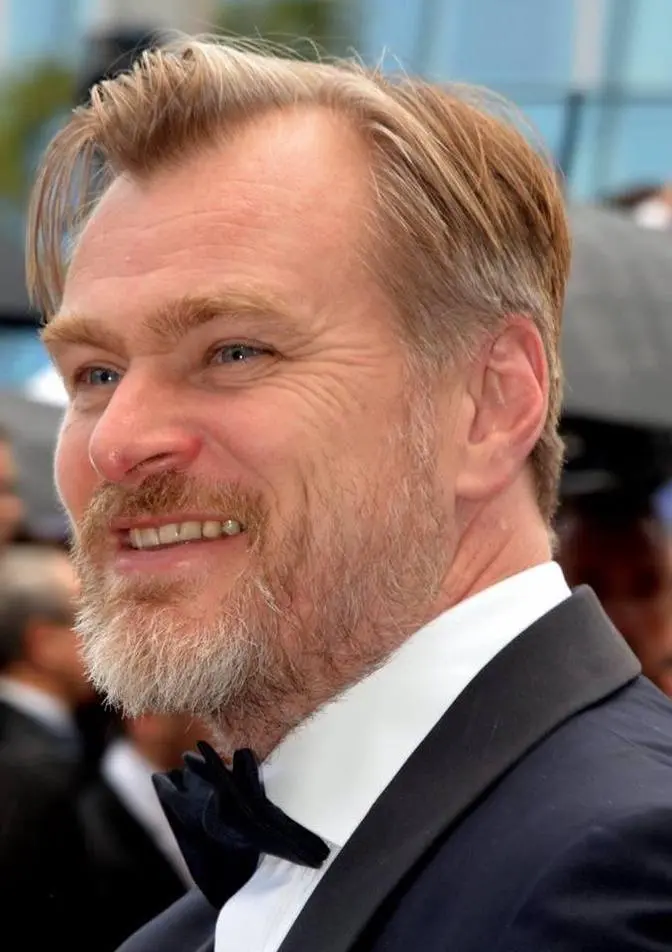
Christopher Nolan is a writer and director with some pretty defined creative habits, which
isn't exactly a secret considering that besides sticking to darkly toned narratives, he also often
has the same actor play different characters across a few different films. But it makes no
difference whether we're talking about Memento, The Dark Knight Trilogy, Inception, Interstellar,
or his others. There's a character that's featured more often than any other on the
stories he tells us, and that's the character of time. And considering Nolan does it so often,
I think we can gain a lot better of an understanding of the stories he tells us
by taking a look at how and why Christopher Nolan uses the element of time so frequently,
especially I think you'll notice as a force of antagonism in his films.
I'm not afraid of death. I'm an old physicist. I'm afraid of time.
I think there's a really interesting comparison between how Nolan uses time as an antagonistic
character in Inception versus Interstellar. The main characters are both fathers who are
centered around a desire to protect and be with their children. And Cobb's trying to complete
his corporate espionage while he's running out of time on a trans-pacific flight, while Cooper's
trying to complete his mission flying through space before his ship runs out of resources and
fuel. But despite those similarities, I think there's a really surprising amount of difference
in how time confronts the two characters. In the dream, your mind functions more quickly,
therefore time seems to feel more slow. In relation to the real world, time speeds up
significantly for Cobb as he descends deeper and deeper into the labyrinth of dreams, which
is a story mechanic that serves pretty effectively as a stylized, amplified depiction of his agony
of being separated from his children. As time has become Cobb's enemy and that each second,
something that only feels like a moment to the rest of the world, feels like a very real eternity
to him. And then conversely for Cooper, every minute he spends in space on strange worlds or
orbiting a black hole, time slows down for him instead and speeds up for his children back on
earth. And the way that dilation of time keeps growing bigger the closer Cooper gets to his goal,
it almost seems vindictive in the way that it keeps stealing larger and larger portions of
what could have been a life of raising his children, which heightens the torment Cooper
already feels over his impossible choice between being a father and being the savior of the human
species. And personalizing the depiction of time and the particular mark it leaves on each of the
other characters is really one of the secrets to why Christopher Nolan's use of time in his stories
is so effective. He makes the effort in his films to build up time as a constant presence throughout
the story, to give it this consistent shape and a weight, to develop it as a real fleshed out
character in its own right. Because without that, time itself would just revert back to becoming
some kind of sad tertiary plot device rather than a central active figure in the events of the story
and how it plays out. However, while Nolan does brilliantly adapt how time is embodied in each of
his stories, there's a certain rule he seems to never break. And The Dark Knight Rises gives us a
perfect illustration of that rule. Batman's trying to prevent the destruction of Gotham, something
threatened by time itself, represented by a literal ticking time bomb. But the ticking away of that
bomb really represents a pretty paltry threat to Batman. I mean, he just does typical Batman things
and harnesses his inner strength, does push-ups until his spine is healed and escapes a nightmarish
pit prison, all in time to get back to Gotham and fly the bomb out over the ocean before it
detonates, of course. And given that, you might even be fooled into thinking Batman defeats the
antagonistic efforts of time in this final entry of Nolan's Dark Knight trilogy. Except the rule I
earlier that Nolan always seems to keep in his stories is this. Nobody ever gets to defeat time.
Sure, Batman does manage to waylay the explosion from the city he loves,
but that nuclear threat isn't the real war the antagonistic figure of time is waging on Batman.
Yes, Batman's able to triumph over Talia, Bane and the League of Shadows, but despite that he's
still ultimately forced to submit to the irreversible effect the passage of time and
aging has done to his body and mind. In fact, Batman's aging is really the central theme of
the story, his growing recognition that he can no longer continue to inhabit the symbol he's
constructed. Just as Bruce himself states in Batman Begins, a man can be destroyed,
but a symbol can't be killed. And that's exactly the story the Dark Knight Rises tells us. The
story of a man who's confronted by the fact that although time has not defeated the symbol,
it has defeated the man. For all his ingenuity and brilliance and the gadgetry and wealth he
has access to, Bruce can't reverse the effect time has had on his ability to continue his
crusade against crime. In the finale of the trilogy, time alone does what nothing else could
accomplish and forces Bruce to give up the cape and cowl, and along with it a large part of the
central purpose of his life. And I think that's illustrative of one of the most powerful aspects
of how Christopher Nolan uses time in his stories. Whatever effect time has on his characters are
always without fail permanent. Bruce saves Gotham but has to give up his identity as Batman. In
Interstellar, Cooper saves mankind but misses Murph's entire life and the experience of raising
her and of being her father. And Nolan's second feature film, Memento, is one I think more than
any other exhibits his penchant for posing time as an antagonist impossible to defeat
or escape. Because Leonard can't make new memories, time itself has abandoned him and
by doing so it's condemned him to experience the immediate agony of his wife's death every day,
forcing him to lose her over and over again no matter how long it's been.
And being unanchored for time means he can't possibly get any peace from the vengeance he
can't even remember taking. But what sets Memento apart is that time isn't only a foe to the
audience as well. The lack of chronological order to the story forces the audience to suffer the
obstruction of time right there with Leonard. As an antagonist time has no mercy which is
frightening enough but pretty common among foes in the world of cinema. But the fact that it also
has no malevolence makes it even more terrifying because if an enemy has malice then at least it
has emotions or desires that can possibly be appealed to. Among other reasons Christopher
Nolan's stories are compelling in that we instinctively feel a great deal of communion
with characters who are combating time itself. Because in many ways time is the universal enemy
of all mankind which I think in the end is probably the reason why Christopher Nolan
loves telling us stories about time in the first place. Hey thanks for watching. If you enjoyed
this video and would like to see others like it make sure to show me by hitting like and subscribing.