
Real footage and rare sighting of a glass octopus 👌 #Seaanimals #Nature Video by: @schmidtocean
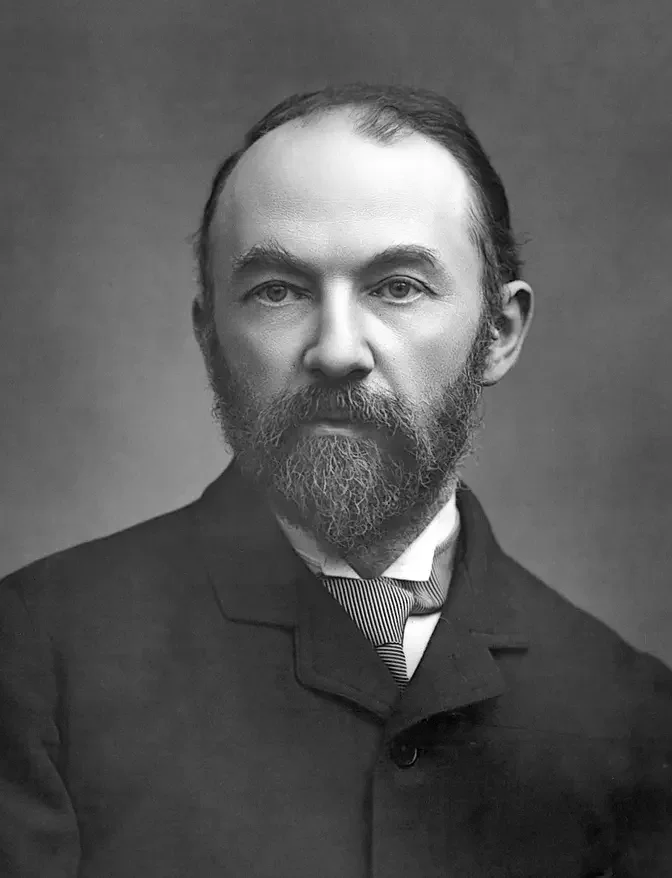
A PAIR OF BLUE EYES by Thomas Hardy.
Chapter XXIX
Care, thou canker!
It is an evening at the beginning of October, and the mellowest of autumn sunsets irradiates
London even to its uttermost eastern end.
Between the eye and the flaming west columns of smoke stand up in the still air like tall
trees.
Everything in the shade is rich and misty blue.
Mr. and Mrs. Swancourt and Elfride are looking at these lustrous lurid contrasts from the
window of a large hotel near London Bridge.
The visit to their friends at St. Leonard's is over, and they are staying a day or two
in a metropolis on their way home.
Knight spent the same interval of time in crossing over to Brittany by the way of Jersey
and St. Malo.
He then passed through Normandy, and returned to London also, his arrival there having been
two days later than that of Elfride and her parents.
So the evening of this October day saw them all meeting in the above-mentioned hotel,
where they had previously engaged apartments.
During the afternoon Knight had been to his lodgings at Richmond to make a little change
in the nature of his baggage, and on coming up again there was never ushered by a bland
waiter into a comfortable room a happier man than Knight, when shown to where Elfride and
her stepmother were sitting after a fatiguing day of shopping.
Elfride looked none the better for her change.
Knight was as brown as a nut.
They were soon engaged by themselves in the corner of the room.
Now that the precious words of promise had been spoken, the young girl had no idea of
keeping up her price by the system of reserve which other more accomplished maidens use.
Her lover was with her again, and it was enough.
She made her heart over to him entirely.
Dinner was soon dispatched, and when a preliminary round of conversation concerning their doing
since the last parting had been concluded, they reverted to the subject of to-morrow's
journey home.
That enervating ride through the myrtle climate of South Devon—how I dread it to-morrow!
Mrs. Swancourt was saying.
I had hoped the weather would have been cooler by this time.
Did you ever go by water?
said Knight.
not since the time of railways.
Then, if you can afford an additional day, I propose that we do it, said Knight.
The channel is like a lake just now.
We should reach Plymouth in about forty hours, I think, and the boat starts from just below
the bridge here, pointing over his shoulder eastward.
Hear, hear! said the vicar.
It is an idea, certainly, said his wife.
Of course, these coasters are rather tubby, said Knight, but you wouldn't mind that.
No, we wouldn't mind.
And the saloon is a place like the fish-market of a ninth-rate country town, but that wouldn't
matter.
Oh, dear no!
If we had only thought of it soon enough, we might have had the use of Lord Luxellian's
yacht.
But never mind.
We'll go.
We shall escape the worrying rattle through the whole length of London to-morrow morning,
not to mention the risk of being killed by excursion-trains, which is not a little one
at this time of the year, if the papers are true.'
Elfride, too, thought the arrangement delightful, and accordingly ten o'clock the following
morning saw two cabs crawling round by the mint, and between the preternaturally high
walls of Nightingale Lane towards the riverside.
The first vehicle was occupied by the travellers in person, and the second brought up the luggage.
under the supervision of Mrs. Snewson, Mrs. Swancourt's maid, and for the last fortnight
Elfride's also.
For although the younger lady had never been accustomed to any such attendant at roving-times,
her stepmother forced her into a semblance of familiarity with one when they were away
from home.
Presently wagons, bales, and smells of all descriptions increased to such an extent that
the advance of the cabs was at the slowest possible rate.
At intervals it was necessary to halt entirely, that the heavy vehicles unloading in front
might be moved aside—a feat which was not accomplished without a great deal of swearing
and noise.
The vicar put his head out of the window.
"'Surely there must be some mistake in the way,' he said with great concern, drawing
his head in again.
"'There is not a respectable conveyance to be seen here except ours.
I have heard that there are estranged dens in this part of London, into which people
have been entrapped and murdered.
Surely there is no conspiracy on the part of the cabman?'
"'Oh, no, no, it's all right,' said Mr. Knight, who was as placid as Dewey Eve by
the side of Elfride.
"'But what I argue from,' said the vicar, with a greater emphasis on uneasiness,
"'are plain appearances.
This can't be the highway from London to Plymouth by water, because it is no way at
all to any place.
We shouldn't miss our steamer and our train too, that's what I think.
Depend upon it we are right.
In fact, here we are.'
"'General's Wharf,' said the cabman, opening the door.
No sooner had they alighted than they perceived a tussle going on between the hindmost cabman
and a crowd of light porters, who had charged them in collum, to obtain possession of the
bags and boxes, Mrs. Newsom's hands being seen stretched towards heaven in the midst
of the melee.
Knight advanced gallantly, and after a hard struggle reduced the crowd to two, upon whose
shoulders and trucks the gulls vanished away in the direction of the water's edge with
startling rapidity.
Then more of the tribe who had run on ahead were heard shouting to boatmen, three of whom
pulled alongside, and, two being vanquished, the luggage went tumbling into the remaining
one.
"'Never saw such a dreadful scene in my life—never!' said Mr. Swancourt, floundering
into the boat.
Worse than famine and sword upon one, I thought such customs were confined to continental
ports.
Aren't you astonished, Elfride?'
"'Oh, no,' said Elfride, appearing amid the dingy scene like a rainbow in a murky
sky.
It is a pleasant novelty, I think.'
"'Where in the wild ocean is our steamer?'
the vicar inquired.
I can see nothing but old hulks for the life of me.'
"'Just behind that one,' said Knight.
The object of their search was soon after this close to view—a great lumbering form
of inky blackness, which looked as if it had never known the touch of a paintbrush for
fifty years.
It was lying beside just such another, and the way on board was down a narrow lane of
water between the two, about a yard and a half wide at one end, and gradually converging
to a point.
At the moment of their entry into this narrow passage a brilliantly painted rival paddled
down the river like a trotting steed, creating such a series of waves and splashes that their
frail wherry was tossed like a teacup, and the vicar and his wife slanted this way and
that, inclining their heads into contact with a punch and judy air and countenance, the
wavelets striking the sides of the two hulls and flapping back into their laps.
"'Dreadful!
Ah, horrible!'
Mr. Swancourt murmured privately, and said aloud,
should have come, if I had known this trouble was attached to it.
"'If they must splash, I wish to it splashes with clean water,' said the old lady, wiping
her dress with a handkerchief.
"'I hope it is perfectly safe,' continued the vicar.
"'Oh, papa, you are not very brave!' cried Elfride merrily.
"'Bravery is only obstruseness to the perception of contingencies,' Mr. Swancourt severely
answered.
Mrs. Swancourt laughed, and Elfride laughed, and Knight laughed, in the midst of which,
pleasantness, a man shouted to them from some position between their heads and the sky,
and they found that they were close to the Juliet, into which they quiveringly ascended.
Yet having been found that the lowness of the tide would prevent their getting off for
an hour, the Swancourts, having nothing else to do, allowed their eyes to idle upon men
in blue jerseys performing mysterious mending operations with tar twine.
They turned to look at the dashes of lurid sunlight, like burnished copper stars afloat
on the ripples, which danced into and tantalised their vision, or listened to the loud music
of a steam-crane at work close by, or to sighing sounds from the funnels of passing steamers
getting dead as they grew more distant, or to shouts from the decks of different craft
in their vicinity, all of them assuming the form of—'Ah, hey!'
Half-past ten, not yet off.
Mr. Swancourt breathed a breath of weariness, and looked at his fellow-travellers in general.
Their faces were certainly not worth looking at.
The expression waiting was written upon them so absolutely that nothing more could be discerned
there.
All animation was suspended till Providence should raise the water and let them go.
"'I have been thinking,' said Knight, "'that we have come amongst the rarest class of people
in the kingdom.
Of all human characteristics, a low opinion of the value of his own time by an individual
must be among the strangest to find.
Here we see numbers of that patient and happy species—rovers, as distinct from travellers.
But they are pleasure-seekers to whom time is of no importance.'
"'Oh, no!
The pleasure-seekers we meet on the Grand Routes are more anxious than commercial travellers
to rush on.
And added to the loss of time in getting to their journey's end, these exceptional people
take their chances of seasickness by coming this way.'
"'Can it be?'
inquired the vicar with apprehension.
"'Surely not, Mr. Knight, just here in our English Channel—close at our doors, as I
may say.
Entrance-passages are very drafty places, and the Channel is like the rest.
It ruins the temper of sailors.
It has been calculated by philosophers that more dams go up to heaven from the Channel
in the course of a year than from all the five oceans put together.
They really start now, and the dead looks of all the throng come to life immediately.
The man who had been frantically hauling the rope that bade fair to have no end ceases
his labours, and they glide down the serpentine bends of the Thames.
Anything anywhere was a mine of interest to Elfride, and so was this.'
"'It is well enough now,' said Mrs. Swancourt, after they passed the Knorr.
"'But I can't say I have cared for my voyage hitherto.
For being now in the open sea, a slight breeze had sprung up, which cheered her as well as
her two younger companions.
But unfortunately it had a reverse effect upon the vicar, who, after turning a sort
of apricot-jam colour, interspersed with dashes of raspberry, pleaded indisposition, and vanished
from their sight.
The afternoon wore on.
Mrs. Swancourt kindly sat apart by herself reading, and the betrothed pair were left
to themselves.
Elfride clung trustingly to Knight's arm, and proud was she to walk with him up and
down the deck, or to go forward, and, leaning with him against the forecastle rails, watch
the settling sun gradually withdrawing itself over the stern into a huge bank of livid cloud,
with golden edges that rose to meet it.
She was childishly full of life and spirits, though in walking up and down with him before
the other passengers, and getting noticed by them, she was at starting rather confused,
it being the first time she had shown herself so openly under that kind of protection.
"'I expect they are envious, and saying things about us, don't you?' she would whisper to
Knight, with a stealthy smile.
"'Oh, no,' he would answer, unconcernedly, 'why should they envy us, and what can they
say?'
"'Not any harm, of course,' Elfride replied, "'except such as this.
How happy those two are!
She is proud enough now.'
"'What makes it worse?' she continued, with the extremity of confidence.
"'I heard those two crickety men say just now, she's the knobbiest girl on the boat.
But I don't mind it, you know, Harry.'
"'I should hardly have supposed you did, even if you had not told me,' said Knight, with
great blandness.
She was never tired of asking her lover questions, and admiring his answers, good, bad, or indifferent
as they might be.
The evening grew dark, and night came on, and lights shone upon them from the horizon
and from the sky.
"'Now, look ahead of us, at that halo in the air of silvery brightness.
Watch it, and you will see what it comes to.'
She watched for a few minutes, when two white lights emerged from the side of a hill, and
showed themselves to be the origin of the halo.
"'What a dazzling brilliance!
What do they mark?'
"'The South Foreland.
They were previously covered by the cliff.'
"'What is that level line of little sparkles—a town, I suppose?'
"'That's Dover.'
All this time and later soft sheet-lightning expanded from a cloud in their path, enkindling
their faces as they paced up and down, shining over the water, and, for a moment, showing
the horizon as a keen line.
Elfride slept soundly that night.
Her first thought the next morning was a thrilling one—that night was as close at hand as when
they were at home in Endelstow, and her first sight, on looking out of the cabin window,
was the perpendicular face of Beachy Head, gleaming white in a brilliant six o'clock-in-the-morning
sun.
This fair daybreak, however, soon changed its aspect.
The cold wind and the pale mist descended upon the sea, and seemed to threaten a dreary
day.
When they were nearing Southampton, Mrs. Swancourt came to say that her husband was so ill that
he wished to be put on shore here, and left to do the remainder of the journey by land.
He would be perfectly well, directly he treads firm ground again.
Which shall we do?
Go with him, or finish our voyage as we intended?
Elfride was comfortably housed under an umbrella which Knight was holding over her to keep
off the wind.
Oh, don't let us go on shore! she said with dismay.
It would be such a pity.
That's very fine, said Mrs. Swancourt archery, as to a child.
See, the wind has increased her colour, the sea, her appetite and spirits, and somebody
her happiness.
Yes, it would be a pity, certainly.
Tis my misfortune to be always spoken to from a pedestal, sighed Elfride.
Well, we will do as you like, Mrs. Swancourt, said Knight.
But—
I myself would rather remain on board, interrupted the elder lady, and Mr. Swancourt particularly
wished to go by himself, so that shall settle the matter.
The vicar, now a drab colour, was put ashore, and became as well as ever forthwith.
Elfride, sitting alone in a retired part of the vessel, saw a veiled woman walk aboard
among the very latest arrivals at this port.
She was clothed in black silk, and carried a dark shawl upon her arm.
The woman, without looking round, turned to the quarter allotted to the second-cabin passengers.
All the carnation Mrs. Swancourt had complimented her step-daughter upon possessing left Elfride's
cheeks, and she trembled visibly.
She ran to the other side of the boat, where Mrs. Swancourt was standing.
Let us go home by railway with papa, after all, she pleaded earnestly.
I would rather go with him.
Shall we?
Mrs. Swancourt looked round for a moment, as if unable to decide.
Ah! she exclaimed, it is too late now.
Why did you not say so before, when we had plenty of time?
The Juliet had that minute let go, the engines had started, and they were gliding slowly
away from the quay.
There was no help for it but to remain, unless the Juliet could be made to put back, and
that would create a great disturbance.
Elfride gave up the idea, and submitted quietly.
Her happiness was sadly mutilated now.
The woman whose presence had so disturbed her was exactly like Mrs. Jethway.
She seemed to haunt Elfride like a shadow.
After several minutes' vain endeavour to account for any desire Mrs. Jethway could
have in watching her, Elfride decided to think that, if it were the widow, the encounter
was accidental.
She remembered that the widow, in her restlessness, was often visiting the village near Southampton,
which was her original home, and it was possible that she chose water-transit with the idea
of saving expense.
What is the matter, Elfride?
Knight inquired, standing before her.
Nothing, more than that I am rather depressed.
I don't much wonder at it.
That wharf was depressing.
We seemed underneath and inferior to everything around us.
But we shall be in the sea-breeze again soon, and that will freshen you, dear.
The evening closed in, and dusk increased as they made their way down Southampton Water,
and through the Solent.
Elfride's disturbance of mind was such that her light spirit of the foregoing four and
twenty hours had entirely deserted her.
The weather, too, had grown more gloomy, for though the showers of the morning had ceased,
the sky was covered more closely than ever with dense leaden cloud.
How beautiful was the sunset when they had rounded the north foreland the previous evening!
Now it was impossible to tell within half an hour the time of the luminaries going down.
Knight led her about, and, being by this time accustomed to her sudden changes of mood,
overlooked the necessity of a cause in regarding the conditions.
Impressionableness and elasticity.
Elfride looked stealthily to the other end of the vessel.
Mrs. Jethway, or her double, was sitting at the stern, her eyes steadily regarding Elfride.
Let us go to the forepart, she said quickly to Knight.
See, there the man is fixing the lights for the night.
Knight assented, and after watching the operation of fixing the red and the green lights on
the port-and-starboard bows, and the hoisting of the white light to the masthead, he walked
up and down with her till the increase of wind rendered promenading difficult.
Elfride's eyes were occasionally to be found furtively gazing abaft, to learn if her enemy
were really there.
Nobody was visible now.
Shall we go below? said Knight, seeing that the deck was nearly deserted.
No, she said.
If you will kindly get me a rug from Mrs. Swancourt, I should like, if you don't mind,
to stay here.
She had recently fancied the assumed Mrs. Jethway might be a first-class passenger,
and dreaded meeting her by accident.
Knight appeared with the rug, and they sat down behind a weathercloth on the windward
side, just as the two red eyes of the needles glared upon them from the gloom, that pointed
summits, rising like shadowy phantom figures against the sky.
It became necessary to go below to an eight o'clock meal of nondescript kind, and Elfride
was immensely relieved at finding no sign of Mrs. Jethway there.
They again ascended, and remained above till Mrs. Snewson staggered up to them with a message
that Mrs. Swancourt thought it was time for Elfride to come below.
Knight accompanied her down, and returned again to pass a little more time on deck.
Elfride partly undressed herself and lay down, and soon became unconscious, though her sleep
was light.
How long she had lain she knew not, when by slow degrees she became cognizant of a whispering
in her ear.
"'You are well on with him, I can see.'
"'Well, provoke me now.
My day will come, you will find.'
That seemed to be the utterance, or words to that effect.
Elfride became broad-awake and terrified.
She knew the words, if real, could only be those of one person, and that person the widow
Jethway.
The lamp had gone out on the places in darkness.
In the next berth she could hear her stepmother breathing heavily.
Further on, Snussen breathing more heavily still.
These were the only other legitimate occupants of the cabin, and Mrs. Jethway must have stealthily
come in by some means and retreated again, or else she had entered an empty berth next
Snussen's.
The fear that this was the case increased Elfride's perturbation, till it assumed the
dimensions of a certainty.
For how could a stranger from the other end of the ship possibly contrive to get in?
Could it have been a dream?
Elfride raised herself higher and looked out of the window.
There was the sea, floundering and rushing against the ship's side, just by her head,
and then stretching away, dim and moaning, into an expanse of indistinctness, and far
beyond all this two placid lights like rayless stars.
Now almost fearing to turn her face inward again, lest Mrs. Jethway should appear at
her elbow, Elfride meditated upon whether to call Snussen to keep her company.
Four bells sounded, and she heard voices, which gave her a little courage.
It was not worthwhile to call Snussen.
At any rate Elfride could not stay there panting longer, at the risk of being again disturbed
by that dreadful whispering.
So wrapping herself up hurriedly, she emerged into the passage, and by the aid of a faint
light burning at the entrance to the saloon, found the foot of the stairs, and ascended
to the deck.
Dreary the place was in the extreme.
It seemed a new spot altogether in contrast with its daytime self.
She could see the glow-worm light from the binnacle, and the dim outline of the man at
the wheel, also a form at the bows.
Not another soul was apparent from stem to stern.
Yes, there were two more, by the bulwarks.
One proved to be her Harry, and the other the mate.
She was glad indeed, and on drawing closer found they were holding a low, slow chat about
nautical affairs.
She ran up, and slipped her hand through Knight's arm, partly for love and partly for stability.
"'Elfie, not asleep?' said Knight, after moving a few steps aside with her.
"'No, I cannot sleep.
May I stay here?
It is so dismal down there, and I was afraid.
Where are we now?'
"'Due south of Portland Bill.
Those are the lights abeam of us.
Look!'
"'A terrible spot, that, on a stormy night.
Do you see a very small light that dips and rises to the right?
That's a light-ship on the dangerous shoal called the Shambles, where many a good vessel
has gone to pieces.
Between it and ourselves is a race, a place where antagonistic currents meet and form
whirlpools, a spot which is rough in the smoothest weather and terrific in a wind.
That dark, dreary horizon we just discerned to the left is the West Bay, terminated landward
by Chesil Beach.'
"'What time is it, Harry?'
"'Just past two.'
"'Are you going below?'
"'Oh no, not to-night.
I prefer pure air.'
She fancied he might be displeased with her for coming to him at this unearthly hour.
"'I should like to stay here too, if you will allow me,' she said timidly.
"'I want to ask you things.'
"'Allow you, Elfie?' said Knight, putting his arm round her and drawing her closer.
"'I am twice as happy with you by my side.'
"'Yes, we will stay and watch the approach of day.'
So they again sought out the sheltered nook, and sitting down wrapped themselves in the
rug as before.
"'What were you going to ask me?' he inquired, as they undulated up and down.
"'Oh, it was not much—perhaps a thing I ought not ask,' she said hesitatingly.
Her sudden wish had been to discover at once whether he had ever been engaged to be married.
If he had, she would make that a ground for telling him a little of her conduct with Stephen.
Mrs. Jethway's seeming words had so depressed the girl that she herself now painted her
flight in the darkest colours, and longed to ease her burdened mind by an instant confession.
If Knight had ever been imprudent himself, he might, she hoped, forgive all.
"'I wanted to ask you,' she went on, "'if you had ever been engaged before.'
She added tremulously, "'I hope you have.
I mean, I don't mind at all if you have.'
"'No, I never was,' said Knight instantly, and heartily replied, "'Elfride.'
And there was a certain happy pride in his tone.
"'I am twelve years older than you, and I have been about the world, and, in a way,
into society, and you have not.
And yet I am not so unfit for you as strict-thinking people might imagine, who would assume the
difference of age to signify most surely an equal addition to my practice in love-making.'
Elfride shivered.
"'You're cold.
The wind is too much for you.'
"'No,' she said gloomily.
The belief which had been her sheet-anchor in hoping for forgiveness had proved false.
This account of the exceptional nature of his experience—a matter which would have
set her rejoicing two years ago—chilled her now like a frost.
"'You don't mind my asking you?'
she continued.
"'Oh, no, not at all.'
"'And have you never kissed many ladies?'
she whispered, hoping he would say a hundred at least.
The time, the circumstances, and the scene were such as to draw confidences from the
most reserved.
"'Elfride,' whispered Knight, in reply, "'it is strange you should have asked that question,
but I'll answer it, though I have never told such a thing before.
I have been rather absurd in my avoidance of women.
I have never given a woman a kiss in my life, except yourself and my mother.
The man, of two-and-thirty, with the experienced mind, warmed all over the boy's ingenuous
shame as he made the confession.
"'What!
Not one?'
she faltered.
"'No, not one.
How very strange!'
"'Yes, the reverse experience may be commoner, and yet, to those who have observed their
own sex, as I have, my case is not remarkable.
Men about town are women's favourites, that is postulate, and superficial people don't
think far enough to see that there may be reserved, lonely exceptions.
Are you proud of it, Harry?'
"'No, indeed.
Of late years I have wished I had gone my ways and trod out my measure like lighter-hearted
men.
I have thought of how many happy experiences I may have lost through never going to woo.'
"'And why did you hold aloof?'
"'I cannot say.
I don't think it was my nature to.
Circumstances hindered me, perhaps.
I have regretted it for another reason.
This great remissness of mine has had its effect upon me.
The older I have grown, the more distinctly I have perceived that it is absolutely preventing
me from liking any woman who is not as unpractised as I, and I gave up the expectation of finding
a nineteenth-century young lady in my own raw state.
Then I found you, Elfride, and I felt, for the first time, that my fastidiousness was
a blessing, and it helped to make me worthy of you.
I felt at once that, differing as we did in our experiences, in this matter I resembled
you.'
"'Well, aren't you glad to hear it, Elfride?'
"'Yes, I am,' she answered in a forced voice.
But I always had thought that men made lots of engagements before they married, especially
if they don't marry very young.'
"'So all women think, I suppose, and rightly, indeed, of the majority of bachelors, as I
said before.
But an appreciable minority of slow-coach men do not, and it makes them very awkward
when they do come to the point.
However, it didn't matter in my case.'
"'Why?' she asked uneasily.
"'Because you know even less of love-making and matrimonial pre-arrangement than I, and
so you can't draw ambiguous comparisons if I do my engaging improperly.'
"'I think you do it beautifully.'
"'Thank you, dear.
But,' continued Knight, laughingly, "'your opinion is not that of an expert, which alone
is of value.'
Had she answered,
"'Yes, it is,' half as strongly as she felt it, Knight might have been a little astonished.
"'If you had ever been engaged to be married before,' he went on, "'I expect your opinion
of my addresses would be different.
But then I should not—'
"'Should not what, Harry?'
"'Oh, I was merely going to say that in that case I should never have given myself the
pleasure of proposing to you, since your freedom from that experience was your attraction,
my darling.'
"'You are severe upon women, are you not?'
"'No, I think not.
I had a right to please my tastes, and that was for untried lips.'
"'Other men than those of my sort acquire the taste as they get older, but don't find
an Elfride—'
"'What horrid sound does that be here when we pitch forward?'
"'Only the screw.
Don't find an Elfride as I did.
To think that I should have discovered such an unseen flower down here in the West, to
whom a man is as much as a multitude to some women, and a trip down the English Channel
like a voyage round the world!'
"'And would you,' she said, and her voice was tremulous, "'have given up a lady, if
you had become engaged to her, and then found that she had had one kiss before yours?
And would you have gone away and left her?'
"'One kiss—no, hardly for that.'
"'Two?'
"'Well, I can hardly say inventorily like that.
Too much of that sort of thing certainly would make me dislike a woman.
But let us confine our attention to ourselves, not go thinking of might-have-beens.'
So Elfride had allowed her thoughts to dally with false surmise, and every one of Knight's
words fell upon her like a weight.
After this they were silent for a long time, gazing upon the black mysterious sea, and
hearing the strange voice of the restless wind.
A rocking to and fro on the waves, when the breeze is not too violent and cold, produces
a soothing effect even upon the most highly wrought mind.
Elfride slowly sank against Knight, and looking down, he found by her soft regular breathing
that she had fallen asleep.
Not wishing to disturb her, he continued still, and took an intense pleasure in supporting
her warm young form as it rose and fell with her every breath.
Knight fell to dreaming too, though he continued wide awake.
It was pleasant to realize the implicit trust she placed in him, and to think of the charming
innocence of one who could sink into sleep in so simple and unceremonious a manner.
More than all, the musing, impractical student felt the immense responsibility he was taking
upon himself by becoming the protector and guide of such a trusting creature.
The quiet slumber of her soul lent a quietness to his own.
Then she moaned and turned herself restlessly.
Presently her mutterings became distinct.
"'Don't tell him—he will not love me.
I did not mean any disgrace—indeed, I did not.
So don't tell Harry.
We were going to be married—that's why I ran away.
And he says he will not have a kissed woman.
And if you tell him, he will go away, and I shall die.
I pray have mercy, oh!'
Elfride started up wildly.
The previous moment a musical ding-dong had spread into the air from their right hand
and awakened her.
"'What is that?' she exclaimed in terror.
"'Only eight bells,' said Knight, soothingly.
"'Don't be frightened, little bird, you are safe.
What have you been dreaming about?'
"'I can't tell—I can't tell,' she said with a shudder.
"'Oh, I don't know what to do.'
"'Stay quietly with me.
We shall soon see the dawn now.
Look, the morning star is lovely over there.
The clouds have completely cleared off whilst you have been sleeping.
What have you been dreaming of?'
"'A woman in our parish.'
"'Don't you like her?'
"'I don't, and she doesn't like me.
Where are we?'
"'About south of the X.'
Knight said no more on the words of her dream.
They watched the sky till Elfride grew calm, and the dawn appeared.
It was mere one lightness first.
Then the wind blew in a changed spirit, and died away to a zephyr.
The star dissolved into the day.
"'That is how I should like to die,' said Elfride, rising from her seat and leaning
over the bullock to watch the star's last expiring gleam.
"'As the lions say,' Knight replied, "'to set as sets the morning star, which goes
not down behind the darkened west, nor hides obscured among the tempests of the sky, but
melts away into the light of heaven.'"
"'Oh!
Other people have thought the same thing, haven't they?
That's always the case with my originalities.
They are original to nobody but myself.'
"'Not only the case with yours.
When I was a young hand at reviewing, I used to find that a frightful pitfall.
Dilating on subjects I met with which were novelties to me, and finding afterwards they
had been exhausted by the thinking-world when I was in pinafores.'
"'That is delightful.
Whenever I find you have done a foolish thing I am glad, because it seems to bring you a
little nearer to me, who have done many.'
And Elfride thought again of her enemy asleep under the deck they trod.
All up the coast prominences singled themselves out from recesses.
Then a rosy sky spread over the eastern sea and behind a low line of land, flinging its
livery in dashes upon the thin airy clouds in that direction.
Every projection on the land seemed now so many fingers, anxious to catch a little of
the liquid light thrown so prodigally over the sky, and after a fantastic time of lustrous
yellows in the east, the higher elevations along the shore were flooded with the same
hues.
The bluff and bare contours of Start Point caught the brightest, earliest glow of all.
And so also did the sides of its white lighthouse, perched upon a shelf in its precipitous front
like a medieval saint in a niche.
Their lofty neighbour, Bolt Head, on the left remained as yet ungilded, and retained its
grey.
Then up came the sun, as it were, in jerks, just to seaward of the easternmost point of
land, flinging out in Jacob's ladder-path of light from itself to Elfride and Knight,
and coating them with rays in a few minutes.
The inferior dignitaries of the shore—Forward Point, Bury Head, and Prawl—had all acquired
their share of the illumination ere this, and, at length, the very smallest perturbance
of Wave, Cliff, or Linnet, even to the innermost recesses of the lovely valley of the Dart,
had its portion, and sunlight, now the common possession of all, ceased to be the wonderful
and coveted thing it had been a short half-hour before.
After breakfast Plymouth arose into view, and grew distincter to their nearing vision,
the break-water appearing like a streak of phosphoric light upon the surface of the sea.
Elfride looked furtively around for Mrs. Jethway, but could discern no shape like hers.
Afterwards in the bustle of landing she looked again with the same result, by which time
the woman had probably glided upon the quay unobserved.
Expanding with a sense of relief, Elfride waited whilst Knight looked to their luggage,
and then saw her father approaching through the crowd, twirling his walking-stick to catch
their attention.
Elbowing the way to him, they all entered the town, which smiled a sunniest smile upon
Elfride as it had done between one and two years earlier, when she had entered it at
precisely the same hour as the bride-elect of Stephen Smith.