
Chapter 25 - A Pair of Blue Eyes
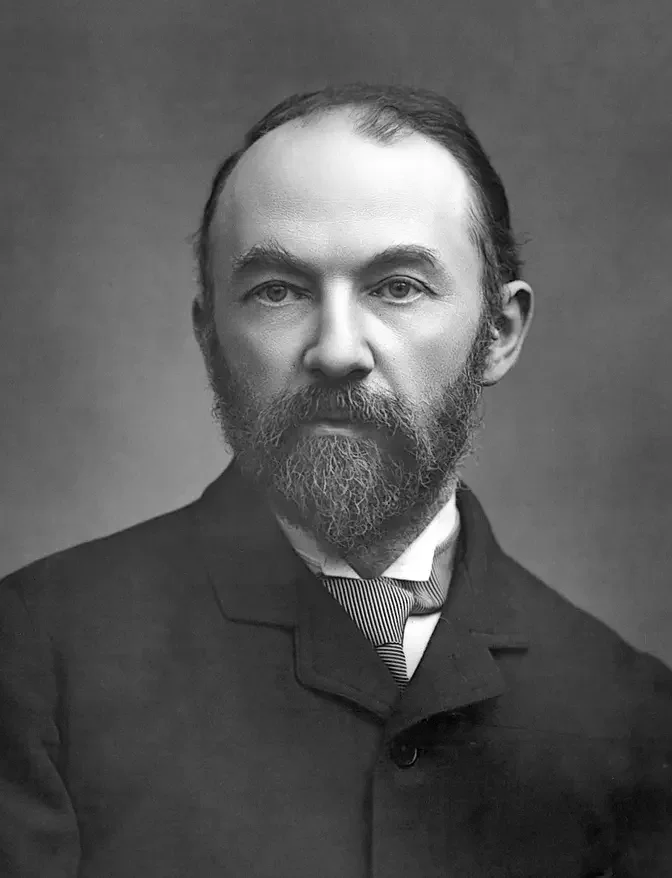
A Pair of Blue Eyes by Thomas Hardy Chapter 25
Mine Own Familiar Friend
During these days of absence Stephen lived under alternate conditions. Whenever his emotions
were active he was in agony. Whenever he was not in agony the business in hand had driven
out of his mind by sheer force all deep reflection on the subject of Elfride and love. By the
time he took his return journey at the week's end Stephen had very nearly worked himself
up to an intention to call and see her face to face. On this occasion also he adopted
his favourite route, by the little summer steamer from Bristol to Castle Boterel, the
time saved by speed on the railway being wasted at junctions and in following a devious course.
It was a bright silent evening at the beginning of September when Smith again set foot in
the little town. He felt inclined to linger a while upon the quay before ascending the
hills, having formed a romantic intention to go home by way of her house. Yet not wishing
to wander in its neighbourhood till the evening shades should sufficiently screen him from
observation.
And thus waiting for night's nearer approach he watched the placid scene, over which the
pale luminosity of the west cast a sorrowful monochrome, that became slowly embrowned by
the dusk. A star appeared, and another, and another. They sparkled amid the yards and
rigging of the two coal-rigs lying alongside, as if there had been tiny lamps suspended
in the ropes. The masts rocked steeply to the infinitesimal flux of the tide, which
clucked and gurgled with idled regularity in nooks and holes of the harbour-wall.
The twilight was now quite pronounced enough for his purpose, and, as, rather sad at heart,
he was about to move on, a little boat containing two persons glided up the middle of the harbour
with the lightness of his shadow. The boat came opposite him, passed on, and touched
the landing-steps at the further end. One of its occupants was a man, as Stephen had
known by the easy stroke of the oars. When the pair ascended the steps and came into
greater prominence, he was unable to discern that the second personage was a woman, also
that she wore a white decoration, apparently a feather, in her hat or bonnet. Which spot
of white was the only distinctly visible portion of her clothing?
Stephen remained a moment in the rear, and they passed on, when he pursued his way also,
and soon forgot the circumstance. Having crossed a bridge, forsaken the high road, and entered
the footpath which led up the vale to West Endelstow, he heard a little wicket click
softly together some yards ahead. By the time that Stephen had reached the wicket and passed
it he heard another click, of precisely the same nature, from another gate yet further
on. Clearly some person or persons were preceding him along the path, their footsteps being
rendered noiseless by the soft carpet of turf.
Stephen now walked a little quicker, and perceived two forms. One of them bore aloft the white
feather he had noticed in the woman's hat on the quay. They were the couple he had seen
in the boat. Stephen dropped a little further to the rear.
From the bottom of the valley along which the path had hit their two lane, beside the
margin of the trickling streamlet, another path now diverged, and ascended the slope
of the left-hand hill. This footway led only to the residence of Mrs. Swancourt and a cottage
or two in its vicinity. No grass covered this diverging path in portions of its length,
and Stephen was reminded that the pair in front of him had taken this route, by the
occasional rattle of loose stones under their feet. Stephen climbed in the same direction,
but for some undefined reason he trod more softly than did those preceding him. His mind
was unconsciously in exercise upon whom the woman might be, whether a visitor to the crags,
a servant, or Elfride. He put it to himself yet more forcibly. Could the lady be Elfride?
A possible reason for her unaccountable failure to keep the appointment with him returned
with painful force.
They entered the grounds of the house by the side-wicket, whence the path, now wide and
well-trimmed, wound fantastically through the shrubbery to an octagonal pavilion called
the Belvedere, by reason of the comprehensive view over the adjacent district that its green
seats afforded. The path passed this erection, and went on to the house, as well as to the
gardener's cottage on the other side, straggling dense to East Endelstow, so that Stephen felt
no hesitation in entering a promenade, which could scarcely be called private. He fancied
that he heard a gate open and swing together again behind him. Turning, he saw nobody.
The people of the boat came to the summer-house. One of them spoke.
I am afraid we shall get a scolding for being late.
Stephen instantly recognized a familiar voice, richer and fuller now than it used to be.
Elfride! he whispered to himself, and held fast by a sapling, to steady himself under
the agitation her presence caused him. His heart swerved from its beat. He shunned receiving
the meaning he sought.
A breeze is rising again. How the ash-tree rustles! said Elfride.
Don't you hear it? I wonder what the time is?
Stephen relinquished the sapling.
I will get a light and tell you. Step into the summer-house. The air is quiet there.
The cadence of that voice, its peculiarity, seemed to come home to him like that of some
notes of the northern birds on his return to his native clime, as an old natural thing
renewed, yet not particularly noticed as natural before that renewal. They entered the Belvedere.
In the lower part it was formed of close woodwork nailed crosswise, and had openings in the
upper part by way of windows. The scratch of a striking light was heard, and a bright
glow radiated from the interior of the building. The light gave birth to dancing leaf-shadows,
stem-shadows, lustrous streaks, dots, sparkles, and threads of silver sheen of all imaginable
variety and transience. It awakened gnats which flew towards it, revealed shiny gossamer
threads, and disturbed earthworms.
Stephen gave but little attention to these phenomena, and less time. He saw in the summer-house
a strongly illuminated picture. First, the face of his friend and preceptor Henry Knight,
between whom and himself an estrangement had arisen, not from any definite causes, beyond
those of absence, increasing age, and diverging sympathies. Next, his bright particular star,
Elfride. The face of Elfride was more womanly than when she had called herself his, but
as clear and healthy as ever. Her plenteous twines of beautiful hair were looking much
as usual, with the exception of a slight modification in their arrangement in deference to the changes
of fashion. Their two foreheads were close together, almost touching, and both were looking
down. Elfride was holding her watch. Knight was holding the light with one hand, his left
arm being round her waist. Part of the scene reached Stephen's eyes through the horizontal
bars of woodwork, which crossed their forms like the ribs of a skeleton. Knight's arm
stole still further round the waist of Elfride.
"'It is half-past eight,' she said in a low voice, which had a peculiar music in it, seemingly
born of a thrill of pleasure, at the new proof that she was beloved.
The flame dwindled down, died away, and all was wrapped in a darkness, to which the gloom
before the illumination bore no comparison in apparent density. Stephen, shattered in
spirit and sick to his heart-centre, turned away. In turning he saw a shadowy outline
behind the summer-house on the other side. His eyes grew accustomed to the darkness.
Was the form a human form, or was it an opaque bush of juniper?
The lovers arose, brushed against the loristeens, and pursued their way to the house. The indistinct
figure had moved, and now passed across Smith's front. So completely enveloped was the person
that it was impossible to discern him or her any more than as a shape. The shape glided
noiselessly on.
Stephen stepped forward, fearing any mischief was intended to the other two.
"'Who are you?' he said.
"'Never mind who I am,' answered a weak whisper from the enveloping folds. "'What I am may
she be. Perhaps I knew well—ah, so well—a youth whose place you took, as he there now
takes yours. Will you let her break your heart, and bring you to an untimely grave, as she
did the one before you? You are Mrs. Jethway, I think. What do you do here, and why do you
talk so wildly?'
"'Because my heart is desolate, and nobody cares about it. May hers be so that brought
trouble upon me.'
"'Silence!' said Stephen, staunch to Elfride, in spite of himself. She would harm nobody
willfully—never would she. How do you come here? I saw the two of them coming up the
path, and wanted to learn if she were not one of them. Can I help disliking her if I
think of the past? Can I help watching her if I remember my boy? Can I help ill-wishing
her if I well wish him?'
The bowed form went on, passed through the wicket, and was enveloped by the shadows of
the field. Stephen had heard that Mrs. Jethway, since the death of her son, had become a crazed,
forlorn woman, and, bestowing a pitying thought upon her, he dismissed her fancied wrongs
from his mind, but not her condemnation of Elfride's faithlessness. That entered into,
and mingled with the sensations his new experience had begotten. The tale told by the little
scene he had witnessed ran parallel with the unhappy woman's opinion, which, however baseless
it might have been antecedently, had become true enough as regarded himself.
A slow weight of despair, as distinct from a violent paroxysm as starvation from a mortal
shot, filled him, and wrung him body and soul. The discovery had not been altogether unexpected,
for throughout his anxiety of the last few days, since the night in the churchyard, he
had been inclined to construe the uncertainty unfavourably for himself. His hopes for the
best had been but periodic interruptions to a chronic fear of the worst.
The strange concomitant of his misery was the singularity of its form. That his rival
should be Knight, whom once upon a time he had adored, as a man is very rarely adored
by another in modern times, and whom he loved now, added deprecation to sorrow, and cynicism
to both. Henry Knight, whose praises he had so frequently trumpeted in her ears, of whom
she had actually been jealous, lest she herself should be lessened in Stephen's love on account
of him, had probably won her the more easily by reason of those very praises which he had
only ceased to utter by her command. She had ruled him like a queen in that matter, as
in all others. Stephen could tell by her manner, brief as had been his observation of it, and
by her words, few as they were, that her position was far different with Knight. That she looked
up at and adored her new lover from below his pedestal, was even more perceptible than
that she had smiled down upon Stephen from a height above him.
The suddenness of Elfride's renunciation of himself was food for more torture. To an unimpassioned
outsider, it admitted of at least two interpretations. It might either have proceeded from an endeavour
to be faithful to her first choice, till the lover seen absolutely overpowered the lover
remembered, or from a wish not to lose his love till sure of the love of another. But
to Stephen Smith the motive involved in the latter alternative made it untenable where
Elfride was the actor. He mused on her letters to him, in which she had never mentioned a
syllable concerning Knight. It is desirable, however, to observe that only in two letters
could she possibly have done so. One was written about a week before Knight's arrival, when,
though she did not mention his promise coming to Stephen, she had hardly a definite reason
in her mind for neglecting to do it. In the next she did casually allude to Knight, but
Stephen had left Bombay long before that letter arrived. Stephen looked at the black form
of the adjacent house, where it cut a dark polygonal notch out of the sky, and felt that
he hated the spot. He did not know many facts of the case, but could not help instinctively
associating Elfride's fickleness with the marriage of her father, and their introduction
into London society.
He closed the iron gate bound in the shrubbery as noiselessly as he had opened it, and went
into the grassy field. Here he could see the old vicarage—the house alone that was associated
with the sweetest pleasant time of his incipient love for Elfride. Turning sadly from the place
that was no longer a nook in which his thoughts might nestle when he was far away, he wandered
in the direction of the East Village, to reach his father's house before they retired to
rest. The nearest way to the cottage was by crossing the park. He did not hurry. Happiness
frequently has reason for haste, but it is seldom that desolation needs scramble or strain.
Sometimes he paused under the low-hanging arms of the trees, looking vacantly on the
ground. Stephen was standing thus scarcely less crippled in thought than he was blank
in vision, when a clear sound permeated the quiet air about him, and spread on far beyond.
The sound was the stroke of a bell from the tower of East Endelstow Church, which stood
in a dell not forty yards from Lord Lugzellian's mansion, and within the park enclosure. Another
stroke greeted his ear, and gave character to both. Then came a slow succession of them.
"'Somebody is dead,' he said aloud.
The death-knell of an inhabitant of the Eastern Parish was being tolled. An unusual feature in
the tolling was that it had not begun according to the custom in Endelstow and other parishes
in the neighbourhood. At every death the sex and age of the deceased were announced by a system
of changes. Three times three strokes signified that the departed one was a man, three times two
a woman, twice three a boy, twice two a girl. The regular continuity of the tolling suggested that
it was a resumption rather than the beginning of a knell, the opening portion of which Stephen had
not been near enough to hear. The momentary anxiety he felt with regard to his parents
passed away. He had left them in perfect health, and had any serious illness seized either,
a communication would have reached him ere this. At the same time, since his way home would lay
under the churchyard yews, he resolved to look into the belfry in passing by, and speak a word
to Martin Canister, who would be there. Stephen reached the brow of the hill, and fent inclined
to renounce his idea. His mood was such that talking to any person to whom he could not
unburden himself would be wearisome. However, before he could put any inclination into effect,
the young man saw from amid the trees a bright light shining, the rays from which radiated like
needles through the sad, plumy foliage of the yews. Its direction was from the centre of the
churchyard. Stephen mechanically went forward. Never could there be greater contrast between
two places of like purpose than between this graveyard and that of the further village.
Here the grass was carefully tended, and formed virtually a part of the manor-house lawn,
flowers and shrubs being planted indiscriminately over both, whilst the few graves visible were
mathematically exact in shape and smoothness, appearing in the day-time like chins newly
shaven. There was no wall, the division between God's Acre and Lord Luxellian's being marked only
by a few square stones set at equidistant points. Among those persons who have romantic sentiments
on the subject of their last dwelling-place, probably the greater number would have chosen
such a spot as this in preference to any other. A few would have fancied a constraint in its
trim neatness, and would have preferred the wild hill-top of the neighbouring site,
with nature in her most negligent attire. The light in the churchyard, he next discovered,
was to have its source in a point very near the ground, and Stephen imagined it might come from
a lantern in the interior of a partly dug grave. But a nearer report showed him that its position
was immediately under the wall of the aisle, and within the mouth of an archway. He could now hear
voices, and the truth of the whole matter began to dawn upon him. Walking on towards the opening,
Smith discerned on his left hand a heap of earth, and before him a flight of stone steps which the
removed earth had uncovered, leading down under the edifice. It was the entrance to a large family
vault, extending under the north aisle. Stephen had never before seen it open, and descending one
or two steps stooped to look under the arch. The vault appeared to be crowded with coffins,
with the exception of an open central space, which had been necessarily kept free for ingress,
and access to the sides, round three of which the coffins were stacked in stone bins or niches.
The place was well lighted with candles stuck in slips of wood that were fastened to the walls.
On making the descent of another step the living inhabitants of the vault were
recognisable. They were his father, the master-mason, an under-mason, Martin Canister,
and two or three young and old labouring men. Crowbars and workmen's hammers were scattered
about. The whole company, sitting round on coffins which had been removed from their places,
apparently for some alteration or enlargement of the vault, were eating bread and cheese,
and drinking ale from a cup with two handles passed round from each to each.
Who is dead? Stephen inquired, stepping down.
End of chapter 25