
Chapter 24 - A Pair of Blue Eyes
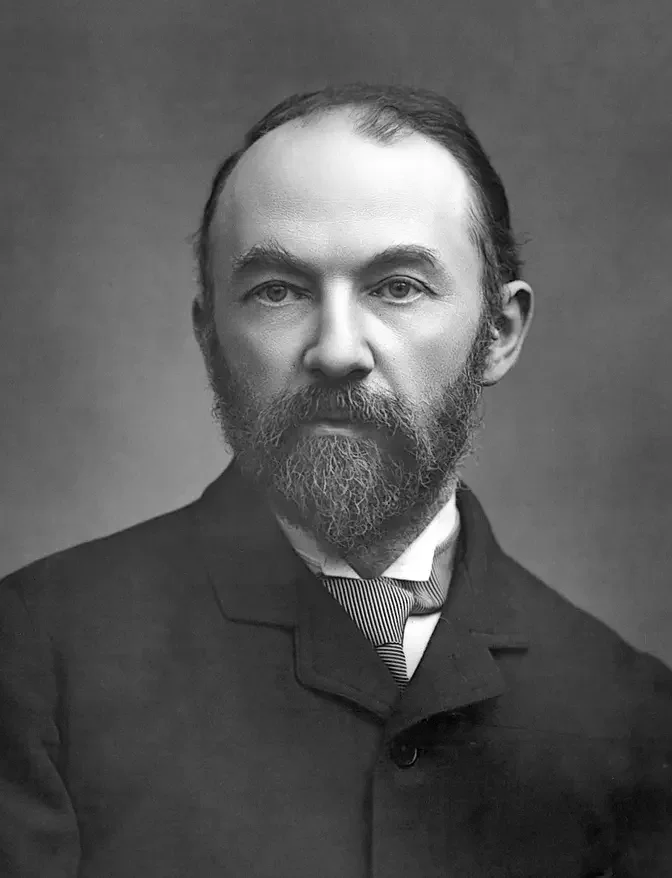
A PAIR OF BLUE EYES by Thomas Hardy, Chapter XXIV
Breeze, bird, and flower Confess the hour.
The rain had ceased since the sunset, but it was a cloudy night, and the light of the
moon, softened and dispersed by its misty veil, was distributed over the land in pale
grey.
A dark figure stepped from the doorway of John Smith's riverside cottage and strode
rapidly towards West Endelstow with a light footstep.
Soon ascending from the lower levels, he turned a corner, followed a car-track, and saw the
tower of the church he was in quest of distinctly shaped forth against the sky.
In less than half an hour from the time of starting, he swung himself over the churchyard
style.
The wild, irregular enclosure was as much as ever an integral part of the old hill.
The grass was still long.
The graves were shaped precisely as passing years chose to alter them from their orthodox
form as laid down by Martin Canister and by Stephen's own grandfather before him.
A sound sped into the air from the direction in which Castle Boterel lay.
It was the striking of the church-clock, distinct in the still atmosphere as if it had come
from the tower hard by, which, wrapped in its solitary silentness, gave out no such
sounds of life.
1, 2, 3, 4, 5, 6, 7, 8, 9.
Stephen carefully counted the strokes, though he knew well their number beforehand.
Nine o'clock.
It was the hour Elfride had herself named as the most convenient for meeting him.
Stephen stood at the door of the porch and listened.
He could have heard the softest breathing of any person within the porch.
Nobody was there.
He went inside the doorway, sat down upon the stone bench, and waited with a beating
heart.
The faint sounds heard only accentuated the silence.
The rising and falling of the sea, far away along the coast, was the most important.
A minor sound was the scurr of a distant night-hawk.
Among the minutest, where all were minute, were the light settlement of gossamer fragments
floating in the air, a toad humbly labouring along through the grass near the entrance,
the crackle of a dead leaf which a worm was endeavouring to pull into the earth, a waft
of air getting nearer and nearer, and expiring at his feet under the burden of a winged seed.
Among all these soft sounds came not the only soft sound he cared to hear—the footfall
of Elfride.
For a whole quarter of an hour Stephen sat thus in tent, without moving a muscle.
At the end of that time he walked to the west front of the church.
Turning the corner of the tower, a white thorn stared him in the face.
He started back and recovered himself.
It was the tomb of young farmer Jethway, looking still as fresh and as new as when it was first
erected, the white stone in which it was hewn having a singular weirdness amid the dark
blue slabs from local quarries, of which the whole remaining gravestones were formed.
He thought of the night when he had sat thereon with Elfride as his companion, and well remembered
his regret that she had received, even unwillingly, earlier homage than his own.
But his present tangible anxiety reduced such a feeling to sentimental nonsense in comparison,
and he strolled on over the graves to the border of the churchyard, whence, in the day-time,
could be clearly seen the vicarage and the present residence of the Swancourts.
No footstep was discernible upon the path up the hill, but a light was shining from
a window in the last named house.
Stephen knew there could be no mistake about the time or place, and no difficulty about
keeping the engagement.
He waited yet longer, passing from impatience into a mood which failed to take account of
the lapse of time.
He was awakened from his reverie by Castle Boterel clock.
One, two, three, four, five, six, seven, eight, nine, ten.
One little fall of the hammer, in addition to the number it had been sharp pleasure to
hear, and what a difference to him!
He left the churchyard on the side opposite to his point of entrance, and went down the
hill.
Slowly he drew near the gate of her house.
This he softly opened, and walked up the gravel drive to the door.
Here he paused for several minutes.
At the expiration of that time the murmured speech of a manly voice came to his ears through
an open window behind the corner of the house.
This was responded to by a clear soft laugh.
It was the laugh of Elfride.
Stephen was conscious of a gnawing pain in his heart.
He retreated as he had come.
There are disappointments which wring us, and there are those which inflict a wound
whose mark we bear to our graves.
Such are so keen that no future gratification of the same desire can ever obliterate them.
They become registered as a permanent loss of happiness.
Such a one was Stephen's now.
The crowning aureola of the dream had been the meeting here by stealth, and if Elfride
had come to him only ten minutes after he had turned away, the disappointment would
have been recognisable still.
When the young man reached home he found there a letter which had arrived in his absence.
Believing it to contain some reason for her non-appearance, yet unable to imagine one
that could justify her, he hastily tore open the envelope.
The paper contained not a word from Elfride.
It was the deposit note for his two hundred pounds.
On the back was the form of a cheque, and this she had filled up with the same sum payable
to the bearer.
Stephen was confounded.
He attempted to divine her motive.
Considering how limited was his knowledge of her later actions, he guessed rather shrewdly
that between the time of her sending the note in the morning, and the evening's silent
refusal of his gift, something had occurred which had caused a total change in her attitude
towards him.
He knew not what to do.
It seemed absurd now to go to her father next morning, as he had purposed, and ask for an
engagement with her, a possibility impending all the while that Elfride herself would not
be on his side.
Only one course recommended itself as wise—to wait and see what the days would bring forth,
to go and execute his commission in Birmingham, then, to return, learn if anything had happened,
and try what a meeting might do.
Perhaps her surprise at his backwardness would bring her forward to show latent warmth as
decidedly as in old times.
This act of patience was in keeping only with the nature of a man precisely of Stephen's
constitution.
Nine men out of ten would perhaps have rushed off, got into her presence by fair means or
foul, and provoked a catastrophe of some sort—possibly for the better, probably for the worse.
He started for Birmingham next morning.
A day's delay would have made no difference, but he could not rest until he had begun and
ended the programme proposed to himself.
Bodily activity will sometimes take the sting out of an anxiety as completely as assurance
itself.