
Biblical Archaeology From the Ground Down: Thyatira: What are Purple Dye Trade Guilds
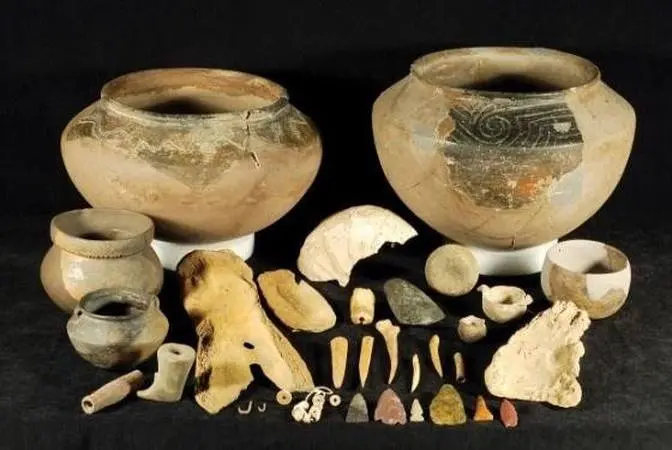
#Archaeology#archaeological artifacts
Welcome to our episode of Biblical Archaeology from the Ground Down.
Presented by Bible Interact and hosted by Dr. George Sparks.
Join us as we explore the fascinating world of the Bible from leading experts in the field of
archaeology. Thyatira is one of the seven churches mentioned in Revelation. Thyatira is an ancient
city located between Pergamum and Sardis, in the district of Lydia or Mycia. In the 1st and 2nd
centuries, it was part of the Roman province of Asia, and its population was estimated at around
25,000 citizens. It belonged to the Pergamum region or in Latin Conventus, and was an important part
of the Roman Empire. Its unique geographical location and its rich history make it an
important city. Thyatira was unlike the other seven churches. It was not a cultural hub with
grand temples, but rather had a military significance. It was well known for its many
trade guilds, but after an earthquake destroyed the town, it was rebuilt with the help of the
Roman Empire. The trade guilds played an important role in the city of Thyatira.
From the booming textile industry to the craftsmen of leatherworking,
this city was a manufacturing center driven by the skilled hands of its inhabitants.
Weaving, dyeing, and cleaning textiles was the business of the textile guilds,
while those in the leather trade included tanners, cutters, and shoemakers.
Together, these guilds created a driving economic force in Thyatira that prospered for years.
The Roman province of Lydia and especially the city of Thyatira was famous for its clothing
industry and essential to this was the dyeing process and the prominent role that the Dyer's
Guild played in city associations. Pliny the Elder believed that the purple dyeing was invented in
Sardis. Of the 103 inscriptions that contain references to purple trade, 29% are from Asia
Minor, and many of these were from Thyatira. 15 of the 28 inscriptions from Thyatira are related
to the trade of purple dyers, although no inscriptions from Thyatira mention purple
dyers, but only dyers. More than half of the inscriptions from Thyatira and the surrounding
area pertain to the textile industry. Lydia, one of Paul's first converts in Asia, was a seller of
purple cloth who likely learned her textile business in Thyatira, highlighting the importance
of the Dyer's Guild. This guild contributed greatly to Thyatira's prosperity, as attested
to by Menippus of Thyatira, who sold purple goods in Thessalonica and came from Thyatira.
Evidence suggests that women were also involved in the purple dye trade, as shown by an inscription
in the feminine form. Furthermore, inscriptions which refer to Julia Lydia Laterane of Ephesus
and Julia Lydia of Sardis demonstrate that women could achieve high social prestige in the 1st
century. The production of purple dye has been documented for centuries, with archaeological
indicators such as purple stained containers, crushed muric shells, burnt organic matter,
and various equipment like vats, cisterns, crushing and perforating tools being discovered.
Tyrian purple, the most prestigious purple dye, was extracted from mollusc shellfish found along
the Mediterranean coast in specialized workshops called tinctoria and then sold to local craftsmen.
Interestingly, some of the sites where these workshops were located are far away from the
coast. In my article for the Near East Archaeological Society Bulletin, entitled,
What is the Matter with Lydia's Purple? A re-examination of the purpurari in Thyatira
and Philippi, I elaborate on the history of Lydia and the dye-making trade in the ancient Near East.
I discuss the implications of this trade for the ancient Roman Empire, and the roles that Lydia
and her dye-making trade played in this. I invite you to read my article for more information on
this fascinating subject. All our books are listed on our website smirnayan.blogspot.com
and can be purchased on Amazon. Thank you for watching.
He has 35 years in his research in archaeological digs in the Middle and Near East.
Also, he's been at the Temple Mount Sifting Project, and also T.L. McCarter, a candidate
for biblical eye, if you will. I believe he's also been at Shiloh, right? At Shiloh.
And on the Jordanian side, it was T.L. Hammam for 15 years, where Dr. Graves and also Dr.
Scott Stripling located ancient, and it was Lydias. We were talking about Lydia. Let's
think of Lydia. Lydias. Too many L's today. And I believe that's 100% on that excavation.
So we are in his book, Jesus Speaks to the Seven Churches, and we're going to be at Thyatira.
Dr. Graves, welcome today, and let's get started. You already warned me that you
got a doctor's appointment coming up. Let everybody know your business.
So we're trying to beat the clock from the dock.
Edward, please, tell me about Thyatira. This is going to be a lot of fun.
Well, thanks, George. Yeah, Thyatira is one of the next cities of the seven churches that we're
going to take a look at. It's just down the road from Pergamum. Pergamum and Sardis are located
close to Thyatira in the district of Lydia or Mysia in the ancient Near East, or in this
particular case, it's a province of Asia in the Roman period, and the province was called Pergamum.
So the province itself was Pergamum. We have the city of Pergamum,
but now there's also a Roman province called Pergamum, and that's where this city resided.
It had a population in the first century, about 25,000 citizens. There are some interesting facts
about Thyatira that I found very, very intriguing. It wasn't a very beautiful cultured city with a
like we saw at Pergamum. It was a military location, and it was famous for its trade guilds.
Now, we have to understand trade guilds were a little bit like unions in the ancient Near East.
You would go to your union club, your guild's club, and you would have a particular god that
represented your guild, and you would sacrifice to them, but they were very, very important in
the ancient world. Two of the most famous, perhaps, is the trade guild of Purple Dyers.
There's a lot of different kinds of guilds, but the textile industry seemed to be the one that
was focused on at Thyatira. We know this because of the inscriptions. We have many inscriptions
talking about the Dyer's Guild, the Linen Weaver's Guild, the Wool Worker's Guild.
We also have Leather Work, the Tanners, Leather Cutters, and Shoemakers Guild.
So it was sort of a manufacturing center. We have the Coppersmiths Guild, the Blacksmiths Guild,
the Potters Guild, but the one that was very, very important for me and my research was
we have a lady called Lydia, the Seller of Purple, and so the Purple Dyers Guild was a
very important one at Thyatira. Now, Purple Dye, it comes from the extraction of a shellfish called
Amurix Shell in the Mediterranean, and they only would have a small amount from each of the shells.
It's the size of a pinhead. That's how much you would get out of each shell, and because they had
collect so many shells, they would smash them up and then they would collect the dye.
It became very expensive. So this kind of dye, a specific kind of shell,
and there's various different colors that comes from the different shells,
it became very expensive. So everybody that would dye their robes with their cloth purple,
it became very expensive. That's why Lydia, the Seller of Purple, was likely a very wealthy lady,
and she went to Philippi and did her sales there. Whether she actually did the dyeing or whether
she just sold the cloth, we're not sure. Apollo Trimanius was the patron god of the guild,
and it was celebrated with feasts and religious activities and sacrifices. We have actually a
photograph of one of them on one of the coins, and they elected an annual president. We have the
names of some of them. We have the guilds in most of the cities in Asia Minor, but there's a very
large concentration of them at Thyatira, and so they would have... With the discovery of a number
of inscriptions, we know a lot about the Dyer's Guild. We have a photograph actually, a fresco of
it from Pompeii depicting the Philonica, which is the dyer's shop, where they would make the cloth,
they would hang it to dry, where they would do the coloration of it, and then they would sell
the cloth to the different folks that were making it. I wrote an article on it. It was published in
the Near East Archaeological Society, dealing with the purple dyers and how it was done and
all the details of that. For a long time, people were arguing that the dyeing was done at the coast
because that's where the fish were, where the shellfish were. However, I argued that it was
also transported inland, and that's why we have it in Thyatira inland, because they can ship the dye
over land in jars and pottery. Anyway, it's a technical article, if anyone's interested in
reading more about it. But we have Lydia the Seller of Purple that I thought was very significant,
very interesting, that it was being practiced and carried out in Thyatira. Now Pliny the Elder,
in his writings, he suggested that the process was invented in Sardis, which will be one of
cities we haven't, I don't think we've looked at Sardis yet, but that's one we'll be looking
at in the synagogue there. Lydia the Seller of Purple mentioned Acts chapter 16, verses 14 and
15, and verse 40, likely a wealthy lady, lived in Philippi, probably learned her textile business
in Thyatira, because we have a number of inscriptions talking about the dyers in Thyatira,
and then she moved to Philippi to carry out her business.
And there was a demand for many different kinds of cloth in Roman society. Now the shellfish was
not the only thing that was used to dye in the ancient Near East. They also used matter root,
which is a plant, and the root from the plant can also dye fabric. And so Ramsey argued that
because Thyatira was inland that it had to be matter root, and I argued no, it could also have
been the more expensive dye from the shellfish brought over land, and that she would have been
selling fabrics to all the different strata of the culture at that period of time. Just like today,
you have the expensive shops, and then you have no frills, or the dollar store. So you would
go to different stores and different fabrics depending on the diverse quality of the purple
cloth that they were selling. The city of Thyatira also had a significant religious community. Like
all cities in the ancient world, they had many different gods, and we see this from the
numismatics, or the coins. Apollo, Trimanius, Artemis, Dionysius, coins from all of those
different gods worshipped at Thyatira. Sybil, or Tyche, was another one that was very famous
in Asia Minor, and she was worshipped at Smyrna as well as at Thyatira. Zeus, of course, or Jupiter,
this god was also worshipped at Thyatira as it was at Smyrna. Asclepius, we talked about Asclepius
and the snakes. We have the snakes in a basket on coins, a sacred snake representing Asclepius,
so he was worshipped at Thyatira as well. The imperial cult, like all cities in the Roman
Empire, had a temple. There were no temples discovered, but the imperial altar with the
imperial priests are mentioned from Thyatira. The most popular emperor that was worshipped
or venerated was Augustus, and they became involved in the provincial cult of Augustus
and Roma at Pergamum as well. Domitian was venerated at Thyatira, and so throughout her
history Thyatira enthusiastically venerated Rome and the Roman emperors. The population was mostly
Greek. It's somewhat ambiguous whether there was any evidence of Jewish community. It was a military
community, so most of them were Romans and Greeks. We have an absence of references to
Jewish elements in the message in Revelation for Thyatira as well. So a fairly small center,
25,000. We have a couple of local references, however, in the biblical text. In Revelation
chapter 2 verse 18 it says, "...the Son of God, whose feet are like fine brass,
is contrasted with the fact that the brass guild thrived in Thyatira." And we see this
on one of the coins from Thyatira. So I think that's kind of an interesting allusion
that in this particular message to this city, Jesus talks about the fine brass
and feet made of fine brass because they were producing that at that place.
It's compared to Apollo Thyramenus on their coins. We can see that in one of the coins. I'll
have some references of these. The woman Jezebel is mentioned in Revelation 2.20.
She was the Old Testament king. Ahab's wife was seduced to Israel from worship of Yahweh
through syncretism with Baal. And there's the potential for a synchronism with the imperial
cult in Thyatira. So the idea of adultery with immoral practices was also carried out
in the trade of the imperial cult. So when they would celebrate their guild,
they would practice sexual immorality, prostitution, those kinds of practices that's
mentioned in Revelation with the woman Jezebel. So I think that's kind of an interesting connection
between the guild and Jezebel and her practices of prostitution or what have you.
And we also have the deep secrets of Satan, perhaps reference to the Gnostic influence
of Gnosis. I think what's a really interesting one though is in Revelation 2.28 when it talks
about the morning star's promise to the overcomers. Now the morning star was Venus,
Aphrodite in the Roman religion, and that's contrasted with the Messianic Jewish belief
of the coming of the king as the morning star. And we actually have a coin with depiction on it
of a comet representing the eight days that it was visible with the trails pointing in all the
upwards directions. And the comet appeared after Julius Caesar's death, being called a star
by contemporary witnesses, and lasted for, as I said, eight days. And then they believed that
was his deification. And so they worshipped the emperor, but Jesus was contrasting himself as the
morning star in contrast with the deification of the Roman emperors. And that brings us to
the conclusion of our overview of Thyatira and some of the local references and the
selling of purple dye. Let me ask you some, well, for our viewers, you mentioned deities
also corresponding with coins and what they represented in that culture. So would you
suggest that coins in the ancient world were a way of media? Like this is what our city is about,
this is what's in our city, come visit us, you know, we have trains. So when we look at these
ancient coins, which we will display, it's more than just like we have today, 45 cents, 50 cents,
a penny. It's actually a way of advertising the city. Yes. And what was key to their cities,
it's a little bit like our stamps that we have made at the post office today, where we put
pictures of all the things that were sort of famous for or known for for each country.
They would do that for each city on their coins and represent something significant.
And so it was a way of us going back in history now to study these coins because we get to
study the culture. It's like reading a newspaper. And then as we're starting to wrap it up,
you mentioned that within these guilds were, you know, what makes it a guild, what makes
within that city is they got to be making money and making money is prosperity.
And in a way, it is a type of fertility. So when we talk about or when you mentioned these
fertility cults and sexuality in a Christian's perspective, the author of Revelation,
he compares it to Jezebel. But in that ancient culture, would they look at fertility as an act
of also influencing that god, that goddess to participate in making their endeavors prosperous?
Or is it just having sex? No, it's all connected. In the ancient world,
all of the society was connected with religion and with the gods.
And so you had the Romans with their god and goddesses and you had the Greeks with theirs
and Asia Minor with Tyche. And like I said, the Romans didn't care who somebody worshipped.
As long as you did your penance, you know, and did your sacrifice at the Roman temple,
you could go and practice whatever you wanted to. The guilds were like our unions today.
But they were connected and attached to religious practices. So there were feasts and celebrations,
special days that would honor them with their gods. They would sacrifice to those gods at their
guild. So when they go to their union meeting, they'd have to bring a sacrifice. And it also
was connected with, you know, giving money. So it was all connected in their culture and society,
unlike how we have it today in ours. It's a bit disjointed and sort of separate. You go to church,
to the synagogue, and then you would go to your union meetings today.
But back in those days, it was all combined and interconnected.
Another thing is, let's say we're going to, in the video, we're going to bring in some coins.
And within the coins, they'll probably show the deity and what that, and that culture would know
what that deity is about. But then we'd have to look at it. And one is, you could say tyke,
but let's say Asclepius in this case, because most people would be,
should kind of be aware of Asclepius. And with Asclepius, you see the serpent, right?
The god of healing.
So when the ancient culture, now we see a snake because of, let's say the Bible,
we think of Adam and Eve and the tree and the deception. But in the ancient culture,
when we look at the coins and it shows us that the cult of Asclepius, if you will,
and it has a serpent, usually wrapped around a pole or something. What would the ancient mind
think about that type of coin? What does that mean to them?
Well, for them, that meant, you know, the god of healing. And so it had a sort of a positive
reference. Anybody who is sick is a bad thing. We associate bad things with snakes.
But they also associated, you know, the poison, the venom with healing as well. So this was in
the ancient mind all connected together. Sometimes the emperor's picture was on one
side of the coin, and then you have a god or goddess on the other side of the coin,
or something of significance on the other side. But you always had the Roman emperor on one side
of the coin, much the same as we have today on our coins. We have one of the rulers, you know,
George Washington, or, you know, one of the fathers on one side of the coin,
and then you had something commemorating it on the other side, an eagle, or Mount Rushmore,
or something like that. So we haven't changed a lot with our coins, but they represented
what it meant to the people in that culture in that day. And that's why they're so important
for us, because we get to look back into their culture, back into their mind, back into that
historical setting with the coins, and we can figure out what was important to them and how
they lived. Okay, fair enough. You know, really, it's all very fascinating. You know,
the many times we look, I say we, I'm just including myself, and I don't read the book
of Revelation every week, you know, it's every once in a while I go back and read through it.
It's just that I sometimes presuppose, you know, over so many years, so much Hollywood,
so much information that is not exactly academic coming from the pulpit.
We, and we really don't understand the culture from which it is written.
Yes. We get, we really don't get an accurate view of what Revelation is about.
We impose our Western ideas and thinking on the text, rather than understanding the history and
geography from the text, you know, revealing to us what it meant for those first century
Christians. And when you understand the history and the culture, it helps us to better understand
what the message was being given to them, and then how we can apply it to our own culture today.
Right. So, once again, folks, we are talking about Jesus speaks to the seven churches,
and it's very affordable, as well as very thick. I went over the church of, or the location of
Thyatira last night. It started on page one, excuse me, 276. And when we get to page 288,
it focused on Lydia, who is making purple. I find that absolutely fascinating.
And it does have a connection, of course, with Acts chapter 16, verse 14 to verse 15.
And the idea that it does come from a certain shell, shellfish. Now, just a side question,
is that shellfish, the Murex shell, is it extinct now, or does it still exist?
Oh, it still exists. And I'll put a post up with the various types, there's various types of Murex
shells from the Mediterranean, and they all produce a slightly different shade of blue or
purple or pink. But we've actually, in archaeology, we find a variety of things that
we can connect to the Murex, the manufacturing plants, if you will, where this was being
produced. So, we find the shells, we find the different types of bowls that they were using,
the craters that they would use to crush the shellfish in. If it was a stinky business,
it smelled bad, you can imagine a lot of shellfish around. So, they usually had to do these
things outside of the city somewhere, because it smelled so bad. But we find all of the different,
we find a large amount of shellfish at a site, an archaeological site, that we know that they were
practicing probably this dying process. The shells, the fish were also being used to be eaten,
because you could eat the mollusks. So, just finding a few Murex shells around doesn't mean
it's purple dying. But we find all the other accoutrements in the archaeological remains,
with the large vats that they were using to crush them and soak the cloth in. And we find some other
items that we can connect to being a factory or a manufacturing plant.
You know, when you talked about the dying being outside the city,
it kind of reminds me, I could be wrong here, was it Peter that was in, or close to Simon
the Tanner's house outside the city of Joppa? Oh, yes. Yes, it's been a while since I've thought
of that. But yes, yeah, they had the part of the Tanner's Guild.
The Tanner's Guild. Now, in the Jewish culture, in the Jewish law,
was tanning outside the city because it was unclean?
Probably it was. I'm not sure on that. That's not something I looked at.
Yeah, I think, I suppose it depended on whether they're clean or unclean animals. The
coven foot. Uh-huh. Oh, yeah. You think usually, like, things that now are delicacy would be
considered abomination. You think lobster, anything that's eaten from the bottom of the ocean.
But that's a side note. I was just wondering, when you're starting to talk about
how the tanning was outside the city, that just reminds me of Peter being at Simon.
Something our viewers may not know is that the Romans loved their agorum, which was a fish sauce.
Okay. And so they had a fish sauce
that they put on everything. They just loved it. It's quite salty. But agorum is something that
the Romans just loved. I think you can find a recipe online somewhere. But anyway, we find
it in the ancient writings a lot. And we find it in the remains in some of the vessels, this agorum
fish sauce. Oh, wow. That'd be something. It's agorum. Not golem. Not golem, but agorum.
Hey, well, anyway, I really appreciate this information and your time. And we got to wrap
things up. Once again, we were in one of many Dr. Graves' books. This one is Jesus Speaks to
the Seven Churches. Make sure it doesn't have too much flashy on it here. And I do recommend,
as we do advertise it, leading into the program, and you go to his site and order these books as
their excellent resource. I've picked up so many. I read them. And even if you just read a chapter
a week, you'll eventually get through it and gain so much information. So I do encourage
this, folks. And they're good for your home and also backing up scriptures if you're a pastor,
loads of information, loads of great information and resources. And he is working on another book,
another project, which I can't wait to see this. I know it's going to take a little time.
And what's the name of it again? What are you going to call this book?
It's going to be The History of Biblical Archaeology. And we're going to look at the
archaeologists themselves and some of the fascinating stories that come along with the
work of archaeology and what they discovered. So not just the artifacts, but the people.
And I think it's important for us to understand that all these discoveries are made by
interesting and colorful individuals. Absolutely. And we know we have our pros,
we have our cons, because we're people. I think that's going to be a fascinating book. And I'll
tell you the truth, I can't wait for that one. Dr. Graves, thanks for your time. I appreciate
it very much. Good to be with you, George. Thanks. This is Biblical Archaeology from
the Ground Down, sponsored by Bible Interact. Thank you very much.