
Africa and Medieval Western Europe Wars, Kings and Political Dynamics
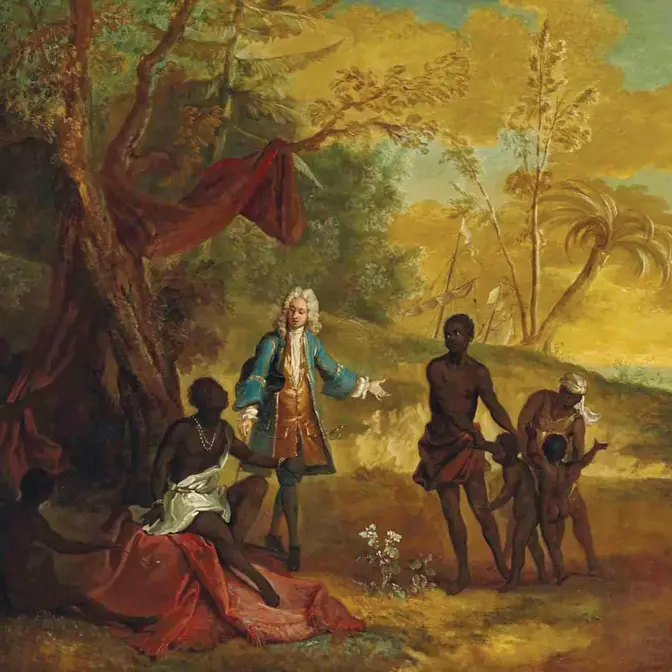
"#Renaissanc #WesternEurope #AraboBerber #MedievalHistory #Charlemagne
In this video, we explore the political struggles, wars, and key figures that shaped the relationship between Africa and medieval Western Europe. From the Arabo-Berber conquest of Spain to Charlemagne’s unification of the Franks, we dive into the economic and cultural links between these two worlds. Discover how Muslim innovations in Spain and Sicily influenced European development and laid the foundation for the Renaissanc
Hey, history lovers! Today, we're going to uncover the lesser-known but fascinating
connections between Africa and medieval Western Europe. We'll dive into political struggles,
legendary kings, brutal wars, and the economic links that shaped both continents.
If you thought Africa had no impact on medieval Europe, think again.
By the 7th century, Western Europe was a shadow of its former Roman self.
The great migration of Germanic tribes had left the Western provinces devastated.
Cities collapsed, and life became highly localized, centered on small agricultural
settlements. While the Byzantine Empire maintained its urban culture, Western Europe became a
fragmented patchwork of kingdoms. But these so-called Dark Ages weren't as isolated as you
might think. During this time, several new kingdoms emerged, the Visigoths in Spain,
the Merovingians in Gaul, which is modern-day France, and the Anglo-Saxons in England. But
despite their efforts to reorganize, they soon faced a new external threat,
one that would reshape Europe's political and economic landscape for centuries.
In the early 8th century, the Arabo-Berber conquest swept across Spain, known as Al-Andalus.
This Muslim conquest marked a massive shift for Europe, carving off a significant portion
of the Latin West. The Franks, under Charles Martel, famously halted Muslim expansion in
the Battle of Tours in 732. Yet for more than two centuries, Muslim forces continued raiding
coastal cities in southern France and Italy, keeping the Mediterranean in a constant state
of unrest. Enter Charlemagne, the greatest figure in medieval Western Europe. By the late 8th
century, Charlemagne, ruler of the Franks, had unified much of Western Europe and was crowned
emperor in 800. His empire stretched from northern Spain to central Europe, making him the most
powerful monarch in the West. Yet much of Spain remained under Muslim rule, and southern Italy
was controlled by the Byzantines and Longobards. Now let's talk about a famous historical debate
known as the Pirenne Thesis. Belgian historian Henri Pirenne argued that it wasn't the Germanic
invasions that truly isolated Europe, but the rise of the Muslim empire. According to Pirenne,
the Arab conquest of North Africa and parts of Spain severed the trade routes between Europe
and the Mediterranean, forcing Western Europe to become inward-looking, landlocked, and poor.
Without Muhammad, no Charlemagne, Pirenne said. However, modern historians disagree with Pirenne's
conclusion. While it's true that Mediterranean trade was disrupted, the rise of European feudalism
was driven by more than just economic isolation. The autarkic economy, where local estates produced
everything they needed, was already forming before the Muslim conquests.
So while trade diminished, it wasn't the sole cause of Europe's transformation.
But that doesn't mean the Muslim impact on Europe was insignificant. Far from it. Muslim rule in
Spain and Sicily brought new innovations from crops like rice and citrus to advances in science,
mathematics, and philosophy. These intellectual and technological exchanges would lay the groundwork
for the European Renaissance, long before it officially began in the 13th century.
The Muslim influence in Spain and Sicily was profound. Through the libraries and universities
of Al-Andalus, European scholars gained access to Greek, Roman, and Islamic knowledge that had
been lost or forgotten in the West. This intellectual revival would slowly spark the Renaissance,
transforming Europe from a fragmented collection of feudal states into the birthplace of modern
science and thought. So what's the key takeaway here? Africa and medieval Western Europe were
far from isolated. From the Muslim conquest of Spain to the intellectual exchanges across the
Mediterranean, these two worlds influenced each other in ways that reshaped both continents.
And the impact of these interactions echoes through history, leading to the eventual rise
of modern Europe. Thanks for tuning in to this fascinating chapter of World History.
If you enjoyed this deep dive into the connections between Africa and medieval Europe,
don't forget to like, subscribe, and hit that bell for more history you didn't learn in school.
See you next time!