
Senusret III: The Warrior Pharaoh Who Transformed Egypt's Middle Kingdom
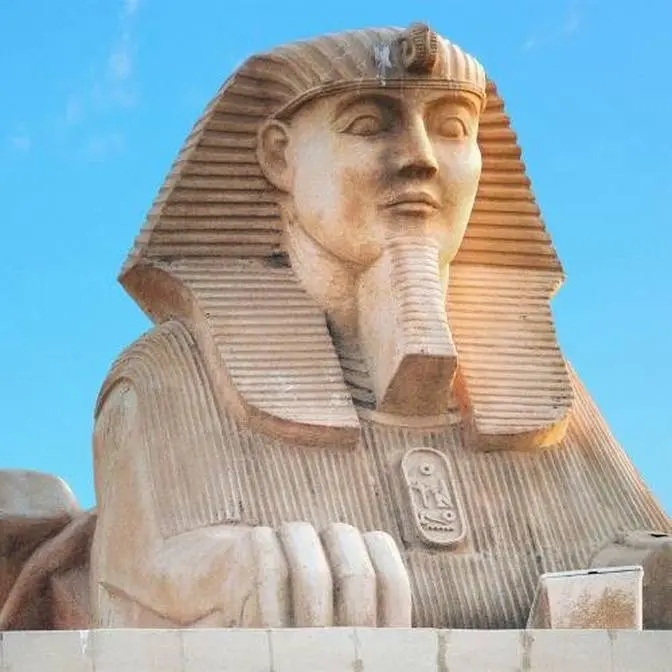
Ancient Egypt, a land of pharaohs, of pyramids and power, a civilization that has fascinated
historians and archaeologists for centuries, of life and death on the banks of the Nile,
the river that was the lifeblood of this ancient civilization, providing sustenance and a means
of transport. Among these rulers, few shine as brightly as Senusret III. His legacy is etched
in stone and remembered through the ages. He reigned during the Middle Kingdom, a time of
This era saw a revival in art, culture and architecture. Senusret III, however, was more
than just a ruler. He was a warrior, a leader who led his troops into battle and secured Egypt's
borders, a reformer and a builder. His reforms in administration and governance strengthened
the central authority and improved the lives of his people. His reign, from 1878 to 1839 BC,
marked a turning point in Egyptian history. It was a period of great achievements and lasting
impact. He inherited a kingdom, yes, but he forged it into something stronger,
more resilient. His efforts in fortifying Egypt's defences and expanding its territories
were unparalleled. A kingdom ready to face the challenges of a changing world.
His military campaigns and strategic alliances ensured Egypt's dominance in the region.
This video will explore the life and achievements of Senusret III, the warrior pharaoh who left an
undeniable mark on ancient Egypt. His legacy continues to inspire and intrigue us to this day.
To understand Senusret III, we must first understand his time, the Middle Kingdom.
This era, spanning from the 21st to 17th centuries BC, was a time of renewal.
After the instability of the First Intermediate Period, Egypt was reunited. The pharaohs of the
Twelfth Dynasty, Senusret III's lineage, brought stability and prosperity. Senusret III was born
into this dynasty. His father, Senusret II, ruled before him. His grandfather, Amenemhat I,
founded the Twelfth Dynasty. This lineage provided a strong foundation for Senusret III's reign.
He inherited a stable kingdom, but the ambition of a true pharaoh burned within him.
He would not be content with mere maintenance. He sought to expand, to fortify, to leave his own
mark on history. Little is known of Senusret III's early life. What we do know is gleaned
from inscriptions and monuments. These sources paint a picture of a prince groomed for power.
He likely received a rigorous education. He was trained in warfare, administration, and religion,
all essential skills for a future pharaoh. His father, Senusret II, likely involved him in
matters of state. This provided invaluable experience. It prepared him for the challenges
of ruling a vast and complex kingdom. When Senusret II died, Senusret III seamlessly
ascended to the throne. He was ready. He was prepared. His reign would be one of action,
of conquest, and of enduring legacy. Senusret III was a warrior king. He understood the
importance of military power. He knew that to secure Egypt's borders, he had to be prepared
for war. His reign was marked by numerous military campaigns. These campaigns expanded
Egypt's borders and solidified its position as a dominant power in the region. One of his primary
targets was Nubia. Located to the south of Egypt, Nubia was a rich source of gold and other resources.
It also posed a constant threat to Egypt's southern border. Senusret III led several
campaigns into Nubia, crushing rebellions and extending Egyptian control further south than ever
before. Section 5. Securing the Borders, Nubian Campaigns. Senusret III's Nubian campaigns were
not mere raids. They were carefully planned operations designed to establish lasting
control. He understood the importance of logistics in warfare. He built a series of forts along the
Nile, securing supply lines and creating a permanent Egyptian presence in Nubia.
One of his most impressive feats was the construction of a canal at Semna.
This canal bypassed a treacherous stretch of the Nile, allowing Egyptian ships to travel further
south. The canal at Semna was a testament to Senusret III's strategic brilliance. It facilitated
trade and strengthened Egypt's grip on Nubia, ensuring the flow of resources and curtailing
future uprisings. Section 6. Strengthening the Realm, Domestic Reforms. Senusret III's
focus was not solely on military expansion. He also implemented significant domestic reforms.
These reforms were designed to centralize power, improve administration and strengthen the economy.
He understood that a strong and prosperous Egypt depended on more than just military might.
He restructured the provincial government, reducing the power of local nomarchs or governors
and consolidating authority in the hands of the pharaoh. This reduced corruption and increased
efficiency. It also ensured that the pharaoh's will was carried out throughout the kingdom.
Section 7. Administrative Reforms, Centralization and Efficiency. Senusret III's administrative
reforms were far-reaching. He understood that a well-organized bureaucracy was essential for a
thriving kingdom. He streamlined the government, creating new positions and departments to manage
the increasingly complex affairs of state. He also implemented a system of taxation based on
land ownership. This provided a steady stream of revenue for the royal treasury, allowing Senusret
III to fund his ambitious building projects and military campaigns. This emphasis on efficient
administration and revenue collection marked a significant departure from the past. It ensured
that Egypt had the resources necessary to maintain its position as a regional power.
Section 8. Infrastructure and Building Projects, Monuments to a Legacy. Senusret III was a prolific
builder, a visionary who left an indelible mark on the landscape of ancient Egypt. He understood
the power of architecture to project authority and inspire awe. He commissioned numerous temples,
pyramids and other monumental structures throughout the length and breadth of Egypt.
These grand edifices were not just symbols of religious devotion or royal power,
but also served as vital economic hubs, bustling with activity and commerce. The temples and
monuments were intricately designed, showcasing the advanced engineering skills of the time.
One of his most impressive building projects was his pyramid complex at Dahshur. This site,
though smaller than some of the grander pyramids of his predecessors, was nevertheless a marvel of
engineering and artistry. It included a pyramid, a mortuary temple and a series of subsidiary
pyramids for his queens. The subsidiary pyramids were built to honour his queens, reflecting the
importance of royal women in his reign. The complex at Dahshur stands as a testament to
Senusret III's power and ambition, a permanent reminder of his reign etched onto the landscape
of Egypt. His legacy, immortalised in stone, continues to inspire awe and admiration
centuries after his time. The monuments he built are not just relics of the past,
but enduring symbols of a civilisation's grandeur and ingenuity.
Senusret III's reign marked a high point in the Middle Kingdom.
His military campaigns expanded Egypt's borders and secured its position as a dominant power.
His domestic reforms strengthened the central government, improved administration and
stimulated the economy. His building projects left an enduring legacy of architectural splendour.
But his impact went beyond the tangible. He left a profound mark on the Egyptian psyche.
He was seen as the epitome of the warrior pharaoh. He was admired for his strength,
his decisiveness and his unwavering commitment to Egypt's well-being.
His reign was remembered as a golden age, a time of peace and prosperity.
Senusret III stands tall among the pharaohs of ancient Egypt.
His reign marked a pivotal era in the history of this ancient civilisation.
He was more than just a ruler, he was a visionary leader who understood the challenges and
opportunities of his time. His foresight and strategic thinking set him apart from his predecessors.
He was a warrior who expanded Egypt's borders, leading his armies into battle with unmatched
courage and tactical brilliance. A reformer who strengthened its government, he implemented
policies that improved the efficiency and stability of the administration, ensuring that
the kingdom ran smoothly, and a builder who left an enduring legacy in stone and story.
His architectural projects, including temples and fortresses, stood as testaments to his reign
and vision. His reign was a time of peace, prosperity and unprecedented power for Egypt.
The economy flourished and the arts and culture reached new heights. He left behind a kingdom
that was stronger, more unified, and more prosperous than ever before. His efforts in
unifying the nation brought about a sense of national identity and pride. Senusret III's
impact on Egyptian history was profound and long-lasting. His policies and projects influenced
not only his immediate successors, but also future generations. He set the stage for the
continued success of the Middle Kingdom, laying the groundwork for future pharaohs to build upon.
Ensuring that Egypt's golden age would continue for generations to come,
Senusret III's legacy is a testament to his extraordinary leadership and vision.