
Are We About to Rewrite the History of Ancient Egypt? Unexpected Discoveries in the Desert!
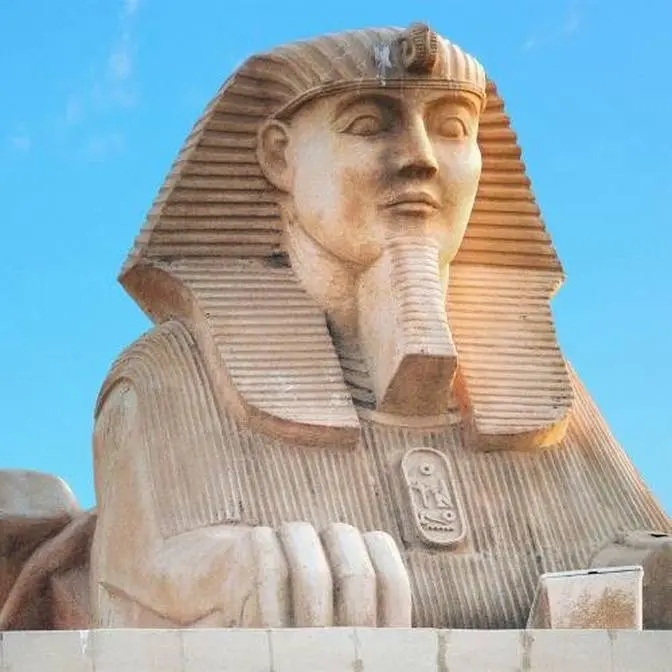
The Sahara Desert, a vast ocean of sand. It stretches as far as the eye can see.
Beneath its sun-baked surface lie secrets. These secrets are from a time long past.
They are remnants of a civilization that once flourished. This is ancient Egypt,
a land of pharaohs and pyramids, of gods and goddesses. For centuries these secrets lay
dormant, buried under tons of sand and rubble. But in recent years, there have been remarkable
discoveries. These discoveries are changing our understanding of this ancient civilization.
These finds are not just ancient artifacts, they are pieces of a puzzle. A puzzle that,
when put together, reveals a picture of a complex and sophisticated society.
A society that was far ahead of its time in many ways.
Join us on a journey as we uncover these ancient secrets. We will explore the extraordinary
discoveries that are shedding new light on one of history's most fascinating civilizations.
From the towering pyramids to the smallest amulets, each discovery offers a glimpse
into the lives of the people who lived, loved, and died along the Nile River thousands of years
ago. The desert sands are whispering their stories. Are you ready to listen?
I don't think people understand the true depth of the enigma of ancient Egypt. Ancient Egypt has
always held a particular fascination for us. Perhaps it is the sheer age of the civilization,
or the enigmatic nature of its hieroglyphics, or maybe it is the sheer scale of its monuments.
Whatever the reason, Egypt continues to captivate our imaginations. It draws us into its web of
mystery and intrigue. Recent discoveries have only served to deepen this fascination.
One such discovery was made near the Step Pyramid of Djoser. This pyramid is one of
the oldest stone structures in the world. It is a testament to the ingenuity of the
ancient Egyptians. Near this iconic monument, archaeologists unearthed something astonishing.
They found a 4,300-year-old mummy. This mummy was covered in gold. A find like this is incredibly
rare. It is a window into the burial practices of the elite in Egypt's early dynastic period.
The discovery sent ripples of excitement through the archaeological community.
It is a reminder that there is still so much we don't know about ancient Egypt.
Every grain of sand in this ancient land has the potential to hold a new secret,
a new piece of the puzzle.
The discovery of the gold-covered mummy is just one example of the many amazing finds that have
been made in Egypt in recent years. From lost cities to hidden tombs, archaeologists are
constantly unearthing new treasures. These treasures are providing us with an unprecedented
glimpse into the lives of the people who lived in ancient Egypt. We are learning about their
beliefs, their customs, and their daily lives. We are gaining a deeper understanding of their art,
their architecture, and their technology. These discoveries are not just changing our
understanding of ancient Egypt. They are also challenging our assumptions about the past.
They are forcing us to reconsider what we thought we knew about history.
Join us now as we delve deeper into some of the most extraordinary discoveries from ancient
Egypt and beyond. We will unravel the mysteries of these ancient civilizations. We will discover
the stories these artifacts tell. Prepare to be amazed by the wonders of the past.
The Step Pyramid of Djoser stands as a testament to the ingenuity of the ancient Egyptians.
In its shadow, archaeologists made a discovery that sent shockwaves through the world.
They unearthed a 4,300-year-old mummy encased in gold.
The excitement among the archaeologists was palpable. The presence of gold suggested the
mummy was someone of great importance. This golden secret not only highlighted the wealth
and status of the individual, but also provided insights into the craftsmanship and artistry of
the time. The find promised to shed new light on the burial practices and beliefs of the ancient
Egyptians. It underscored the significance of gold in ancient Egyptian culture, symbolizing
eternal life and divine protection. This discovery, set against the backdrop of the Nile,
connected the past with the present, offering a glimpse into the grandeur of ancient Egypt.
The discovery of the 4,300-year-old mummy provided archaeologists with a unique opportunity to study
ancient Egypt's elite burial practices. Gold was a symbol of immortality and divine power.
It was believed to be the flesh of the gods, ensuring safe passage into the afterlife.
The mummy's golden mask was a testament to this belief. It served as identification and a conduit
for the Ka to recognize its body. The Ka needed to reunite with the body to enjoy the afterlife.
Amulets offered protection and guidance through the underworld. This discovery offers a glimpse
into the intricate rituals and beliefs of ancient Egypt. The use of gold in the mummy's burial was
not merely symbolic. It also spoke volumes about the individual's status and wealth. Gold was a
rare and valuable commodity controlled by the pharaoh and the elite. Lavish gold adornments
suggest considerable power and influence. The quantity of gold points to a thriving economy.
The early dynastic period was a time of great innovation and development, with the unification
of Upper and Lower Egypt under the first pharaohs. From the sands and secrets of ancient tombs, we
shift our focus to a pharaoh unlike any other, Hatshepsut, a name that echoes through the halls
of history. She was a woman in a man's world, a queen who dared to rule as king. Her most enduring
legacy is the magnificent temple complex at Deir el-Bahari. After her death, her name was
systematically erased from monuments. The mystery of Hatshepsut's erasure adds another layer of
intrigue to her captivating tale. Hatshepsut's stepson, Thutmose III, is a figure often shrouded
in her shadow. His reign, though delayed by Hatshepsut's rule, would become one of the most
successful in Egyptian history. He is remembered as a great warrior pharaoh, expanding the boundaries
of the empire through military campaigns. But the question remains, what role did he play in the
systematic erasure of Hatshepsut's legacy? Some historians believe that Thutmose III, upon assuming
full power, sought to legitimize his own claim to the throne by eliminating any trace of his
stepmother's rule. Others argue that the erasure was a more complex process, perhaps driven by
political motivations or religious beliefs that we can only speculate about today. Whatever the
reason, the attempt to erase Hatshepsut's memory ultimately failed. Her story was rediscovered in
the 19th century, and she has since reclaimed her place as one of ancient Egypt's most fascinating
and enigmatic rulers. The mystery surrounding her erasure only adds to her allure, inviting us to
ponder the complexities of power, ambition, and the passage of time. Hatshepsut's story is a reminder
that history is not always a straightforward narrative. It is a tapestry woven from fragments
of evidence, often incomplete and open to interpretation. The search for answers, the quest
to uncover the truth behind the myths and legends, is what makes exploring ancient civilizations so
compelling. Howard Carter's name is synonymous with archaeological discovery. His story takes us
to the Valley of the Kings, where pharaohs, including Tutankhamun, were laid to rest.
In the early 20th century, many believed the valley's secrets had been exhausted,
but Carter remained undeterred. Driven by passion, he searched for Tutankhamun's tomb.
After years of toil, he unearthed steps leading to an astonishing discovery. In 1922, Carter and
Lord Carnarvon entered Tutankhamun's untouched tomb. The world held its breath as news spread.
The treasures, from the golden death mask to intricate chariots, captivated the public.
Carter's meticulous work set new archaeological standards. The discovery of Tutankhamun's tomb
was a watershed moment in the field of archaeology. It brought ancient Egypt into
the global spotlight, sparking a renewed fascination with its history and culture.
Carter's meticulous work, coupled with the sheer magnitude of the find, revolutionized our
understanding of ancient Egyptian burial practices and the wealth of the pharaohs.
But the legacy of Howard Carter extends beyond the treasures he unearthed.
His unwavering determination, his meticulous approach, and his deep respect for the ancient
world continue to inspire archaeologists and historians today. His story reminds us that
there are still mysteries to be solved, secrets waiting to be uncovered beneath the sands of time.
The stories of Hatshepsut and Howard Carter, though separated by millennia,
are united by a common thread, the enduring allure of ancient Egypt.
Their lives and work remind us that the past is not a closed book, but an ongoing conversation,
an invitation to explore, to question, and to marvel at the wonders of civilizations long gone.
Journey back to the reign of Rameses II, a warrior king and prolific builder.
His legacy is etched in stone across Egypt from Abu Simbel to P. Rameses.
Rameses II's reign was a golden age for Egypt. His death marked the beginning of an incredible
journey. Rameses II's body was prepared for burial with great ceremony. His tomb,
a labyrinthine complex, was filled with treasures. The pharaoh's mummy was carefully
preserved for eternity. The tomb remained hidden for centuries, rediscovered in the 19th century.
Rameses II's tomb was discovered in the 19th century. Archaeologists unearthed his tomb,
revealing a wealth of artifacts. The pharaoh's mummy was transported to France in 1885.
This journey highlighted the complex relationship between archaeology and colonialism.
Rameses II's mummy arrived in Paris, sparking fascination. Extensive examination and
conservation efforts were undertaken. In 1976, the pharaoh's mummy returned to Egypt.
Today, it rests in the Egyptian Museum in Cairo.
The Valley of the Kings held Tutankhamun's tomb. Tutankhamun's reign was brief,
but his tomb escaped plundering. The discovery of his tomb would rewrite history.
Howard Carter's meticulous work led to the discovery.
Howard Carter dedicated years to uncovering Tutankhamun's tomb.
In 1922, Carter unearthed the tomb's entrance.
The antechamber revealed a treasure trove of ancient wonders.
Wonderful things, Carter whispered. The world marveled at Tutankhamun's intact tomb.
The tomb contained a dazzling array of treasures. At its heart lay Tutankhamun's sarcophagus and
golden mask. The discovery offered a window into a lost world. A darker narrative emerged
with the discovery. Lord Carnarvon's sudden death fueled tales of a curse.
Newspapers spun stories of a vengeful spirit. The curse, though a myth, added intrigue to the
story. Tutankhamun's legacy endures due to his tomb's discovery. The discovery sparked
renewed interest in ancient Egypt. Carter's documentation set new archaeological standards.
The boy king's tomb continues to reveal new secrets. The ginger mummy offers a
glimpse into ordinary Egyptian life. Found in a shallow grave preserved by
The mummy provides insights into the lives of non-elite Egyptians.
It challenges our understanding of life and death in ancient Egypt.
The ginger mummy reveals tales of a bygone era. His remains offer insights into his diet,
health, and daily life. Simple possessions hint at his spiritual beliefs.
The ginger mummy connects us with ordinary people of the past.
The discovery of Tutankhamun's tomb with its dazzling treasures ignited a firestorm of
speculation. Whispers of a curse, a vengeful spirit guarding the boy king's eternal slumber
spread like wildfire. Newspapers eager for a sensational story linked a series of deaths
to the tomb's opening. The legend of the mummy's curse had roots in ancient Egyptian beliefs,
a culture deeply intertwined with the supernatural and the afterlife.
Tombs were sacred spaces, final resting places of souls. Disturbing a tomb was seen as a violation.
The legend of the mummy's curse, once confined to hushed whispers and sensationalized newspaper
articles, found fertile ground in popular culture. The image of the bandaged mummy
rising from its sarcophagus to wreak havoc on those who dared disturb its slumber
captured the imagination of writers, filmmakers, and artists.
The early days of cinema embraced the mummy's curse with gusto, producing a string of horror
films that played on people's fears of the ancient and the unknown. These films,
often set in exotic locations and featuring elaborate sets and special effects, presented
the mummy as a relentless force of vengeance, its wrath inescapable by those who had profaned its
tomb. The mummy's curse became a trope in literature as well, inspiring countless novels and
short stories that explored the themes of greed, obsession, and the dangers of tampering with forces
beyond our comprehension. From Arthur Conan Doyle's chilling tale of a vengeful mummy to
Bram Stoker's exploration of ancient Egyptian lore, the mummy's curse provided fertile ground
for tales of horror and suspense. The legend of the mummy's curse, though rooted in superstition,
tapped into a universal fear of the unknown, the unsettling feeling that some things are best left
undisturbed. It was a reminder that the past, though long gone, still held the power to reach
out and touch the present, sometimes with tragic consequences. The legend of the mummy's curse,
though captivating, crumbles under scientific scrutiny. Deaths attributed to the curse can be
explained by natural causes or harsh conditions. Ancient Egyptians were masters of science and
medicine. They understood hygiene and sanitation, especially with the dead. Tomb curses were meant
to deter grave robbers. No evidence suggests these curses had real power. The mummy's curse,
debunked by science, still fascinates us. It speaks to our fascination with the mysteries
of the past. From the gold-covered mummy resting in the shadow of the steppe pyramid of Djoser,
to the whispers of curses echoing through the Valley of the Kings, our journey through ancient
Egypt has been a testament to the enduring power of the past. These echoes of the past are more
than just relics gathering dust in museums or stories confined to textbooks. They are tangible
links to civilizations that thrived millennia ago. What is it about ancient civilizations that
continues to captivate our imaginations? Perhaps it's the sheer scale of their achievements,
the pyramids and temples that stand as testaments to human ingenuity and ambition.
Or maybe it's the mystery, the allure of the unknown, the secrets whispered by crumbling
ruins and half-buried artifacts. Whatever the reason, our fascination with the past is more
than just a passing curiosity. It's a fundamental part of being human, a desire to understand where
we came from, to connect with the threads of history that bind us together. By studying
ancient civilizations, we gain a deeper appreciation for the complexities of human nature,
the challenges we faced, and the remarkable resilience of the human spirit. The stories
of ancient civilizations are not just about kings and queens, battles and conquests. They're about
the lives of everyday people, their hopes and dreams, their struggles and triumphs. They're about
the innovations that shaped their world, the art and music that brought them joy, the beliefs that
gave their lives meaning. By delving into these stories, we gain a broader perspective on our own
lives, our own challenges, and our own potential. We learn that the human experience, though shaped
by time and circumstance, transcends cultural boundaries and connects us across millennia.
Our exploration of ancient secrets, though nearing its end, is but a single chapter in a much larger
story, a story that continues to unfold with each new discovery. The sands of time still hold
countless secrets, waiting to be unearthed, stories eager to be told. The field of archaeology
is constantly evolving, driven by new technologies and innovative approaches to understanding the
past. From ground-penetrating radar that reveals hidden structures beneath the earth, to DNA
analysis that unlocks the secrets of ancient lineages, we are constantly refining our ability
to piece together the fragments of history and paint a more complete picture of the past.
But the quest to uncover the past is not just about unearthing artifacts or deciphering ancient
texts. It's about understanding the human story in all its complexity, appreciating the diversity
of cultures that have graced our planet, and learning from the mistakes and triumphs of those
who came before us. As we move forward into the future, let us carry with us the lessons of the
past, the wisdom embedded in ancient stones and whispered by the desert winds. Let us approach the
unknown with the same sense of wonder and curiosity that drove those early explorers,
remembering that the journey of discovery is just as important as the destination.