
Biblical Archeology From the Ground Down: Was Jesus Really a Carpenter's Son?
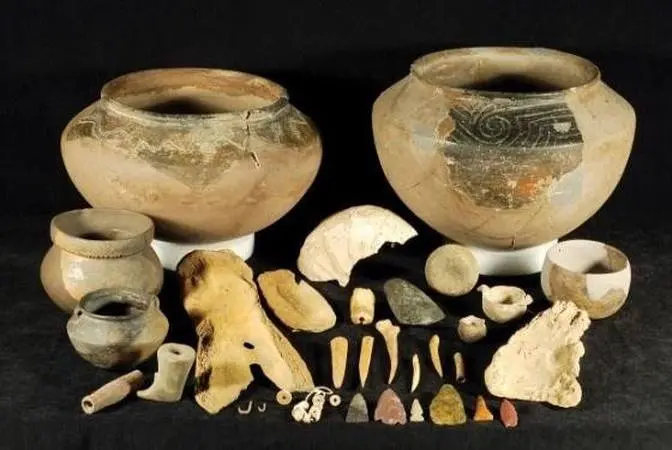
#Archaeology#archaeological artifacts
Hello, people. My name is Dr. George Sparks, and this is Biblical Archaeology from the Ground Down,
sponsored by Bible Interact. Today, I actually have a question for you, and that is,
was Jesus really the carpenter's son? Now, what made me come up with this particular title
is that in the news this week, the Civil Administration Defense Ministry in Archaeology
had a press announcement, and let me read this to you. The Defense Ministry archaeologists
announced that they had discovered a remnant of quarries and a stonemason shop on the outskirts
of Jerusalem during the work to expand a highway in the West Bank. The Civil Administration,
an agency within the Defense Ministry in charge of civil affairs in the West Bank,
said that the site was from the Second Temple Period, and that the dig revealed an entire
production center. What does that mean? Well, it was a production center for making stoneware.
Now, the Greek word for an individual that would make products of stone, whether it be,
you could say, cups or bowls or dishes out of stone, or you could say the stone that was used,
the large blocks in the Temple Mount, or the large limestone blocks that were used to construct
Herod's Temple. These types of workers were called tectons, and they were artificers and
stonemasons, and they were very skillful in what they did. Now, why would this be important? Well,
number one, remember in the Gospel where it says that Jesus went to a marriage feast with
his disciples, and they were running out of wine, so he stated that one of the servants
should pour water into what they call the ritually pure vessels, and they take this vessel,
all right, and they give it to what they call the governor of the feast. That's the individual that's
overcharge of the wedding feast, and he tastes it, and he says, this wine is superior than the wine
that you had at the beginning of the feast. The types of vessels that they used were ritually
pure. That means that they were stone vessels, all right, so the vessel that was used in this
epic event in the Gospels was actually stone vessels, ritually pure. Now, when we think of
Jesus as the carpenter's son, it's defined in the Bible in the New Testament as carpenter
more often than not. It actually comes from the Greek word tecton, so when we say,
if Jesus is the carpenter's son, and you're probably thinking to yourself, of course he's
not the carpenter's son, he's the son of God, so obviously it was a trick question. That's not what
I intended in the first place. I was looking at the word carpenter, because we think of somebody
that's highly skilled making chairs and tables along that line, when really what Jesus, Joseph,
and his family were doing, all right, were more than likely tectons by definition,
and they were stonemasons, all right, so for supporting this, the traditional
perspective comes from Mark chapter 3, Mark chapter 6 and verse 3, and also in Matthew
chapter 13 and verse 55. So in Mark chapter 6 and verse 3, it reads, it's not this the carpenter's
son, the son of Mary, and the brothers of James, Joseph, Judas, and Simon, and are not his sisters
also with us? And they took offense of him, meaning that they didn't believe that Jesus was
anything special, because they knew his family, and his family were, he was a carpenter's son,
he was a tecton. Okay, Matthew chapter 23 and verse 55. Then they scoffed, he's just a carpenter's
son, and we know Mary, his mother, and his brothers, James, Joseph, Simon, and Judas.
So with these two scriptures in mind, they both are translated, translated the word tecton
into carpenter. So in our minds, we think that Jesus was a carpenter's son
by making wood, but if you skillfully want employment during the reign of Herod,
Herod the Great, his sons, and his grandsons, you want to be a tecton, because look at these
structures that you go visit today. If you go to on a tour vacation over in Israel, you're probably
going to go to Caesarea Maritima, his seaport harbor, and also the theater, all made out of stone.
You're going to go to Jerusalem, and probably go to the western wall. Once again, it's stone, the
temple mount, the temple itself that's no longer there, but we see the stones that were thrown off
by the Romans in 70 AD. Also a very popular site, not that far from Bethlehem, and it's called the
Herodion. It almost looks like a giant volcano. Matter of fact, the base of the Herodion, this
large structure, is larger than that of the Great Pyramid of Egypt, and the structure could also be
seen from space. Something that I find fantastic about this Herodion, it's the only building that
he named after himself, Herod, and when we call him Herod the Great, it's not that he was a great man,
it's because of his building campaigns, the greatness of it, and even though we love to go
to Israel and visit those particular locations where he had these construction buildings built
by Tectons. Still, we love to visit, but we hate the individual that was responsible for their
construction. Now, with that in mind, Jesus and his family were Tectons. They were Masons, and
for gainful employment, they're probably going to be a part of Herod's building campaign
somewhere, if it's near Jerusalem or maybe somewhere in Galilee. For instance, there's a
location of a city, it was a very wealthy city during the time period of Jesus and his ministry,
the Greek name is called Cyphrus, the Hebrew name is called Zipporah. This location was actually
about four miles northwest of Nazareth, so it's just a few hours walk if one was healthy,
and it was an important Jewish center for quite a long time from the Hellenistic period
to the time of the late Roman period, so we can start with like 2nd century BC to almost the 3rd
century AD after the first Jewish revolt. Part of the Jewish Talmud was also written there,
so it's a place of learning. It is very wealthy, and during the first Jewish revolt,
when over a million Jews were killed, it is very bloody, and there's lots of destruction,
the destruction of the temple, and the final fall of Masada. Yet there is one city
that the Romans bypassed, and that was the city of Cyphrus, and there's a reason for that,
because one side of the city was Gentile, was Roman, and on the other side of the city it had
a Jewish quarter, and these two groups actually lived side by side very effectively, so much so
that during that revolt in 70 AD, around 66 to 70, the Romans bypassed it, and maybe when Jesus
was there at an early age working with his family as a tecton, he saw them working together,
and maybe this is why Jesus, I'm just thinking that maybe this is why Jesus would say to love
your enemy, because why just do good for those that agree with you, that are on your side,
but also those that have a difference, and this is kind of interesting because in the excavations
at Cyphrus, and there were over six archaeological digs, and in the excavations of the
Gentile or the Roman side, they found a most elaborate mosaic. Now, this was an extremely
wealthy town. I mean, even their shops, where people go shopping, had mosaic floors. The
synagogue there has a mosaic floor, and the walkway that they would use to approach, you
could say, these shops actually had a covering, so they had columns and a roof, so the people
that were shopping could stay out of the sun. Not only that, but when they were excavating
Sepphoris, they found a water system that was underground, and in some of the ancient writings,
they supposed that the reason why the water system was underground, instead of having an above
aqueduct, is that the people of the city thought that that might just ruin their view,
so the water system was underground. If you ever go to Sepphoris, which many tour groups do,
you can visit the mosaic called the Mona Lisa of Galilee. It was excavated possibly around
20 years ago by Carol and Eric Myers. It's a husband and wife archaeological team. It
has a banquet scene of people, you could say, drinking, and in a good portion of it, I think it
has a very attractive lady, very elegant, and for this reason, they have dubbed this mosaic
the Mona Lisa of Galilee. When I went there years ago, it was still being excavated,
but now it's underneath a building, and it's protected, and it's very clean, and it's just
amazing, beautiful mosaic, so I do recommend going to Sepphoris. And what's on the Gentile
side? Remember, I told you there's also a Jewish side. So on the Jewish side of Sepphoris,
when archaeologists were excavating, they found the ruins of homes, and in these homes,
they found ritual baths, they call mikveh baths, but also stone vessels, also dishes,
coins. Coins make an archaeological excavation a little bit easier to date, because the coins
are easily dated, but we do find these stone vessels. Why? Because it's a wealthy community,
they have the ritual baths and the stone dishes, which would mean that they are conscious of
their ritual and cleanliness, their observance of Jewish laws. In Sepphoris, there was something
else that I thought was really fantastic, besides the running water. The community actually had
their own theater, and it was a semi-circular theater, and it would seat up to around 4,000
spectators. Now, you would think, because Jesus and his family were Tectons, did they help
construct that particular theater? And the answer, according to archaeologists,
is unfortunately no, because it was built during the latter part of the first century
in the Common Era. That doesn't mean that early on, that the people of the citizens of the city
wouldn't have a smaller theater, and as the population grew, they had to enlarge the theater.
So, it's very possible that the theater that we go visit today is still in use,
was built over top of or added to an older theater, which possibly, possibly, Jesus and his
family helped construct being Tectons, being stonemasons. Now, I thought that's very interesting.
Now, being or working in a Jewish gentile environment, one could pick up on both types
of customs and traits, of course, the Jewish rituals, but also to understand the Roman way
of life and the words that they would use that were exclusively, you know, of that type of
community. Do we have evidence of that also in the Gospel? And the reason why I would ask that
or I would think that and look for it as evidence in the Gospels is because it'd be more reason to
believe that Jesus and his family had gainful employment at Sepphoris. When Jesus was talking
to the Sadducees, and he was at the temple area, and he called them something that was a very
gentile word, and he uses it eight times in the Gospel of Matthew, and he says,
woe unto you Pharisees, you scribes, you guys are hypocrites, hypocrites.
Now, that's really not a Jewish word, and it's far removed from what we think today.
Because today, a hypocrite is somebody that would say that they don't do something, and then you
catch them doing it. Maybe they say, oh, I quit smoking, and then you catch them smoking, and say,
oh, that's a hypocrite, or I no longer drink, and then you might catch them, see them drinking,
and say, oh, that's a hypocrite. That's how we think of or about that word today. Somebody that's
saying one thing and doing another, kind of like a lie. But in the time period of Jesus,
it actually means an actor or an actress of the stage. So he says to those Pharisees, you dress
up, and you play a part, and you wear large philancteries, and you also enlarge the borders
of your garments, meaning these tassels, the tallits. And you can see, no offense, I'm just
using this prayer shawl, for an example, and they'd be wearing one. It'd probably be extremely
elaborate, and these little tassels are very small. Maybe theirs was very large. Maybe I'll
let you hold it up a little. You can see that these are small, but very large and very colorful.
And then the largest of all the tassels is on the corner of the garment. You can see it has one,
two, three, four, five knots, representing the five books of Moses or the Torah.
And these are the people that are being looked up to when Jesus is saying, but you're not sincere.
You're playing a part. You're like an actor of the stage. You're hypocrites.
So we have Jesus using a very Gentile word, and you think, well, where would he pick up on that?
And how would he know to use it very effectively? And I would think that possibly when his family
was being or working at Sepphoris and Tectons, that could very well be a reason.
Now, lastly, the reason why I think that Jesus was at Sepphori, the Gospels do indicate that
as Jesus grew up, he was a very unique young man. For instance, when his parents visited Jerusalem
and he was young, possibly an early teenager, maybe 12, 13, it says that they missed him for
three days and they had to walk back and get him. And they found him at the temple and he was
talking to what they call the doctors, probably the Sadducees and the scribes, the very ones that
he calls almost 30 years later, hypocrites. And with that in mind, we would think that,
okay, he was at the temple. Here's a young man that's kind of like very smart, very unique,
and he probably has a message. This isn't yet time for him to appear as the Messiah
as he's growing up, right? It's not until he's baptized by John the Baptist and then his ministry
starts to increase. In John's ministry, of course, this has decreased. However,
I can't imagine that people would see him and he would talk, and it might be very impressive.
And as his ministry grew and he became more popular, I think people would follow him.
There's an indication for that in the Gospels as well, that Jesus would be at Sepphori as a tecton,
that Jesus would be influenced also by the words being used, the culture of the Gentiles,
such as using the word hypocrite. And also, would people follow him? Were they impressed?
Would they follow him from Sepphori, Cyprus, to Galilee, from Galilee to Jerusalem, and maybe
all the way to the cross and to his resurrection? There is a woman that was mentioned in the Gospel
Luke, and her name is Joanna. Now, there's a number of different Joannas, but they use an
epithet, a word or a name that suggests who she is among other Joannas. Like it might say Jesus,
Jesus of Nazareth. Well, this was Joanna, but not Joanna of Sepphoris. Joanna is the wife of
Cusa. Well, who was this guy Cusa? Why would they use that name, so that they would exclude her
from other Joannas? Well, Cusa was Herod Antipas' financial administrator in Galilee, and his city
of administration was, at that time, Sepphoris, even though there was a new one being constructed
called Tiberias at the southern end of the Sea of Galilee, around 20 CE of the Common Era. So,
this Joanna, the wife of Cusa, since Cusa was Herod's administrator in the area of Galilee
in the city of administration during that early time period where Jesus was growing up and in
his ministry was Sepphoris, I think that's a good indication that this lady followed Jesus
through his ministry. Matter of fact, let's read a little bit about this lady. It says,
Joanna, the wife of Cusa, is a woman mentioned in the gospel who was healed by Jesus and later
supported him and his disciples in their travels with, uses the word, sustenance. She is one of
women recorded in the gospel of Luke as accompanying Jesus and his disciples and also
a witness to Jesus' resurrection. Her husband was Cusa who managed the household of Herod Antipas,
the ruler of Galilee. This is the origin of the distinguishing epithet commonly attached to her
name, differentiating her from other figures named Joanna. So, this is more than likely the
gospel is trying to say a lady that followed Jesus from Sepphoris throughout Galilee down
to Jerusalem, possibly to the cross, and also, of course, his resurrection. So, I find that very
fascinating. So, it's a long way to go about. I hope you learned something. First of all,
in the gospel, what is the Greek word used for carpenter? It is tekton. What was the city
close to Nazareth where Jesus and his family could have worked as tektons, these stonemasons?
And where is the name of the city? Sepphoris. All right, in Sepphoris, there's a theater.
What is the actors or the actresses of the stage called? They are called
hypocrites. And who was the lady that followed Jesus from Sepphoris? A very wealthy woman.
Her husband was Cusa, Herod's administrator. And who knew that? You think Herod knew that
this Cusa, what he was paying Cusa, was actually going to support Jesus' ministry?
Nice. Who did this? Who followed Jesus from Sepphoris? The Galilee. From Galilee all the
way down to Jerusalem and was there at his resurrection. And her name was Joanna,
the wife of Cusa. Well, so anyway, folks, I hope you learned something. It has been fun.
And next time, let's say we said that Jesus was, was Jesus the carpenter's son? Well,
technically, he was a tekton. He was a stonemason. And that's the answer to the question.
Jesus and his family were stonemasons. All right, so my name is Dr. George Sparks.
Remember to like and subscribe, and have a great day. Thank you.