
Let's Explore IRELAND - DINGLE (Pubs, Beaches, Ancient Ruins & Epic Coastline)
47 Video Views·Aug 20, 2024
Jeeve, my name is Rowan and I'd like to show you around my home country of Ireland,
its natural wonders and hidden secrets. This week I'll be showing you around our stunning coastline,
secluded beaches and ancient ruins. Sit back, relax and let's explore the Dingle Peninsula.
Located in County Kerry on the southwest coast of Ireland, the Dingle Peninsula is the most
westerly point on the island of Ireland. Dingle's a Gaeltacht region, meaning Irish is the most
commonly spoken language, although English is widely spoken in the main town. The peninsula
was once home to an ancient tribal kingdom, the Cork of Gwaeibne, who gave the peninsula
its Irish language name. There are more than 2,000 archaeological sites on the peninsula,
from the clifftop fortress of Caharconry in the Sleafmish Mountains to the Ríosc monastic citadel
on the western coast. But today we're going to start in Inch Beach, near the lovely town of
With beige sands, crystal blue waters and lovely views of the Ivera Peninsula, it's the ideal place
for a relaxing stroll. It's also a really popular surfing destination with decent waves all year
round. Heading west along the coast, we come to the village of Anascall, home to the South Pole Inn
and legendary Antarctic explorer Tom Crean. During the doomed 1910 race to the South Pole,
he was responsible for the rescue of two teammates, Lashley and Evans. After marching 2,500
kilometres by foot across the ice and snow, his teammates were struck down by scurvy and exhaustion.
Crean volunteered to hike the last 55 kilometres alone, through a blizzard to get rescue.
Two years later, Crean was with Erne Shackleton when his ship was crushed in the ice. After
landing in Elephant Island, Crean and Shackleton set off in a makeshift boat for a whaling station
on South Georgia. They were blown onto the wrong side of the island, had to slide down a 2,000 metre
high drop, finally reaching the station and organising the rescue of the stranded crew.
When Tom Crean finally returned to Anascall, he saw the village only had nine pubs and decided
it desperately needed a tenth. After driving for 15 minutes, we come to Kinnard and its secluded
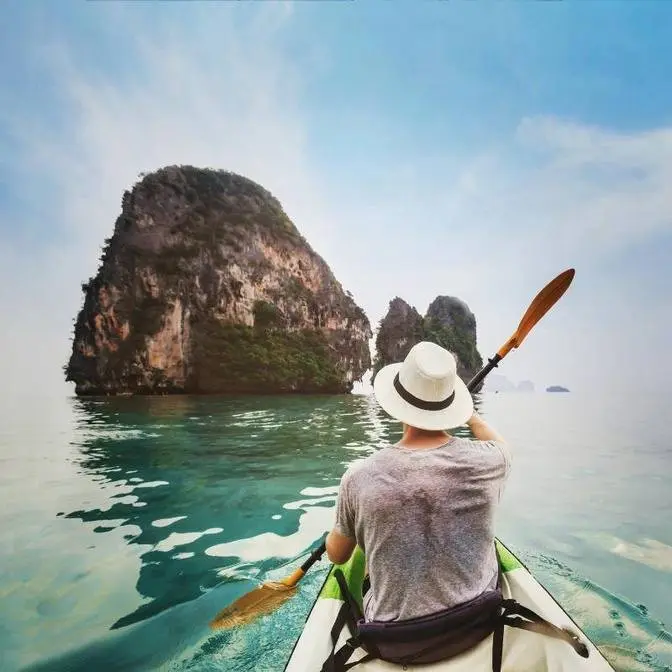
beach. It's a great place for a little swim and the more adventurous visitors can kayak out to
Anstarrock, the large sea stack in the bay. Then we come to the town of Dingle, which gave the
Dingle was once a walled mercantile city with many castles, enough to rival medieval Galway.
Today, it's a charming fishing port, whose laid-back vibes attract plenty of artisans and
creative types. It's the perfect base of operations to explore the rest of the peninsula.
What's so special about Dingle Town? Well, while there are plenty of tourist towns in Ireland,
Dingle is possibly the most Irish-y in an indigenous sense. Old Gaelic festivals such
and the town still uses old Irish orthography, meaning we can see fadas over the vales and
builches over consonants. There's a sacred stone, the Boulogne Moor, on Main Street,
nearly four metres in length. During penal times, when the Irish Catholics were being persecuted
under British rule, the local people would leave sand in the holes to let the priests
know it was safe to perform mass. You can even see our native Oam alphabet on the side of buildings.
However, most Irish people associate Dingle with Fungie the Dolphin,
Ireland's most famous bottlenosed resident. There used to be daily boat trips out to visit him,
but he sadly passed away in October 2020, after nearly 40 years of welcoming visitors to the
harbour. Today, tourists come to visit the pubs, the craftwork shops and the excellent seafood.
They also come for scoops of Murphy's Ice Cream and their uniquely Irish flavours,
now with stores in Dublin, Galway and Killarney. Personally,
I really like the Sea Salted Vanilla or the Caramelised Brown Bread.
Next to the Nath Muira Church is Undycert, home to the Irish Institute for Education and Celtic
Culture. Inside, you'll find a library and a visitor centre, a deep dive into Dingle's heritage,
and the nearby Garden Labyrinth is a really nice place to relax and drink in the sunshine.
But, if I have to be honest, my favourite place to visit is the Oceanworld Aquarium,
home to Ireland's largest collection of sharks and penguins.
Some of my earliest childhood memories are of coming here on a rainy afternoon,
hearing the droplets pattering on the roof and I'd explore these underwater tunnels.
It just had this refreshing, dreamlike quality, this cosy feeling of naive wonder,
taking shelter from an Atlantic storm.
As you leave Dingle Town, you're offered with a pair of spectacular driving routes.
To the north is Connor Pass, the highest mountain road in Ireland.
First time I visited was in 2007, and I still have my old shaky camcorder footage.
It's a narrow, twisting road with a 400m high drop,
snaking along the sheer cliffs and quarry lakes between the towns of Dingle and Kilmore Cross.
The route brings you out to Castle Gregory, on the north side of the peninsula.
At the end of a 5km long tombolo is a collection of islands known as Ní Mhachairí,
where the local farmers keep their sheep.
The largest island, Illinatonic, features a 1,500 year old monastic citadel.
Taking the western road will lead you onto the Sleighhead Drive,
a looped road which brings you out to what was once considered the edge of the known world.
And yes, this is part of the Wild Atlantic Way, the world's longest coastal driving route.
Our first stop is the beach at Ceann Trá, also known as Ventry.
In good weather, you'll often find people swimming or horse riding,
but if it's raining, there's a museum nearby with about 6,000 years worth of archaeological history.
Further on down is the Iron Age fortress of Dun Beg,
perched on a cliff overlooking the Atlantic.
Most of the fort has now fallen into the sea,
but if you really want to immerse yourself in ancient Ireland,
there are some exceptionally well-preserved buildings at Adán o Chualachán's farm in Fafn.
This is a clocán, a uniquely Irish style of building.
Built without mortar, they were a common type of house during the Gaelic Age.
In English, we sometimes refer to them as beehive huts because of their shape,
although I like to think of them as stone igloos.
In ancient times, there was an entire city of these clocán,
spread out across the sloping coastline.
Archaeologists have discovered more than 400 of these buildings in Dingle,
along with nearly 20 underground passageways.
Of course, this being a farm on the west coast of Ireland,
there are some very fluffy, woolly residents living nearby.
And as part of the tour,
Adán will offer visitors a chance to feed a hungry sheep and hold a baby lamb.
After looping around the towering cliffs at Sleigh Head,
we come to a viewpoint called Ríoch na hIlan.
Here, you'll find some spectacular views of the Blasket Islands,
a cluster of six islands out in the Atlantic,
inhabited until a terrible storm in 1954.
Sitting on the rugged coastline,
gazing out over the blue Atlantic and the offshore islands while seabirds circle overhead,
it's like you've fallen into a postcard.
Nearby is the village of Dún Cuinn,
once home to Dolores O'Riordan, the lead singer of the Cranberries.
Here, you'll find Cuminole Beach.
On a quiet day in sunny weather, it's a little paradise.
Nearby is the pier of Dún Cuinn, the gateway to the Blasket Islands.
Islanders would often climb these steps in the past,
carrying their Courrook boats on their backs.
This is where the seasonal boat tours depart,
bringing visitors out to the Blaskets.
These islands were once known as Ilán na Fuertre,
named after the local ferretor tribe.
The modern name comes from the old word the Viking raiders used for the area,
Brascair, meaning a dangerous place.
But for the native Irish, it was home.
The largest island is on Blasket Moor,
with Little Beganish to the east.
Blasket Moor was once home to some of the most famous writers
of modern Irish language literature,
like Peg Sayers, Muirse O'Sullivan and Tomáš O'Critain.
In Ireland, we often study their work as part of our high school curriculum.
To the north is Inis Tuiscirt.
Locals say he looks like a sleeping giant.
To the south is Inis Ficallán,
once home to a Gaelic monastery
and later purchased by a former Irish Taoiseach.
Beside it is Inis na Bro,
with its spooky cathedral rocks.
Finally, there's Antiocht,
rising like a black pyramid out of the Atlantic Ocean.
It's the most westerly point in the Republic of Ireland.
The unique lifestyle of the Blasket Islanders
can be explored inside the visitor centre on the mainland,
the Anadla Blascaid.
Personally, I really liked learning about the Náibh Uags,
the traditional fishing boats of the Blasket people.
Nearby is a walking trail,
which loops around the cliffs of Dún Cuinn,
allowing visitors to explore the desolate landscape.
Believe it or not,
this was the filming location for a movie called Ryan's Daughter.
The trail leads all the way out to Dún Mór,
the most westerly point in the Irish mainland.
If you keep swimming for another 3,000 kilometres,
eventually you'll reach Canada.
But for now, we'll continue north towards Ardnacatna,
taking in some lovely views of Ceann Sibeil,
where the recent Star Wars movies were filmed.
Here, we can find examples of Dingle's ancient monastic buildings,
the most famous of which being the Galerys Oratory,
built more than a thousand years ago.
Like the Cluckán we saw earlier,
the dry stone building is watertight
and shaped like an upturned boat.
It was a pilgrimage centre during the Gaelic Age,
but there's a local tradition as well.
If you can climb out through the small window at the back of the chapel,
you'll be guaranteed a place in heaven.
But if you want to escape the crowds,
you can head to the monastic ruins of Kilmacéadair,
where you'll find chapels,
elm stones,
and an ancient Gaelic sundial.
Kilmacéadair is one of the starting points for Cusann na nÉamh,
an 18-kilometre-long pilgrimage route
up to the top of Nockbrannon,
also known as Mount Brandon.
It's Dingle's highest mountain and Ireland's eighth-highest peak.
The mountain is named after Saint Brendan the Navigator,
Ireland's most famous monastic sailor.
Sometime between 512 AD and 530,
Saint Brendan left Ireland
and used the islands of the North Atlantic as stepping stones
and set foot in North America.
By all contemporary accounts,
Saint Brendan was the first European to reach North America,
more than 500 years before Leif Erikson
and nearly a millennium before Christopher Columbus.
There were some very interesting things recorded during Saint Brendan's voyage,
such as an island with rivers of golden fire and flame-throwing demons.
Many speculate that these were in fact the volcanoes of Iceland,
and when they're talking about crystal pillars floating in the ocean,
they're in fact talking about icebergs.
Mount Brandon can be a very challenging climb,
but when the sky is clear,
the views from the peak are truly breathtaking.
When evening falls,
in my opinion,
there's no better place to go than one of Dingle's many pubs.
There's An Drochad Beog, which offers trad music every night.
There's Foxy John's, which still doubles as a hardware store.
But my personal favourite is Dick Mack's,
more than 120 years old.
Excellent ambience, colourful snugs,
as well as their own brewery.
If you're fond of dark beer,
I highly recommend their coffee stout.
In the old days,
pilgrims would come from far and wide to lose themselves in Dingle,
and I guess some things never change.
As a child,
I was often brought on family holidays to Dingle,
but it was only after travelling the world
I came to appreciate how special it truly is.
Next time,
we'll be moving away from Ireland's peaceful Atlantic coast
to the largest city on planet Earth,
where we'll find temples, dragons and sumo wrestlers.
But don't worry,
we'll be exploring more of Ireland again soon,
so leave a comment down below
and let me know where you'd like to see in the next video.
Thank you so much for coming along with me.
Don't forget to click that like button
and subscribe for another adventure.
See you next time!