
Bruce Lee’s Daughter Reveals the Awful Truth About Him
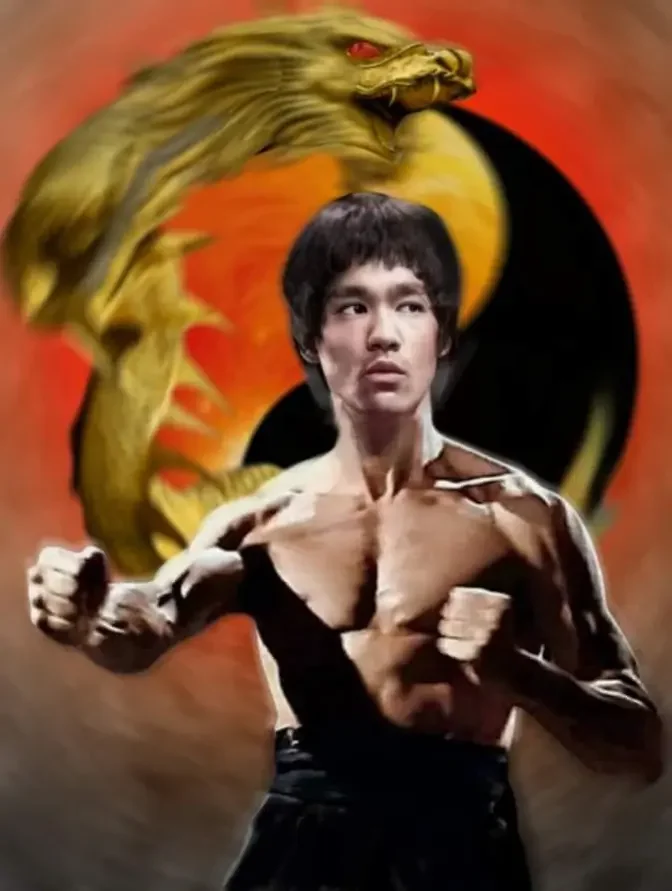
1.6K Video Views·Jun 21, 2024
It gives you this sense of, you know, internal strength,
I think, which is like the most amazing part of it.
More than the external strength, it's the internal strength.
Renowned as a martial arts legend and pioneer,
Bruce Lee revolutionized action cinema for what it is today.
His lightning-quick strikes and profound philosophies
made him a global phenomenon,
representing the pinnacle of human focus and potential.
But shockingly, after he died at age 32,
rumors and assumptions about his marriage, drug use,
and death spread like wildfire.
Now, 50 years later, his daughter, Shannon Lee,
is finally speaking out to set the record straight
about the man behind the icon,
revealing details that ended up leaving fans shocked.
Before we take a look at these details,
let's try to understand why he ended up
doing the things he did.
Bruce Lee's early life and family.
Bruce Lee was born Lee Jun Fan
in San Francisco, California in 1940,
while his parents traveled through the United States
on an opera tour.
Lee's father, Lee Hoi Chuen,
was a famous Cantonese opera singer and actor in Hong Kong.
His mother, Grace Ho,
came from a wealthy Eurasian family in Hong Kong
with English, Chinese, and Dutch ancestry.
When Lee was just a few months old,
his family returned to Hong Kong
where he would spend his early childhood.
The Lee family lived an affluent lifestyle in Hong Kong
due to Lee Hoi Chuen's successful acting career.
However, their lives changed dramatically
when Hong Kong fell under Japanese occupation
during World War II from 1941 to 1945.
Like many Chinese families during the war,
the Lee's struggled through harsh living conditions
and limited resources.
There was intense hardship during this period
before the Japanese finally surrendered in 1945.
Once the war ended, Hong Kong began rebuilding
and Lee's father continued his opera career.
His status as a famous singer
afforded the family some privileges,
including enrollment for Lee at Tak Son School
at the age of 12.
But academic life did not come naturally
to the restless athletic boy.
After struggling at Tak Son School for several years,
his parents transferred him to the Catholic La Salle College
and then St. Francis Xavier's College,
hoping he would fare better.
As a teenager, Lee began getting into fights
with local gangs frequently.
His frustrated parents decided
he needed more structure and discipline,
so they arranged for him to begin studying
Wing Chun Kung Fu under the great master, Yip Man.
Though Lee showed great enthusiasm for martial arts,
his training almost ended before it began
due to his mixed ancestry.
At that time, many Chinese masters
refused to teach non-pure Chinese
and only accepted Lee after his friend vouched for him.
Later in his training,
Lee's heritage became an issue again
as the other students resisted working with him
once they found out he was part Caucasian.
But Lee persevered and continued studying privately
with Yip Man and a few select students.
Under their mentorship, Lee excelled quickly.
By the age of 18, he was already defeating opponents
in major Hong Kong boxing competitions.
However, his fighting on the streets and in competitions
was causing his parents grief.
After Lee badly beat a rival gang member in a fight,
they decided to send him to the United States
just before his 19th birthday.
They hoped he would have more opportunities there
and avoid trouble with the police.
Lee's older sister, Agnes, and several family friends
were already established in San Francisco,
so Lee moved there first
before settling in Seattle to finish high school.
Over the next few years,
Lee focused on his education and martial arts training
while living with various friends
and working odd jobs around Seattle.
He started teaching his own version of Wing Chun,
which incorporated techniques from other fighting styles
he learned along the way.
Among his first students were Jesse Glover,
who later became his assistant instructor,
and several judo practitioners he met
through his friend and mentor, James Yim Lee.
By 1961, Lee had set up
his own martial arts school in Seattle
and also enrolled at the University of Washington,
studying philosophy and drama
alongside his martial arts training and teaching.
But he soon dropped out as teaching martial arts
and developing his own Jeet Kune Do techniques
became his overwhelming passion.
In 1964, Lee was invited
to give a martial arts demonstration
at the Long Beach International Karate Championships.
There, he performed his famous one-inch punch
against volunteer Bob Baker.
Lee stood upright with his fist an inch from Baker's chest
and delivered a powerful blow,
sending Baker flying backward into a chair.
Baker later said the pain from that single punch
was so intense he had to stay home from work
for several days.
Around this time, Lee also fought Wong Jack Man,
a well-known Kung Fu master in San Francisco's Chinatown.
It was an intensely competitive fight
apparently sparked by Lee's willingness
to teach white students, which Wong took issue with.
Details remain controversial,
but it was clear Lee's victory helped cement his reputation
and his right to teach anyone interested
in learning from him.
By the mid-1960s, Lee had established himself
as an incredibly skilled and unorthodox martial artist,
attracting students eager to learn the techniques
he called Jeet Kune Do, the way of the intercepting fist.
When Hollywood producer William Dozier
saw Lee give an impressive demonstration
at the 1967 Long Beach International Karate Championships,
he invited Lee to audition for a role
in the TV series, Number One Son,
about the adventures of Charlie,
his controversial road to fame.
Before we take a look at his darker side,
let's take a look at his road to fame.
You see, prior to his invitation to audition
for a role in the TV series, Number One Son,
Lee was making a name for himself
with some small acting roles.
In 1966, at the age of 25,
Lee got his first major role playing Kato
in the TV series, The Green Hornet.
This introduced Hong Kong martial arts
to many American viewers for the first time.
As a professional martial artist,
Lee refused to use typical American fist fighting,
insisting on employing his Wing Chun techniques instead.
This led to innovations like slowing down
his blindingly quick moves
so they could be filmed properly.
Lee became friends with Gene LaBelle,
a stuntman on The Green Hornet,
and the two exchanged fighting knowledge.
Though the show was canceled after only one season,
it brought Bruce Lee recognition
and planted the seeds for stardom.
After the cancellation of The Green Hornet in 1967,
Lee found himself lacking direction and out of steady work.
He opened a small martial arts school in Los Angeles,
named the Jun Fan Kung Fu Institute,
where he began formulating his own unique approach
to martial arts.
Lee had become disillusioned
with the traditional styles he had learned,
feeling they were too rigid and formalized
to be practical in real combat situations.
He emphasized adaptability in a style of no style,
cherry picking the most effective techniques
from various disciplines.
At his school, Lee started to develop and refine the system
that would eventually become known as Jeet Kune Do,
or the way of the intercepting fist.
It was a revolutionary concept at the time,
with Lee incorporating elements of Wing Chun Kung Fu,
boxing, fencing, and other arts into his framework.
He also pioneered weight training
and strength conditioning for martial artists
while placing emphasis on physical fitness
and practical application.
Lee found a circle of celebrity students and supporters,
including Hollywood script writer, Sterling Sillifant.
Sillifant helped Lee get work as a fight choreographer
and land minor acting roles.
In 1969, Lee choreographed the fight scenes
for films like Marlowe and The Wrecking Crew,
as well as appearing in shows
like Here Come the Brides and Blondie.
But he still struggled to get leading roles
and felt pigeonholed by Hollywood due to his ethnicity.
During that time, he also collaborated on a film script
titled The Silent Flute,
with screenwriter Sterling Sillifant
and actor James Coburn.
While not produced at the time,
it provided valuable learning.
By 1971, Bruce Lee had become frustrated
with only receiving minor supporting roles.
He longed to be a star
and display his talents on the silver screen.
Producer Fred Weintraub suggested
that Lee returned to Hong Kong to make a feature film,
which he could showcase to Hollywood executives.
At first, Lee did not realize
he had become a celebrity across Asia
from his performance in The Green Hornet,
which had been unofficially dubbed The Kato Show
when it aired on Hong Kong television.
After negotiations with major studios like Shaw Brothers,
Lee signed a two-picture deal
with upstart studio Golden Harvest.
The first of these, The Big Boss, was released in 1971.
In it, Lee plays a young Chinese man who moves to Thailand
and ends up fighting against the illicit drug trade.
The film featured Lee's artistic martial arts skills
as well as his philosophy,
showcasing his talent for the first time as a leading man.
Though low budget,
The Big Boss broke box office records across Asia.
It catapulted the unknown actor to stardom overnight.
Riding the momentum,
Lee starred in Fist of Fury later that same year.
Set in Shanghai during the 1930s,
Lee played a martial arts student
seeking to avenge his master's murder.
He fights opponents using powerful punches,
wide arcing kicks, and innovative nunchaku techniques.
Lee performed all his own stunts,
emphasizing emotional intensity
and spiritual philosophy between fight scenes.
Like The Big Boss, Fist of Fury
was a major commercial success,
breaking the box office record set by Lee's previous film.
For his third Hong Kong feature in 1972,
The Way of the Dragon,
Lee was given complete creative control.
He wrote, directed, produced, choreographed,
and starred as a young martial artist
who defends family members threatened by the mob.
This film contained Lee's lengthy, iconic fight scene
against Chuck Norris in the Coliseum.
Their duel is considered one of the greatest fights
in cinema, marrying athleticism and brutality.
The Way of the Dragon took in a staggering
5.2 million Hong Kong dollars,
Lee's highest-grossing film ever.
Now a bona fide movie star,
Lee formed his own production company
called Concord Production Inc. with Raymond Chow.
His next endeavor would be his first Hollywood co-production,
1973's Enter the Dragon.
This was the first kung fu film
produced by a major Hollywood studio.
Warner Brothers set on an island
hosting an international fighting tournament.
Lee played a Shaolin monk recruited
to spy on the proceedings.
Enter the Dragon was a global phenomenon,
earning over $90 million worldwide.
It cemented Lee as a martial arts legend
and sparked a worldwide kung fu craze.
Tragically, just days before the premiere of his biggest hit,
Bruce Lee died at age 32.
Though his meteoric career was short-lived,
Lee became an international icon
and introduced Chinese martial arts cinema to the mainstream.
He pioneered martial arts choreography for the screen
using innovative camera angles and editing techniques.
Lee emphasized emotional characterization
and philosophy alongside physical technique.
Even after his shocking death,
Lee's legend continued to grow.
Unfinished footage he had shot
for his last film, Game of Death,
was later cobbled together by Golden Harvest
using lookalike actors, stunt doubles,
and existing Lee footage in 1978.
In the 1990s and 2000s, interest began to rise
in Lee's unique martial arts and philosophical perspectives.
His writings on topics like self-actualization
and emotional liberation were found inspiring by many.
Bruce Lee bridged the gap between Hong Kong action cinema
and Hollywood like no one before.
Lee's films made the Hong Kong film industry
globally prominent.
He paved the way for future martial arts stars
like Jackie Chan and Jet Li.
His groundbreaking fight choreography
has been studied and imitated by filmmakers ever since.
Bruce's family, romances, and infidelity.
While studying at the University of Washington,
Bruce Lee met Linda Emery, a fellow student.
Interracial marriage was still banned
in many states at the time,
so they wed in secret in August 1964.
Together, they had two children,
Brandon, born in 1965, and Shannon in 1969.
Yet behind the scenes,
Bruce was still a flawed human like anyone else.
He struggled at times with the temptations
that came with fame,
not always remaining faithful to Linda
despite their close bond.
She heard all the gossip swirling about his affairs,
but chose to turn a blind eye rather than confront it.
Actress Sharon Farrell later fondly described
a passionate tryst with the martial arts legend
at the height of his fame.
Still, Linda remained devoted to Bruce.
On the day Bruce died,
he was with actress Betty Ting Pei,
fueling public rumors.
But Linda staunchly defended her husband
even after his passing,
standing by the intimate love they shared.
In a letter rebutting sensationalized claims
about his death,
she made it clear that as his wife,
she knew the real Bruce,
not the exaggerated media myths.
Their marriage weathered its storms
to still shine bright in her memory.
Linda was devastated when Lee suddenly died in 1973
due to an allergic reaction,
but she worked tirelessly over the decades
to continue promoting his art of Jeet Kune Do
and manage his estate.
She wrote an intimate biography
of her late husband in 1975,
which became the basis for the 1993 film Dragon,
the Bruce Lee story.
Their son Brandon inherited Bruce's passion
for martial arts.
As a child, Brandon learned directly from his father
and visited him on set.
He grew determined to follow in Lee's footsteps
as an action star.
After some early roles,
Brandon was tragically killed in 1993 at age 28
by a prop gun accident on the set of The Crow,
eerily similar to how his father passed.
Shannon was only four when her beloved father died.
She later studied Jeet Kune Do under her father's students
to connect with his legacy.
Though she focused on acting at first,
Shannon became more dedicated to martial arts in adulthood.
She now heads the Bruce Lee Foundation,
managing her father's estate and promoting his teachings.
Linda has since retired from the foundation,
but even in her late seventies,
she still strives to keep Bruce's memory alive,
seeing her role as almost a sacred duty.
She wants both his legions of fans and their family
to know the extraordinary man behind the screen icon,
not just the intense image of strength,
but his philosophy of compassion.
Decades later, Linda and her children
continue to receive new generations of Bruce Lee fans
at the foundation.
Young people awed by his films
and eager to learn his techniques.
They explain he was not just a master fighter,
but also a profound thinker and caring family man.
The awful tragedy is that Lee's own family lost him so soon,
just as his fame was taking off.
Yet his loved ones persevere
in sharing his legacy with the world.
Bruce's death and very serious rumors.
The shocking death of Bruce Lee
at the tragically young age of 32
has generated endless speculation
and conspiracy theories over the decades.
As his devoted daughter Shannon
grapples with her father's complex legacy,
she seeks to separate fact from fiction
regarding the mysterious circumstances around Lee's passing.
By 1973, Bruce Lee was at the height of his fame
as a martial arts superstar
and pioneering Asian actor in Hollywood.
On July 20th,
while visiting the home of actress Betty Ting Pei
in Hong Kong,
Lee suddenly collapsed
after taking a painkiller for a headache.
He was rushed to the hospital,
but died shortly after arriving.
The official cause of death was ruled as cerebral edema
or swelling of the brain,
likely as a complication from a previous collapse
Lee had suffered two months prior.
But this unexpected loss of a vital celebrity in his prime
sparked immediate questions.
Rumors swirled of love affairs, drug abuse,
mafia vendettas, even family curses.
Sensational headlines portrayed Lee's death
as the last act in an evening of wild partying
or eccentric sex games gone wrong.
Lee's wife Linda was forced to fend off offensive claims
that tarnished her husband's name.
For Shannon, just four years old
when her beloved father died,
protecting his legacy from rumor and innuendo
became a lifelong struggle.
In the chaos after Lee's death,
producer Raymond Chow had falsely claimed
Lee was at home with Linda that fateful evening.
When Chow's deception was uncovered,
speculation mounted that Lee was instead engaged
in a torrid affair with Betty Ting Pei.
Enraged fans blamed Ting Pei for Lee's demise.
I received threats that my life was in danger
as revenge for Bruce,
a terrified Ting Pei confessed years later.
Though no evidence ever indicated they were lovers,
the damage was done.
Bruce Lee's reputation would be forever linked
to the beautiful actress who spent his final hours with him.
Equally persistent were accusations
of a fatal drug overdose.
Traces of cannabis were found in Lee's system,
fueling rumors of substance abuse
despite medical opinions debunking claims
it caused his death.
Speculation expanded over the years to cocaine,
LSD, and other hard drugs as well.
For Shannon, already robbed of her beloved father,
such rumors only deepened the pain.
In truth, an allergy to meprobamate,
the tranquilizer ingredient in the equigiesic painkiller
given to him by Ting Pei,
was the likely culprit behind Lee's brain swelling.
But conspiracy theories continued swirling.
Some claimed Ting Pei was an assassin
working for Chinese triads
who wanted Lee dead over unpaid protection debts
or as competition to mainland cinema.
Others pointed the finger at Raymond Chow,
implying Lee's ambitious business partner
orchestrated his demise to seize control
of their production company, Concord,
and fully capitalize on Lee's posthumous fame.
Chow stood to gain immensely from complete ownership
over Lee's hit films,
Enter the Dragon and Game of Death.
Most outlandish is the belief that the Lees were cursed
as Shannon's grandparents had lost a son
before Bruce's birth.
True believers cite the early freakishly similar deaths
of both Bruce and his son, Brandon,
as evidence of this hex on the Lee men.
Of course, such supernatural explanations
ignore realistic factors like Brandon's accidental shooting
on the film set of The Crow.
For Shannon Lee, all these rumors and innuendos
have made preserving her father's legacy
tremendously difficult.
As sole heir to the Bruce Lee estate,
she has devoted herself to protecting his image
and sharing his talents with new generations of fans.
Yet outrageous conspiracy theories
continue swirling around Bruce Lee decades after his death,
forcing Shannon to repeatedly defend her father's name.
While the full truth behind Bruce Lee's
shocking early demise may never be known,
his daughter rejects all sensational claims and speculation.
Shannon wants her father remembered
for what he brought to the world while alive,
the dazzling charisma, the work ethic,
the profound martial arts.
She keeps his memory alive
not through conspiracy or controversy,
but by passing on Bruce Lee's teachings,
a precious inheritance she shares with all.
Bruce's daughter speaks out.
After years of silence,
Shannon Lee finally breaks her silence
in an explosive tell-all.
But will her shocking revelations only deepen the mystery?
As the sole heir to Bruce Lee's estate,
Shannon Lee has devoted herself
to protecting her father's legacy
from misinformation and controversy.
Now, 50 years after his shocking death,
Shannon is opening up about the real Bruce Lee
and setting the record straight
regarding suggestive rumors
that have haunted her family for decades.
Shannon revealed in a recent interview
that her father was always ahead of his time.
She noted that he had a strong philosophical foundation
and believed in constant personal growth,
implementing timeless principles into his life.
Shannon said that her father exercised his mind
as rigorously as his body.
She explained that he had the ability to direct his mind
to manifest what he wanted.
Shannon thinks that is why people see him
as representing boundless human potential.
It's very invigorating.
However, Shannon pointed out
that not everyone has embraced Bruce Lee's legacy.
She called out director Quentin Tarantino
for his portrayal of Lee as an arrogant asshole
in his 2019 film, Once Upon a Time in Hollywood.
While Tarantino defended this as creative license,
his subsequent comments further enraged Shannon.
Shannon explained that in the film,
Tarantino depicts Bruce losing a fight
to stuntman Cliff Booth.
But in real life,
Cliff would never have stood a chance against her father.
Shannon said Bruce Lee was a real fighter
with actual documented wins.
She added that she's tired of white Hollywood,
portraying him as some Kung Fu stereotype
when he was the real deal.
She also slammed Tarantino's implication
that unlike the fictional war hero Booth,
her father wouldn't survive in the jungle.
Shannon called out the racist notion
that the skills of an Asian martial artist
were somehow inferior to a white stuntman's capabilities.
Shannon noted it's ironic
because Tarantino clearly idolized
her dad's Kung Fu films for Kill Bill.
Yet he continues disrespecting Bruce Lee's combat prowess
and legacy, according to her.
Shannon said he should have consulted their estate
to fact check before making such insulting depictions.
Shannon also fired back against accusations
her father was embroiled in crime and substance abuse.
She insisted it's outrageous how the media
tried linking his death to triad debts,
cocaine binges or love affairs.
Shannon stated her father had never touched
hard drugs in his life,
but people ignored the medical facts
and instead turned his death into a circus sideshow,
according to her.
Shannon explained the awful truth is far less salacious
than the fantasies invented by tabloids.
Her father simply suffered complications
from a pain medication while recovering
from a previous health issue.
Shannon insisted that her father's death
was an unfortunate allergic reaction,
not a drug overdose or immoral scandal
like detractors had claimed.
She said that their lies had deeply hurt their family.
She described surviving such rumors and innuendo
as her lifelong struggle as Bruce's devoted daughter.
Shannon seems definitely not interested
in conspiracies and controversies.
She declared that she shared his talent and teachings
to keep his true spirit alive.
She rejects sensational claims,
instead passing on Bruce Lee's profound philosophies
and tireless drive.
The authentic attributes that made him legendary.
She said proudly that 50 years later,
people still see her father as representing
the best in human achievement and ability,
but she worries that those who actually knew him
are disappearing, letting others define his complex story.
So Shannon explained she is here to speak the truth
about Bruce Lee's life and his awesomeness.
What do you think about Bruce Lee?
Make sure to subscribe to the channel
and let us know.
Thanks for watching.