
At Christminster Again, Chapter 3 - Jude the Obscure
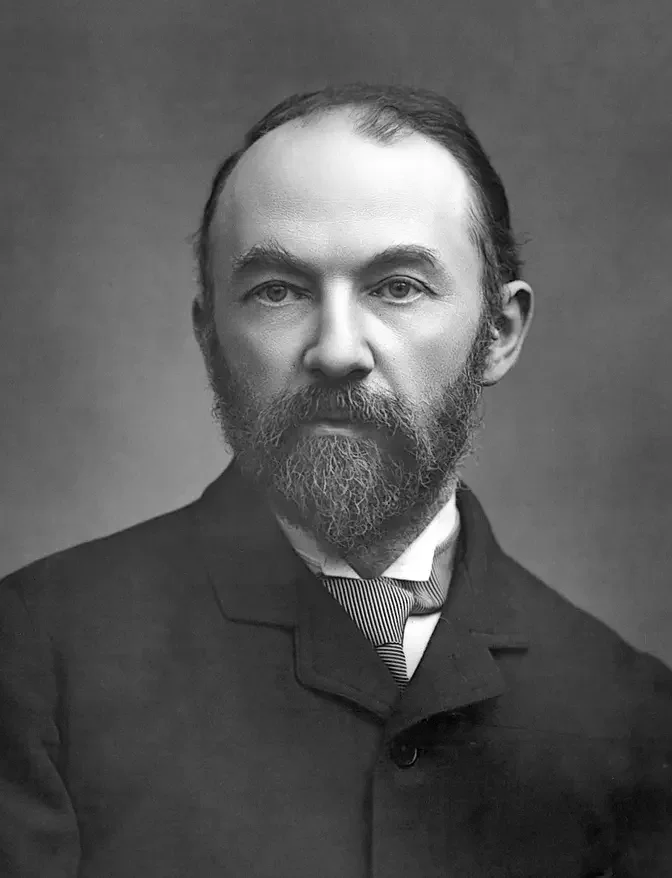
Part VI, Chapter III of Jude the Obscure by Thomas Hardy
Sue was convalescent, though she had hoped for death, and Jude had
again obtained work at his old trade. They were in other lodgings now,
in the direction of Beersheba, and not far from the Church of
Ceremonies, St. Silas. They would sit silent, more boldful of the
direct antagonism of things than of their insensate and stolid
obstructiveness. Vague and quaint imaginings had haunted Sue in the
days when her intellect scintillated like a star, that the world
resembled a stanza or melody composed in a dream. It was wonderfully
excellent to the half-aroused intelligence, but hopelessly absurd at
the full waking, that the first cause worked automatically like a
somnambulist and not reflectively like a sage, that at the framing of
the terrestrial conditions there seemed never to have been contemplated
such a development of emotional perceptiveness among the creatures
subject to those conditions, as that reached by thinking and educated
humanity. But affliction makes opposing forces loom anthropomorphous,
and those ideas were now exchanged for a sense of Jude and herself
fleeing from a persecutor.
We must conform, she said mournfully. All the ancient wrath of the
power above us has been vented upon us, his poor creatures. And we
must submit. There is no choice. We must. It is no use fighting
against God.
It is only against man and senseless circumstance, said Jude.
True, she murmured. What have I been thinking of? I am getting as
superstitious as a savage. But whoever or whatever our foe may be, I am
cowled into submission. I have no more fighting strength left, no more
enterprise. I am beaten, beaten. We are made a spectacle unto the
world and to angels and to men. I am always saying that now.
I feel the same.
What shall we do?
You are in work now, but remember, it may only be because our history
and relations are not absolutely known. Possibly, if they knew our
marriage had not been formalized, they would turn you out of your job
as they did at Albrigham.
I hardly know. Perhaps they would hardly do that. However, I think that
we ought to make it legal now, as soon as you are able to go out.
You think we ought?
Certainly.
And Jude fell into thought.
I have seemed to myself lately, he said, to belong to that vast band of
men shunned by the virtuous, the men called seducers. It amazes me when
I think of it. I have not been conscious of it, or of any wrongdoing
towards you, whom I love more than myself. Yet I am one of those men.
And I wonder if any other of them are the same poor blind, simple
creatures as I.
Yes, Sue, that's what I am. I seduced you. You were a distinct type, a
refined creature, intended by nature to be left intact. But I couldn't
leave you alone.
No, no, Jude, she said quickly. Don't reproach yourself with being what
you are not. If anybody is to blame, it is I.
I supported you in your resolve to leave Fillitson. And without me,
perhaps you wouldn't have urged him to let you go.
I should have just the same. As to ourselves, the fact of our not having
entered into a legal contract is a saving feature in our union. We have
thereby avoided insulting, as it were, the solemnity of our first
marriages.
Solemnity?
Jude looked at her with some surprise and grew conscious that she was
not the Sue of their earlier time.
Yes, she said, with a little quiver in her words. I have had dreadful
fears, a dreadful sense of my own insolence of action. I have thought
that I am still his wife.
Whose?
Richard's.
Good God, dearest, why?
I can't explain. Only the thought comes to me.
It is your weakness, a sick fancy without reason or meaning. Don't let
it trouble you. Suicide uneasily.
As I set off against such discussions as these, there had come an
improvement in their pecuniary position which earlier in their experience
would have made them cheerful. Jude had quite unexpectedly found good
employment at his old trade almost directly he arrived, the summer
weather suiting his fragile constitution, and outwardly his days went
on with that monotonous uniformity which is in itself so grateful after
vicissitude. People seemed to have forgotten that he had ever shown any
awkward aberrancies and he daily mounted to the parapets and copings of
colleges he could never enter and renewed the crumbling freestones of
mullioned windows he could never look from, as if he had known no wish
to do otherwise.
There was this change in him, that he did not often go to any service
at the churches now. One thing troubled him more than any other, that
Sue and himself had mentally travelled in opposite directions since the
tragedy. Events which had enlarged his own views of life, laws, customs
and dogmas, had not operated in the same manner on Sue's. She was no
longer the same as in the independent days, when her intellect played
like lamp and lightning over conventions and formalities which he at
that time respected, though he did not now. On a particular Sunday
evening he came in rather late. She was not at home, but she soon
returned when he found her silent and meditative.
What are you thinking of, little woman? he asked curiously.
Oh, I can't tell clearly. I have thought that we have been selfish,
careless, even impious in our course as you and I. Our life has been a
vain attempt at self-delight, but self-abnegation is the higher road. We
should mortify the flesh, the terrible flesh, the curse of Adam.
Sue, he murmured, what has come over you?
We ought to be continually sacrificing ourselves on the altar of duty,
but I have always striven to do what has pleased me. I well deserve the
scourging I have got. I wish something would take the evil right out of
me, and all my monstrous errors, and all my sinful ways.
Sue, my own too-suffering dear, there is no evil woman in you. Your
natural instincts are perfectly healthy, not quite so impassioned
perhaps as I could wish, but good and dear and pure. As I have often
said, you are absolutely the most ethereal, least sensual woman I ever
knew to exist without inhuman sexlessness. Why do you talk in such a
changed way? We have not been selfish, except when no one could profit
by our being otherwise. You used to say that human nature was noble and
long-suffering, not vile and corrupt, and at last I thought you spoke
truly, and now you seem to take such a much lower view. I want a humble
heart and a chastened mind, and I have never had them yet. You have been
fearless, both as a thinker and as a feeler, and you deserved more
admiration than I gave. I was too full of narrow dogmas at that time to
see it. Don't say that, Jude. I wish my every fearless word and thought
could be rooted out of my history. Self-renunciation, that's everything.
I cannot humiliate myself too much. I should like to prick myself all
over with pins and bleed out the badness that's in me."
"'Hush!' he said, pressing her little face against his breast, as if she
were an infant. It is bereavement that has brought you to this. Such
remorse is not for you, my sensitive plant, but for the wicked ones of
the earth who never feel it."
"'I ought not to stay like this,' she murmured, when she had remained in
the position a long while.
"'Why not?'
"'It is indulgence.'
"'Still on the same tack. But is there anything better on earth than
that we should love one another?'
"'Yes. It depends on the sort of love, and yours, ours, is the wrong.'
"'I won't have it, Sue. Come, when do you wish our marriage to be signed
in a vestry?'
She paused and looked up uneasily.
"'Never,' she whispered.
Not knowing the whole of her meaning he took the objection serenely and
said nothing. Several minutes elapsed and he thought she had fallen
asleep, but he spoke softly and found that she was wide awake all the
time. She sat upright and sighed.
"'There is a strange indescribable perfume or atmosphere about you
tonight, Sue,' he said. "'I mean not only mentally but about your clothes
also. A sort of vegetable scent, which I seem to know yet cannot
remember. It is incense.'
"'Incense?'
"'I have been to the service at St. Silas's, and I was in the fumes of
it.'
"'Oh, St. Silas's?'
"'Yes, I go there sometimes.'
"'Indeed, you go there?'
"'You see, Jude, it is lonely here in the weekday mornings when you are
at work, and I think and think of—of my—'
She stopped till she could control the lumpiness of her throat.
"'And I have taken to go in there, as it is so near.'
"'Oh, well, of course, I say nothing against it. Only it is odd for you.
They little think what sort of a child is among them.'
"'What do you mean, Jude?'
"'Well, a sceptic, to be plain.'
"'How can you pain me so, dear Jude, in my trouble? Yet I know you
didn't mean it. Would you ought not to say that?'
"'I won't, but I am much surprised.'
"'I want to tell you something else, Jude. You won't be angry, will you?
I have thought of it a good deal since my babies died. I don't think I
ought to be your wife, or as your wife, any longer.'
"'What? But you are.'
"'From your point of view, but—'
Of course we were afraid of the ceremony, and a good many others would
have been in our places, with such strong reasons for fears. But
your experience has proved how we misjudged ourselves and overrated
our infirmities, and if you are beginning to respect rites and
ceremonies as you seem to be, I wonder you don't say it shall be carried
out instantly. You certainly are my wife, Sue, in all but law. What do
you mean by what you said?'
"'I don't think I am.'
"'Not. But suppose we had gone through the ceremony. Would you feel
that you were then?'
"'No. I should not feel even then that I was. I should feel worse than I
do now.'
"'Why so, in the name of all that's perverse, my dear?'
"'Because I am Richard's.'
"'Ah! You hinted that absurd fancy to me before.'
"'It was only an impression with me then. I feel more and more
convinced as time goes on that I belong to him or to nobody.'
"'By good heavens! How we are changing places!'
"'Yes, perhaps so.'
Some few days later, in the dusk of the summer evening, they were
sitting in the same small room downstairs, when a knock came to the
front door of the carpenter's house where they were lodging, and in a
few moments there was a tap at the door of their room. Before they
could open it the comer did so, and a woman's form appeared.
"'Is Mr. Folly here?'
Sue and Jude started as he mechanically replied in the affirmative,
for the voice was Arabella's. He formally requested her to come in,
and she sat down in the window-bench, where they could distinctly see
her outline against the light, but no characteristics that enabled
them to estimate her general aspect and air. Yet something seemed to
denote that she was not quite so comfortably circumstanced nor so
bouncingly attired as she had been during Cartlet's lifetime. The
three attempted an awkward conversation about the tragedy of which
Jude had felt it to be his duty to inform her immediately, though she
had never replied to his letter.
"'I have just come from the cemetery,' she said.
"'I inquired and found the child's grave. I couldn't come to the
funeral. Thank you for inviting me all the same. I read about it in the
papers and I felt I wasn't wanted. No, I couldn't come to the funeral,'
repeated Arabella, who, seeming utterly unable to reach the ideal of a
catastrophic manner, fumbled with iterations.
"'But I am glad I found the grave. And as your trade, Jude, you'll be
able to put up a handsome headstone to him.'
"'I shall put up a headstone,' said Jude drearily.
"'He was my child, and naturally I feel for him. I hope so. We all did.
The others that weren't mine I didn't feel so much for, as was natural.
"'Of course.'
A sigh came from the dark corner where Sue sat.
"'I had often wished I had mine with me,' continued Mrs. Cartlet.
"'Perhaps it wouldn't have happened then. But, of course, I didn't wish
to take him away from your wife.'
"'I am not his wife,' came from Sue.
The unexpectedness of her words struck Jude silent.
"'Oh, I beg your pardon, I'm sure,' said Arabella.
"'I thought you were.'
Jude had known from the quality of Sue's tone that her new and
transcendental views lurked in her words, but all except their obvious
meaning was, naturally, missed by Arabella. The latter, after
convincing that she was struck by Sue's avowal, recovered herself and
went on to talk with placid bluntness about her boy, for whom, though
in his lifetime she had shown no care at all, she now exhibited a
ceremonial mournfulness that was apparently sustaining to the
conscience. She alluded to the past and in making some remark appealed
again to Sue. There was no answer. Sue had invisibly left the room.
"'She said she was not your wife,' resumed Arabella in another voice.
"'Why should she do that?'
"'I cannot inform you,' said Jude shortly.
"'She is, isn't she? She once told me so.'
"'I don't criticise what she says.'
"'Ah, I see. Well, my time is up. I am staying here tonight and
thought I could do no less than call after a mutual affliction. I am
sleeping at the place where I used to be barmaid, and tomorrow I go
back to Alfredston. Father is home again and I am living with him.'
"'Has he returned from Australia?' said Jude with languid curiosity.
"'Yes. Couldn't get on there. Had a rough time of it. Mother died of
this what-do-you-call-it in the hot weather, and Father and two of the
young ones have just got back. He has got a cottage near the old place
and for the present I am keeping house for him.'"
Jude's former wife had maintained a stereotyped manner of strict good
breeding even now that Sue was gone and limited her stay to a number of
minutes that should accord with the highest respectability. When she
had departed, Jude, much relieved, went to the stairs and called Sue,
feeling anxious as to what had become of her. There was no answer and
the carpenter who kept the lodgings said she had not come in. Jude was
puzzled and became quite alarmed at her absence, for the hour was
growing late. The carpenter called his wife, who conjectured that Sue
might have gone to St. Silas's church, as she often went there.
"'Surely not at this time of night,' said Jude. "'It is shut.'
"'She knows somebody who keeps the key, and she has it whenever she
wants it. How long has she been going on with this?'
"'Oh, some few weeks, I think.'"
Jude went vaguely in the direction of the church which he had never once
approached since he lived out that way years before, when his young
opinions were more mystical than they were now.
The spot was deserted but the door was certainly unfastened. He lifted
the latch without noise and, pushing to the door behind him, stood
absolutely still inside. The prevalent silence seemed to contain a
faint sound, explicable as a breathing or a sobbing, which came from the
other end of the building. The floorcloth deadened his footsteps as he
moved in that direction through the obscurity, which had broken only by
the faintest reflected night-light from without. High overhead, above
the chanceled steps, Jude could discern a huge, solidly constructed
Latin cross, as large probably as the original it was designed to
commemorate. It seemed to be suspended in the air by invisible wires.
It was set with large jewels, which faintly glimmered in some weak ray
caught from outside, as the cross swayed to and fro in a silent and
scarcely perceptible motion. Underneath upon the floor lay what appeared
to be a heap of black clothes, and from this was repeated the sobbing
that he had heard before. It was his Sue's form, prostrate on the
paving.
Sue? he whispered.
Something white disclosed itself. She had turned up her face.
What do you want with me here, Jude? she said almost sharply. You
shouldn't come. I wanted to be alone. Why did you intrude here?
How can you ask? he retorted in quick reproach, for his full heart was
wounded to its centre at this attitude of hers towards him.
Why do I come? Who has a right to come, as you'd like to know, if I have
not? I who love you better than my own self, better, far better, than
you have loved me. What made you leave me to come here alone?
Don't criticise me, Jude. I can't bear it. I have often told you so.
You must take me as I am. I am a wretch, broken by my distractions.
I couldn't bear it when Arabella came. I felt so utterly miserable I
had to come away. She seems to be your wife still, and Richard to be
my husband.
But they are nothing to us.
Yes, dear friend, they are. I see marriage differently now. My babies
have been taken from me to show me this. Arabella's child killing mine
was a judgment, the right slaying the wrong. What? what shall I do? I
am such a vile creature, too worthless to mix with ordinary human
beings.
This is terrible, said Jude, verging on tears. It is monstrous and
unnatural for you to be so remorseful when you have done no wrong.
You don't know my badness, he returned vehemently. I do. Every atom and
dreg of it. Will you make me hate Christianity or mysticism or
sacerdotalism or whatever it may be called, if it is that which has
caused this deterioration in you? That a woman poet, a woman seer, a
woman whose soul shone like a diamond, whom all the wise of the world
would have been proud of if they could have known you, should degrade
herself like this. I am glad I had nothing to do with divinity, damn
glad, if it is going to ruin you in this way. You are angry, Jude, and
unkind to me and don't see how things are. Then come along home with
me, dearest, and perhaps I shall. I am overburdened, and you too are
unhinged just now. He put his arm round her and lifted her, but though
she came she preferred to walk without his support.
I don't dislike you, Jude, she said in a sweet and imploring voice. I
love you as much as ever, only I ought not to love you any more. Oh, I
must not any more.
I can't own it.
But I have made up my mind that I am not your wife. I belong to him. I
sacramentally joined myself to him for life. Nothing can alter it.
But surely we are man and wife, if ever two people were in this world.
Nature's own marriage it is, unquestionably.
But not heaven's. Another was made for me there, and ratified eternally
in the church at Melchester.
Sue, Sue, affliction has brought you to this unreasonable state, after
converting me to your views on so many things, to find you suddenly
turned to write about like this, for no reason whatever, confounding
all you have formerly said, through sentiment merely. You root out of
me what little affection and reverence I had left in me for the
church, as an old acquaintance. What I can't understand in you is your
extraordinary blindness now to your old logic. Is it peculiar to you,
or is it common to woman? Is a woman a thinking unit at all, or a
fraction always wanting its integer? How you argue that marriage was
only a clumsy contract, which it is. How you showed all the objections
to it, all the absurdities. If two and two made four when we were happy
together, surely they make four now. I can't understand it, I repeat.
Ah, dear Jude, that's because you are like a totally deaf man observing
people listening to music. You say, what are they regarding? Nothing is
there. But something is.
That is a hard saying from you, and not a true parallel. You threw off
old husks of prejudices, and taught me to do it, and now you go back
upon yourself. I confess I am utterly stultified in my estimate of you.
Dear friend, my only friend, don't be hard with me. I can't help being
as I am. I am convinced I am right, that I see the light at last. But,
oh, how to profit by it!
They walked along a few more steps till they were outside the building
and she had returned the key.
Can this be the girl? said Jude when she came back, feeling a slight
renewal of elasticity now that he was in the open street. Can this be
the girl who brought the pagan deities into this most Christian city?
Who mimicked Miss Fondova when she crushed them with her heel? Quoted
Gibbon and Shelley and Mill? Where are dear Apollo and dear Venus now?
Oh, don't, don't be so cruel to me, Jude, and I so unhappy, she sobbed.
I can't bear it. I was in error. I cannot reason with you. I was wrong,
proud in my own conceit. Arabella's coming was the finish. Don't
satirise me. It cuts like a knife.
He flung his arms round her and kissed her passionately there in the
silent street before she could hinder him.
They went on till they came to a little coffee-house.
Jude, she said with suppressed tears, would you mind getting a lodging
here? I will, if you really wish. But do you. Let me go to our door and
understand you.
He went and conducted her in. She said she wanted no supper and went in
the dark upstairs and struck a light. Turning, she found that Jude had
followed her and was standing at the chamber door. She went to him, put
her hand in his and said, Good night. But, Sue, don't we live here? You
said you would do as I wished. Yes, very well. Perhaps it was wrong of
me to argue distastefully as I have done. Perhaps, as we couldn't
conscientiously marry at first in the old-fashioned way, we ought to
have parted. Perhaps the world is not illuminated enough for such
experiments as ours. Who are we to think we could act as pioneers?
I am so glad you see that much at any rate. I never deliberately meant
to do as I did. I slipped into my false position through jealousy and
agitation.
But surely through love. You loved me.
Yes, but I wanted to let it stop there and go on always as mere lovers
until....
But people in love couldn't live forever like that.
Women could. Men can't, because they won't. An average woman is in
this superior to an average man. That she never instigates, only
responds. We ought to have lived in mental communion and no more.
I was the unhappy cause of the change, as I have said before. Well, as
you will. But human nature can't help being itself.
Oh, yes. That's just what it has to learn. Self-mastery.
I repeat, if either were to blame, it was not you but I.
No, it was I. Your wickedness was only the natural man's desire to
possess the woman. Mine was not the reciprocal wish, till envy
stimulated me to oust Arabella. I had thought I ought in charity to
let you approach me, that it was damnably selfish to torture you as I
did my other friend. But I shouldn't have given way if you hadn't
broken me down by making me fear you would go back to her.
But don't let us say any more about it. Jude, will you leave me to
myself now?
Yes. But so, my wife as you are, he burst out. My old reproach to you
was, after all, a true one. You have never loved me as I love you.
Never. Never. Yours is not a passionate heart. Your heart does not
burn in a flame. You are, upon the whole, a sort of fae or sprite,
not a woman.
At first I did not love you, Jude, that I own. When I first knew you I
merely wanted you to love me. I did not exactly flirt with you. But
that inborn craving which undermines some women's morals, almost more
than unbridled passion, the craving to attract and captivate, regardless
of the injury it may do the man, was in me. And when I found I had
caught you I was frightened. And then, I don't know how it was, I
couldn't bear to let you go. Possibly to Arabella again. And so I got
to love you, Jude. But you see, however fondly it ended, it began in
the selfish and cruel wish to make your heart ache for me without
letting mine ache for you.
And now you add to your cruelty by leaving me.
Ay, yes. The further I flounder the more a harm I do.
Oh, Sue, he said with a sudden sense of his own danger. Do not do
this immoral thing for moral reasons. You have been my social
salvation. Stay with me for humanity's sake. You know what a weak
fellow I am. My two arch-enemies you know. My weakness for womankind
and my impulse to strong liquor. Don't abandon me to them, Sue, to
save your own soul only. They have been kept entirely at a distance
since you became my guardian angel. Since I have had you I have been
able to go into any temptations of the sort without risk. Is it my
safety worth a little sacrifice of dogmatic principle? I am in terror
lest if you leave me it will be with me another case of the pig that
was washed turning back to wallowing in the mire."
Sue burst out weeping.
Oh, but you must not, Jude. You won't. I pray for you night and day.
Well, never mind. Don't grieve, said Jude generously. I did suffer,
God knows, about you at that time, and now I suffer again, but perhaps
not so much as you. The woman mostly gets the worst of it in the long
run. She does, unless she is absolutely worthless and contemptible,
and this one is not that anyhow.
Sue drew a nervous breath or two.
She is, I fear. Now, Jude, good night, please.
I mustn't stay, not just once more, as it has been so many times.
Oh, Sue, my wife, why not?
No, no, not wife. I am in your hands, Jude. Don't tempt me back now I
have advanced so far.
Very well, I do your bidding. I owe that to you, darling, in penance
for how I overruled it at the first time.
My God, how selfish I was! Perhaps, perhaps I spoilt one of the
highest and purest loves that ever existed between man and woman.
Then let the veil of our temple be rent in two from this hour.
He went to the bed, removed one of the pair of pillows thereon,
and flung it to the floor.
Sue looked at him, and bending over the bed rail, wept silently.
Don't you see that it is a matter of conscience with me, and not of
dislike to you?
She brokenly murmured.
Dislike to you? But I can't say any more. It breaks my heart. It will
be undoing all I have begun. Jude, good night.
Good night, he said, and turned to go.
But you shall kiss me, she said, starting up. I can't, Pear.
He clasped her and kissed her weeping face, as he had scarcely ever
done before, and they remained in silence till she said,
Good-bye, good-bye, and then gently pressing him away, she got free,
trying to mitigate the sadness by saying,
We'll be dear friends just the same, Jude, won't we? And we'll see each
other sometimes, yes, and forget all this, and try to be as we were long
ago.
Jude did not permit himself to speak, but turned and ascended the
stairs.
End of chapter 3