
At Christminster Again, Chapter 2 - Jude the Obscure
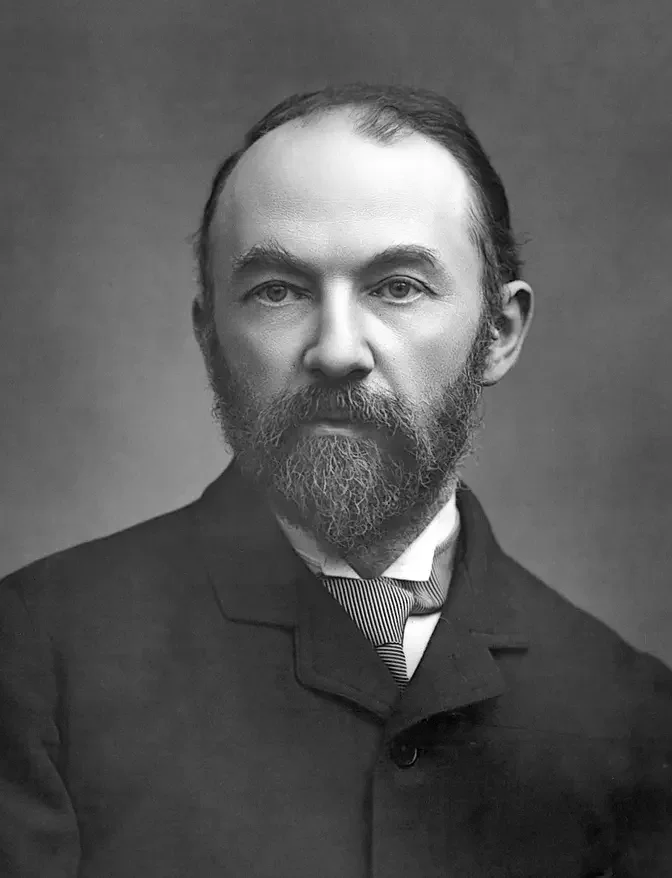
Part VI. Chapter II of Due the Obscure by Thomas Hardy
Sue sat looking at the bare floor of the room, the house being little
more than an old intramural cottage, and then she regarded the scene
outside the uncurtained window. At some distance opposite, the outer
walls of Sarcophagus College, silent, black, and windowless, threw
their four centuries of gloom, bigotry, and decay into the little
room she occupied, shutting out the moonlight by night and the sun by
day. The outlines of Rubric College also were discernible beyond the
other, and the tower of a third further off still. She thought of the
strange operation of a simple-minded man's ruling passion that it
should have led Jude, who loved her and the children so tenderly, to
place them here in this depressing purlieu, because he was still
haunted by his dream. Even now he did not distinctly hear the
freezing negative that those scollard walls had echoed to his desire.
The failure to find another lodging and the lack of room in this house
for his father had made a deep impression on the boy. A brooding,
undemonstrative horror seemed to have seized him. The silence was
broken by his saying.
Mother, what shall we do tomorrow?
I don't know, said Sue despondently. I am afraid this will trouble your
father. I wish father was quite well, and there had been room for him.
Then it wouldn't matter so much. Poor father!
It wouldn't. Can I do anything?
No. All is trouble, adversity and suffering.
Father went away to give us children room, didn't he?
Partly.
It would be better to be out of the world than in it, wouldn't it?
It would almost, dear.
Tis because of us children, too, isn't it, that you can't get a good
lodging? Well, people do object to children sometimes.
Then, if children make so much trouble, why do people have them?
Oh, because it is a law of nature.
But we don't ask to be born.
No, indeed. And what makes it worse with me is that you are not my real
mother, and you needn't have had me unless you liked. I oughtn't to
have come to ye, that's the real truth. I troubled them in Australia
and I trouble folk here. I wish I hadn't been born.
You couldn't help it, my dear. I think that whenever children are born
that are not wanted they should be killed directly before their souls
come to them and not allowed to grow up big and walk about."
Sue did not reply. She was doubtfully pondering how to treat this
too reflective child. She had last concluded that so far as
circumstances permit it she would be honest and candid with one who
entered into her difficulties like an aged friend.
There is going to be another in our family soon, she hesitatingly
remarked. How? There is going to be another baby.
What? The boy jumped up wildly.
Oh, God, mother, you've never assent for another, and such trouble with
what you've got.
Yes, I have, I am sorry to say, murmured Sue, her eyes glistening with
suspended tears.
The boy burst out weeping.
Oh, you don't care, you don't care, he cried in bitter reproach.
How ever could you, mother, be so wicked and cruel as this, when you
needn't have done it till we was better off and father well. To bring
us all into more trouble. No room for us and father are forced to go
away and we turned out to-morrow and yet you'll be going to have
another of us soon. Tis done a purpose, tis, tis.
He walked up and down, sobbing.
You must forgive me, little Jude, she pleaded, her bosom heaving now
as much as the boy's.
I can't explain. I will when you are older. It does seem as if I have
done it on purpose, now we are in these difficulties. I can't explain,
dear, but it is not quite on purpose. I can't help it.
Yes, it is, it must be, for nobody could interfere with us like that
unless you agreed. I won't forgive you ever, ever. I'll never believe
you care for me or father or any of us any more.
He got up and went away into the closet adjoining her room, in which
a bed had been spread on the floor. There she heard him say,
If we children was gone, there'd be no trouble at all.
Don't think that, dear, she cried rather peremptorily, but go to sleep.
The following morning she awoke at a little past six and decided to
get up and run across before breakfast to the inn which Jude had
informed her to be his quarters, to tell him what had happened before
he went out. She arose softly to avoid disturbing the children who,
as she knew, must be fatigued by their exertions of yesterday.
She found Jude at breakfast in the obscure tavern he had chosen as a
counterpoise to the expense of her lodging, and she explained to him
her homelessness. He had been so anxious about her all night, he said.
Somehow, now it was morning, the request to leave the lodgings did not
seem such a depressing incident as it had seemed the night before,
nor did even her failure to find another place affect her so deeply
as at first. Jude agreed with her that it would not be worthwhile to
insist upon her right to stay a week, but to take immediate steps for
removal.
You must all come to this inn for a day or two, he said. It is a rough
place and it will not be so nice for the children, but we shall have
more time to look round. There are plenty of lodgings in the suburbs,
in my old quarter of Beersheba. Have breakfast with me now you are
here, my bird. Are you sure you are well? There will be plenty of time
to get back to prepare the children's meal before they wake. In fact,
I'll go with you."
She joined Jude in a hasty meal, and in a quarter of an hour they
started together, resolving to clear out from Sue's too respectable
lodging immediately. On reaching the place and going upstairs she found
that all was quiet in the children's room, and called to the landlady
in timorous tones to please bring up the tea kettle and something for
their breakfast. This was perfunctorily done, and producing a couple
of eggs which she had brought with her, she put them into the boiling
kettle and summoned Jude to watch them for the youngsters, while she
went to call them, it being now about half-past eight o'clock. Jude
stood bending over the kettle, with his watch in his hand, timing the
eggs, so that his back was turned to the little inner chamber where the
children lay. A shriek from Sue suddenly caused him to start round. He
saw that the door of the room, or rather closet, which had seemed to go
heavily upon its hinges as she pushed it back, was open, and that Sue
had sunk to the floor just within it. Hastening forward to pick her up
he turned his eyes to the little bed spread on the boards. No children
were there. He looked in bewilderment round the room. At the back of
the door were fixed two hooks for hanging garments, and from these the
forms of the two youngest children were suspended by a piece of boxcord
round each of their necks, while from a nail a few yards off the body of
little Jude was hanging in a similar manner. An overturned chair was
near the elder boy, and his glazed eyes were slanted into the room, but
those of the girl and the baby were closed.
Half-paralysed by the strange and consummate horror of the scene he let
Sue lie, cut the cords with his pocket-knife and threw the three children
on the bed, but the feel of their bodies in the momentary handling
seemed to say that they were dead. He caught up Sue, who was in fainting
fits, and put her on the bed in the other room, after which he
breathlessly summoned the landlady and ran out for a doctor. When he got
back Sue had come to herself, and the two helpless women, bending over
the children in wild efforts to restore them, and the triplet of little
corpses formed a sight which overthrew his self-command. The nearest
surgeon came in, but, as Jude had inferred, his presence was
superfluous. The children were past saving, for though their bodies were
still barely cold, it was conjectured that they had been hanging more
than an hour.
The probability held by the parents later on, when they were able to
reason on the case, was that the elder boy, on waking, looked into the
room for Sue, and, finding her absent, was thrown into a fit of
aggravated despondency that the events and information of the evening
before had induced in his morbid temperament. Moreover, a piece of
paper was found upon the floor, on which was written, in the boy's
hand, with a bit of lead-pencil that he carried,
Done, because we are too many.
At sight of this Sue's nerves utterly gave way, an awful conviction
that her discourse with the boy had been the main cause of the tragedy,
throwing her into convulsive agony which knew no abatement.
They carried her away against her wish to a room on the lower floor,
and there she lay, her slight figure shaken with her gasps, and her
eyes staring at the ceiling, the woman of the house vainly trying to
soothe her. They could hear from this chamber the people moving about
above, and she implored to be allowed to go back, and was only kept from
doing so by the assurance that, if there were any hope, her presence
might do harm, and the reminder that it was necessary to take care of
herself lest she should endanger a coming life. Her inquiries were
incessant, and at last Jude came down and told her there was no hope.
As soon as she could speak she informed him what she had said to the
boy and how she thought herself the cause of this.
No, said Jude. It was in his nature to do it.
The doctor says there are such boys springing up amongst us, boys of a
sort unknown in the last generation, the outcome of new views of life.
They seem to see all its terrors before they are old enough to have
staying power to resist them. He says it is the beginning of the coming
universal wish not to live. He's an advanced man, the doctor, but he can
give no consolation to....
Jude had kept back his own grief on account of her, but he now broke
down, and this stimulated Sue to efforts of sympathy which, in some
degree, distracted her from her poignant self-reproach. When everybody
was gone she was allowed to see the children.
The boy's face expressed the whole tale of their situation. On that
little shape had converged all the inauspiciousness and shadow which
had darkened the first union of Jude, and all the accidents, mistakes,
fears, errors of the last. He was their nodal point, their focus, their
expression in a single term. For the rashness of those parents he had
groaned, for their ill-assortment he had quaked, and for the
misfortunes of these he had died. When the house was silent and they
could do nothing but await the coroner's inquest, a subdued, large,
low voice spread into the air of the room from behind the heavy walls
at the back.
What is it? said Sue, her spasmodic breathing suspended.
The organ from the college chapel. The organ is practicing, I suppose.
It is the anthem from the Seventy-third Psalm. Truly God is loving unto
Israel.
She sobbed again.
Oh, oh, my babies! They had done no harm. Why should they have been
taken away, yet not I?
There was another stillness, broken at last by two persons in
conversation somewhere without.
They are talking about us, no doubt.
Moaned Sue.
We are made into a spectacle unto the world and to angels and to men.
Jude listened.
No, they are not talking of us, he said. They are two clergymen of
different views, arguing about the eastward position. Good God! the
eastward position, and all creation groaning!
Then another silence, till she was seized with another uncontrollable
fit of grief.
There is something external to us which says you shan't. First it
said you shan't learn, then it said you shan't labour, now it says you
shan't love.
He tried to soothe her by saying,
That's bitter of you, darling.
But it's true.
Thus they waited, and she went back again to her room.
The babies' frock, shoes and socks, which had been lying on a chair at
the time of his death, she would now not have removed, though Jude
would feign have got them out of her sight. But whenever he touched
them she implored him to let them lie, and burst out almost savagely
at the woman of the house when she also attempted to put them away.
Jude dreaded her dull apathetic silences almost more than her
paroxysms.
Why don't you speak to me, Jude? she cried out after one of these.
Don't turn away from me. I can't bear the loneliness of being out of
your looks.
There, dear, here I am, he said, putting his face close to hers.
Yes, O my comrade, our perfect union, our two and oneness, is now
stained with blood.
Shadowed by death, that's all.
Ah, but it was I who incited him, really, though I didn't know I was
doing it. I talked to the child as one should only talk to people of
mature age. I said the world was against us, that it was better to
be out of life than in it at this price, and he took it literally. And
I told him I was going to have another child. It upset him. Oh, how
bitterly he upbraided me.
Why did you do it so?
I can't tell. It was that I wanted to be truthful. I couldn't bear
deceiving him as to the facts of life, and yet I wasn't truthful, for
with a false delicacy I told him too obscurely. Why was I half wiser
than my fellow women, and not entirely wiser? Why didn't I tell him
pleasant untruths instead of half realities? It was my want of
self-control, so that I could neither conceal things nor reveal them.
Your plan might have been a good one for the majority of cases, only in
our particular case it chanced to work badly, perhaps. He must have
known sooner or later.
And I was just making my baby darling a new frock, and now I shall
never see him in it, and never talk to him any more. My eyes are so
swollen that I can scarcely see, and yet, little more than a year ago,
I called myself happy. We went about loving each other too much,
indulging ourselves to utter selfishness with each other. We said,
do you remember, that we would make a virtue of joy? I said it was
nature's intention, nature's law and raison d'etre, that we should be
joyful in what instincts she afforded us, instincts which civilization
had taken upon itself to thwart. What dreadful things I said! And now
fate has given us this stab in the back for being such fools as to take
nature at her word.
She sank into a quiet contemplation till she said,
It is best, perhaps, that they should be God. Yes, I see it is.
Better that they should be plucked fresh than stay to wither away
miserably.
Yes, replied Jude. Some say that the elders should rejoice when their
children die in infancy.
But they don't know. Oh, my babies, my babies! Could you be alive now?
You may say the boy wished to be out of life, or he wouldn't have done
it. It was not unreasonable for him to die. It was part of his
incurably sad nature, poor little fellow. But then the others, my own
children and yours.
Again Sue looked at the hanging little frock and at the socks and shoes
and her figure quivered like a string.
I am a pitiable creature, she said, neither good for earth nor heaven
any more. I am driven out of my mind by things. What ought to be done?
She stared at Jude and tightly held his hand.
Nothing can be done, he replied. Things are as they are and will be
brought to their destined issue.
She paused.
Yes, who said that?
She asked heavily.
It comes from the chorus of the Agamemnon. It has been in my mind
continually since this happened.
My poor Jude, how you have missed everything, you more than I, for I
did get you. To think you should know that by your unassisted reading
and yet be in poverty and despair.
After such momentary diversions her grief would return in a wave.
The jury duly came and viewed the bodies, the inquest was held, and
next arrived the melancholy morning of the funeral. Accounts in the
newspapers had brought to the spot curious idlers who stood apparently
counting the windowpanes and the stones of the walls. Doubt of the
real relations of the couple added zest to their curiosity. Sue had
declared that she would follow the two little ones to the grave, but
at the last moment she gave way and the coffins were quietly carried
out of the house while she was lying down. Jude got into the vehicle
and drove away, much to the relief of the landlord, who now had only
Sue and her luggage remaining on his hands, which he hoped to be also
clear of later on in the day. And so to have freed his house from the
exasperating notoriety it had acquired during the week through his
unlucky admission of these strangers. In the afternoon he privately
consulted with the owner of the house and they agreed that if any
objection to it arose from the tragedy which had occurred there they
would try to get its number changed. When Jude had seen the two little
boxes, one containing little Jude and the other the two smallest,
deposited in the earth, he hastened back to Sue, who was still in her
room, and he therefore did not disturb her just then. Feeling anxious,
however, he went again about four o'clock. The woman thought she was
still lying down but returned to him to say that she was not in her
bedroom after all. Her hat and jacket too were missing. She had gone
out. Jude hurried off to the public house where he was sleeping. She
had not been there. Then, bethinking himself of possibilities, he went
along the road to the cemetery which he entered and crossed to where
the interments had recently taken place.
The idlers who had followed to the spot by reason of the tragedy were
all gone now. A man with a shovel in his hands was attempting to earth
in the common grave of the three children. But his arm was held back
by an expostulating woman who stood in the half-filled hole. It was
Sue, whose coloured clothing, which she had never thought of changing
for the morning he had bought, suggested to the eye a deeper grief
than the conventional garb of bereavement could express.
He's filling them in and he shan't till I've seen my little ones again.
She cried wildly when she saw Jude.
I want to see them once more. Oh, Jude, please, Jude, I want to see
them. I didn't know you would let them be taken away while I was
asleep. You said perhaps I should see them once more before they were
screwed down. And then you didn't. You took them away. Oh, Jude, you
are cruel to me too.
She's been wanting me to dig the grave out again and let her get at
the coffins," said the man with the spade.
She ought to be took home by the look of her. She is hardly
responsible, poor thing, seemingly.
Can't dig him up again now, ma'am. Do ye go home with your husband
and take it quiet. And thank God that there'll soon be another to
swage your grief.
But Sue kept asking piteously.
Can't I see them once more? Just once? Can't I? Only just one little
minute, Jude. It would not take long. And I should be so glad, Jude.
I will be so good and not disobey you ever any more, Jude, if you will
let me. I will go home quietly afterwards and not want to see them
any more. Can't I? Why can't I?
Thus she went on. Jude was thrown into such acute sorrow that he
almost felt he would try to get the man to accede. But it could do no
good, and might make her still worse. And he saw that it was
imperative to get her home at once. So he coaxed her and whispered
tenderly, and put his arm round her to support her, till she
helplessly gave in and was in due to leave the cemetery.
He wished to obtain a fly to take her back, but economy being so
imperative, she deprecated his doing so, and they walked along
slowly, Jude in black crepe, she in brown and red clothing.
They were to have gone to a new lodging that afternoon, but Jude
saw that it was not practicable, and in course of time they entered
the now hated house. Sue was at once got to bed and the doctor sent
for. Jude waited all the evening downstairs. At a very late hour the
intelligence was brought to him that a child had been prematurely
born, and that it, like the others, was a corpse.
End of chapter 2