
The Epic Debate: Amenophis IV - Imposter or Majestic Sun King?
Before we plunge into the compelling universe of ancient Egypt,
we'd like to prompt you to subscribe to our channel, give this video a thumbs up,
share it with your enthusiast friends, and do remember to leave your insights in the comment
section below. We appreciate your feedback and are eager to know your thoughts.
Have you ever contemplated the significant impact the ancient Egyptian civilization has left
on our contemporary society? Submerge with us into the fascinating realm of the 18th dynasty pharaoh
Ammonophis IV Akiton, who ascended the throne from 1372 to 1354 BC.
Born into a dynasty of rulers, he was the offspring of Ammonophis II, grandson of Thutmose III,
and great-grandson of Thutmose II, who was the initial husband of Hatshepsut,
the daughter of Thutmose III. Ammonophis III Akiton was not merely a ruler,
he was a remarkable poet and philosopher, often characterized in modern Judeo-Christian
Egyptological literature as a mystic or a heretic. His wife Nefertiti, a noblewoman,
bore him six daughters, one of whom was married to Tutankhamun, who succeeded Akhenaten to the
Egyptian throne. However, the term heretic appears inapt when ascribed to Ammonophis IV Akiton.
In religious discussion, heresy denotes a belief contradictory to the Roman Catholic faith
and denounced by the Church. Yet, how could Ammonophis IV Akiton ever have professed a heresy?
This query emphasizes the precautionary need when interpreting pharaonic thought
through the Indo-European and Christian Egyptologist perspective.
Stay tuned for our next video, where we will delve deeper into the scientific insights
extracted from the texts of Ammonophis IV Akiton.
Ammonophis IV Akiton's return to the worship of the sun as a single, unique, almighty,
and universal divinity was, in essence, a return to an ancient spiritual path
first traced by his old kingdom ancestors from 2780 to 2280 BC.
The pyramids, royal tombs built from the 3rd to 17th dynasties, were essentially solar monuments.
These structures invoked various modes of ascension such as stairways and shafts of sunlight,
enabling pharaohs to live in the afterlife as comparisons of the sun god.
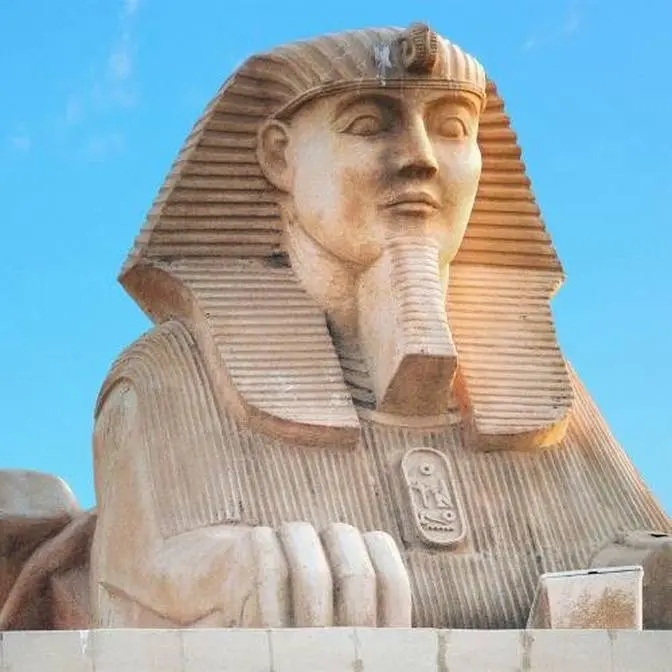
From Khefren, the 4th king of the 4th dynasty, who commissioned the sculpture of the Great
Sphinx of Giza, the kings came to be known as Sons of Ra, a solar kinship that was maintained
until the end of the pharaonic civilization. All gods with universal aspirations in ancient Egypt
had to assume a solar aspect. Amun became Amun-Ra, Kum became Kum-Ra, Munt became Muntra, and so on.
Ammonophis IV Akiton's solar ideas were a central part of ancient Egyptian civilization,
making sun worship second nature to the builders of the pharaonic world.
Ammonophis IV Akiton's texts, for their literary qualities, intense lyricism,
and exceptional breadth of vision, have been extolled as one of the jewels of universal literature.
The hymn develops an ancient Egyptian idea, adding new elements such as anthropological
observations that acknowledge the variations in skin color, language, and character among
different human races. In summary, Ammonophis IV Akiton, the 18th dynasty pharaoh, was not only
a ruler but also a poet, a philosopher, and a significant contributor to the ancient Egyptian
civilization. His return to the worship of the sun as a single, unique, almighty, and universal
divinity marked a return to an ancestral spiritual path. His texts, particularly the hymn to the sun,
are considered jewels of universal literature, encapsulating a cosmopolitan humanistic vision
that acknowledged the diversity of the human race. His influence, it is believed, even extended to the
This deep dive into the life and influence of Ammonophis IV Akiton is a testament to the
profound impact of the ancient Egyptian civilization on our modern society. It's a reminder that even
in the distant past, there were those who recognized the beauty of diversity
and the interconnectedness of all life under the sun.