
台灣沒有得到正確的推廣 | 外國人眼中的台灣|外國人在台灣|Foreigners in Taiwan | Living in Taiwan
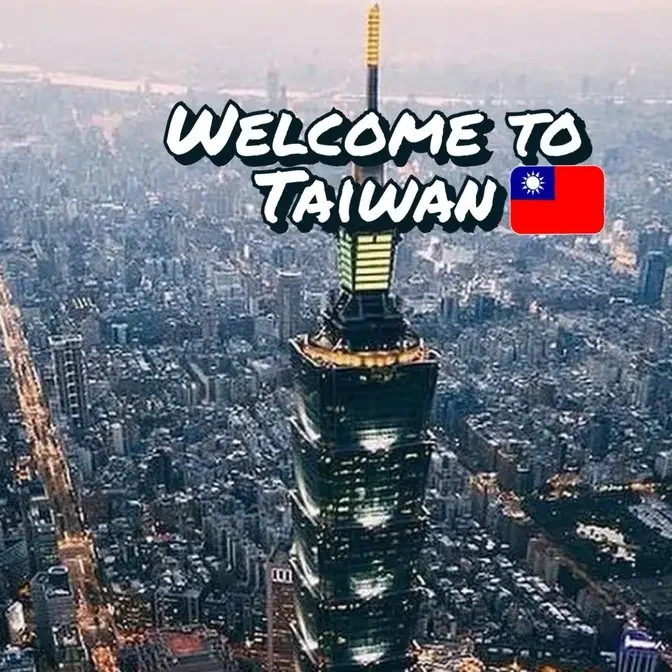
加拿大人在台灣,聽聽他對台灣的感覺。
我的Instagram :
https://www.instagram.com/ljseyf?igsh=MWg2ZXFqa2p0NDdwNg%3D%3D&utm_source=qr
我的Facebook:
https://www.facebook.com/lboysey?mibextid=kFxxJD
YouTube channel :
https://youtube.com/@welcometotaiwan4140?si=rI0R0JeTr4M_bTZQ
#kindheartedlighttaiwan
I think Taiwan is misunderstood from a destination perspective.
International visitors don't really know about Taiwan.
What's promoted to potential visitors is very superficial,
it's very top layer and it doesn't necessarily really dig deep
into the true culture and the true experiences that can be had here.
I think it's pretty lazy. I think the marketing for Taiwan is quite lazy.
Two out of every three visitors that comes to the island will never come again.
My name is Michael. I come from Toronto, Canada.
I work in the tourism industry. I run a couple of tourism businesses here in Taiwan.
I originally visited Taiwan in 2005, coming here as a gap year.
And I stayed for a couple of years.
Spent a fair bit of my time out in Wai Ao, the beach community in Wai Ao.
And this was before Wai Ao was a beach community.
It was a fishing village at the time.
And I fell in love with Taiwan, surfing, teaching in Taipei, and then I left.
And I went to Australia to go and pursue my Master's.
And while I was there, I met my wife who's Taiwanese.
And I think because I was just leaving Taiwan and I had all these fond memories of it,
we just kind of gravitated towards each other and started a relationship.
Two young children and we could kind of see the writing on the wall that
it was going to be very difficult for them to be able to maintain fluency in Chinese,
despite my wife speaking Chinese at home.
Just everything in your environment is in English.
And so they, much like my French, is that if you don't actually have an opportunity to use it,
it's difficult to maintain that language.
And so when my kids were about four and two and a half,
we kind of talked about, you know, the challenge that that would present.
And, you know, the fact that they couldn't potentially speak to Ama Ngagong, my brother-in-law,
that was kind of disheartening.
And we wanted to make sure that, you know, they had this connection to half of their heritage.
So we decided to move to Taiwan in 2019.
And now their Chinese is better than mine.
What do you think about the Taiwanese tourism sector?
How well is it promoted at the international level?
It's complicated, I think.
I think in Taiwan's tourism industry, there are some amazing aspects and components of it.
I think that there is a lot that's untapped from an international perspective.
International visitors don't really know about Taiwan.
They know about these top ten bucket list experiences,
whether it be Sun Moon Lake, Taipei 101, Jiufen, Suifen.
They know about night markets.
They know about bubble tea and fried chicken.
But I don't think that they really get an understanding of the type of full experience that you can have in Taiwan.
I think Taiwan is misunderstood from a destination perspective.
I think that the image of Taiwan in a lot of international visitors' minds,
or even not international visitors, just international communities,
is that it's a very urban environment and that there's not necessarily a lot of outdoor and adventure travel experiences.
I think that what's promoted to potential visitors is very superficial.
It's very top layer and it doesn't necessarily really dig deep into the true culture and the true experiences that can be had here.
I think it's pretty lazy.
I think the marketing for Taiwan is quite lazy.
I think it is leading to a very challenging scenario for Taiwan.
I think Taiwan as a tourism destination, you could say that it's in decline.
The attractions and some of the infrastructure is outdated,
particularly when you think about museums and cultural sites.
I don't necessarily think that the investment has maintained.
We build it once, we launch it, we have a great PR event,
and then it is neglected and it starts to decline.
As a tourism destination, you can see that stuff already happening in Taiwan.
Two out of every three visitors that come to the island will never come again.
That's what the data shows.
From a destination perspective, we're failing to really create memorable experiences
that people will want to come back and explore more.
It's really hard to get an international tourist to come to Taiwan.
It's a big decision for anybody to travel,
but particularly Taiwan because we don't have any rubber tire traffic.
Everybody has to fly here.
There are short-haul source destinations like Japan, Korea, and Singapore
where we continue to get visitors to,
but if somebody is coming from North America, Europe, or other parts of the world
that is a long-haul destination, that's a big deal.
That's a big life decision for them to come to Taiwan.
We need to do better at making sure that they have a great experience when they get here.
Personally, you said you work in the tourism sector.
What do you do?
I'm involved in the tourism sector in a number of different ways.
When I arrived in Taiwan, I started a role as a part-time lecturer at Mingchuan University.
I teach tourism to domestic and international students.
In 2020, myself, my brother-in-law, and a buddy launched a project called Park Bus Taiwan.
Park Bus Taiwan was originally set out to create a non-profit organization
that would improve access to nature for people who live in cities.
In Taiwan, it's very convenient to get out to different places,
but when it comes to some of these more remote national forests and historic trails,
it's quite difficult to get there if you don't have your own vehicle.
What we wanted to do was make these places more accessible.
For example, a family of four living in Taipei or Taichung or other major cities,
they don't have access to a car sometimes.
You can only imagine throwing the whole family on a scooter
and trying to drive up to the mountains.
Nobody wants to do that, and it's not safe, really.
Yet, these people who live in cities in Taiwan,
they pay taxes to support these protected areas and to maintain these trails,
yet they can't access them.
That was the original intent of Park Bus.
Now, we run tours, weekly scheduled hikes that range from beginner level to more advanced overnight hikes.
Every week, if you Google or search on any of the social channels,
Park Bus Taiwan, that's P-A-R-K-B-U-S Taiwan,
or you can go to the website, which is parkbus.com.tw,
and we have a listing of all of our tours.
It's all bilingual, so that was another thing that we wanted to do,
was make all these experiences in English and in Chinese as well,
so it's a great opportunity for both Taiwanese to go out and explore their own country and rediscover it,
but also for international visitors who can sometimes feel a little isolated
when you come to a new country and you're trying to meet new friends.
We launched Park Bus in the beginning of the pandemic,
which was kind of crazy in its own way to start a tour company at the beginning of the pandemic,
but we were really lucky in Taiwan in the way that the government managed the pandemic.
One of the reasons that I had even started to think about the idea of it
was because you would hear all of these stories and narratives and messages
coming from governments all over the world, which was stay indoors.
And I've grown up always close to the outdoors,
whether it was as a kid going to summer camp,
my parents instilling the value of nature message of stay indoors just didn't connect with me,
and I know how healing the outdoors can be,
and I felt like there was a need for creating an opportunity
for people to have that same healing experience in nature.
Do you guys promote it outside?
Like international level, do international tourists come here on your behalf
or you just try to get them when they come to Taiwan?
So at first, as the borders were closed, we were just focusing on the local residents.
So this would be domestic Taiwanese or international residents who live in Taiwan.
And since the borders have opened up,
we've been working on trying to reach these international visitors in their source markets.
So we've done a couple of different things.
We keep doing some PR in these source markets
and have started to work with the Taiwan Tourism Administration to try and get our message out.
And this is the challenge, right?
Like as a small business in Taiwan that's trying to reach an international market,
for better or worse, we have to rely on the Taiwan Tourism Administration to tell that story.
So that's like the top of the funnel, get their attention,
get everyone's awareness of what's happening in Taiwan.
And then we can deliver and convert these people into international visitors.
But from ParkBus, what we decided to do,
we noticed that there were so many other opportunities
to promote the outdoors and adventure travel in Taiwan,
not just hiking, because ParkBus primarily focuses on hiking.
So we launched a new platform called Taiwan Outdoors,
working with local suppliers who are vetted as being safe and unique and professional
and connect them with international visitors.
So it's not just hiking, it'll be cycling, river tracing, diving,
indigenous experiences and wellness experiences.
So the idea behind it is to try and present Taiwan as an outdoor and adventure travel destination,
which it is, right?
I think for a lot of people who know Taiwan, they know that it's an incredible destination.
But for those who don't, I mean, they go to other places to have those same experiences.
People will go to Vietnam and they'll pay 7,000 US dollars for a six-day cycling trip in Vietnam,
and they won't pay that here.
And so we have a long journey to go in terms of trying to raise awareness
about the cycling experiences or the hiking experiences and the different experiences here.
Both their social media links will be in the description below.
You can go check it out.
Can you speak Chinese?
It's better than my French.
I can have a conversation, but as soon as it starts to get technical, it goes over my head a little bit.
But I play along and listen and pick up these kind of context clues in a language
that allow you to kind of move forward.
And I think for international migrants who come to Taiwan, I think that's part of it,
is just not getting overwhelmed with the fact that it's just completely different.
In many cases, at least in English, there's very little words that sound the same.
So to pick up on these little things bit by bit, and I think that will help you progress your Chinese.
As an educator and a father, how is it like raising two kids here in Taiwan as a foreigner?
I guess I'm lucky in some regards because my wife is Taiwanese,
so she can kind of help navigate some of these conversations with,
whether it's the school or getting them into programs.
So I can only imagine how challenging that might be for a foreign couple who has kids here.
I think that challenge is real.
But for me, I'm kind of lucky in that regard.
But I think raising kids in Taiwan is a very challenging path
if you reflect on your own childhood and how you were raised.
So, I mean, I recall finishing school at three o'clock
and then going down to play in creeks and messing around on my bike for hours
before you'd have to go home for dinner.
And then you would go home for dinner and you would just play puzzles,
you'd do puzzles and, you know, maybe watch some TV and whatever that might be.
But for children in Taiwan, the challenge is, you know,
there's a lot demanded of them in terms of academics.
And they don't get a lot of time to just be kids.
And I feel like in many ways the education system sort of saps the soul of youth from kids.
From kids, yeah. That's right.
But I would say that it's quite interesting because I come from a family of teachers.
And so I was lucky enough to be able to take my family back to Canada in the summer
and had lots of conversations about, you know, what the education system is like in Canada.
Having experience living in Canada and in Taiwan,
how is the cost of living compared to these countries, especially the medical cost?
Well, Canada has a very good and renowned universal health care system.
Although I would say that there's sort of hidden costs, you know, within it.
Where in Taiwan it's, from a health care perspective, it's fantastic.
I mean, it's spectacular. You and I were talking about it earlier.
There's almost a reliance on it in people.
And I think whether it's, you know, international migrants or if it's domestic Taiwanese,
I think we rely on it a little bit too much.
And there's obviously some shaky foundations within the national health insurance program in Taiwan.
But I think, I mean, it's a blessing.
We're truly blessed to live in Taiwan and be able to have the health care system that we have.
Also, Canada is renowned for having wonderful natural environment.
Yeah, it is.
Can you give us a little bit insight of some of the wonderful natural environments in Canada?
So I grew up in, just outside of Toronto.
And that's in the province of Ontario.
And the province of Ontario has tens of thousands of lakes.
And so one kind of characteristic of an Ontario outdoor experience is spending time by lakes.
That's fishing, swimming, boating.
So canoeing and kayaking and, you know, maybe just sitting out on the dock and having a drink.
That's part of, that's definitely part of the kind of culture there.
So as I mentioned, I grew up in going to camp.
And that was a big part of it as well.
So camping, right, canoe trips.
I think the one difference between Taiwan and Canada when it comes to, like, nature is that you can live in Toronto.
And you still have to drive like an hour, an hour and a bit just to get out into nature, right?
So the development has been like the sprawl, which is oftentimes described as, you know, just cookie cutter houses and plazas, you know, as far as the eye can see.
And it's really, that's definitely happened.
Whereas in Taiwan, you have this amazing access to nature.
So I live in Lingco and I can walk to the Lingco County Forest.
And, you know, there's four or five kilometers of trails, like within a 10 minute walk from my house.
And I have all the conveniences of everything that I need in the city, but I can go do those things.
So that's the kind of difference between nature and Canada in Taiwan.
Depends on where you live, of course.
During your stay here, what have you found or seen that you found very strange, unique or special in Taiwan?
Pork intestine soup or something like that might be where I kind of draw the line on some strange, but unique, the indigenous cultures.
So the fact that Taiwan has such vibrant indigenous culture, and that's in kind of stark contrast to Canada,
where while we have proud and strong First Nation communities,
they're not as like integrated into society, right?
Indigenous communities in Canada are oftentimes kind of pushed onto these reserves,
whereas in Taiwan, certainly there's like indigenous communities and villages.
But I think I'm pretty proud of how Taiwan has uplifted and continues to work towards better relationships with its indigenous communities.
I know it's not perfect, but I think they do a pretty good job.
What advice would you give to someone or a Taiwanese who wishes to go visit Canada?
Try the beer? I don't know.
I think Canada is such a diverse place. It's huge. It's massive.
So it really depends on where you're going to go and what you should do.
But I think if you're looking for a real Canadian experience and a kind of true authentic experience in Canada,
you could go to a place like Newfoundland, and you'd probably meet a real Canadian there.
If you were to change anything in Taiwan, what would it be?
I think it would be around the tendency to have to evaluate everything.
That it has to be a numerical evaluation to determine whether something is a success or not.
And I particularly mean that around kids' education.
I think that there's too much emphasis on the rank of a kid versus maybe how creative they are.
I think there needs to be some kind of balance.
I think Taiwan would be an amazing place for people to raise their family, and it is.
But it would be a pretty special place if there was just toning back a little bit on the education system.
Do you have anything else to tell Taiwanese people?
Yeah, I think be proud, brave, and being able to make suggestions on innovation and changes to society that you want to see.
I think one of the greatest challenges that we have in Taiwan is that we maintain,
and I don't use this in a political sense, but we maintain the status quo.
And I think that has a lot to do with the culture of indirect communication.
That has a lot to do with the risk aversion nature of Taiwanese.
And I think that prevents a lot of positive changes from family structures to outdoor recreational policies to how we tell stories about Taiwan.
And I think, in my experience in tourism, I think we have to do a better job as Taiwanese.
And I sit here as a foreigner that is invested in Taiwan as a home and as a place that I run my business.
But we need to do a better job of storytelling rather than just being kind of lazy on how we market the country,
because Taiwan has a lot of potential.
I think tourism can be a very important role for soft power and how it's presented in the international community.
And we need friends.
So if we can get someone to come to our shores and let them truly see Taiwan for what it is,
then we've made one friend.
And they go back home and they tell their community and their friends and their network about how amazing the Taiwanese people are,
how amazing the country is.
And the next time they hear Taiwan in the news, they'll have a different opinion of it.
All right. Thank you very much. And I hope you continue to enjoy your stay here in Taiwan.
Yeah. Thanks a lot. It's home, so I will.
Okay.
See you.