
Ancient Civilizations Visual Timeline: Evolution of Art
Prepare to embark on a mesmerizing journey through the annals of history as we explore
the captivating evolution of art in ancient civilizations. Art, in its myriad forms,
has long been the hallmark of human creativity and expression. From the earliest cave paintings
to the intricate sculptures adorning ancient temples, it serves as a window into the soul
of humanity, reflecting our dreams, fears, and aspirations across the ages. As we delve into
the rich tapestry of ancient art, we invite you to join us in unraveling its mysteries and marvels.
Prepare to be transported to distant lands and bygone eras where art flourished amidst the
sands of time, leaving behind a legacy that continues to inspire and intrigue us to this day.
Before we embark on our exploration, let us take a moment to set the stage for our journey.
Ancient civilizations, such as Egypt, Greece, and Mesopotamia, emerged along the banks of
mighty rivers and fertile valleys, where the bounty of nature nurtured the seeds of human
civilization. These cradles of culture gave rise to art forms that not only adorned their cities
but also reflected their beliefs, values, and aspirations. In the land of the pharaohs,
art served as a conduit to the divine, with monumental sculptures and intricate hieroglyphs
adorning temples and tombs. In Greece, artists strove to capture the essence of beauty and
perfection, producing sculptures and paintings that celebrated the human form and the ideals
of democracy and philosophy. Meanwhile, in Mesopotamia, art served as a means of storytelling
and record-keeping, with clay tablets and stone reliefs bearing witness to the triumphs and
Our journey through the ancient world's artistry begins in the land of the pharaohs,
where art flourished as a means of expressing religious beliefs and immortalizing the rulers
of ancient Egypt. Egyptian art was deeply intertwined with religion and the afterlife.
Temples and tombs were adorned with elaborate paintings and sculptures,
serving both practical and spiritual purposes. The pyramids, particularly the Great Pyramid of Giza,
stand as monumental testaments to Egyptian architectural and engineering prowess,
as well as their spiritual beliefs regarding the afterlife and the journey of the soul.
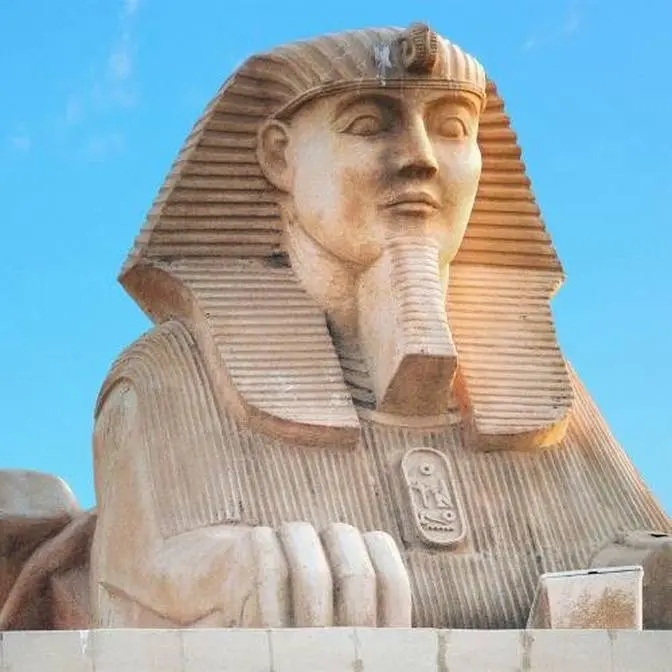
The iconic Great Sphinx of Giza, with its lion's body and human head,
is a testament to the skill of Egyptian sculptors. Beyond the sphinx, Egyptian
sculpture encompassed a wide range of subjects, from gods and pharaohs to everyday people.
The bust of Nefertiti, renowned for its beauty and grace, exemplifies the idealized portrayal
of royalty in Egyptian art. Additionally, the exquisite craftsmanship of jewelry and
funerary objects, such as the golden mask of Tutankhamun, reflects the Egyptians' reverence
for the divine and their meticulous attention to detail. Hieroglyphs, the intricate system
of writing used by the ancient Egyptians, adorned temple walls and tombs, conveying
both practical and religious messages. These inscriptions provided insight into Egyptian
mythology, rituals, and historical events, allowing modern scholars to decipher the
mysteries of this ancient civilization. Next, we turn our gaze to ancient Greece,
where art reached new heights of realism and idealism. Greek art, renowned for its harmony,
balance, and emphasis on the human form, emerged during the Classical period and profoundly
influenced Western art and culture. Architecture, sculpture, pottery, and painting flourished in
city-states like Athens, where democracy and intellectual pursuits thrived. In addition
to the Parthenon, Greek architecture encompassed other marvels such as the Temple of Artemis at
Ephesus and the Theater of Epidaurus, showcasing both technical innovation and aesthetic beauty.
Sculptures like the Doryphoros, Spear-Bearer, Bipolycleitos and the Nike of Samothrace
epitomized the Greeks' pursuit of idealized beauty and naturalistic representation.
Greek pottery, divided into distinct styles such as geometric, black figure, and red figure,
depicted a wide array of subjects, from mythological narratives to scenes of daily life.
Vase painters like Axikias and the Berlin Painter achieved remarkable detail and emotional depth,
transforming utilitarian objects into works of art.
Our final destination is Mesopotamia, the cradle of civilization,
where art served as a medium for storytelling and record-keeping.
Mesopotamian art, born in the fertile crescent between the Tigris and Euphrates rivers,
reflected the region's rich cultural tapestry and complex history. Sumerians, Akkadians, Babylonians,
and Assyrians all contributed to the artistic legacy of Mesopotamia, leaving behind a diverse
array of artifacts and monuments. In the city of Babylon, the Ishtar Gate, adorned with majestic
reliefs of mythical beasts, symbolized the power and glory of the Babylonian Empire.
The ziggurats, towering stepped pyramids dedicated to the gods, served as religious
centers and symbols of Mesopotamian power and piety. The ziggurat of Ur, dedicated to the moon
god Nana, is one of the most well-preserved examples of this architectural form.
Mesopotamian sculpture, often found in relief carvings on palace walls and steels,
depicted scenes of warfare, royal ceremonies, and mythological narratives.
The Assyrian reliefs from the palace of King Ashurnasirpal II at Nimrud are renowned for
their dynamic compositions and detailed craftsmanship, providing insights into
ancient Mesopotamian society and culture. Cylinder seals, small cylindrical objects
engraved with intricate designs, were used for administrative and religious purposes,
serving as signatures and amulets. These seals, made from materials like stone and lapis lazuli,
were rolled onto clay tablets to authenticate documents and mark ownership,
offering valuable insights into Mesopotamian artistry and craftsmanship.
Yet, behind the facade of beauty lay a world fraught with challenges and conflicts.
Ancient artists faced a myriad of obstacles in their pursuit of creative expression.
Political instability often disrupted artistic endeavors, as rulers changed,
empires rose and fell, and wars ravaged the land. In ancient Egypt, for example,
periods of political upheaval, such as the Intermediate Periods, saw a decline in monumental
art production as resources were diverted to more pressing concerns. Moreover, societal
restrictions placed limits on artistic freedom and innovation. In some cases, religious beliefs
dictated the subject matter and style of art, imposing rigid conventions that stifled creativity.
For instance, in ancient Mesopotamia, where religion played a central role in daily life,
artists were tasked with creating images that reinforced the authority of the ruling elite
and the supremacy of the gods. Resource limitations also posed significant challenges
to ancient artists. Materials such as stone, wood, and precious metals were often scarce and
expensive, forcing artists to work within strict constraints. In Greece, the availability of high
quality marble was a determining factor in the scale and scope of architectural projects and
sculptural commissions. Similarly, in Mesopotamia, where clay was abundant but stone was scarce,
artists developed innovative techniques such as glazed brick to adorn temples and palaces.
Despite these obstacles, ancient artists persevered, driven by a deep-seated passion
for their craft and a desire to leave their mark on history. Through ingenuity and determination,
they found ways to overcome challenges and create enduring masterpieces that continue
to inspire and amaze us today. Nevertheless, adversity only served to fuel their creativity
and ingenuity. Despite facing political instability, societal constraints, and resource
limitations, ancient civilizations persevered, driven by a profound belief in the power of art
to transcend time and space. Through collaboration and cultural exchange, artists honed their skills
and pushed the boundaries of artistic expression. In Egypt, the construction of monumental temples
and tombs continued unabated, serving as a testament to the enduring power of pharaonic
rule and religious belief. Greek artists, inspired by the pursuit of excellence and the ideals of
humanism, continued to refine their craft, creating timeless masterpieces that remain
unrivaled in their beauty and complexity. In Mesopotamia, despite the rise and fall of empires,
the tradition of storytelling through art persisted, with each civilization adding its
own unique chapter to the epic tale of human civilization. As the ancient world gave way to
the medieval era, the legacy of ancient art lived on, shaping the artistic traditions of successive
generations and laying the foundation for the Renaissance and beyond. Today, as we marvel at
the wonders of ancient art, let us not only admire its beauty but also heed its lessons. Let us draw
inspiration from the resilience and creativity of our ancestors, as we confront the challenges of
our own time and strive to create a brighter future for generations to come. As we draw our
journey to a close, let us reflect on the profound impact of ancient art on our modern world. From
architecture to sculpture, painting to pottery, the legacy of ancient civilizations lives on,
shaping our aesthetics, beliefs, and values. As stewards of this cultural heritage, let us honor
the past by preserving and protecting these treasures for generations to come. Join us in
celebrating the wonders of ancient art by delving deeper into its mysteries. Explore museums,
read books, and engage with online resources to broaden your understanding and appreciation of
our shared heritage. And remember, the story of ancient civilizations is not merely confined to
the pages of history, it is alive and waiting to be discovered in every brushstroke and chisel
mark left behind by our ancestors.