
Will it Yogurt_ PEANUTS (🥜Raw VS Roasted!) Mary's Test Kitchen
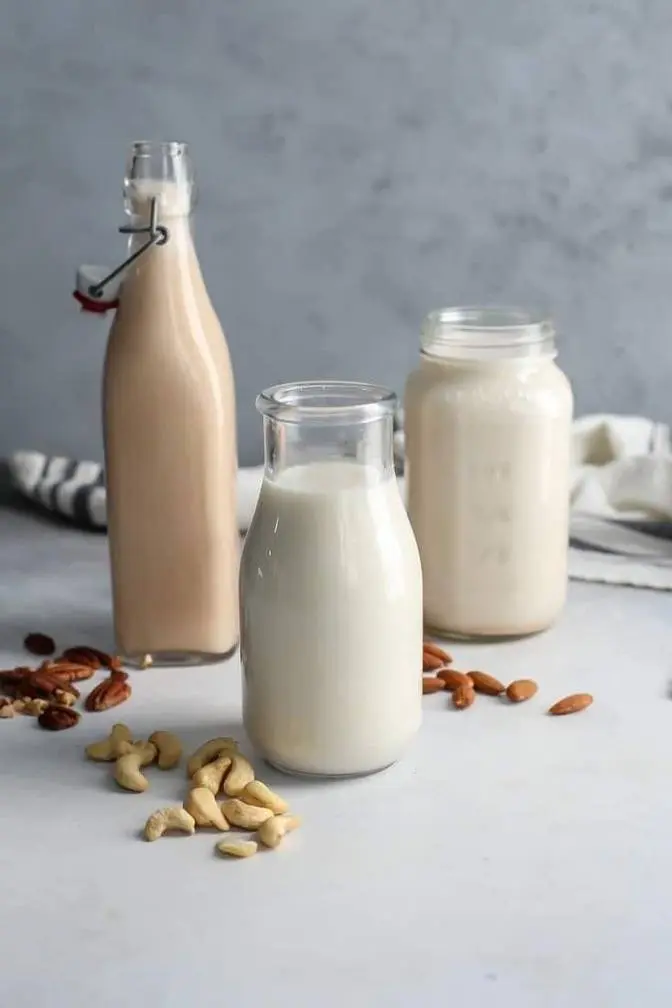
Is turning peanuts into yogurt a brilliant idea or just nuts?
Can we use regular roasted from the grocery store or must we go searching for pure raw peanuts?
Hello friends and not yet friends, welcome back to Mary's Test Kitchen where we're gonna find out.
Starting with 200 grams of raw unsalted peanuts in plenty of cold water.
These go in the fridge overnight and the next day we'll see how thirsty those legumes were.
Apparently not that thirsty. They only drank 90 grams of water.
Come to think of it, is soaking necessary for peanut milk?
I don't actually know.
I also don't actually know why I'm using fresh water here
instead of utilizing the leftover soaking water.
Tsk tsk.
In any case, this was our hydrated plain peanuts plus double their weight in water
at high speed in my Vitamix for 30 seconds.
Afterwards, it looks completely liquefied.
And the nut milk bag is suspiciously easy to squeeze.
But eventually, the evidence is in the bag.
I mean the fibre. Lots of fluffy peanut fibre with a texture that's a lot like coconut flour.
I bet you could dry it and sub it in any recipe that calls for coconut flour.
As for me, I'm saving it for recipe testing.
Let's see how much creamy raw peanut milk we have.
751 grams.
Which we'll need to cook.
Well, some internet yogurt makers will have you believe you can skip this pasteurization step
but come on guys, we don't know where these nuts have been.
We could be introducing uninvited bacteria and fungi which could overpower our yogurt probiotics.
Why take the chance?
Once it comes to a boil, we can turn off the heat
and let it cool to a probiotic-friendly temperature.
Today, we'll aim for 100 degrees Fahrenheit.
While we wait, let's choose our champion.
AKA our inoculant.
In the first episode of Will It Yogurt,
I went over the different ways you can procure vegan yogurt probiotics.
You can use commercial vegan yogurt starter,
vegan yogurt from the grocery store just as long as it has live cultures in it.
This one's my favourite recently.
Or you can use a couple spoonfuls from your last batch of homemade yogurt.
Like this batch of peanut puree yogurt.
Oh yes my friends, I did make a similar batch to the one we're making today
only I didn't separate the fibre from the milk.
I actually used this mango coconut yogurt to inoculate it
and FYI, the resulting peanut puree yogurt doesn't taste like mango or coconut.
Just tangy and otherwise very neutral.
But the fibre makes it gritty so the taste while it's okay,
the texture is kind of choky.
And while I have been using it, let's just say I wouldn't serve it to guests.
But it will make an excellent way to introduce yogurt probiotics
to our now cooled plain peanut milk.
Or so I assume.
Some online yogurt videos will also tell you that you can
wrap this up and leave it on the counter to ferment.
Maybe, depending on your local climate, it's possible and safe to do so.
But commercial yogurt cultures are generally thermophilic,
meaning they do better fermenting at a warmer temperature.
I'm going to play it safe and use my dehydrator because it's just convenient for me.
If you don't have something like this, don't worry.
There are lots of ways to keep your fermenting milk warm.
Just check the description.
I've linked a blog post all about the different methods.
I set my machine to 100 degrees Fahrenheit for 8 hours.
That's less time than our previous soy and pumpkin seed yogurts required
but peanuts have way more starch, aka more food for the probiotics,
so I think I'll go quicker.
In the meantime, I want to see how dry roasted peanuts will fare
since they're so much more commonly found in grocery stores than plain peanuts.
So let's soak the same amount in water and leave it in the fridge overnight.
I totally forgot about the fermenting plain peanut yogurt and didn't check it.
Until the next morning at 5am.
That means it fermented at 100 degrees Fahrenheit for 8 hours
but then spent another 8 hours at room temperature.
Then I put it in the fridge immediately and just hoped, fingers crossed, it hadn't gone bad.
A few hours later, I turned on the camera to reveal the results.
I can tell you first thing this morning, there wasn't that layer of whey on the top.
So that developed as it chilled.
But it does look pretty good, right?
Nice and thick.
Nice pretty white colour.
That is thick.
That's not going to be my taste test.
It's too big of a bite.
It's very tangy.
It's pretty good.
And it feels very smooth.
It feels a lot smoother than it looks, actually.
So I want to see if I can make the visual match up to the mouthfeel with this.
Oh now it's really liquidy.
Crap.
Whoops.
I probably should have poured off the separated whey before using my immersion blender on this.
It's like yolk now.
Super liquidy.
And personally, I like it thick.
But this is not a problem.
It's just another job for my trusty nut milk bag.
I tell ya, this thing was so affordable and I just love it so much.
This is going to go in the fridge overnight for maximum drainage.
And the cold temperature will prevent it from developing more sourness.
Now let's do the whole thing again with our dry roasted peanuts.
Will dry roasting affect how it ferments?
Already, we see a difference.
They soaked up less water than the plain peanuts.
This time, I actually saved the soaking water.
Yay me.
It's marginally more difficult to squeeze the roasted peanut milk out of the nut milk bag.
Let's have a little milk taste test.
Look how creamy that looks.
It tastes like roasted peanuts.
Not very strong.
Certainly it's watered down.
But it's nice.
I would drink this milk.
I don't think this pot is big enough.
This has got to be cool enough by now, right?
89 degrees.
It's a little bit cooler.
Should I turn up the heat?
Yeah, I'm going to warm it back up.
I was busy editing photos for the blog.
So if you want the written recipes, they are linked in the description below.
Yeah, 93 degrees.
I'm going to warm this up a little bit.
But notice how it has like a tofu skin.
It broke up very easily.
105.
That's fine.
Once again, I'm going to use my leftover whole peanut yogurt.
This time I'll actually use a measuring spoon.
One and two.
I'll let it ferment at 100 degrees for eight hours.
I'd like to tell you I planned to forget about it again same as before
and put it in the fridge at 5am like before.
But I didn't plan to.
It just happened.
So let's get into our dry roasted peanut yogurt.
I don't know what I was expecting.
But this was not it.
That roasted peanut flavour really comes through this time.
It's so fragrant.
At the same time, mild.
Like we haven't made peanut butter.
But it is distinct.
And it's gloriously tangy.
Not too sour but very pronounced.
Like perfect level in my opinion.
It's not all rainbows and unicorns though.
It's so thin.
And you know I like it thick.
This time I'm going to use two layers of reusable cheesecloth
as my nut milk bag is, of course, currently occupied.
I suspect because cheesecloths are not as fine as my nut milk bag,
the whey is going to strain out more quickly.
And like the other batch, I'm going to put it in the fridge.
And get out our strained plain peanut yogurt.
See how it's improved.
Looks like we have a third cup of whey in the bowl.
Which tastes like slightly tangy water.
That's interesting.
But the curds, how are they?
So thick.
So creamy.
The peanut flavour has become a little stronger compared to before
but I would still call it extremely mild.
Extremely neutral.
In fact, I still don't think you could tell it was made from peanuts
if you weren't told ahead of time.
Which could make this dangerous in certain households
so be sure to label your jars and definitely don't send your kids to school with it.
But I think it's going to do extremely well as a plant-based alternative to dairy sour cream.
The flavour, because it's so neutral,
it's not a yummy delicious just eat it with a spoon without anything else kind of yogurt.
More of a use it in recipes or as a condiment type of yogurt.
Three hours later and I think we've drained enough.
Even more whey has drained in just a short time.
The taste of this whey is actually pretty pleasant.
It reminds me of like a Chinese herbal tea.
Which kind? I don't remember.
But it's like light, fresh.
I could just drink this as like a probiotic drink.
Anyways, this yogurt is next level.
It's official, no need to hunt down plain peanuts.
This roasted peanut yogurt is incredibly delicious.
Smooth, definitely an eat with a spoon kind of yogurt.
I bet it will be great for both sweet and savory recipes.
Actually, both these yogurts were pretty cheap to make and definitely worth the effort.
Will you be giving peanut yogurt a try?
Which one do you want to try more?
Let me know in the comments below.
And while you're there, please tell me what you would like me to try next.
Thank you so much for watching.
Please give this video a thumbs up if you liked it and subscribe if you haven't already
for more nutty adventures to follow.
Bye for now!