
European Travel Skills: Packing
3 Video Views·May 23, 2024
This video is an excerpt from a much longer European Travel Skills Talk. To view other topics, or to watch my Travel Skills Talk in its entirety, visit ricksteves.com, or check out my Rick Steves YouTube channel. Thanks.
Thank you for joining us. I want to talk about packing light. My name is Rick Steves, and I have spent a third of my adult life living out of a 9 by 22 by 14 inch carry-on-the-airplane-sized suitcase.
And I'll tell you, you're going to learn now, or you're going to learn later, it's important to pack light. I don't care if you're going for two weeks, or two months, winter, or summer, you need to pack light.
You don't have a mule. If you do have a pack mule, you are abusing your spouse, okay? Every person should generally be able to carry their own stuff, and they should pack assuming they got to carry it.
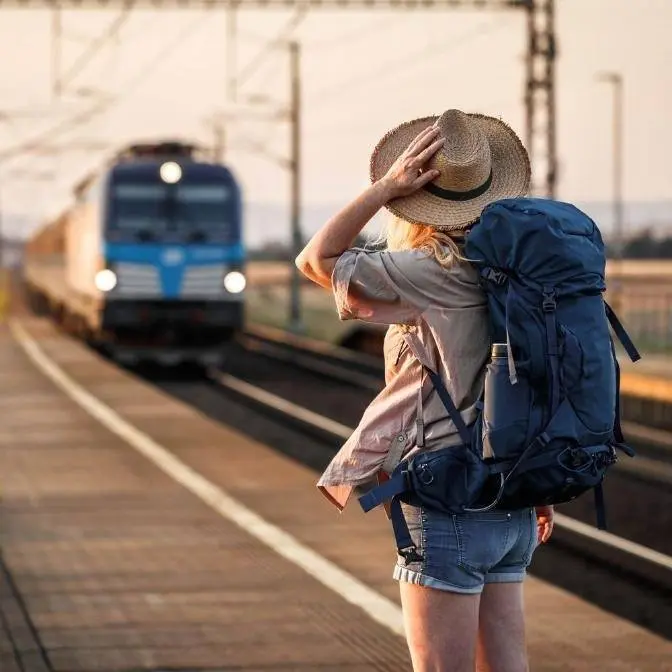
Now, when you travel around Europe, you see a lot of people with a lot of gear, and you wonder, why do they need so much stuff? I mean, look at this. I hope she's going to use all that.
Now, I live out of a bag that I can get up that donkey path and into Civita di Bagnoregio without a lot of effort, and that's really, really important.
Good travel means you're going to have to walk. If your trip's any good, you're not going to have a hotel right in front of your tour bus, or right in front of the train station.
And a lot of Europe is inaccessible. You can't get buses into the center of town these days, so you need to be mobile, and if you need to buy a porter everywhere you go, that's bad style, and it's going to put you in a real bind.
So, just get serious about packing light. Here's the reality. You come in by train, and you've got to get that bag out at least to the taxi rank, probably to the subway, and then on to your hotel.
You've got to unload your gear, load it up, walk out to the tour bus, and so on, and as I mentioned, if your tour is any good, the bus will not park directly in front of the hotel.
You want to be buried in the old town with your hotel, and that means the reality, getting out to the bus, getting out to the train station, whatever. So, you want to be mobile.
When I'm traveling, you've got a big choice. Do you want a roller suitcase, or do you want a suitcase that has a grip, that has hidden padded shoulder straps, that hangs on your back?
For me, that's a real advantage. I'm the last person on the plane. I like to be the last person on the plane, and I'm never unable to jam my bag up above. If I had a roller bag, that's a little bit different story.
If you need to have a roller bag, that's okay. Someday I'm going to need a roller bag. As long as I'm strong enough to carry it on my back, I will, okay.
I find in my office, among the men, it's kind of half and half, half of us carry it on our back, half use a roller bag. Among the women, most women like that roller bag.
So really, either way, and just because you have a roller bag doesn't mean you can pack heavier. That's a key thing, right.
Now this is my home for four months out of the year. The bag is something we've designed. It cost about $100. If I could get a better bag for $500, I'd buy it in a heartbeat, because this is my home.
It's a lot of living, and I find that this bag has everything we need. It's a self-imposed limit, 9 by 22 by 14 inches, that's as big as I can carry out of the airplane, very important.
It's got a very smart configuration of pockets, and I hang it on my back with those padded shoulder straps. I just love it.
These people are very mobile, and when you're traveling by train, you need to be mobile.
I will remind you, if you're traveling by car, you can be packing a little heavier, because you can use the car to get where you want to go in most cases.
But if you're traveling by train, you got to get serious about packing light.
On our tours, and we take a lot of people on our tours, this group here looks like a reunion for one of our tours, people just like you guys, we do not allow anybody to check any bags.
9 by 22 by 14 inches, that is the max. Last year we took 20,000 people on 800 different tours. For some of those people, that was a radical concept.
What? 9 by 22 by 14 inches for my whole trip? That was my cosmetics kit. Nope, that's everything, because, and it's kind of tough love.
And for years, I've been forcing people into this beauty of packing light, and I think, am I coming down too hard on them?
I drop in and visit them a week into their trip, and I ask them, how's it going? They're always thankful.
I've never met anybody who was mad at me for making them pack light.
You're going to learn now, or you're going to learn later, the importance of packing light.
So you can see these people here, these are people who take, this is one of our tours, a small group from one of our tours,
and we've got six people here, they've all got their roller bags, and they've all got day bags.
The roller bag, day bag thing, that's really your world.
Whether you're taking a cruise, or a bus tour, or going on your own, you got your big bag, you leave it on the ship, you leave it under the bus, you leave it in the hotel room,
and you got your day bag for out and about.
Here's me coming back from a two-month trip. That's my world.
When I leave home, I always think, this bag is so light, I must be forgetting something,
and I go to my Europe Through the Back Door book, and I look through the packing list, and it's all there.
You don't need to pack heavy, as I was talking about.
Whether you're going for two weeks, or two months, whether you're going winter or summer,
whether you're a man or a woman, rich or poor, old or young, it's all the same.
You will do yourself a huge favor if you pack light.
You got your big bag, you got your little bag.
Now, I do like to accommodate the reality that you're going to get things as you go.
Alright, I come, I leave home really bare bones, but I'm beyond getting souvenirs,
but a lot of people understand me, they're going to buy, they're going to buy their beer stein,
and they're going to buy their whatever all around Europe,
and I like to have what's called a hideaway tote.
I leave that in the car, I leave that deep stored on the bus,
and that's where I put my stuff I don't want to carry into the hotel every night.
Alright, very nice. It lets you still be packing light,
even though you're cheating and you're gathering stuff as you go,
and then when you fly home, you can fly home heavy,
and you've got this big bag that you can check onto the airplane.
If you can enjoy the luxury, however, of not checking things onto the airplane,
you're doing yourself a huge favor.
With climate change, more flights are canceled in Europe these days,
you need to be more flexible, and you need to be able to go to the airport
and be able to roll with the punches.
And if I've got my bag with me, I can hop on an earlier flight,
or I can take a canceled flight and jump over here without wondering where the heck's my bag.
Just last year, I missed two planes in Frankfurt.
Not my fault, there was a thunderstorm, it closed down the airport, it happens a lot.
So if you have your bags with you, if you can handle that, you become a more resilient traveler.
If you're packing heavy, you should go by car.
One thing I've learned, if you're traveling with little kids, you should be packing heavy.
There's a lot of stuff to keep the kids happy in Europe, alright.
I got over my fanatic pack light stuff a long time ago with little kids,
and I learned anything mom thinks is worth bringing is probably worth bringing.
I mean, just between you and me.
So rent a car, you know, have a car from airport to airport,
and take a few extra bags, and the family will be much happier.
Remember, when you have a car, you can be a lot more flexible.
You can drive from one spot to the next, and it just makes a lot of sense.
I mentioned climate change.
With or without climate change, you've got to be prepared for the weather,
and I would just anticipate some violent weather over there.
And the key is, you don't let the weather dictate your sightseeing.
You've got to get out and do it.
You want solid shoes, you want a Gore-Tex jacket, you want an umbrella,
you've got to have the right gear.
In Europe they say there's no bad weather, just inappropriate clothing,
and that's very wise, that's very wise.
So you want to be able to get out, and more,
even more of concern than the rain to me is the heat.
It is really hot over there.
I don't know my Celsius very well, but I do know that 28 equals 82 Celsius to Fahrenheit.
That's all I need to know.
If it's over 28, it's hot, it's over 82.
And it's not unusual to find a climate chart like this where,
in France, everything is over 30.
That means this is a very hot day, an uncomfortably hot day.
I do my Mediterranean traveling in the spring or the fall,
and I go north of the Alps in the middle of the summer,
and I highly recommend that.
You can go to the Mediterranean in the summer, but it's really, really hot.
You'll have air conditioning, but it's still like a blow furnace when you go outside.
I was in Germany last year for three weeks,
and every day it was close to 100 degrees in July.
That's unprecedented in Germany.
Every day it was that hot, it was muggy,
and then there was a monsoon thunderstorm in the afternoon.
This is just a new pattern.
So you will find, in your travels, violent weather,
lots of rain, and lots of heat.
Many times, I've got this slide just because many times,
you're in an outdoor restaurant, all of a sudden,
the clouds came, it got dark, and you've got a monsoon,
and everybody scampers for the tent.
Get out and have a good time regardless of the weather, bottom line.
If you wait in your bed and breakfast for the weather to get good,
you're never going to hike up that little hill.
Just get out there, and the weather will change three times during the hike.
The main item of bulk in your luggage is clothing,
and the biggest thing in your clothing is your shoes.
I mean, look at the size of my shoes there to my little bag.
That's a big deal.
I think it's really important to have practical shoes.
My guides in Europe often have very impractical shoes,
and they're out every day on the cobbles,
and climbing the ruined castles, and so on,
and I'll never forget this guide here,
I just wanted to make a photograph to compare.
I think it's really important to sacrifice a little bit of style,
and just have good solid shoes.
I love my Echoes, I love a good solid sole.
I don't need high tops, but I do want a solid good sole.
I want shoes that I can go through puddles and not get all wet.
It's pretty important.
Now the question, do you bring more than one pair of shoes?
I would think long and hard about bringing a second pair of shoes.
If you need a second pair of shoes, bring it, but it should be a light one.
A lot of times I bring a second pair of shoes just because I think it's expected,
but I don't use it.
Generally, I use the same pair of shoes.
I pack one pair of shoes, some people go,
oh man, that is barbaric.
I take them off at night, they breathe.
Shoes are big.
Get a well-worn in, well-tested, favorite pair of shoes, and use it.
The main item of bulk, again, shoes and clothing.
When you take less clothing, it doesn't mean you wash more,
you just wash a little as you go.
And you've got a limited wardrobe, and you're traveling so fast,
nobody's going to notice that except for your travel partner,
and he or she has the same problem.
So just make an agreement where you don't complain about each other's
limited wardrobe, and you're packing light.
It's quite easy to pack light.
This is what you need right here, laid out on a bed.
For a lot of people, they like to compartmentalize,
I think this makes a lot of sense.
I don't have time to get into all the details on packing,
but I would remind you, philosophically,
don't have this mindset where you're prepared for every scenario.
This is an American thing.
We like to be prepared.
We bring an extra one, just in case two people want to use it,
or you lose it, or one's broken,
or maybe you want to loan one out while you're still using yours.
No, just bring one.
If you need another one, you can buy it.
Assume they have it over there.
Pack for the best scenario, not the worst scenario.
That's fundamental.
If you lay at home thinking,
what all the stuff might I need,
you're going to pack way too much stuff.
Look at the packing charts, we've got them in our program,
and just pack the bare essentials.
In fact, it's fun to have to go buy something in Europe.
It's really fun to have to branch out and pick something up.
People like to compartmentalize.
These packing cubes are one of the most popular items in our travel store.
Again, they know where their sweaters are,
where their dainties are,
where their electronic gear is, and so on.
Compartmentalize in your bag.
I don't have a lot of credibility among women when it comes to packing light,
so it's just smart for us to have a woman,
who's a great traveler and a great guide,
give a talk about packing light for women.
And we've got a wonderful talk on our website,
in the travel talk section, by Sarah Murdoch,
about packing light.
I hope that you can enjoy that talk.
Whether you're a man or a woman,
it has a lot more information than what I'm going to share right now about packing.
When it comes to electronic gear,
I used to say, minimize the electronics,
no electronics.
That was a long time ago.
Now, I love electronics.
There's nothing wrong with electronics.
Electronics empower you in Europe.
You want to know how to get the gear going in Europe.
There's two issues.
Converting the power, and plugging it into the wall.
I have never had a piece of electronic gear,
that I can remember,
that didn't have a built-in converter.
It's not an issue these days.
You'll hear about converters,
110 to 220 volts, and so on.
I don't even bother with it.
I mean, if you looked at the fine print,
you'd see 110 to 220.
The issue is, can you plug it into the wall?
That's what you need,
and this is a very simple thing.
In Britain and Ireland,
you got the big three rectangular prongs.
Boom.
Everywhere else,
you've got the two little round prongs.
Boom.
Technically, there's a little part of Switzerland
that has an odd device,
but I just ignore that.
Just keep it real simple.
It's a good advice, just in general,
when you travel.
Two plugs, and that'll cover you everywhere.
My electronic gear, I love my laptop.
I love my phone.
I love my camera.
That's basically it.
When you're traveling,
you want to get online.
There's all sorts of great ways to get online.
There's all sorts of media you can enjoy.
There's movies you can download.
You got your music, you got your Skype.
There's all sorts of reasons to have a good computer,
or a tablet, or a smartphone,
where you can get online,
depending on your style,
but it's important to be online in Europe to travel well.
There are little guilty pleasures
that all of us should feel free to bring, okay.
I want you to be hardcore about packing,
but if you have some little treat
you want to bring along, bring it.
My guilty pleasure is my noise reduction headphones.
I love these things.
I would rather go economy class on a plane
with noise reduction headphones
than business class without.
There's a lot of rumble on the plane.
I've got lots of good things I want to listen to.
When I'm wearing my noise reduction headphones,
nobody talks to me.
There's just some beautiful reasons
to have your headphones on,
and when you're in your hotel room,
or you're in the back of a tour bus, or whatever,
you can enjoy beautiful quality sound
with your noise, with your quality speakers.
So everybody should be able to bring
their fun little extra.
As far as toiletries go,
there's not a lot of reason to bring
a lot of toiletries.
Frankly, I'm kind of surprised people
need so much stuff in their travels.
I like to have a toiletry bag like this.
We sell these like hotcakes.
They hang in the bathroom,
because a lot of times you don't have a lot of hard services.
When I lay out my toiletries,
it's pretty skimpy.
It's pretty basic,
and I'm pretty fanatic about that,
and I think that's all you need.
So without getting into all the details,
I'll just remind you,
you can travel very light
when it comes to toiletries.
Don't bring everything you need with you from home.
Look forward to running out of toothpaste.
Yeah, now you got an opportunity to go
into a Bulgarian department store,
shop around, pick up something you think
might be toothpaste.
That's part of the cultural experience,
isn't it?
That's part of the cultural experience.
When it comes to washing your clothes,
it's a reality we all gotta deal with,
and you've got options.
You know, you can pay the ransom
and have the hotel do it,
you can wash it in your sink,
or you can go down the street to the laundromat.
When you go to the laundromat,
you can pay extra for them to put it in
and fold it for you,
and come back later and pick it up.
Sometimes they even have a service
where they pick it up at the hotel
and drop it back to the hotel,
which is quite nice,
or you can sit there like a local person
who doesn't own a washer and a dryer,
and you can just do your little work,
and write your postcards or whatever
while your laundromat's going.
Hotels will tell you if there's a laundromat nearby,
it's not the first time they've had that question.
If there's not a laundromat nearby,
fine, do it at the next stop.
Sometimes there's no laundromats in town,
but it's not really an insurmountable problem.
You'll get your laundry done.
It's cheap when you go down the street to the laundromat,
it's free when you do it in the sink.
I just roll up my sleeves and think of it as exercise.
I wash whatever's dirty in the sink.
Usually there's a sign right next to the sink
that says,
don't wash your laundry in the room.
That needs to be interpreted as,
we're a classy joint,
we've got expensive furniture and floors,
we don't want you hanging stuff out the window,
and we don't want you dripping on our wood,
alright,
but you're paying 150 bucks,
you can wash your stuff in the sink.
I give you permission.
Again, just do it thoughtfully,
wring it really tight,
snap it a few times,
and hang it over the tub,
and you're doing fine.
By the way, I don't bring shampoo,
I just use the,
I don't bring a laundry detergent,
I just use the shampoo from the Itsy Bitsy in the hotel,
and it works just great.
That's the one Itsy Bitsy I use,
otherwise I bring my shampoo and soap from home.
Hang it up in the morning,
it should be alright.
By the way, before your trip,
wash everything out ahead of time,
and straighten it out as best you can,
and see what it looks like when it's dry.
A lot of shirts just don't work,
and you'll have to iron them,
and a lot of shirts work great,
and you should favor, obviously,
those shirts that wash and wear well with the sink.
You'll want to have a money belt.
A money belt is important,
whether you wear it every day or not,
you should have that ability to tie your valuables
under your clothing in a money belt,
because theft is a big problem for travelers.
And of course, when you're packing,
a big element of that is having your information.
This family's having a great trip,
because mom has the right guidebook,
and she's using it.
She did not skimp on guidebooks.
Guidebooks are a $20 tool for a $3,000 experience.
They're worth buying, and they're worth carrying,
and if they're any good, they'll pay for themselves
on the shuttle in from the airport.
Now you don't want to just carry a lot of paper,
that can be a real problem,
and you see a lot of people that have a library,
and it's a third of their bulk.
Get serious about ripping those books up.
It's a ritual for me, I get out a box cutter,
and I tear those books up, and I staple them,
and I put a big plastic or a tape binding on them,
and I've got my little versions of the big books
that cover just the places I'm going to.
So rip the heck out of those guidebooks.
A lot of people think, oh that's sacrilegious.
These are tools.
Your guidebook should be a mess after the trip's over.
And of course, you can always buy another one, right?
Okay, so you got your Moleskine,
you got your personal office,
you got your ripped up guidebooks,
you got your tourist information with rubber bands,
it's all right there.
Have the information, but keep it light.
It is so important to pack light.
It really is. Think about it.
You'll never meet anybody who brags that
every year I pack heavier.
With experience, you get serious
about the beauty of packing light.
Thank you.
If you've enjoyed this video,
you'll find lots more at ricksteves.com
and on my Rick Steves YouTube channel.
Happy travels, and thanks for joining us.