
At Melchester, Chapter 5
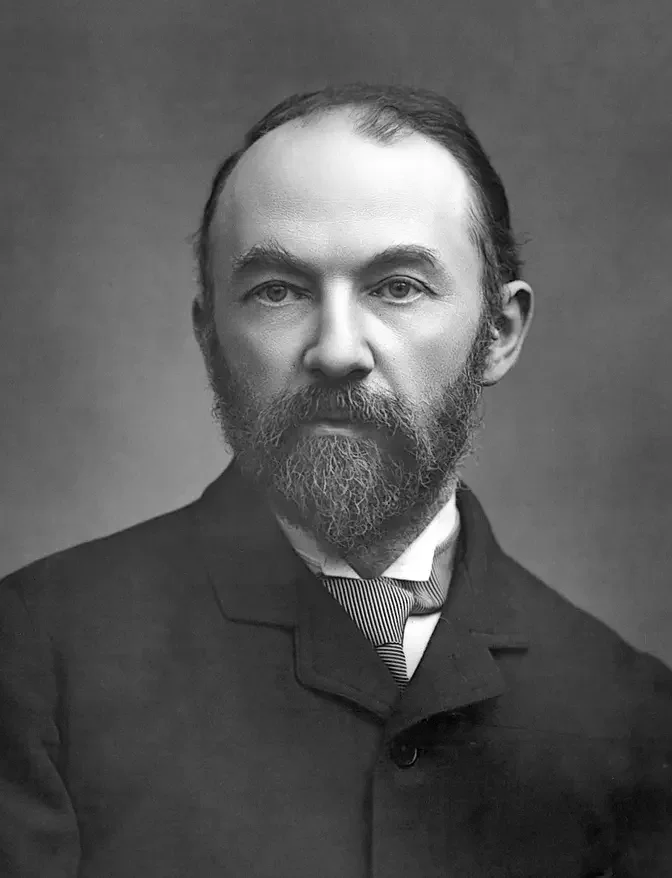
Part III Chapter V of Jew of the Obscure by Thomas Hardy
When he returned she was dressed as usual.
Now, could I get out without anybody seeing me? she asked.
The town is not yet astir.
Would you have had no breakfast?
I don't want any.
I fear I ought not to have run away from that school.
Things seem so different in the cold light of morning, don't they?
What Mr. Filliton will say I don't know.
It was quite by his wish that I went there.
He's the only man in the world for whom I have any respect or fear.
I hope he'll forgive me.
But he'll scold me dreadfully, I expect.
Then I'll go and explain, began Jude.
Oh, no, you shan't.
I don't care for him.
He may think what he likes.
I should do just as I choose.
Would you just this moment, said?
Well, if I did, I shall do as I like for all of them.
I have thought of what I shall do.
Go to the sister of one of my fellow students in the training school who has asked me to
visit her.
She has a school near Shaston, about eighteen miles from here, and I shall stay there till
this thing is blown over and I get back to the training school again.
At the last moment he persuaded her to let him make her a cup of coffee in a portable
apparatus he kept in his room for use on rising to go to his work every day before the household
was astir.
Now, a Jew bit to eat with it, he said, and off we go.
You can have a regular breakfast when you get there.
They went quietly out of the house, Jude accompanying her to the station.
As they departed along the street a head was thrust out of an upper window of his lodging
and quickly withdrawn.
Sue still seemed sorry for her rashness and to wish she had not rebelled, telling him
at partings that she would let him know as soon as she got readmitted to the training
school.
They stood rather miserably together on the platform and it was apparent that he wanted
to say more.
I want to tell you something, two things, he said hurriedly as the train came up.
One is a warm one and the other a cold one.
Jude, she said, I know one of them and you mustn't.
What?
You mustn't love me.
You are to like me, that's all.
Jude's face became so full of complicated glooms that hers was agitated in sympathy
as she bade him adieu through the carriage window, and then the train moved on and waving
her pretty hand to him she vanished away.
Melchester was a dismal place enough for Jude that Sunday of her departure and the close
so hateful that he did not go once to the cathedral services.
The next morning there came a letter from her which, with her usual promptitude, she
had written directly she had reached her friend's house.
She told him of her safe arrival and comfortable quarters and then added,
What I really write about, dear Jude, is something I said to you at parting.
You had been so very good and kind to me that when you were out of sight I felt what a cruel
and ungrateful woman I was to say it, and it has reproached me ever since.
If you want to love me, Jude, you may.
I don't mind at all and I'll never again say that you mustn't.
Now I won't write any more about that.
You do forgive your thoughtless friend for her cruelty and won't make her miserable by
saying you don't.
Ever.
Sue.
It would be superfluous to say what his answer was and how he thought what he would have
done had he been free, which should have rendered a long residence with a female friend quite
unnecessary for Sue.
He felt he might have been pretty sure of his own victory if it had come to a conflict
between Phillitson and himself for the possession of her.
Yet Jude was in danger of attaching more meaning to Sue's impulsive note than it really was
intended to bear.
After the lapse of a few days he found himself hoping that she would write again.
But he received no further communication and in the intensity of a solicitude he sent another
note, suggesting that he should pay her a visit some Sunday, the distance being under
eighteen miles.
He expected a reply on the second morning after dispatching his missive, but none came.
The third morning arrived, the postman did not stop.
This was Saturday and in a feverish state of anxiety about her he sent off three brief
lines stating that he was coming the following day, for he felt sure that something had happened.
His first and natural thought had been that she was ill from her immersion, but it soon
occurred to him that somebody would have written for her in such a case.
Conjectures were put an end to by his arrival at the village schoolhouse near Shaston on
the bright morning of Sunday between eleven and twelve o'clock when the parish was as
vacant as a desert, most of the inhabitants having gathered inside the church whence their
voices could occasionally be heard in unison.
A little girl opened the door.
"'Miss Bridehead is upstairs,' she said, "'and will you please walk up to her?'
"'Is she ill?' asked Jude hastily.
"'Only a little, not very.'
Jude entered and ascended.
On reaching the landing a voice told him which way to turn, the voice of Sue calling his
name.
He passed the doorway and found her lying in a little bed in a room a dozen feet square.
"'Oh, Sue!' he cried, sitting down beside her and taking her hand.
"'How is this?
You couldn't write?'
"'No, it wasn't that,' she answered.
"'I did catch a bad cold, but I could have written, only I wouldn't.'
"'Why not?'
"'Frightening me like this?'
"'Yes, that was what I was afraid of, but I had decided not to write to you any more.
They won't have me back at the school, that's why I couldn't write.
Not the fact, but the reason.'
"'Well?'
"'They not only won't have me, but they gave me a parting piece of advice.'
"'What?'
"'She did not answer directly.'
"'I vowed I would never tell you, Jude.
It is so vulgar and distressing.'
"'Is it about us?'
"'Yes.'
"'But do tell me.'
"'Well, somebody has sent them baseless reports about us, and they said you and I ought to
marry as soon as possible, for the sake of my reputation.
There, now I have told you, and I wish I hadn't.'
"'Oh, poor Sue!
I don't think of you like that means.
It did just occur to me to regard you in the way they think I do, but I hadn't begun to.
I have recognized that the cousinship was merely nominal, since we met as total strangers.
But my marrying you, dear Jude, why, of course.
If I had reckoned upon marrying you, I shouldn't have come to you so often, and I never supposed
you thought of such a thing as marrying me till the other evening, when I began to fancy
you did love me a little.
Perhaps I ought not to have been so intimate with you.
It is all my fault.
Everything is my fault, always."
The speech seemed a little forced and unreal, and they regarded each other with a mutual
distress.
"'I was so blind at first,' she went on.
"'I didn't see what you felt at all.
Oh, you have been unkind to me.
You have, to look upon me as a sweetheart without saying a word, and leaving me to discover
it myself.
Your attitude to me has become known, and naturally they think we've been doing wrong.
I'll never trust you again.'
"'Yes, Sue,' he said simply.
"'I am to blame, more than you think.
I was quite aware that you did not suspect till within the last meeting or two what I
was feeling about you.
a sense of relationship, and that it was a sort of subterfuge to avail myself of it.
But don't you think I deserve a little consideration for concealing my wrong, very wrong sentiments,
since I couldn't help having them?'
She turned her eyes doubtfully towards him, and then looked away as if afraid she might
forgive him.
By every law of nature and sex a kiss was the only rejoinder that fitted the mood and
the moment, under the suasion of which Sue's undemonstrative regard of him might not inconceivably
have changed its temperature.
Some men would have cast scruples to the winds and ventured it, oblivious both of Sue's declaration
of her neutral feelings and of the pair of autographs in the vestry chest of Arabella's
parish church.
Jude did not.
He had, in fact, come in part to tell his own fatal story.
It was upon his lips, yet at the hour of his distress he could not disclose it.
He preferred to dwell upon the recognized barriers between them.
Of course, I know you don't care about me in any particular way, he sorrowed.
You ought not, and you are right.
You belong to Mr. Phillitson.
I suppose he has been to see you?
Yes, she said shortly, her face changing a little, though I didn't ask him to come.
You are glad, of course, that he has been, but I shouldn't care if he didn't come any
more.
It was very perplexing to her lover that she should be piqued at his honest acquiescence
in his rival if Jude's feelings of love were deprecated by her.
He went on to something else.
This will blow over, dear Sue, he said.
The training-school authorities are not all the world.
You can get to be a student in some other, no doubt.
I'll ask Mr. Phillitson, she said decisively.
Sue's kind hostess now returned from church and there was no more intimate conversation.
Jude left in the afternoon, hopelessly unhappy, but he had seen her and sat with her.
Such intercourse as that would have to content him for the remainder of his life.
The lesson of renunciation it was necessary and proper that he, as a parish priest, should
learn.
But the next morning, when he awoke, he felt rather vexed with her and decided that she
was rather unreasonable, not to say capricious.
Then in illustration of what he had begun to discern as one of her redeeming characteristics,
there came promptly a note which he must have written almost immediately he had gone from
her.
Forgive me for my petulance yesterday.
I was horrid to you, I know it, and I feel perfectly miserable at my horridness.
It was so dear of you not to be angry.
Jude, please still keep me as your friend and associate, with all my faults.
I'll try not to be like it again.
I am coming to Melchester on Saturday to get my things away from the training school.
I could walk with you for half an hour if you would like.
Your repentant, Sue."
Jude forgave her straightway and asked her to call for him at the cathedral works when
she came.