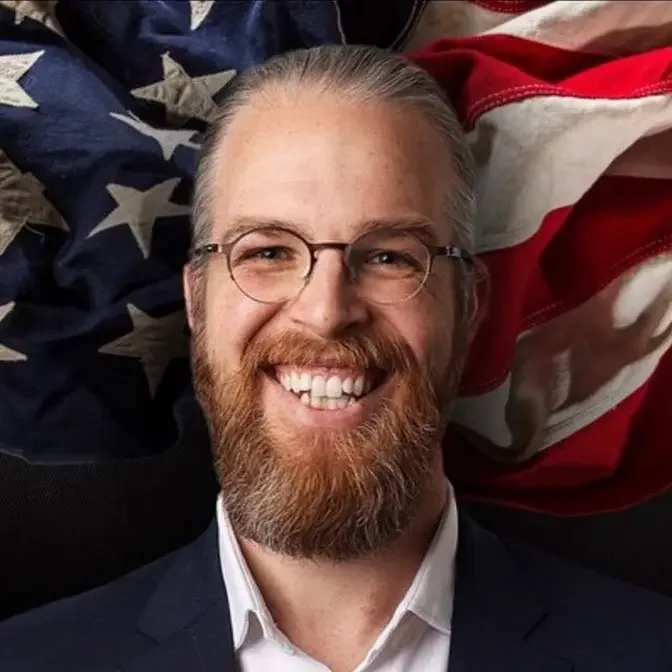
STARTS AT 9PM ET: Join me for an important discussion with filmmaker Namrata Singh Gujral where we discuss her most recent documentary America, Invaded.
Ladies and gentlemen, welcome to Man in America. I'm your host Seth Holhouse.
You've probably been watching what's happening with the border with complete
disgust. I know that I have been. But one level that I haven't yet considered until recently,
especially after coming across this documentary called America Invaded, was what is the disgust
being felt by the veterans that were fighting in the Middle East, fighting the same terrorists
that they're now letting walk right across our border? So that to me is an important thing to
look at because we know that there's been a massive increase in veteran suicides, etc. But
what's it like for a veteran that is a quadruple amputee that was fighting terrorists that now
is turning on the news and watching, oh yeah, now they're letting these terrorists just walk into
the country. These are terrorists that you would be shooting on sight if they were over in
Afghanistan or Iraq, and now they're walking into the country. And so there's not just that,
just a much bigger picture. So today I'm interviewing the filmmaker behind America
Invaded. Her name is Namrata Gershwal. And so she has been making incredible documentaries about
these kinds of topics. And so we just released this documentary, or she did. But let me go and
play the trailer for it because that will really help set the tone for the discussion today.
That's when the idea started to blossom about the military service.
I was only in Afghanistan for one month.
I don't got a left arm. I don't got any more legs or, you know, a right arm.
That was my only child. He would have been 34 now.
Jeremy called our childhood a leave it to beaver childhood.
I think of the three of us being enlisted for the most purely patriotic reasons.
He enlisted because of 9-1-1. He felt that he needed to help our country.
And Buchanan High School has lost more young men in that war than any other high school
in the United States. There's a lot of kids that lost their lives for this country.
The terrorist organizations, their commitment, their resolve, their desire, intent to do harm
to Americans. We could actually have a sleeper cell already in the United States.
The international intelligence community, we are worried that America has underestimated
the hatred that terrorists have for the West and for America in particular.
After fighting with the Taliban all these years,
Americans opened the airplane doors and said, welcome to America.
If the people that are supposedly running our country aren't going to do anything to
keep our country safe, then why are you sending our kids to places where they can be harmed or killed?
So folks, not only is it an incredible documentary, but there's an incredible
woman behind the documentary that I'll be talking to right now. So folks,
please enjoy the interview. Namrata, thank you so much for joining us on the show today.
It's a pleasure to have you here. Thanks so much for having me.
So you are a documentary filmmaker of many other things, which is close to my heart, the role of
film and communication, obviously. And you've recently released a documentary called America
Invaded. Now, a lot of people would think, oh, okay, it's another just border documentary. Yes,
there's a war going on down there and we're being invaded and we're seeing it every night on the
news. But what I found with your documentary is it tells an entirely different story by looking at
the sacrifices that we've made and our young men have made in this country in the Middle East to
protect us from terrorists. And coupling that and juxtaposing that with literally opening up the
door since the same terrorists they were hunting down in Afghanistan or Iraq are now just walking
over the border and is coming in. And so it's a really important angle that I think it's really
important story that's not being told enough. So I guess I'll just hand it over to you. Do you want
to just give an overall synopsis of America Invaded, a little bit of background about yourself,
and I'll just let you start where you feel comfortable. Well, first Seth, thank you so
much for having me and providing this platform to share this very important film with your viewers
and your audiences. I always say in Hollywood, we don't make these films because these are huge
moneymakers. We make these because we love our country. I'm, by the way, a registered Democrat,
longtime Democrat, and I felt compelled to make this film. So I hope your audiences will set up
and take notice as to why this film was made and what is particularly important about this picture.
I'll go back to what you said, the juxtaposition of the American soldiers' legacy and sacrifice
in trying to protect America and then letting terrorists in through a southern border.
I don't even mince my words. I say terrorism because it's proven that we have jihadists in
the country that came in through the southern border. I'm not sure why people, I mean, these are
facts and statistics. Some folks will still kind of maybe beat around the bush a little bit and say,
allegedly, we have terrorists. No, it's not alleged. We have them. Go take a look at the
stats. When you ask your young men and women and American kids to go overseas to protect America,
and they do it with all their soul and heart because they love this country so much,
how dare you allow terrorists back in the country that might have killed them on foreign lands
that are now in the U.S.? And that is the premise of America Invaded. It's not just
America invaded at the southern border, but America invaded in terms of America's soul,
America's spirit, because our young ones are our spirit and our soul, right? That's how we continue
America. And to unravel their legacy, to me, is beyond anything else that you could do that
could be destructive to this country. And it's difficult to look at this
situation and not get upset. I know for me, looking at the videos I see of people walking
across the border, and not just that, but then seeing the stories in the headlines of
rape and murder and the human trafficking, that already is enough for me as a proud American to
say, this disgusts me. But I can't imagine, right? It'd be very difficult for me to put myself in
the shoes of someone that went and fought overseas, maybe did two or three tours in the Middle East,
maybe lost a leg or lost an arm, lost a brother, lost a best friend. I can't imagine what it would
be like for them coming back and not only dealing with the crisis of our veterans and the lack of
support that they get, which is a whole other documentary worth of information that needs to
be put out there. So not only that, but then looking and seeing the same people that you're
over on foreign land, now not only just coming into the country and sneaking in, but being given
money, being given hotel rooms, all taxpayer money. And so I know that you interviewed a
lot of these young men that had fought, and some of them that were amputees or they lost
friends and family. What were some of the stories and perspectives that really stuck with you
from the interviews that you did for the documentary?
So that's a terrific question. In fact, I'll start my answer with just saying that
every Ghoul star's family story is equally important. And there are many, even from the
global war on terror, not just from all the different wars that America's engaged in.
However, you can only get so many stories in a 90-minute feature. So we extensively interviewed
many different families. I'm talking maybe perhaps even reached out to somewhere in the hundreds.
And we ended up picking six stories for the film. It's not that they were more important,
it's just they went above and beyond what you would even consider the sacrifice of a Ghoul
star family just in terms of the way they were impacted. And again, not that these six stories
are any more powerful or better than any of the other stories. I'll tell you what we ended up
doing was we have a sole survivor in the film, for example, Ghoul Wise. He's the current Saving
Private Ryan. Three brothers, only three siblings went to war. Two of them died in combat, and they
brought the third one home, just like Saving Private Ryan. He's the only one here now. There's
actually two of them in the U.S., and he's one, and we have him in the film. We have a quadruple
amputee in the film. You talk about perhaps losing a limb or a leg. He lost both his legs and both
his arms, only has a torso. We have him. We have an African-American Ghoul star mom who lost her
only child in Afghanistan, only child, and she's now older. She's not going to have any more kids.
And we have that. We have a very important angle that I wanted to put into it because I do believe
that the 22 soldiers a day that are committing suicide after coming back from Iraq and Afghanistan,
those are our numbers now, I believe they're very much casualties of this war. And so we
have one of those Ghoul star moms whose son committed suicide when he came back because he had
so many TBIs, the traumatic brain injuries when he was in Iraq and Afghanistan that some of these
soldiers are literally going to VA. They're sitting in the parking lot, and they're just
taking their lives right there. And finally, we look at the sort of larger aftermath of what
happened. So we end the story with this one mom whose son was one of the Kabul 13 that pull out
from Afghanistan. And it was so traumatic for the family. The brothers were very close,
the older brother, and we've seen this, by the way, in many other families. We just couldn't
put all the stories in the film. At his one-year anniversary, the older brother went to the
memorial and took his life. So we talk about numbers at the end of the film in terms of
casualties of the global war on terror. But the casualties spread far more than just the numbers
that come from DoD. It's all the other stuff that happens that people forget after they've
read the news headline or read the news story. And I think the one thing I will say is,
with all of these stories and speaking to all of these American heroes and their families,
people often ask me, is there regret? And we actually asked them in the film,
do you regret it? I will tell you, I am not that brave of a person because they don't have
regrets because by and large, every single one of them said, if not me, then who? If not me,
then who? Who would have been there for America? Who would have been there to take care of the
guys to my right and left? Who would have taken the hit if I hadn't taken the hit?
So if that tells you anything, I think in a nutshell, that's who these people are. And
that's who, by the way, we are unraveling the heroism and legacy of when we do what's being
allowed to be done at the southern border. Do you recall any specific conversations with
these people that fought, lost limbs, friends, large portions of their life to protect this
country? What were some of their perspectives on watching the border? What was it like for them
to see the footage or to see what's happening with the southern border?
Well, actually, it's interesting because the whole reason this movie came about
is because of a gold star mom. I actually released another film a couple of years ago,
I think it was like, yeah, two or three years ago. It was called America's Forgotten. And that was
also on the southern border, but kind of, you know, more sort of the humanitarian part of it
in terms of what happens to migrants, women getting raped, etc. We followed the journey
of a woman who was continuously raped across the Mexican border. And we followed the journey of
this kid who got dehydrated and died at the border. But we also talked about the impact to
Americans as a result of that, you know, that open border, for example, economy and job losses
and things like that. We have a veteran in that film, who, if you think about it on the surface,
it doesn't seem like he was impacted by the border. But he actually is a veteran, came back
from Iraq and Afghanistan, moved to California, has serious PTSD, decided he does handyman work,
so decided to be a contractor. And he couldn't find a job. And by the way, I'm an immigrant,
so this is not meant to be a soundbite that would look somebody will pull from your show and put on
the Internet and say, oh, she's so anti whatever. He doesn't speak Spanish, so he couldn't get a job
in California in construction because he had PTSD. And I'm not saying that it's correct.
I'm not going to make judgments on it. He got further and further into drugs.
So what a juxtaposition that turned out to be. He can't get a job now. He's on heavy duty drugs
and from L.A. is going to the Mexican border down south to Mexico to procure those drugs.
Anyway, that's the previous film. So we were doing screenings around the country,
and I was actually in Houston doing a screening and a gold star mom walked up to me and she said.
Folks, perhaps you'd agree with me when I say that over the past five years,
the mainstream health care system's credibility has plummeted. Alternative health care systems
that aren't beholden to medical consensus or big pharma are on the rise. Sweetamine is time tested
and proven to boost your life with better health. It's one of the leading products that helps with
inflammation and daily aches and pains. Just because you get older, it doesn't mean you have
to feel old. And folks, did you know that most of the diseases that make people sick and die these
days are rooted in chronic inflammation, oftentimes due to glycine deficiency. So sweetamine is
composed mainly of the amino acid glycine, the nutrient that the immune system uses to regulate
inflammation. So with once daily sweetamine, most people feel the reduction in pain after just a few
days. So I challenge you to the 12 day sweetamine challenge to fight inflammation and take control
of your health today. So folks, buy sweetamine online at sweetamine.com or call 855-GET-SWEET,
that's 855-438-7933. And make sure you use promo code Seth, S-E-T-H, to get a nice discount on your
purchase. Love what you did. I saw you on a few Fox shows and when I watched your movie and I
loved everything that you did. There's only one thing, I wish you had paid more attention to
national security. And at the time I remember, I literally remember thinking to myself, oh,
okay, well, I don't know if you see this, but sometimes, you know, people will say,
well, you know, that shot that you did, I wish you had kind of done this. And you're thinking,
no, I couldn't have done that because there was like a beam falling down on that side. So the
camera couldn't have gone there. So, you know, it's one of those things where you get feedback,
but you kind of know what's happening on set. And I thought to myself, well, national security,
yeah, okay, I understand, but I'm not sure what the big importance in that film was.
However, I do take my audience feedback very seriously. So I came back and I had a couple
of my assistants just look at it. And at the time I was making two other documentaries,
Vetted and America's Forgotten 2. And I think what we started finding out, I reached out to a friend,
won't mention names for privacy, head of Homeland Security, ex-head. And I said,
is this true? And they're like, yeah. And I'm like, why isn't this headline news every single
day all the time? I mean, terrorists are coming into the country. And I changed the flavor of
both pictures, actually merged both pictures together and made America invaded. So when you
ask me how the soldiers feel about the southern border, the picture was made because it was
prompted by the questions of a gold star mom whose son had enlisted after 9-11 and was killed
in Iraq. And she simply couldn't understand what her son gave his life up for.
I'm sure it would be really difficult for a mother, especially to see that,
the sacrifice of losing a son and seeing what's happening at the southern border. And so,
you know, that you spoke to a lot of different experts in this process of creating the
documentary that understand national security and what's happening. And they're not just gonna
give you soundbites, like a CNN soundbite of what's happening, but the real people,
like your friend that you mentioned that you're able to talk to speak with. And so,
from the research that you've done and the people you've spoken to, what is your assessment of our
national security? The open border, what's it really doing? How secure are we? Are we more
secure now than we were 10, 15 years ago? What's your thoughts on this?
Well, listen, I'll just even go ahead and give the spoiler, because we started the film with
an ex-FBI director saying, 20 years later, after the global war on terror, is America safer? And
then he answers that question at the end himself. But the answer is, no, it's not. In fact, it's
less safe now than we were on 9-11, if that tells you anything. And the film kind of walks you
through all of that. And that's him, that's the ex-FBI director. Now, personally, I'll tell you
this, as a documentarian who comes from an investigative journalism background, I make
movies, but I've won a couple of Society of Professional Journalists awards. I mean,
I don't say that to be immodest. I take the stuff very seriously.
I will tell you that the findings of this picture, there was a memo that came out in 2001,
before the 9-11 attacks. It was called the Phoenix memo. And what it was, was an FBI agent had put
together pretty much an entire kind of blueprint of the aviation schools that were going to be
targeted by these terrorists that were going to come in and then launch a large mass scale attack
on Americans. And it kind of just made the rounds. It didn't really go anywhere. I think because a
lot of people, and I don't know the mindset, I'm just guessing this, perhaps it was like, well,
this person is overreacting, or whatever that is. And then 9-11 happened. In fact,
a couple of people that I reached out to couldn't really talk about it because,
as a result of the Phoenix memo, now the families of 9-11 victims are suing the government of Saudi
Arabia. So a lot of this is now, it's in the courts and stuff. So I guess some folks can't
talk about it. Here's what I'm willing to say on camera. I think America Invaded, this film,
should be almost heeded as a Phoenix memo in 2024 of sorts. That's how firmly I believe they're here.
And that's how firmly I believe their intent is. And that's how firmly I believe something
will be orchestrated when the time is right. And I know it's impossible to know exactly, but
what would you see being orchestrated? You mean what kind of attack?
Yeah. Any indication from the people you've spoken to about what could be done? I mean,
we saw what happened just with two planes and the whole story surrounding that. But
if we've got terror cells all over the nation, there could be those kinds of events in every
major city. Do you have any thoughts on what could happen with all this, with the open border?
Yes. So one of the things, and I was asked this question as well,
well, could it be cyber? Could we just be taken out? Could the grid go down?
It could. And you don't necessarily have to be in the US, although it would help to have
some cells here that would be working the internal workings within the US. But I'm not
even talking about the grid going down or supplies going down or any of that. I'm talking about
loss of life. And what I'll do is I'll point your audiences to look at what happened in Bombay,
in Mumbai, in India, 1126, where there was a large scale attack. Various sleeper cells
went to various locations. And I'll let your audiences look at it. And it was ghastly,
a lot of lives were lost. They actually even tried to go into the parliament, which is,
I beg your pardon, not the parliament, their version of the White House.
They were stopped and thwarted. But it was a very large scale, multi city attack.
We actually have a international security expert in the picture, who is the ex director of Ra,
which is the international research and analysis wing. And they work a lot with jihadist attacks,
in particular, around the world. And just by the way, to be clear, not all Muslims are jihadists.
I want to make that very clear. There's some great Muslims in the world and peace loving
Muslims. But unfortunately, there is a faction of them that just, you know, for whatever reason,
just want to kill a bunch of us. And that's just how it is. So in talking to that gentleman from
research and analysis wing, and various others, I think you're looking at a multi city attack,
which would be at the same time, simultaneous, and we would lose a lot of lives.
And it could cripple life as we know it, here in America. And I've explored just a lot of the
grid down scenarios, which could be done through a nuclear warhead as an EMP, through a more
localized EMP, even just through cyber attacks. And the loss of life from that is just, it's
unfathomable to most people, what that could do. I mean, we're so vulnerable.
So one question I do have, though, is that, you know, as I mentioned in the beginning,
there are a lot of documentaries about the border, a lot of coverage on the border,
which is really important. My good friend, Michael Yan is down there a lot. And Vander
Steele, there's a lot of important coverage, you know, coming out. But with this documentary,
how is it different? How would you describe it? Someone said, well,
there's six different things I can watch if I want to understand what's happening on the border.
Why this particular documentary? I think it's very simple for me.
I mean, first of all, I respect every single content creator and filmmaker who's at the border
telling the story. I think it's pertinent for journalists and documentarians to tell it as it
is. So the average American who's going to work perhaps doing two jobs a day has a more succinct
way of watching what's going on in the country and being able to make responsible decisions when
they go vote. So hats off to everyone who's doing it. In terms of this film in particular, though,
it goes beyond the southern border. It goes beyond the photos and videos of people coming
in thousands and crossing the border. It goes beyond Darien Pass that we talk about. We have
an interview with a coyote at Darien Pass in the film, as a matter of fact. And I think that
what this picture does is not only show that we all know we have a problem at the border.
I remember I made a documentary on breast cancer one time, a woman's journey through breast cancer.
And I had Nancy Brinker in the film from Susan G Komen for the Cure. And at the time,
she and I were talking and she said, well, you know, October is Breast Cancer Awareness Month.
And I said to her, I said, Nancy, with all due respect, this is 2009. We're aware of breast
cancer. If you're a woman and you don't know there's a breast cancer problem,
you're living under a rock. And she agreed with me. So I think we're in 2024. If Americans don't
know that there's a problem at the border, they're living under a rock. So I'm sure everybody knows.
So watching that movie and watching people throng through the border,
we know and we watch it because it's horrifying. It's kind of like watching
a car wreck on the freeway. Sometimes you can't get your eyes off of it and you just need to watch
it. This picture goes a lot deeper than that. It talks about why the southern border is open the
way it is. Also, I want to point out, we don't just talk about the southern border in the film,
which a lot of the documentaries do. We actually looked at every single entryway to America
since 9-11. And the southern border, when people coming in, that's illegal, of course. We look at
our legal entry points where people enter the United States three different ways.
Visa, asylum and refuge. We travel to Kenya, to the Dadaab refugee camp, where a lot of the Somali
refugees are coming from, and show you how terrorists are coming in from there.
We take you to Afghanistan. We talk to a special forces guy, Afghan guy, who talks to us about how
some of these Taliban boarded our planes. And that was through a special interest visa. We talk about
Mohammed Massoud with the H-1B visa, who came from Pakistan to the Mayo Clinic to be a physician
and then decided to do a jihadist attack in the United States to kill a bunch of Americans.
So this picture goes far beyond the southern border. It talks about every possible entryway
into the US and how every entryway is being prodded and abused. And what's shocking is
that I'll tell you this. Some of the hijackers of 9-11 were in the United States due to some
loopholes of our legal immigration system. They didn't come into the southern border.
Those loopholes today, you and I are speaking, what is that, the 29th of Feb, 2024, I think it's
the 29th. Those loopholes as we speak today still exist. I can't even tell you. I can't even speak
to it more than that. If that doesn't tell you something. Yeah, it's not accidental. That's for
sure. The more you look into this, you see there's no way this is something that was just
oversight or sloppy organization. I mean, what you can see is, I mean, from my perspective,
I've got a lot of different ideas on this, but fundamentally, I think that we've been,
our country has been overthrown in many ways. And there are people that are playing a role
in actively destroying this country. I mean, to me, it's the only way that we can explain
this. It's not about, well, America's the land of the free and come one, come all. I mean, this is,
I'm all for immigration. My wife is an immigrant. She came from Australia. I'm all for
legal immigration. But this is not that. And I saw even yesterday, I think it was yesterday,
the day before yesterday, there was something about, I forget which country it was. I think
it was Venezuela, where they said that crime is at a 20-year low, but it's because so many
criminals were leaving to come to America. And it's just, it's astounding. Because that's the
thing, is that when you look at these, the people that are coming across the border,
and I've done a lot of interviews with folks that are, whether they're ex-border patrol,
special forces, et cetera, and they can look at a video of the lineup on a street or on the side
of a dirt path down in Texas. And they've done this on the show with me. They say, okay, that
person's Chinese military, that person's Chinese military, that person looks like South American
special forces. They're not regular, you're women and children. I mean, these are people that look
like they're soldiers. They look like they're what you call fifth column, an invading enemy
that's filling up our country with their own soldiers. So that way, the one day they get the
order, they can unleash an attack from all angles. And that's my concern.
Yep. And like I said before, consider this film as a warning and as a Phoenix memo in 2024.
It's not good.
Hey folks, I've got a quick message for you. So I'm sure you've heard a lot of people,
myself included, talking about the importance of buying precious metals, gold and silver.
But what's really behind that? Is it just a thing of, hey, buy this gold, buy this silver, right?
Or is there something deeper that we should be looking at? So I recently came across some figures
about house prices. So in 1930, the average family home was approximately $4,000. Fast forward to
2023, the average family home is just over $400,000. So you have to ask yourself, why is that?
Is it because things have just gotten more expensive? No, it's actually because the dollar
has lost 99% of its value since 1930, right? When people talk about the collapse of the dollar or
inflation, this is what it means. Now let's take a look at gold. So in 1930, if you wanted to
purchase your home in gold, it would take approximately 200 gold coins. So 200 gold
coins would purchase the average family home in 1930, about $4,000. Now, if you, instead of buying
a home with that gold or cash, you set those aside, if you set aside $4,000 in cash in 1930,
it would be worth $4,000 today. What can you buy with $4,000? Can you buy a family home?
No, you can't even buy a crappy used car. But if you set aside $4,000 worth of gold coins
in 1930, which is 200 gold coins, one ounce coins, that would be worth approximately $400,000
today. And this is the key lesson about precious metals. It's not about getting rich. It's about
putting your money into an asset that protects you against inflation and against the destruction
of the currency, which is what happens to all fiat currencies, especially now we're in the end
days of the dollar. And so that's why it's important. Maybe not all of your money, but a
portion of your money, a portion of what you have, I highly recommend putting it into precious metals
of gold and silver, because what it's doing is it's protecting you. This is an asset that has
stood the test of time, not just stood the test of time since the 1930s. We're talking about the
rise and fall of civilizations. Gold was used to buy houses back in ancient Rome. It's still around.
It's an asset that will forever have its value. So folks, if you want to do this and you need
someone that you can trust, there's no person I can recommend more than Dr. Kirk Kelly. He's a
very good friend of mine. He's a strong Christian patriot, and he's out to really help people to
protect their savings and what you've worked for against the destruction of the dollar,
not to mention also protecting it against the dangers of a central bank digital currencies.
So to learn more about this, go to goldwithseth.com or call 720-605-3900. Again,
that's goldwithseth.com or 720-605-3900. Both those places will allow you to set up a quick
appointment where you can talk to a wealth advisor that will help get you started on this path.
Again, goldwithseth.com, 720-605-3900. One question I do have, and I like getting into
your visceral experience of making this, what would you say was one of the most difficult
challenges or moments that you had? I know that every creative process is a journey and you have
your highs and your lows, but something like this, where your journey involves dangerous places,
looking into criminal organizations, talking to people that have great suffering, there's a lot
that can arise out of that. Are there any memory of moments that really stuck with you or really
changed something about your perspective of the world that you had in making this documentary?
Well, look, Seth, I'll say this. Movie making, whether you're making a major
studio picture or you're making an independent project, we have a saying,
pain is temporary, film is forever. I can't speak to a lot of the travels that I did because some
people helped us a lot, is what I'll say, probably that shouldn't have helped us,
but decided to do the right thing. What I will tell you is this. Actually, this answer would
probably work best with what you ask because I really mean it. When we were in post-production
on this film, I think one of the most shocking aspects to me was every time that we thought we
had a locked picture, some other stats would come out or something else would come out,
and I'd be like, I mean, I couldn't keep up with all the transgressions and terrorists coming into
the US. And so at one point, I think someone asked me from, I think it was Washington Post
or something the other day, well, you have all these latest headlines in your picture,
how quickly did you make this film? And I said, you know what? Actually, some of those latest
headlines, we literally took out something from two years ago and put the latest one.
That's how quickly they're happening. And the same thing is happening to where you have tonality and
you have pacing and you have a lot of these different things in the picture. We didn't
have to change a beat. That's how often and how regularly a lot of these incidents are happening
to our legal entry points and our southern border. And I think that was probably the
most shocking thing to me. You make a documentary and you typically, when you put it out, people
look back and go, oh my God, I didn't know that happened. Or I didn't know, oh, some terrorists
also came in like last year, I guess. And you watch this and even since I've released this
documentary, there have been new stats out by CBP. So I think that was perhaps the most shocking
thing. And then someone also asked me, well, do you wish that Biden and Mayorkas would watch your
film? Let me tell you something else. They don't have to watch the film because I can tell you
with a great degree of confidence, they already know. It's not like they don't know all this stuff
is happening, that the sleeper cells are here, the terrorists are coming in. They know. They
don't need to watch this picture. The question is, what are they going to do about it?
Then that is the question. Now, something that you mentioned at the beginning, which I think
is really worth touching upon, you mentioned you're a lifelong Democrat. And I think it's
brilliant that you're working on this. And I think that because for a lot of people, they would say,
oh, the border, that's more of a right-wing issue. And a lot of the Democrat politicians
have been more for open borders and bringing a lot more immigrants in and really
filling up the country. And it's similar. I interviewed a gentleman named Dr. Robert Epstein,
who did this massive project on election fraud. And he's also been a lifelong Democrat. So the
thing is, these aren't issues that are left versus right. And that's the key here. But I wanted to
see from your perspective and from perhaps some of your peers or friends that have come from more
of that Democratic position, how do you feel about this? Looking at a lot of the more Democratic
policies, more lean towards open borders, not all of them, but a lot of them are,
how has that changed your view on politics in America experiencing this?
Well, first of all, I'm very disappointed, frustrated, but I think also very angry at my
party. Because what we're doing to this country, but letting some of these criminals and murderers,
but also terrorist jihadists into the country. You know, when you send your kids to war, yeah,
I get it. A large majority of our military is perhaps maybe Republican or
viewers, right. But there's some, I'm sure there's some kids from liberal families. In fact,
I know there are some kids from liberal families that have died in combat. When you look at the
sacrifices of these kids, these kids are not just Republican or Democrat. And by the way,
if they were on the front lines, and there were six of them, and one of them was Democrat,
and the other five were Republicans, they don't care. They have your back,
just like they would anybody else's. So how dare, first of all, we as Americans,
look away from this issue if it doesn't align with the narrative of our party. That's the
first thing I'm going to say. The second thing I'll say is, and I'm going to say this very openly,
I went into this picture with a very open mind. In fact, when we started making the film, I said,
let's interview some leaders from the right and left. And let's talk about some of the myths or
some messaging that both sides hear as to why this is being allowed to happen.
We interviewed a bunch of folks, just like street interviews. And I think the top messaging from
the right was the Democrats just want to get a bigger voter base and get a voter bank. And so
nine out of 10, eight out of 10 people that come in illegally will vote Democratic,
and that's why they allow it. The messaging that was most prominent from the left or the right was,
the right doesn't want to have people come in and they want to secure the borders because they're
white supremacists, they're anti-brown, they're racist. We heard a lot that word racist and
they're anti-immigration. So what we did was we reached out to, hands down, five on each side.
We did a search, we found people that were most pro-open border and most anti-open border on the
right and left. And we reached out to all of them, we said, we want to give you an opportunity
to talk about this in the film because people are hearing this and this is what they need to
understand. I'll tell you that we reached out to five congressmen and women on the Republican side
to talk about the racism, et cetera. And every single one of them said, sure, I'll come on camera,
I'll talk about it, which was great. We could only get one because again, it's a movie,
you can't make it about congressional leaders. I reached out to five initially that I show in
the picture and then I actually reached out to more in the same thing. Not a single one of them
wanted to come on camera and talk about this issue. In fact, offline, I got a call from one
of them who said, I'll talk about anything, but I don't want to talk about why the border is being
allowed to be forced. I just don't even want to go there. And I can't mention names, but I'll just
leave it at that. You may not know for sure, but why do you think that those folks you reached out
to would talk about anything but the border? Why is it that kind of issue? What's so important
about the border that they won't come on the camera to talk about this border policy?
I don't want to sound like I'm trying to defend them and maybe this will come out as a little bit,
but I'm not. I do believe that there are people in the Democratic Party who see this. I mean,
what's going on is criminal and bizarre, okay? And I'm sure there are people, Democrats like me,
who've seen this and go, what the heck is going on? Well, stop. I think the problem,
I mean, I'm not a politician and I never intend to be one, so I can speak freely to this.
As a matter of fact, it's to share the information that I have gleaned
with the audiences of the American people. I think for a lot of them, they see what's happening,
they recognize what's happening, they see why it's so bad in terms of what could happen to
the United States. So the only other thing then is how do you go against your party and it might
politically go against you with your job and your career, etc.
So I know I'm giving you a roundabout answer, but it is true. There are Democrats who recognize it,
just will not speak publicly about it because it would literally be going against the party's
narrative completely. Which is a difficult place to be, I'm sure, because parties change. The
Democrat party now is very different than it was 20 years ago. The ideals of both parties are very
different. And so I have some empathy for that. I wish people, unfortunately, I think that on both
sides, which I think in a lot of ways, both sides are very corrupted. That's my view of politicians.
And I do wish that more people would just stand up and say, look, even if this costs me my career,
I have to draw a line in the sand somewhere. But it's easy for me to say from my perspective
within my own life where I'm not out doing these other jobs. So what is next for you?
So you just released this documentary, we're going to talk about where to watch it. Do you already
have your next project outline? What's the next thing that you're going to be focusing on?
So I made America's Forgotten and America Invaded back to back again. And I am honored to have made
these pictures, by the way, I'll put a caveat there. But again, you don't make these documentaries
and these movies for the money. Movie making takes funds and that's okay. These are two that
I funded myself because I felt compelled to tell these stories, et cetera. But now I got to go
and make a film that will make money. So I think my next picture is going to be back to Bollywood
and I'm going to make a film. I do some Bollywood work. And so I think that's going to be the next
one. I will say this. I don't know if I'm allowed to say this on camera. So someone told me this
was illegal. But I do think that in November, if things don't go the way they should, someone
should think about making a documentary, American Divorce, A Case for Secession, because
it's just not good, Seth. I know. Folks, I have a quick message for you. Look,
the 2024 election is do or die for the globalists and communists that have infiltrated our country
and are currently running it. And they either have to win or they're going to destroy America
so nothing is left either way. And if you're the person that's watching this show and following
this information, unfortunately, you have the weight on your shoulders of making sure that
your family is prepared, especially as we head into this next year and this next election cycle,
because unfortunately, I think it's going to get rough. And one of the ways I know they're
going to target us is through our food supply. You can see all the food factories burn down.
You can see the warnings of coming famines and food shortages and everything like that. And
food is one of the number one ways totalitarian regimes have always used to control the population
is destroy the food supply. So if you don't have at least two, three, four, five, six months worth
of stored food, I highly recommend you take that very seriously because look, as I mentioned,
if you're the person that's watching this, you're the person that carries the burden of making sure
your family is prepared. I would recommend at least six months, if not a year of storable food.
So if things go haywire, whether it's grid down or terrorist attack from what's coming across the
So folks today, go to heavensharvest.com and make sure you get your storable food.
They'll last for up to 25 years, just in case things go south. You know that you have what's
going to take to feed your family, which is so, so critical for us to get through this next stage
of history. So go to heavensharvest.com today, order your food. They'll last up to 25 years and
use promo code Seth to save 15% on your entire order. Again, that's heavensharvest.com and use
promo code Seth, S E T H to save 15% on your entire order. I'm, I'm worried about some kind
of civil war. I mean, I just, I, I, if you look at the trends of where the country's at, I only
see it going one way. It's hard to imagine it reversing. It's like everything they do,
this throws more fuel in the fire. The country gets more and more divided, more splintered.
And, you know, especially now that you have like with Texas, for instance, where you have these
instances where the federal is battling the state. I mean, that, that's not good. That's
going against the foundation of our country and how this country was established to try to limit,
you know, the, the power of the federal government and give it to the states. And,
you know, these are tricky times because it's, these are what spin out of control and end up
becoming, uh, before you know it, you're like, okay, well, these six states have now succeeded
and they've formed the, the country of Southern states or whatever it is. And it's just, it's not
good. It's not good at all. Yeah. And if I may set, I will say this one more thing. Uh, so I was,
we actually, when, when you do documentaries, you kind of do a little premise because obviously
it's not a narrative. You don't have a script that you follow with documentaries. And I was
with my team the other day and I said, American divorce, that's it. You know, we should. Um,
and I said, well, let's just do a premise. I know what I'm going to do it, but just for the
heck of it, let's do a premise. And I'll tell you the most important thing that came up in that,
in that team meeting was, okay, well, if there was a divorce, you know, you do you I'll do me.
And then what happens to people like me? But I mean, I identify and vote as a Democrat,
but right now I dislike and hate just about everything about the party. I don't know what's
gotten into them. And so we were laughing. We're like, okay, then what happens? Is there like a
state in the middle that all the others go into? Like, you know, it's, it's kind of interesting.
So, uh, but yes, I do agree with you. I think that, uh, I hope it doesn't come to that,
but it's at a point where, uh, things are so polarized and so extreme. And I think the
politicians only add fuel to the fire, by the way, that, you know, this whole thing that happened in
the Senate with that border bill, it should not have passed. And I'm glad the Republicans didn't
pass it. And I said it to someone else. It was a win-win for Biden, because if it had passed,
he could have claimed that he was the person who brought the parties together to secure the border.
If it didn't pass, they did exactly what they did and blamed it on the Republicans and said,
they don't want to secure the border. The truth of it is from someone who's done a lot of research
on this, that bill was awful and it wouldn't have served anything. It wasn't even a band-aid,
forget a solution. And it would have stopped someone from doing, uh, giving it an actual
solution in the future. In the meantime, you would have, you would have had like 8,000 people
a day coming into the country anyway, illegally. And then you're going to like put a cap on it,
I think five or eight, whatever that was. And so in the meantime, you've had,
here's the other part to look at. Now you've got the, these numbers that come into the country
and then at a cap you stop. Well, what if two people come to the border after you've stopped
the cap for the day that actually happened to be real asylees or real refugees. Now you just
turned the real people away because you're meeting a cap because you just allowed a bunch of other
people in that have no business being there or being allowed refuge or asylum into the country.
The whole thing is so was so screwed up and I'm very glad it failed. So good. No, very good points.
So before we sign off, I want to just pull up the website here and I'll put this in the
description. So it's Salem now.com is, is this is a Salem media. This is a streaming service.
I'll put the direct link to this page. Here's where folks can go on. Um, they can watch it.
They can play, they can buy the DVD, uh, America invaded. Do you have any closing comments,
uh, for the audience before we sign off? Uh, just two very quick comments. One
at the end of the day, uh, I decided to put the country before my career, uh, because we're all
American at the end of the day, we're not Democrats and Republicans. We're American. We love this
country with the same soul and heart that, you know, pretty much most of us do. I'll keep it at
and so I think we just need to come together and look past the politicians bullshit.
I don't know if I can say that. Okay. Okay. And then the second thing I'll say is I really would
love to make American divorce. Uh, so if anyone's watching and wants to help, come on over, uh,
reach out to us. Uh, Uniglobe entertainment is the name of the company. Uh, because I'll tell
you what, if I can get some help, I would love to make that documentary as well. I think that
Americans need to see what that would look like. So we stop the bleeding and bring our country back
on track and stop destroying our country. So thank you for having me. Oh, absolutely. It's
been a pleasure. Thank you so much for what you're doing. I really appreciate your work. And I
encourage folks to again, um, Salem now.com. Uh, this is where you're going to find, I'll put the
link below, uh, America invaded. So, uh, Nimrata, thank you again. It's been a pleasure speaking
with you. Take care. Thanks, Seth.