
MY FIRST TIME FLYING THE TBM940 to the BAHAMAS!
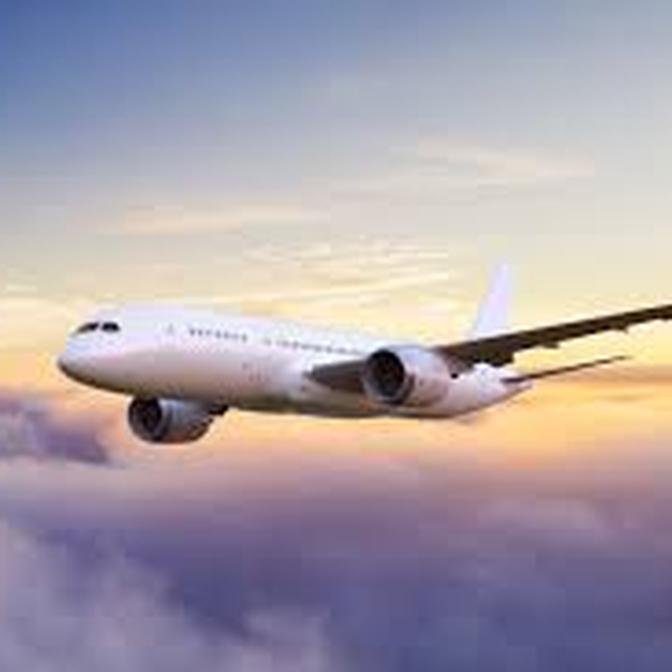
We're here today at Fort Lauderdale Executive Airport. We're going to fly the TBM 940
right on over to Nassau, Bahamas. Let's get this started. All right welcome aboard the TBM 940.
We're here at Fort Lauderdale Executive Airport and I'm excited to bring you guys over to Nassau.
Start this up. Clear out the front. Boost pump coming on and we're going to turn on
the starter for two seconds. Spring load switch one one thousand two one thousand release.
Now we're watching the NG to rise up and stabilize. There it is. Introduce fuel to low idle.
Now we're watching for our light off. Watching the ITT for a hot start. NG for a hung start.
It's a nice cool day today outside so we should get a nice cool start. Looks like it's going to
temp out at 698 degrees celsius on the ITT. Now it's going to wind back down as the engine gets
rotation. Their secondary fuel nozzles kicked in. Good start. All right the first step we'll
go over and get the ATIS here at Fort Lauderdale Executive. Fort Lauderdale Executive Tower
information Victor. One four five three zero observation. Wind three two zero at six. Visibility
one zero. Sky conditions clear. Temperature one seven dew point one one. Altimeter three zero one
two. RNAV GPS runway two seven approach in use. Lying and departing runway two seven and runway
three one. Land and hold short operations are in effect. Aircraft landing runway two seven to hold
short of runway three one. Three thousand feet available. Aircraft landing runway three one
to hold short of runway two seven. Three thousand two hundred fifty feet available. Bird advisories
in effect. All departing fixed-wing aircraft contact clearance delivery one two seven point
nine five prior to taxi. All aircraft read back runway assignment hold short instructions on
initial contact advise you of ATIS information Victor. All right we have information Victor.
Go over to clearance. Go over to clearance. Good morning N949BZ over to Executive Jet Center
with Victor looking to pick up RFR. N949BZ executive clearance. We're to NAVA airport via radar
vectors. GABO to RNAV departure. RAYJ transition then is filed. Maintain two thousand. Expect
minutes after departure. Departure frequency is one one niner point seven. Squawk four five two
three. NASA radar vectors GABO to RNAV departure. RAYJ and as filed. Maintain two thousand one five
thousand ten minutes after nineteen seven. Departure frequency squawking four five two three.
N949BZ. N949BZ read back correct. Contact ground for taxi. Thank you. All right put our
squawk there in the transponder. And nineteen seven will be our departure frequency.
Cleared as I filed. Go over to ground now. Pick up our clearance to taxi.
Executive ground. Good morning N949BZ. Executive Jet Center with Victor. RAYJ taxi.
N949BZ stand by control change in progress. All right they got a controller change in progress.
N949BZ executive ground runway two seven taxi via charlie hold short of taxiway echo.
Charlie hold short of echo to runway two seven. N949BZ. Give the marshal a quick flash of taxi
lights. Let them know we're ready to go. Here we go. Taxi straight ahead and to the left.
They do a great job here at Executive Jet Center. Clear to the left and here we are on
charlie and we're going to hold short of echo for the prop twice here. We've got our approach plate
pulled up here on the ipad mini 6. We've got the pivot mounting system and the pivot case system.
That's what I use in this airplane, all the airplanes I fly. You can easily take the ipad
on and off and if you want to set up like this in your airplane click the description below. We've
got a discount link for 15% off. It's a great system. I use it in all the different airplanes
I fly. I've also partnered with Pilot Institute. They have a lot of amazing online courses. Start
right from home. A lot of the free courses you can use and also a lot of. N949BZ continue taxi.
Continue taxi. N949BZ. All right continue up to uh two seven.
Yeah check out pilotinstitute.com. A lot of free courses online and also paid courses.
You can start your training right from home. I'll link in the description below.
Go to tower frequency. We're getting pretty lucky because earlier today I was pre-flighting. It was
super busy here. They were holding short about a half hour. I'm really excited to fly this airplane
with you guys today. We do have the auto throttle system on board this airplane so once we line up
we'll arm the auto throttle. You wouldn't want to do that while you're taxiing around because if you
accidentally advance the power too far your auto throttle would kick in and take off power. So you
always wait till you're lined up on the runway before you arm that auto throttle. N949BZ runway
two seven line up and wait. Traffic citation seven mile final. N949BZ. All right we are
cleared to line up and wait on the runway. Got an airplane on the seven mile final. Another
airplane just rolling out. Exiting the runway down there. Here's our centerline. We'll line up on this.
And now we can arm the auto throttle. There we go. We are ready to go. Let's wait for his call.
N949BZ turn right heading 315 runway two seven clear for takeoff.
Clear for takeoff two seven we'll turn right to 315. N949BZ. All right 315 is already set up with
our heading bug. We are lined perfectly up on two seven. Looking for a rotation speed. There it is.
And positive rate and indicating. Gear selected up. Oil pressure temperature is all good. We're
starting our right turn to 315. And gear is up. And we'll go flap selected up. Look out the wings.
You'll see the flaps coming up. N949BZ contact Miami Departure. Miami Departure N949BZ good day.
And you're on a damper run. Go to departure frequency. Miami good morning N949BZ one thousand
climb to two thousand. N949BZ Miami Departure radar contact climb to three thousand.
All right three thousand set up. Autopilot's on and we're climbing in flight level change mode.
It's going to pitch for 124 knots. And this thing's going to climb like a little rocket ship.
N949BZ contact departure on one two six point zero five.
And we're going to level out here at three thousand feet. Miami good morning N949BZ level out at three
thousand. N949BZ climb and maintain nine hundred thousand. Turn right heading zero nine or zero.
Nine hundred thousand and turn right to zero nine zero N949BZ.
Incorrection N949BZ climb to nine thousand and amend heading. Heading of zero three zero.
Climb and maintain nine thousand zero three zero in the heading N949BZ.
Fairwings A59 proceed direct. All right so there we go. Nine thousand. Flight level change mode
in zero three zero in the heading. Beautiful day out there. We just cleared the haze layer.
Look at that on a throttle going right to 100 percent. All on its own pitching for 124.
Zoom out a little bit here. W41. So we're getting radar vectors. First fix is Manudo.
And you look off the left window you'll see we've just passed the haze layer.
We should have nice smooth air all the way to NASA. N949BZ heading zero nine or zero.
Zero nine zero N949BZ. All right zero nine zero set up with their heading mode.
And we're in heading mode so the airplane will turn over in that direction.
With my little task right here I like to keep that at six mile range right there. That looks good.
Put this one over to six miles too. That gives me enough information of the air traffic around me
within six miles of me. To me that's a nice distance. One thousand to go. Eight thousand
climbing to nine hundred thousand on a zero nine zero heading. About to go out over the Atlantic
Ocean here. Got Boca Raton airport off our left there you can see down there. Leveling out at
nine or thousand feet. And we got a nice tailwind on this flight today. Today's flight is only
projected to be 35 minutes from Fort Lauderdale executive all the way out to NASA. How about that?
N949BZ proceed direct to Lincoln or rejoin. N949BZ Lincoln is not on our flight plan.
N949BZ proceed direct Minuto. Direct Minuto thanks.
That's more like it. Direct to Minuto. And we'll go into nav mode.
And if you look down here at the flight plan we'll go direct to Minuto and this is our flight
right on down into NASA. Winds are coming out of the west down there today.
And we'll sync up our heading bug now that we're in nav mode. So if I push and hold the heading
button here it goes to sync mode where now the heading bug will stay synced up with whatever
course we're on within nav. I like that nice little feature. So we can actually turn off
our inertial separator right down here by my left knee. Right here. Inertial separator. Push
that. Now it goes to off. So what's happening right now is there's two flaps that are up in
the intake that are rotating to let more air into the engine. We're going to get a ITT is going to
lower which is just going down past 713, 712, 711, 710. You're going to get a torque rise.
Thanks to our auto throttle we don't have to worry about over torquing the engine because the
engine and the computer system will pull the torque back power back so we don't over torque.
Wow look down there at the left wing you'll see a lot of white caps so
it's definitely a rough day down there on the ocean. Not a good day for boating.
949BZ climb to 10,000 and center 133.4.
133.4, 10,000, 949BZ.
All right 10,000 set up plate level change and 33.4.
Climbing good morning 949BZ, 9000 climbing 10,000.
949BZ climb to center, climb and maintain 13,000, 3 foot off the meter, 3008.
3008, climb and maintain 13,000, 949BZ.
Passing 3,600 feet a minute, about to 10,000 feet.
4,000 feet a minute is what we topped out at there.
Climb rate and pressurization check it's all automatic but even though everything's automatic
you still look and make sure everything's doing what it's supposed to do and it's doing a good job.
1,000 ago, 1,200 climbing, 1,300.
Number 949BZ contact Miami center 135.6.
135.6, 949BZ, good day.
Good morning, 949BZ level 13,000.
Number 949BZ, Miami center, roger.
For now maintain 1,300, the altimeter is 3011.
3011, we'll maintain 13,000, 949BZ.
All right, one thing we can do now to stay ahead of the flight, come down to our airport there,
we're landing NASA, waypoint info, we go to frequencies, we're going to want the ATIS
active at COM 2 and then we can put the ground at standby COM 2.
Now over here we're all set up already.
Remember when we want to get the ATIS to go over to ground we want it to land.
Usually I'll set up the approach frequencies and the tower frequency, COM 1.
If you look off the left wing here,
you're going to see we've got a cruise ship just about to go underneath the left wing,
and then out on the distance there, that is Grand Bahama Island and Freeport.
So this is my new part-time job flying this TBM 940.
I fly for a gentleman named Isaac.
Hopefully one day soon I'll be able to introduce you guys to him in one of the videos.
We'll be flying this 940 all over for all kinds of different adventures.
You're going to see Bimini.
It's the first island out here in the Bahamas.
You've got a lot of fun adventures that you can do on that island.
I've been there quite a few times.
That's Bimini.
Niner Bravo Zulu, climb and maintain 1-5-thousand.
Climb and maintain 1-5-thousand, Niner Bravo Zulu.
1-5-thousand set.
Flight level change.
Push down and open up.
Pitch for 1-24 up to 1-5-thousand.
Even over a single engine, you know, a lot of people get intimidated about flying out
here in the Bahamas.
We're basically within glide distance to land the entire flight.
We do have a raft in the back.
If you look down here, I don't know if you can see it, we have a little island right
down here.
Now if we had an engine out here, I would actually go over to Bimini first.
1-thousand to go.
So if you look down here at the iPad, you're going to see that green ring.
That is our glide distance right to where we can glide to.
So if I had an engine out right now, I'd go right down into Bimini.
But like I said, there's Great Isaac Island, which is right down there off our left wing.
That's it right there.
There's a lot of little different islands out here that you could go to, if you had
any issue, instead of floating out in the middle of the ocean.
Let's see if we have honor comm too, if we can get the weather there and NASA.
Information Oscar.
All right, so we're going to expect runway 28 as 3214 is closed for maintenance.
That's why it's always good to get the local information there.
And every hour they give it an identifier.
Right now it's Oscar.
So when we check in, we say we have Oscar.
They know that we know the local, most current information.
And if we go to procedures.
Approach.
We'll scroll down.
Throw in the visual for 28.
And we'll load that.
There we go.
Now up on our screen, we're going to have a just a line just to give us visual reference
to line up with runway 28.
And as I know, we're going to be starting our initial descent here shortly.
I'll put the inertial separator back on now.
So that same little button down by my left knee.
I'm going to push it.
9 Bravo Zulu, contact Miami Center 125.7.
25.7, 9 Bravo Zulu, good day.
Miami, good morning, 949 Bravo Zulu, 1 5,000.
November, 949 Bravo Zulu, Miami Center.
Descend and maintain 1 1,000, 11,000, N3 0 0 7.
3 0 0 7, descend and maintain 1 1,000, that's 949 Bravo Zulu.
All right, we'll VS that 1,500 feet a minute.
And our inertial separator is back on.
We're about to hit Hayter, Hayter.
I think that's how you say it.
H-E-Y-D-R, Hayter.
We're over Hayter.
Now we're turning direct RAYJ on our route.
Get mount 8 4 4, descend and maintain flight level 2 0 0.
Level 2 0 0, get mount 8 4 4.
Oh, it's unfortunate that we have a cloud layer out there as we do.
But over to the left there is the Berry Islands.
It's a beautiful area of the Bahamas.
I did go out with Riley and Elena one weekend.
They have a YouTube channel, Sailing La Vagabonde.
And they went spearfishing, we all did.
And I basically was on dinghy dragging duty.
But as soon as Riley speared that first lobster or fish,
the reef sharks came out of nowhere.
I mean, they were coming out of left and right.
And Riley and Elena and JP, my friend, they still stay in the water
spearfishing with those sharks.
But I got back up in the dinghy.
I was like, heck with that.
That was a fun weekend.
1,000 to go, 1 2,000, descend and 1 1,000.
November 9 at 4 9 at Bravo Zulu.
Contact Nassau Approach, 1 2 1.0.
Over to Nassau, 9 4 9 Bravo Zulu, good day.
This is where we'll let them know we have information, Oscar.
Oh, beautiful view down there.
North end of Andros Island here.
Look at that.
See all the different sandbars, waterways down there.
Nassau, good morning, 9 4 9 Bravo Zulu, 1 1,000 with Oscar.
November 9 at 4 9 at Bravo Zulu.
Nassau Approach, Nassau altimeter 3 0 0 7.
Descend, maintain 5,000.
Expect the visual approach runway 2 8.
Roger, we'll expect the visual for 2 8.
Descend, maintain 5,000, 9 4 9 Bravo Zulu.
Yeah, look at that wall.
Look at the water down there.
Just off Andros Island.
I mean, the water's so clear.
You're basically looking at all the different sand formations and reefs
all at the bottom of the ocean, looking right through all the water.
Where it gets deeper is where you can see it starts to go to a darker color.
Just to the south of here, they actually have a military
area that they do a lot of submarine training.
Really deep water, the tongue of the ocean.
And the submarines will do a lot of training over there.
Coming through 10,000 feet.
Pressurization is checked.
And looking off the right wing.
And over there is Andros Island.
It's a very big island out here in the Bahamas.
And straight over that direction, that would be where that submarine training area is.
1,000 to go.
I'm actually going to go into manual mode with the auto throttle.
And we're going to slow it up a little bit here.
It might get a little bit bumpy going in and out of these clouds.
It's always fun when you get your instrument ready to fly in and out of the clouds.
It really gives you more of a true sense of flying around the Earth.
Compared to when it's just a clear blue sky day.
It might be a little bump or two going through these.
Hope you guys got your seatbelts on right.
Look out the front window here.
Some good views as we go in and out of some of these little clouds.
Clip the left side of this one.
I'll never forget the first time going into a cloud.
It was amazing.
When you're sitting up here in the front of an airplane.
The visual of going in and out of it like that.
It's pretty cool.
Never gets old.
November 904, Niner Bravo Zulu, turn left heading 1-0-0.
1-0-0, Niner Bravo Zulu.
1-0-0 in the heading and into heading mode we go.
This is basically putting us on a right downwind for 2-8.
Oh, we're going to have some nice views of NASA coming in with this type of approach.
Not too often.
I get 2-8 coming to this island.
This is going to give us a lot of good views at the airport.
At our 1 o'clock over here.
2,000 set.
We'll VS that down 1,500 feet a minute.
Now that we're abeam the airport.
We don't really need to be shooting out past it at a crazy amount of speed.
We'll pull the autothrottle back to about 180 knots.
There's no point going super fast away from the airport.
Beautiful view out there.
Look at that.
Baja Mar.
I see Atlantis out there.
Looks like there's maybe two cruise ships right now.
That's where the cruise ships are out there.
That's where we went and checked out the Savannah.
It's a super yacht that we went on in one of my videos for the Vision Jet out here.
If you haven't seen that one go be sure and check that video out.
We go take a tour with the captain out there.
As it was right over there at the pier.
And my favorite thing about that Savannah was that engine room.
Spotless.
Look at the water.
Beautiful out here.
The cameras probably don't even do it justice.
1,000 to go.
If you look down here at the iPad.
There's where we came in.
There's where we're at right now.
I'm going to write down one for Tuing.
There's three cruise ships in right now.
I wonder if that could be Icon of the Seas.
The big Royal Caribbean is all the way on the left.
I don't know if it is or not.
Icon of the Seas is Royal Caribbean's biggest cruise ship in the world.
It's the biggest cruise ship in the world.
And a beautiful view of Atlantis.
All right.
Look at this.
There's downtown.
There's Atlantis.
Man, this has got some amazing views on this flight.
We're on a right turn right now.
I don't think that is Icon of the Seas,
but it's a big cruise ship all the way to the left.
I can't tell if it is or not.
Look at that.
My goodness, beautiful.
We got the airport in sight.
All right, I'm going to take the autopilot off.
Still leaving the autothrottle on because we got vectored pretty tight there.
We'll get under 178.
We'll put our gear and flaps down.
There we go.
Gear selected down.
There's probably 208 out there in front of us.
We went through the final a little bit.
Like I said, it was pretty tight vectors.
First notch of flaps selected.
And indicated.
So basically with my left arm, I did my elevator trip to get off the autopilot.
And I still have the autothrottle on.
We got an aircraft on the runway out there.
But looking good.
That airliner just took off with 28.
I don't know if you guys can see in there climbing up.
We'll see.
We'd like to get that first intersection.
Taxiway would be to go right to the FBO.
If we can get that, that'd be amazing.
We'll see how short we can land this airplane.
If we pass that, there's not a lot of options.
So we're going to definitely try to right past the 32 runway.
There's an intersection of a taxiway.
We're going to try to land right there.
We're under our full flaps configuration speed.
Selected.
Go back to 85 knots.
There we go.
That's 500 feet to the ground.
Actually, I see an airplane on that runway.
So we'll probably try to go right off of the runway.
That's what we're going to be looking at doing here.
Looking good.
So we're going to take the autothrottle off now.
With my middle finger here with my right hand.
I'm going to click that.
And I'll slow yaw damper off.
That would get on all the controls here.
We should be able to make that first taxiway to the right.
I'm going to ease back to flight idle.
There we go.
Center line.
Go back into reverse.
And as we wanted to do, we made that first taxiway.
So welcome to NASA, guys.
We'll try to get you across as soon as possible.
Affirm.
You're cleared to commence your turn and hold short of runway 28.
All right.
Well, there we go.
I didn't want to cross and hold short lines unless I was given clearance.
So we just want to confirm that and we're good to go.
Now we're holding short of 28.
Now we'll sit here and hold short of 28.
All right.
So there we go.
We got the airplane all cleaned up.
So my original plan was to land and then do a left turn over there on Kilo,
which would have brought us right to the FBO.
But then on short final there, I saw that airplane over there,
that gray and black one.
And you can see over there, he was holding short there.
We had to scrap plan A for plan B, which was to come over here.
And once we get space to get into our ramp there,
we'll probably get our clearance to taxi.
Okay, we got to watch out for wake turbulence here if he's going to throttle up.
Because we're going right behind him.
So I'm going to go a little bit faster than normal just to get past him here.
There we go.
No factor.
Now we're on Kilo.
And we'll go over to ground once we get past these whole char lines.
Ground, 949BZ on Kilo.
Need to go into Odyssey.
November 949BZ, NASA.
Ground taxi to Odyssey via Kilo.
Kilo under the ramp, 949BZ.
All right.
Welcome to NASA officially.
We're going to taxi up here into Odyssey.
If you do like these videos, be sure to smash that thumbs up button.
And subscribe to the channel.
Thank you, sir.
Talk to you in a few.
Feels good to get out here back into the Bahamas.
Go back into beta.
And we don't have to ride the brakes.
If you're at flight idle, this thing likes to go.
Basically going into beta, which is up and over the gate a little bit.
You're just changing the pitch of the blades of the prop.
So it doesn't have so much forward bite.
And we'll be looking for a marshaller, which I believe I have in sight out there.
And here is Odyssey.
Anyway, hope everybody's doing well, wherever you're watching from.
And we'll talk to you again someday soon.
Take care, everybody.