
Story 13 a Few Crusted Characters: Andrey Satchel and the Parson and Clerk
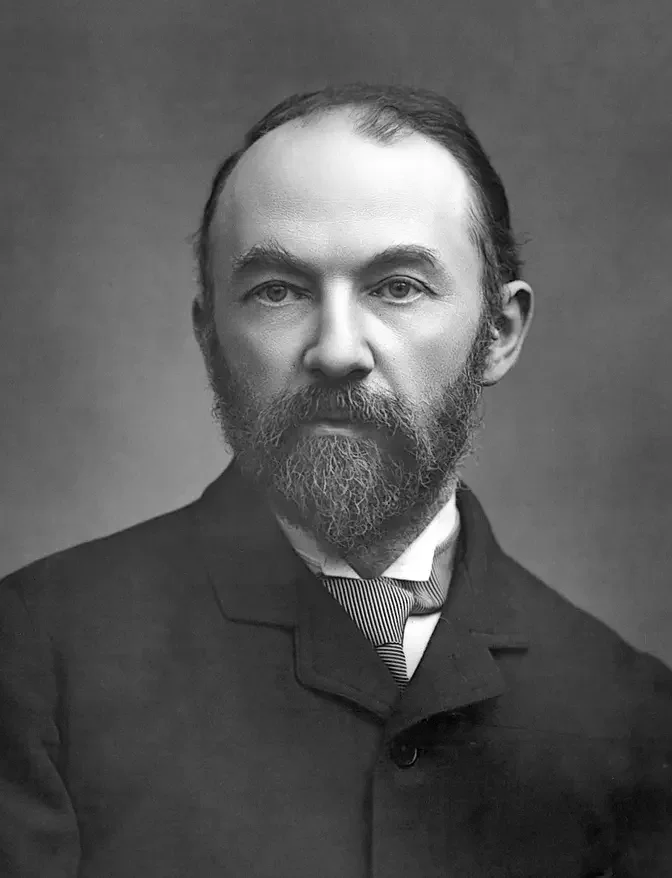
STORY THIRTEEN OF LIFE'S LITTLE IRONIES BY THOMAS HARDY
STORY THIRTEEN ANDRE SATCHELL AND THE PARSON AND CLERK
It all arose, you must know, from Andre being fond of a drop of drink at that time,
though he's a sober enough man now, by all account, so much the better for him.
Jane, his bride, you see, was somewhat older than Andre.
How much older, I don't pretend to say. She was not one of our parish,
and the register alone may be able to tell that.
But at any rate, her being a little ahead of her young man in mortal years,
coupled with other bodily circumstances—ah, poor thing,
sighed the woman—made her very anxious to get the thing done before he changed his mind,
and t'was with a joyful countenance, they say, that she, with Andre, and his brother,
and sister-in-law, marched off to church one November morning, as soon as t'was day almost,
to be made one with Andre for the rest of her life. He had left our place long before it was light,
and the folks that were up all waved their lanterns at him, and flung up their hats as he went.
The church of her parish was a mile and more from the houses, and, as it was a wonderful fine day
for the time of year, the plan was that as soon as they were married, they would make out a holiday
by driving straight off to Port Bredy, to see the ships and sea and the soldiers, instead of coming
back to a meal at the house of the distant relation she lived with, and moping about there
all the afternoon. Well, some folks noticed that Andre walked with rather wambling steps
to church that morning. The truth on it was, that his nearest neighbor's child had been christened
the day before, and Andre, having stood godfather, had stayed all night keeping up the christening,
for he had said to himself, Not if I live to be a thousand shall I again be made a godfather one day,
and a husband the next, and perhaps a father the next, and therefore I'll make the most of
the blessing. So that when he started from home in the morning, he had not been in bed at all.
The result was, as I say, that when he and his bride-to-be walked up the church to get married,
the parson, who was a very strict man inside the church, whatever he was outside, looked hard at
Andre, and said, very sharp, How's this, my man? You are in liquor, and so early, too. I'm ashamed
of you. Well, that's true, sir, said Andre, but I can walk straight enough for practical purposes.
I can walk a chalk line, he says, meaning no offence, as well as some other folk, and, getting
hotter, I reckon that if you, parson Billy, too good, had kept up a christening all night so
thoroughly as I have done, you wouldn't be able to stand at all. Damned me if you would. This answer
made parson Billy, as they used to call him, rather spiteish, not to say hot, for he was a
warm-tempered man, if provoked, and he said very decidedly, Well, I cannot marry you in this state,
and I will not. Go home and get sober. And he slapped the book together like a rat-trap. Then
the bride burst out crying, as if her heart would break, for very fear that she would lose Andre
after all her hard work to get him, and begged and implored the parson to go on with the ceremony.
But no. I won't be a party to your solemnizing matrimony with a tipsy man, says Mr. Too-Good.
It is not right and decent. I am sorry for you, my young woman, but you'd better go home again.
I wonder how you could think of bringing him here drunk like this. But if he don't come drunk,
he won't come at all, sir, she says, through her sobs. I can't help that, says the parson,
and plead as she might, it did not move him. Then she tried him another way. Well, then,
if you'll go home, sir, and leave us here, and come back to the church in an hour or two,
I'll undertake to say that he shall be as sober as a judge, she cries. We'll abide here, with your
permission, for if he once goes out of this here church unmarried, all Van Amberg's horses won't
drag him back again. Very well, says the parson, I'll give you two hours, and then I'll return.
And please, sir, lock the door, so that we can't escape, says she. Yes, says the parson,
and let nobody know that we are here. The parson then took off his claim, what, surplus, and went
away, and the others consulted upon the best means for keeping the matter a secret, which it was not
a very hard thing to do, the place being so lonely, and the hour so early. The witnesses,
André's brother and brother's wife, neither one of which cared about André's marrying Jane,
and had come rather against their will, said they couldn't wait two hours in that hole of a place,
wishing to get home to Longpuddle before dinner-time. They were all together so crusty,
that the clerk said there was no difficulty in their doing as they wished. They could go home,
as if their brother's wedding had actually taken place, and the married couple had gone onward for
their day's pleasure-jaunt to Port-Bredy, as intended, he, the clerk, and any casual passer-by,
would act as witness when the parson came back. This was agreed to, and away André's relations
went, nothing loath, and the clerk shut the church-door, and prepared to lock in the couple.
The bride went up and whispered to him, with her eyes a-streaming still,
My dear good clerk, she says, if we bide here in the church, folk may see us through the windows,
and find out what has happened, and would cause such a talk and scandal, that I never should get
over it, and perhaps, too, dear André might try to get out and leave me. Will you lock us up in
the tower, my dear good clerk, she says? I'll toll him in there, if you will. The clerk had no
objection to do this to oblige the poor young woman, and they tolled André into the tower,
and the clerk locked them both up straightway, and then went home, to return at the end of the two
hours. Parson Too-Good had not been long in his house, after leaving the church, when he saw a
pink and top boots ride past his windows, and with a sudden flash of heat, he called to mind,
that the hounds met that day, just on the edge of his parish. The parson was one who dearly loved
sport, and much he longed to be there. In short, except at Sundays, and at tide-times in the week,
Parson Billy was the life of the hunt. Tis true, that he was poor, and that he rode all of a heap,
and that his black mare was rat-tailed and old, and his tops older and all over of one colour,
whitey-brown, and full of cracks, but he'd been in at the death of three thousand foxes,
and being a bachelor man, every time he went to bed in summer, he used to open the bed at bottom,
and crawl up head foremost, to mine in of the coming winter, and the good sport he'd have,
and the foxes going to earth. And whenever there was a christening at the squires,
and he had a dinner there afterwards, as he always did, he never failed to christen the child over
again in a bottle of port-wine. Now the clerk was the parson's groom and gardener, and general
manager, and had just got back to his work in the garden, when he too saw the hunting-man pass,
and presently saw lots more of him, a nobleman and gentry, and then he saw the hounds,
the huntsman, Jim Tredidge, the whipper-in, and I don't know who besides. The clerk loved going
to cover as frantical as the parson, so much so that whenever he saw or heard the pack,
he could do no more rule his feelings than if they were the winds of heaven. He might be bedding,
or he might be sowing, all was forgot. So he throws down his spade, and rushes into the parson,
who was by this time as frantical to go as he.
"'That, that, Mary, your sir, do want exercise bad, very bad this morning,' the clerk says,
all of a tremble. Don't you think I'd better trot her round the downs for an hour, sir?'
"'To be sure, she does want exercise badly. I'll trot her round myself,' says the parson.
"'Oh, you'll trot her yourself? Well, there's the cob, sir. Really, that cob is getting
uncontrollable through biting in a stable so long. If you wouldn't mind my putting on the saddle.'
"'Oh, very well, take him out certainly,' says the parson, never caring what the clerk did so long
as he himself could get off immediately. So, scrambling into his riding-boots and britches
as quick as he could, he rode off towards the meet, intending to be back in an hour.
No sooner was he gone than the clerk mounted the cob and was off after him.
When the parson got to the meet he found a lot of friends, and was as jolly as he could be.
The hounds found almost as soon as they threw off, and there was great excitement. So, forgetting
that he had meant to go back at once, away rides the parson with the rest of the hunt,
all across the fallow ground that lies between Lippet Wood and Green's Copse, and as he galloped
he looked behind for a moment, and there was the clerk, close to his heels.
"'Ha, ha, clerk, you here?' he says.
"'Yes, sir, here I be,' says Tother.
"'Fine, exercise for the horses.'
"'Aye, sir, hee, hee,' says the clerk.'
So they went on and on into Green's Copse, then across to Higher Jerton, then on across this
very turnpike road to Clemerston Ridge, then away towards Yalbury Wood, up hill and down dale,
like the very wind, the clerk close to the parson, and the parson not far from the hounds.
Never was there a finer-run node with that pack than they had that day, and neither parson nor
clerk thought one word about the unmarried couple locked up in the church tower, waiting to get
janned.
"'These horses of yours, sir, will be much improved by this,' says the clerk,
as he rode along, just a neck behind the parson.
"'Twas a happy thought of your reverent mind to bring them out to-day.
Why, it may be frosty in a day or two, and then the poor things
might not be able to leave the stable for weeks.'
"'They may not, they may not, it is true.
A merciful man is merciful to his beast,' says the parson.
"'Hee, hee,' says the clerk, glancing sly into the parson's eye.
"'Ha, ha,' says the parson, a-glancing back into the clerk's.
"'Haloo!' he shouts, as he sees the fox break cover at that moment.
"'Haloo!' cries the clerk.
"'There he goes!
Why, dammy, there's two foxes!
Hush, clerk, hush!
Don't let me hear that word again.
Remember our calling.'
"'True, sir, true.
But really, good sport do carry away a man so, that he's apt to forget his high persuasion.'
And the next minute the corner of the clerk's eye shot again into the corner of the parson's,
and the parson's back again to the clerk's.
"'Hee, hee,' said the clerk.
"'Hee, hee,' said parson, too good.
"'Ah, sir,' says the clerk again,
"'this is better than crying Amen to you ever and ever on a winter's morning.'
"'Yes, indeed, clerk, to everything there's a season,' says parson, too good,
quite pat, for he was a learned Christian man when he liked,
and had chapter and verse and his tongue end as a parson should.
At last, late in the day, the hunting came to an end,
by the fox running into an old woman's cottage under her table and up the clock-case.
The parson and clerk were among the first in at the death,
their faces a-staring in at the old woman's window,
and the clock striking as he'd never been heard to strike before.
Then came the question of finding their way home.
Neither the parson nor the clerk knowed how they were going to do this,
for their beasts were well-nigh tired down to the ground.
But they started back along as well as they could,
though they were so done up that they could only drag along at an amble,
and not much of that at a time.
"'We shall never, never get there,' groaned Mr. Too-Good, quite bowed down.
"'Never,' groans the clerk, "'tis a judgment upon us for our iniquities.'
"'I fear it is,' murmurs the parson.
Well, it was quite dark before they entered the parsonage gate,
having crept into the parish as quiet as if they'd stole a hammer,
little wishing their congregation to know what they'd been up to all day long.
And, as they were so dog-tired and so anxious about the horses,
never once did they think of the unmarried couple.
As soon as ever the horses had been stabled and fed,
and the parson and clerk had had a bit and a sup themselves, they went to bed.
Next morning, when Parson Too-Good was at breakfast,
thinking of the glorious sport he'd had the day before,
the clerk came in a hurry to the door and asked to see him.
"'It has just come into my mind, sir, that we forgot all about the couple
that we was to have married yesterday.'
The half-chawed victuals dropped from the parson's mouth, as if he'd been shot.
"'Bless my soul!' says he.
"'So we have.
How very awkward!'
"'It is, sir, very.
Perhaps we've ruined the oomen.'
"'Ah, to be sure, I remember.
She ought to have been married before.
If anything has happened to her up in that there tower, and no doctor or nuss—'
"'Ah, poor thing!' sighed the women.
"'Twill be a quarter-session's matter for us,
not to speak of the disgrace to the church.'
"'Good God, clerk, don't drive me wild!' says the parson.
"'Why the hell didn't I marry him drunk or sober?'
Parson used to cuss in them days, like plain honest men.
"'Have you been to the church to see what happened to him, or inquired in the village?'
"'Not I, sir.
It only came into my head a moment ago, and I always like to be second to you in church matters.
You could have knocked me down with a sparrow's feather when I thought it, sir.
I assure you, you could.'
Well, the parson jumped up from his breakfast, and together they went off to the church.
"'It is not at all likely that they are there now,' says Mr. Too-Good, as they went,
and indeed I hope they are not.
They be pretty sure to have scaped and gone home.'
However, they opened the church hatch, entered the churchyard,
and looking up at the tower, there they see'd a small white face at the belfry window,
and a little small hand waving.
"'Twas the bride.
"'God, my life, clerk,' says Mr. Too-Good,
I don't know how to face him,' and he sank down upon a tombstone.
"'How I wish I hadn't been so cussed particular!'
"'Yes, t'was a pity we didn't finish it when we'd begun,' the clerk said.
"'Still, since the feelings of your holy priestcraft wouldn't let ye,
the couple must put up with it.'
"'True, clerk, true.
Does she look as if anything premature had took place?'
"'I can't see her no lower down than her armpit, sir.'
"'Well, how do her face look?'
"'It do look mighty white.'
"'Well, we must know the worst.
Dear me, how the small of my back do ache from that ride yesterday!
Ah, but to more godly business!'
They went on into the church, and unlocked the tower stairs,
and immediately poor Jane and André burst out like starved mice from a cupboard,
André limp and sober enough now, and his bride pale and cold, but otherwise as usual.
"'What,' says the parson, with a great breath of relief,
"'you haven't been here ever since?'
"'Yes, we have, sir,' says the bride, sinking down upon a seat in her weakness,
"'not a morsel wet or dry have we had since.
It was impossible to get out without help, and here we've stayed.'
"'But why didn't you shout, good souls?' said the parson.
"'She wouldn't let me,' says André.
"'Because we were so ashamed at what had led to it,' sobs Jane.
"'We felt that if it were noised about it would cling to us all our lives.
"'Once or twice André had a good mind to toll the bell, but then he said,
"'No, I'll starve first.
"'I won't bring disgrace on my name and yours, my dear.'
"'And so we waited and waited, and walked round and round,
"'but never did you come till now.'
"'To my regret,' says the parson.
"'Now, then, we shall soon get it over.'
"'I—I should like some victuals,' said André,
"'to give me courage if it is only a crust of bread and an onion,
"'for I am that leery that I can feel my stomach rubbing against my backbone.'
"'I think we'd better get it done,' said the bride, a bit anxious in manner,
"'since we are all here convenient, too.'
"'André gave way about the victuals, and the clerk called in a second witness
"'who wouldn't be likely to gossip about it, and soon the knot was tied,
"'and the bride looked smiling and calm forthwith, and André limper than ever.
"'Now,' said parson, too good,
"'you two must come to my house and have a good linen put to your insides
"'before you go a step further.'
"'They were very glad of the offer, and went out of the churchyard by one path,
"'while the parson and clerk went out by the other,
"'and so did not attract notice, it being still early.
"'They entered the rectory as if they'd just come back from their trip to Port Breedy,
"'and then they knocked in the victuals and drank till they could hold no more.
"'It was a long while before the story of what they'd gone through was known,
"'but it was talked of in time, and they themselves laugh over it now,
"'though what Jane got for her pains was no great bargain after all.
"'Tis true, she saved her name.'
"'Was that the same André who went to the Squire's house
"'as one of the Christmas fiddlers?' asked the seedsman.
"'Oh, no, no,' replied Mr. Prophet, the schoolmaster,
"'it was his father did that.
"'Ay, it was all owing to his being such a man for eating and drinking.'
"'Finding that he had the ear of the audience,
"'the schoolmaster continued without delay.'"
End of Story Thirteen