
What staple food did people eat in the Xia Dynasty?
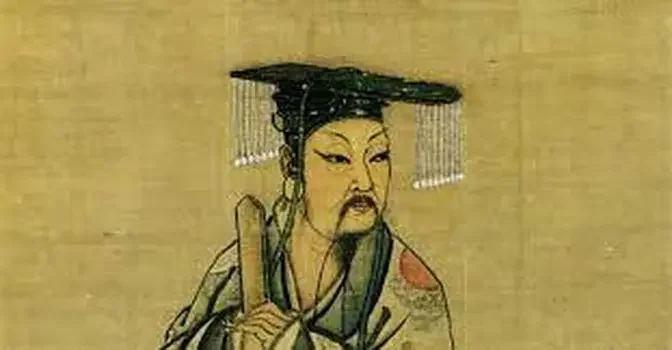
According to legend, Yao and Shun period
Flood
Dayu was ordered to control floods
Travel all over Kyushu
Lasted 13 years
Managed countless rivers
Finally succeeded in water control
Archaeological discoveries at the beginning of this century
Gongxu of the Western Zhou Dynasty is the earliest document recording Dayu.
Shangshu Destiny and Husband's Land
Follow the mountains and rivers
However
With the population size and technological capabilities of 4000 years ago,
Could Dayu follow the mountains and rivers on a large scale?
and dredging the great rivers of Kyushu
Obviously suspicious
Click to subscribe to Aiguan History
Love to the depths
Add a follow
The Xia Dynasty was the first dynasty in Chinese history
There has always been a veil of mystery surrounding him
for his discovery
We also did this after the oracle bone inscriptions were unearthed.
Discovered through research on the Shang Dynasty
Therefore, did the Xia Dynasty exist?
has always been a controversial issue
Until the ruins were discovered
Through extensive research by historians
Only then did we finally confirm the existence of Xia Dynasty
The Xia Dynasty was on the ruins of the primitive social system
established
Although the Xia Dynasty was the first country
But his system is still relatively complete.
They are dominated by hereditary systems
in the succession of national rule
Not only did they keep their dominant surname
It also strengthened the blood surname related to itself.
and transfer the rights to the land and administration of the country
Delegate it to your relatives
It can be said that it is a situation of strong alliance.
At the same time, Xia Dynasty also has its own exclusive management system
Establish King Xia as ruler
He was the center and pillar of power in the Xia Dynasty
Establish a policy
This is the general name for the officials in charge of specific affairs of the Xia Dynasty.
The Taishi Order was also established
To supervise the king’s words and deeds and provide guidance
It can be seen that although the Xia Dynasty was the first dynasty
But the method of self-governance is maintained very well
These
It can also be seen from the cultural relics unearthed from the ruins
Ruins discovered in Henan
I found a lot in it
Cultural relics with high cognitive value
At the same time, rice was found inside
Wheat oysters and rice
You need to know about the food in ancient times
We all generally think that it is vegetarian
But rice appears in the cultural relics of the Xia Dynasty
But the Xia Dynasty was mainly in Henan
Although Henan occupies an advantageous location
But the climate conditions are not suitable for growing rice
The local climate in Henan is dry
There is no water in the fields
Only suitable for growing dry field crops
But in the distant Xia Dynasty
Rice actually appeared
Could it be that thousands of years ago?
Henan can also have fragrant rice flowers
so
It has to remind us of Dayu’s flood control
You must know that farmers depend on the sky for food
As long as there is water
Crops will be vigorous
The most likely possibility is that Dayu controlled the floods.
changed water power
Hence the emergence of rice
Flood control becomes an important area
According to legend, there was a sudden flood at that time
The water covers the mountains
covered with hills
Sweeping people's homes
Leading to people's poverty
homeless
Emperor Shun wanted to recruit talents to control the floods
I learned that Dayu was an ambitious man
smart and intelligent person
So he entrusted him with water control
Dayu did indeed live up to his great trust.
It took several years to finally control the flood.
And a story at that time
It also made people admire Dayu more.
Legend has it that when flood control began
He just got married
One day he passed by his house on the way to water control.
I heard a child crying inside
He knows this is his wife and his child
But he has never seen it once
He wants to go in and have a look
But looking at the floods all over the sky
He still embarked on the road of water control
Even in the face of public persuasion, he did not enter the house.
According to legend, before Dayu controlled the floods,
Dayu's father also participated in flood control
The method used is to cover the soil with water
But this method did not play a big role
after his failure
Dayu just took over the baton
Until Dayu controlled the floods
He observed the terrain
According to terrain conditions
He no longer chooses to block the water
Instead, he chose to guide water
That is, the diversion path
change the direction of water
Let the accumulated river water extend in all directions
Gather into the sea
No more staying in the fields
What is the main food of the ancestors of Erlitou?
20 kilometers east of Luoyang
on the small plain between Ilo
Erlitou ruins, suspected to be the capital of the Xia Dynasty, are located here.
There are many remains unearthed from the site
once shocked the world
But what is less known is that
One of the less surprising discoveries
But it may reveal the truth about Dayu's flood control
According to traditional understanding
In ancient times, the Central Plains was dominated by millet and Shu.
Therefore, it was assumed that the ancestors of Erlitou used this as their staple food.
However, more in-depth research has rewritten the perception
The staple food of Erlitou people is rice.
After thousands of years of washing
Food buried underground is often carbonized
mixed with mud
Modern scholars use the flotation method to find
The soil samples to be collected are placed in water and stirred
Because carbonized grain is lighter
will float on the water
In this way, carbonized grain particles can be collected
Do you know what the ancients ate?
The Erlitou excavation report from 1999 to 2006 shows
The amount of rice is half the amount of corn
The quantity of potato, beans and wheat is very small
Rice quantity is small
A lot of corn
therefore
It was once considered evidence that the Xia Dynasty collected tribute
and the shortcomings of growing rice in the south
Tributed rice to the Xia Dynasty
However in 2019
Scholars counted 277 samples from various periods of Erlitou
Calculated in grain particles
14,768 grains of rice
13,883 grains of millet
2,248 capsules
have to be aware of is
The average thousand-kernel weight of corn is generally two grams
The average thousand-kernel weight of rice is generally 16-34 grams.
same quantity
The weight of the latter is 8-17 times that of the former
obvious
The main staple food in Erlitou is rice.
Rather than the traditional knowledge of millet
Rice was commonly grown in Henan in ancient times
If rice is not the staple food
Then it can also be explained by paying tribute.
But since rice is the staple food
Then it can only be self-produced
therefore
Nowadays, rice is rarely grown in the Luoyang area.
3,500 years ago, the fragrance of rice flowers may have been everywhere
More importantly
Follow the exploration of ancient ancestors’ food issues
Scholars have made a series of major discoveries
Xinmi Xinzhai ruins in Henan are 4,000 to 3900 years old
Considered to be the capital of Xia Qi or the early capital of Xia Dynasty
in
Cultural elements with strong Dongyi style have been unearthed
Suspected evidence of descendant Dai Xia or Taikang Shiguo
Archaeological experts have made additional selections on the Xinzhai site
Among them, the number of rice grains accounts for 5437%
Obviously it’s also a staple food
The following picture shows the location of the Xinzhai ruins
There are many rivers around
Water conservancy conditions are relatively good
But in Yuzhuang, Ye County, Haojiatai, Yancheng
During the study of the Wadian and other sites in the Longshan-to-Xia belt of Yuzhou
It was found that rice and corn coexist as staple food
For example, the distinctive Haojiatai ruins in Yancheng
Some rely on rice as the staple food
Some use corn as the staple food
Lan Wanli of Henan Archaeological Research Institute pointed out
During the Longshan to Erlitou period
Agriculture in Henan is still mainly based on millets and potatoes.
But rice has become quite popular
The traditional agricultural pattern of grains has been formed
Although rice has a long history
However, in the Wei and Jin Dynasties, production was still insufficient.
Not everyone can afford a bowl of white rice
But eating a bowl of rice doesn't mean you are a noble.
The nobles will first select rice with good looks and figure.
Soak and wash with warm water afterwards
Rinse with cold water and rub
Until the rice turns white
plus chopped vegetables
A high-end staple food was born
Later, in the late Southern Dynasties
Rice planting area increases
Only ordinary people can afford it
Southerners like to eat rice
Northerners love to eat noodles
Wheat is also one of the most important staple foods in modern life
different from rice
Maizi is an outsider
Mesopotamia
It is the first area in the world to cultivate wheat.
Some scholars expressed
Wheat was produced before the Xia Dynasty
Through the Silk Road as yet unplanned
introduced into our country
Among the oracle bone inscriptions unearthed from Yin Ruins in my country
It has been recorded that Shimai has been sued
"I Come" in Zhou Ode in the Book of Songs
The plan comes with the intention of wheat
Since then, wheat has gradually been grown on a large scale
Zuo Zhuan also recorded such a story
Jinggong had a nightmare when he was ill
After waking up, he summoned the wizard
The wizard predicted that he would not be able to eat new wheat
It’s wheat harvest time for the second year
Duke Jing of Jin ordered people to offer new wheat
And accused the wizard of deceiving the public with his lies
put him to death
However, before Jin Jinggong was about to eat, he felt abdominal distension
Go to the toilet
Unfortunately, he fell into a manure pit and died.
When wheat first appeared
Due to limited processing means
People can't eat steamed buns and noodles
According to research, Chinese noodles originated in the Han Dynasty
It has a history of more than 2,000 years
During the Eastern Han Dynasty, wheat flour noodles already took shape.
At that time, all pasta was called cakes
Because it needs to be cooked in soup
That’s why it’s also called soup cake
Early soup cakes were flaky
Later it gradually evolved into a strip shape
Noodle
It has basically taken shape in the Wei, Jin, Southern and Northern Dynasties.
Vegetables and beans were also one of the important food crops in ancient times.
Warring States Period
Soybeans begin to replace rats
Become one of the synonyms of food
In the Sui and Tang Dynasties
There are still people who use soybeans as their staple food
This is also a sign of poor family background
People will control the dosage based on their own experience
Otherwise, it will be caused by overeating
Causes abdominal pain and indigestion
Even a poisoning reaction
The history of rice promotion in the ancient Central Plains is roughly
After rice was introduced to Henan,
The ancestors of Longshan first lived in the wetland
Small-scale planting on the edge of swamps
By the time of Dayu
Start large-scale renovation
Naturally Dayu controlled the floods
Then plant rice on a large scale
Feed more people
As a result, the strength of Dayu's tribe rapidly increased
Far surpassing the tribes dominated by Han people such as Mi Mi
Since then the Xia Dynasty was established
More importantly
The ancient Liangzhu Kingdom in Zhejiang was more than 1,000 years older than Dayu
Large-scale water conservancy projects were built in the periphery
Serving rice cultivation
It shows that Dayu is also capable of doing this
But the Great Flood in Kyushu was controlled as recorded in history books
Even the Han, Tang, Song, Yuan, Ming and Qing dynasties found it difficult to do this
So it’s really unrealistic