
Analysis of "Nothing Gold Can Stay" by Robert Frost - Close Reading by Dana Gioia
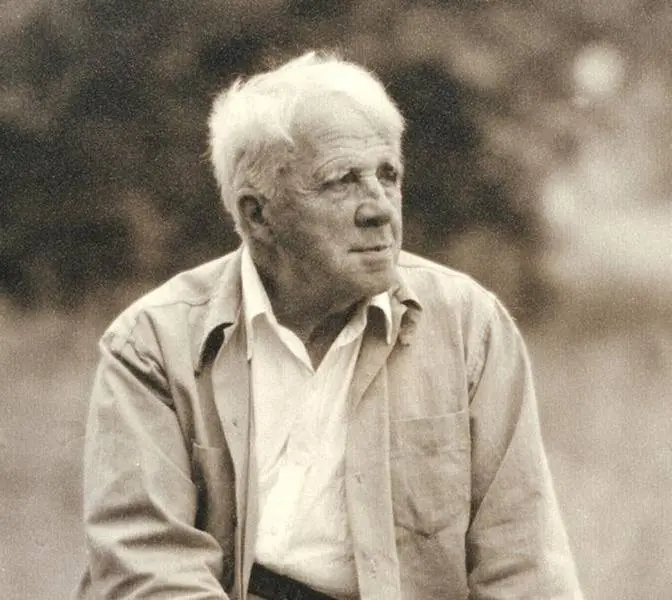
Robert Frost's poem, Nothing Gold Can Stay, is so moving and memorable that the reader is shocked at how short it is.
How does it acquire such power in so few lines?
Nothing Gold Can Stay belongs to a distinctive category of short poem that has never been given a proper name.
Usually between 5 and 12 lines in length, the form is briefer than a sonnet, but more extensive than an epigram.
These short poems also are more ambitious and less satiric than epigrams.
They don't resolve themselves in neat and witty endings.
The form also differs from the sonnet because it does not strive for the complex argument of contrast and resolution so famously found in the 14-line paradigm.
Instead, this type of short poem usually tries to describe a single scene or develop a single idea with evocative finality.
The poems also have an emblematic quality.
The images acquire a symbolic resonance and suggest broader meanings.
Every line, every image, meaningfully contributes to the whole.
There is no place for a weak word to hide.
The poem must be tightly constructed but not so rigid that its effect feels forced or predetermined.
The balance must be perfect.
Small in size, these poems are not small in ambition.
They reach for the fullness of the poetic art.
A number of American poets have been distinguished masters of this concise but expressive form,
most notably Emily Dickinson, Ezra Pound, Langston Hughes, Theodore Rettke, Samuel Menash, Kay Ryan, and Robert Frost.
Nothing Gold Can Stay first appeared in Frost's 1923 volume, New Hampshire, his first book to win a Pulitzer Prize.
Frost would eventually garner the prize four times, still the record for any American poet.
Published when the author was 48, New Hampshire was a diverse collection of longer narratives and satires
mixed with short lyric poems, including several very brief works.
The most memorable of these short poems were Fire and Ice, Dust of Snow, and Nothing Gold Can Stay,
now all classic anthology pieces.
All three illustrate Frost's mastery of the short poem,
but none better exemplifies the imaginative possibilities of the form than Nothing Gold Can Stay.
Let's listen to this remarkable short poem, Nothing Gold Can Stay.
Nature's first green is gold, Her hardest hue to hold,
Her early leaf's a flower, But only so an hour,
Then leaf subsides to leaf, So Eden sank to grief,
So dawn goes down to day, Nothing gold can stay.
Nothing Gold Can Stay is remarkably brief.
Only eight lines long, it consists of just 40 words.
The diction is simple. No word is longer than two syllables.
Most are monosyllables.
The meter is slightly unusual for Frost, iambic trimeter,
a line with three strong stresses, usually spread across six syllables.
The poet usually preferred longer lines, like iambic tetrameter,
the eight-syllable line of stopping by the woods on a snowy evening,
or pentameter, the ten-syllable line of acquainted with the night and his other sonnets.
Nothing Gold Can Stay is, in fact, the only poem in New Hampshire
out of 44 pieces that is written in short six-syllable lines.
All of these stylistic features contribute to the poem's expressive brevity and lyric compression.
The movement of the poem is both simple and richly evocative.
Viewed as a nature poem, Nothing Gold Can Stay presents the moment in early spring
when the vegetative world is first breaking into blossom.
In the first four lines, Frost's imagery, quite literally,
describes how new leaves emerge as yellow or golden blossoms
before they develop into green leaves, or early leafs of flower, the speaker observes.
This period of blossom, however, is very brief,
but only so an hour, the speaker immediately qualifies,
If the first three lines depict a world of rich beauty,
the poem pivots decisively on line four.
The second half of the poem reveals the consequences of nature's fall from gold.
After a brief hour of golden promise, the poem declares,
then leaf subsides to leaf.
As always, Frost's exact phrasing is significant.
Notice his unusual repetition of the word leaf in the same short line.
Taken literally, the line suggests that the leaf was always intended to be only a green leaf,
not a golden flower.
If the flower lasts only an hour, the poem suggests,
the leaf survives for longer.
Viewed as a description of the natural world, this observation appears reasonable.
A branch might blossom for only a week, but the resulting leaves last for months.
Frost's poem, however, is now about to move beyond seasonal observation of nature
into myth and theology.
Then leaf subsides to leaf.
So Eden sank to grief.
So dawn goes down to day.
Nothing gold can stay.
Suddenly the poem takes that surprising turn.
After seemingly presenting only the natural world in the first five lines,
nothing gold can stay now offers a biblical simile
to describe the leaf's change from gold to green.
So Eden sank to grief, the poem unexpectedly declares.
Until now, a reader might assume that the shift from gold to green was only descriptive,
but the use of grief indicates that the transition is in some unfortunate
and perhaps painful sense more than external description.
The reader goes from paradise to pain.
The poem then shifts again.
It pulls back from a mythic world and returns to everyday reality.
So dawn goes down to day.
Brings the stated subject back to the natural world,
but this time the words point to a daily cycle of night and day
rather than the annual cycle of the seasons.
Frost's poem is simple, but it presents a complicated vision of time.
Nothing gold can stay describes one moment.
The morning in spring when plants first blossom into gold
as simultaneously unfolding in three temporal cycles.
The day, the year, and a kind of mythic world.
In each case, the poem depicts the moment when the promise of perfection
declines into something lesser.
Gold unabashedly becomes a symbol,
a very traditional one, for the highest value and most radiant beauty.
Spring, dawn, and Eden are each a sort of golden age,
an impermanent paradise.
What lies ahead is never stated overtly, but it is present by implication.
Day is inevitably followed by night.
Summer is succeeded by fall and winter.
The green leaf eventually turns brown and decays.
The loss of Eden gave Adam and Eve mortality.
Human youth by implication is followed by maturity,
old age, and ultimately death.
The golden moment, therefore, is all the more precious
because it is transitory.
By focusing on a single moment,
Frost evokes an entire day, year, lifetime, and human history.
If Nothing Gold Can Stay can be satisfactorily interpreted
on a natural, mythic, and theological level,
it can also be read, in general terms at least,
from a biographical perspective,
written by a middle-aged man who had already lost two children,
both parents, and his closest friend.
Frost's friend, the British author Edward Thomas,
is commemorated in the poem placed immediately before
Nothing Gold Can Stay in New Hampshire.
Frost's poem evokes a point in life
when the golden illusions of youth have vanished.
The poem is not explicitly autobiographical.
Frost's poems are almost never explicitly about his own life.
Nothing Gold Can Stay reaches for broader resonance
than the merely personal,
yet anyone familiar with Frost's often difficult life
can see its hard-won wisdom was rooted in bitter experience.
How characteristic of Frost that the personal origins of the poem,
whatever they were, have been so magnificently transcended
into a universal vision of the human condition.
What the reader encounters in this tiny masterpiece
is not a private complaint about life's injustice,
but a tender, if heartbreaking, expression
of the transience of beauty and the grief of mortality.