
Exclusive
Jack Posobiec: The Establishment ‘Is in Bed With the CCP’
8 Video Views·Nov 2, 2023
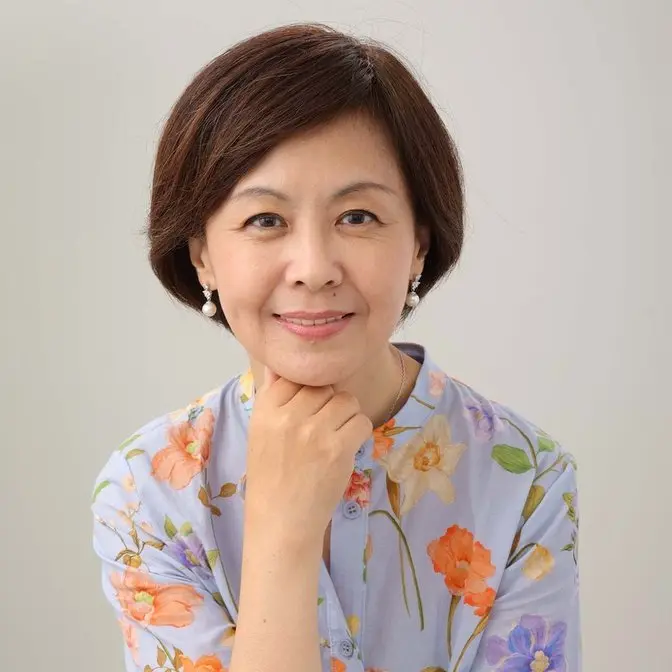
Hello, everyone.
Welcome to Focus Talk.
Today we will have a chat with Jack Posobiec to talk about his experience in China, his
understanding of the Chinese Communist Party's threats, and his perspectives on the new Biden
administration's China policy.
Hi, Jack.
Good to see you.
Hi.
Thank you so much for having me on again.
Thank you for inviting me.
Thank you.
Thank you for coming on to the show.
So Jack, you're a journalist, an activist, a writer, and also an influencer who has a
lot of followers on social platforms.
Some of our Chinese audience may not know you that well.
So how would you describe who you are and what you do?
Sure.
Well, for the audience in China, 大家你们好,老百姓们。
And really, my background in China comes from a long time of studying both the Chinese
language as well as living in China.
I lived for about two years in the Shanghai area, right in Puxi, actually in the Putuo
district.
Oh, yes.
And I was working for first the American Chamber of Commerce there in Shanghai while studying,
and then later was going to work for more U.S. businesses that were getting involved
in China and actually had the opportunity to travel all around China, mostly on business
trips.
A little bit of tourism.
You have to do some tourism.
And I have been all around.
I've been to Xinjiang, I've been to Lhasa, Tibet.
So I've seen the Uyghur people, I've been to where they live, I've been to Tibet, I've
been to where the Tibetans live, I've gone all throughout East China, I've been up to
Xi'an, everywhere there, and spent a lot of time living in that area.
In fact, where I lived in Shanghai, strangely enough, happened to be one of the actual neighborhoods
that was full of Uyghurs.
And it was really interesting so that I was every morning when I would go to get my food
as I was just walking to take the bus or walking to take the subway, was they would have Uyghurs
making street food.
Basically, they're different, their food, their bread, their naan, you know, so I might
get some balsa, like, you know, with some meat and pork in it.
But then you'd walk over and that was more traditional Chinese.
But then, of course, you would have Uyghurs with lots of different bread and veggies and
peanuts and all sorts of different golden raisins.
And so that was just every day for me in Shanghai.
And then, of course, on Fridays and Saturdays, they would have the big street bazaar.
And while I spent that time living there, I came back to the U.S. and decided that I
wanted to get involved in the national security on the defense side for my country.
And so I joined the United States Navy and then later became an intelligence officer
serving in the Navy, also using my Chinese skills that I'd picked up in country.
So doing translation work and then also focusing on China in terms of their not only their
naval ambitions, but also their growth and their expansionist policies across, of course,
the Taiwan Strait, but really all of the first island chain, all of Asia, Southeast Asia,
East Asia, Japan, Senkaku Islands and the rest of it.
So to truly understand the growth and expansion of CCP, the way they put the PLA at the forefront
of this growth, so much of that money is going to fund and develop new technologies and new
abilities for their military rather than actually going for the benefit of the people
or the development of the country.
And so this is something that I came back and was really kind of warning in the United
States about what would happen.
I was sending, you know, of course, we're writing our reports for military leaders,
but also congressional leaders and political leaders.
And it just seemed that even though publicly at this time, the president was Barack Obama,
that we would be explaining the growth of China, the rise of China and how China was starting to
now become almost a threat to our security allies in Japan, in Korea, Philippines, of course,
that and at the time, the vice president was Joe Biden.
So, of course, he's reading all this information as well.
And yet they never seem to want to challenge CCP.
They never wanted to actually challenge them economically.
They never wanted to challenge them on anything they were pushing around in the world.
And yet they would go, Joe Biden, during this time, we would be telling him what they were
up to, but then he would go and turn around and actually visit with Xi Jinping, go with him to
Sichuan, go to Sichuan University, talk about how great CCP was, talk about how great everything
they were doing was, and come back to the U.S. and say the same.
Xi Jinping, when I lived in Shanghai, for people who know his background,
he was the former party chairman of Shanghai.
That was the same time that I was living there.
And I actually had the opportunity to meet him once at one of the planning meetings for,
so Shanghai held the Shanghai World Expo in 2010.
But when I was there in 2007, 2008, that's when the planning was going on.
He was the city party chairman.
And actually, I was there talking about one of the U.S. exhibits that was going to be meeting there.
And Xi Jinping was visiting as part of his city delegation to visit the grounds
that were being set up.
They were along the river, sort of a reclaimed area, former industrial area by the river in
Shanghai, and got to meet him and see his entire entourage, all of his security and his advisors.
And I said, he seemed to me like the Chinese version of Tony Soprano at some point,
just the tough, you know, kind of doesn't play by the rules, but it's going to get his way.
To me, that's always been Xi Jinping.
So I joke, I say, I think I'm one of the only people that met both Xi Jinping
and Donald Trump before they became the president and the national chairman.
Wow.
Very unique experience.
That explains why I have a feeling that a lot of people go to you
for information and knowledge about China, as well as about Chinese Communist Party.
Now, we're going to talk about CCP's ambition and threats in a minute,
but I'd like to talk a little bit more about your China experience when you were in China.
That was like, you know, 12, 13 years ago.
At that time, when you visited Xinjiang, when you visited Tibet, what did you see?
Did you realize that there was like maybe
mass human rights violations in China going on under the surface?
Well, in Tibet, when we first went out there, it was very interesting because
the first thing that we saw, of course, was this giant train station
that had been built right in the middle of downtown.
And it wasn't built for Tibetans.
It was built so that CCP would be able to bring their people into Tibet,
would be able to build up their own areas of the city.
And you saw this really increasing amount of Han Chinese that were coming into
and really CCP driven that were coming into the area
and then building up their own sections of the town.
We saw the exact same thing going on in Urumqi, in Xinjiang, the capital there,
where there were some areas of the town, it was all Chinese.
And you would not see any Uyghurs anywhere.
You would not see the Turkish, the local language.
And it was like a Chinese district.
But then you would go to some other areas and it was all Uyghur.
But it was interesting.
So we went to the bazaar, we went to those Uyghur areas.
What you would see were military, essentially, people's armed police,
but in military uniforms, holding AK-47 rifles or SKS, Chinese version SKS rifles,
as well as mallets, clubs and marching around the bazaar.
The other thing, this was 2010, the last time I was in Xinjiang,
that you saw the internet was shut down completely.
And so if I wanted to send a text message,
that was the only way that I could get a signal out from anywhere in Xinjiang
out to the rest of China.
I had no connection to the rest of the US.
I had no way to use the internet.
It was completely being shut down.
You saw these patrols that were going around.
And so 2010, this was before the concentration camps
and the re-education camps started to be built.
Yet you already saw the beginnings of the crackdown that were going on when I was there.
Wow.
So, does your experience in China and what you saw in China
help you to form the basis of your understanding of China and Chinese Communist Party?
Well, it has.
It certainly has.
And I take my experiences in China and all of the, of course,
the great Chinese people that I met and interacted with on a one-on-one level
to understand that there is a great difference between CCP and the leaders
and much of the corruption that you see at the highest levels in the People's Republic of China.
A huge difference between that and the people that I met,
the host family that I stayed with,
the food that we would make, the great food that we would always have,
and the very way that I was welcomed in so many ways into that Chinese culture.
And so understanding that there is a difference from the political side,
the leadership side, from the actual people, the regular people,
the average person there who really don't want anything to do
or don't have anything to do with these big political differences.
And so that, for me, was a huge understanding piece.
Because in the United States, in the West, there is a tendency, I think,
to think of China as a whole, think of China as just one homogenous entity,
when actually that's not the case.
There are many differences in China.
There's many different layers in China.
There's CCP, and this is separate from China and their 5,000 years of history.
Yeah, actually, even a lot of Chinese people, they think that CCP represents China.
So when I met you in DC, it occurs to me that you seem to be making a distinction
between the CCP and the China, between the CCP and the Chinese people.
So that's quite, I would say, not very common in America.
Well, certainly more American people understand the difference nowadays.
But in the past, I think CCP and China, they just use it,
they just use, they think it's the same thing.
It's really amazing that here we are, 15 years after I began this journey
of learning about China, beginning to study Mandarin,
traveling to China, that finally now, the things that I learned so long ago
in the streets of Shanghai, the difference between CCP, the regular people, Laobai Xing,
these are words that I thought I was the only person that knew about.
And you'd come and I would talk about these things to my American friends,
or when I came home, even when I was in the military,
people didn't really understand what I was talking about when I was trying to explain these concepts.
And yet now here we are 2021.
And I think the events of especially the rapid increase and expansion,
exponential growth of globalization, as well as the danger, the risk,
and the global pandemic of COVID-19, the lies that were spread by Xi Jinping and CCP
at the beginning of it, as well as all of the mystery as the origin of COVID-19
has made so many more people become interested in this topic.
And suddenly it seems like the world is talking about the thing
that I've been telling them about for 15 years.
Yeah. And on that same rally on January 5th, at the rally in DC,
you gave a powerful speech.
And one of the messages you sent out was take down the CCP.
So tell us a bit more why you think it's important.
Well, I think it's important to focus on the CCP as a force, not only in China,
but a force around the world, right?
We're looking at one group that is pushing these undemocratic, like the coup in Burma,
all of the violence that's going on there, debt trap diplomacy across the global South.
They're not helping other countries to build themselves up.
They're helping to enrich other corrupt governments and regimes around the world
because they stand against freedom.
But they're trying to use this as part of their global outreach
so they can stretch their influence and expansionism around the world.
So what they call the One Belt, One Road program.
Well, in the One Belt, One Road program,
all roads around the world will lead back to Beijing.
All of the global finance, global debt will be traveling back to Beijing.
They seek to replace the world currency with renminbi.
They're attempting to do this not only for trade expansionism,
but for military expansionism.
This is why you see the push across Burma.
This is why you see the push across Xinjiang,
which is really the importance, the geostrategic importance of Xinjiang,
isn't about the Uyghur people.
It's not even about any of the specific resources in Xinjiang.
It's all about the border with Pakistan, the border with Afghanistan,
and the corridor they are trying to build across that economic corridor of rail
and pipelines that they want to build
so that they can feed their expansive energy purposes
through their biggest partner of Iran's.
That will give them direct access to the Persian Gulf.
That's why they want, and the Indian Ocean.
That's why they want Pakistan so much.
That's why they're focused on Xinjiang.
It's the Uyghurs just happen to be in the way, unfortunately, for them.
The same is true of the Rohingya people
in the coastal areas of the Rakhine state in Burma.
They are in the CCP's way,
and so they are pushing efforts to get rid of them.
This is what's going on,
and it is genocide that's going on against the Rohingya.
It's genocide that's going on against the Uyghurs.
And yet you see the Biden administration is now coming in
in this period of transition,
and they won't even have the guts to say it.
They won't stand up and admit
what the entire world already knows is going on.
Yeah, I think the most dangerous thing is
the CCP is trying to apply their model to the entire world.
They're suppressing models.
So, like you said, they're actually a threat to the entire world.
To bounce off of that,
we see this in the United States as well,
because in the United States,
the country I was born and grew up in in the 1990s
was a country that stood for liberty, that stood for freedom.
We were the shining city on the hill.
And yet they have now, the leaders of the United States,
in many cases, the elites, the business leaders,
the business class,
they have now been taking their ideas
and their conceptions of the world based on a CCP model.
So they are looking at things like online censorship.
I never encountered online censorship in my life before I went to China.
But then when I came back from China,
it seems that I encountered political censorship
across the internet in the United States.
Why?
Because Silicon Valley learned this from China.
The ruling class of the United States learned this from China.
They said, look, the internet is too powerful.
There are too many ideas on here.
People are connecting in ways that is creating problems for us.
So shut them down and shut them up.
Use the policies that we have put forward.
Create certain terms.
Call it misinformation.
In China, you will hear the phrase spreading rumors,
is what CCP calls it.
In the United States, they'll call it misinformation or disinformation.
They'll try to tie everything to a foreign actor,
whether it's false accusations of Russian interference,
when there actually isn't any,
or Russian connections for people who are just American citizens like myself.
These are all CCP tactics,
things that they've learned from watching and learning and traveling in many cases
to Beijing, to Shanghai,
to understanding how these policies were put into place,
the crackdowns that are done on freedom movements,
the crackdowns on religion,
the crackdowns on minority groups or anyone who stands in their way.
This is the same type of policy you see in the United States.
The same way that CCP introduced the social credit systems,
now we are seeing the social credit system type features in the United States
where people, because of their political beliefs,
are being kicked off of banking systems.
They're being not allowed on airplanes in some cases.
They're certainly being kicked off of social media.
In some cases, they're fired from their jobs.
This is the exact same type of tactics that they learned from CCP,
and it's coming to America,
and it's also happening across North America and Canada.
It's happening in New Zealand.
It's certainly happening in Australia,
and it's absolutely happening in Western Europe and the European Union.
I think the free world is in danger.
For Chinese, a lot of Chinese people who came from communist China,
they saw that the minute the information or the speech was censored on the social platform.
Chinese people joke that Twitter is now becoming Weibo, right?
Weibo or Weixin, a Chinese product.
很像的。
很像, yeah, exactly.
In the past four years,
we saw that the Trump administration challenged and confronted the CCP regime,
pretty much for the first time in decades.
Now we have a new administration,
and they have said that the CCP is our most serious competitor.
So are you concerned that the new administration may reverse the course
and go back to the old way of dealing with CCP?
The new administration is really just a continuation of the same type of relations
the U.S. had with CCP during Clinton, during Bush, during Obama.
This is a reversion back to the failed policy of globalization
and a rejection of the same type of economic and information warfare
that Trump and Pompeo and Navarro and others were using against CCP
to confront them in ways that actually matter to them.
I can speak to this as a former member of the United States Navy.
Under Obama, when CCP would be building islands in the middle of international waters
and international waterways, claiming them for themselves,
these areas where international trade travels,
the U.S. Navy under Obama, sure, they would send ships across,
they would send submarines, send airplanes, reconnaissance
to go and watch what were going on.
And they call it saber rattling, right?
Rattling the sabers, making sure they mean business.
But does CCP actually respond to any of these?
No, not at all.
Because they know that unless there is an economic repercussion for any of it,
if there's not an economic element to them,
then the financing is still there.
The wealth flow is still there.
The money is still there.
So that is why the U.S. Chamber of Commerce and the AFL-CIO in the United States,
Wall Street, etc., all backed Joe Biden.
In this last election, all the pro-CCP elements of the U.S. ruling elite
backed Joe Biden to go against Trump.
Why?
Because Trump was the only person who was,
and look, regardless of whether you like him, you don't like him,
you like his politics, you don't like his politics,
you're a conservative, liberal, moderate, independent, whatever you are,
you have to point out that he's been the only person willing
to use economic warfare against CCP.
This has been the most effective and the only effective means
that we have seen used in 30 years of globalization that has been led by CCP.
They have been systematically subverting international organizations
such as the United Nations, the WTO since their arrival in 2001,
and certainly the WHO that we can see even today, just this morning,
the WHO is out in Wuhan repeating exactly what CCP told them to say
about there's no reason to investigate this lab,
there's no question about it.
In fact, it may not even have come from Wuhan.
They're talking about frozen seafood now
and all of these other things that come directly from CCP propaganda.
There is a reason that all of these things are happening.
It is because the CCP does not believe in rule-based order.
They do not believe in international law.
They do not believe in the rule of law
because they don't believe in essential human rights.
And that's, at the end of it, what this is all about.
They do not believe in human rights.
They believe in power.
They believe that might makes right.
And if they have more power and the ability to wield that power
and leverage, they are going to.
This has become a large temptation for the elites in many other countries
who are attracted to this power, who are greedy, right?
It is a form of greed to go for this power.
It's created an insatiable appetite for that power.
And that is what draws them to the CCP's form of non-human rights government.
Now, you just mentioned WHO.
We saw that they are repeating what the CCP is saying,
you know, oh, Wuhan lab, there's no possibility of leaking.
Oh, we are met with transparency and cooperation from the CCP government,
things like that.
But the US, but the new administration is now rejoining these multilateral organizations,
WHO, Human Rights Council of the United Nations, Paris Climate Accord.
Why?
What could they gain?
What could they change?
What you're seeing now is an administration in the United States that is little more than
theater.
It is their window dressing for the global neoliberal agenda.
They have no interest in actually confronting the CCP.
They have no interest in actually getting to the bottom of where COVID-19 came from,
whether it be a lab or from one of these gain of function experiments.
They are essentially not standing up for the people who
live in the United States or in any of these countries.
What they stand for is a global neoliberal agenda that is driven by multinational corporations
that are in bed in many cases, almost every case,
with the CCP functioning based on selling their products,
using the slave wages that they drive in China,
selling that to people in the Midwest of the United States and other parts of the United States,
big screen TVs, but losing your jobs, outsourcing your factories, gutting your homes.
This is the wages of this.
And so instead of having a functioning policy in the way that, like it or not,
President Trump and his advisors, Pompeo and Navarro,
were attempting to have a functioning confrontation with China,
you are now going to see a false controlled opposition form of confrontation where they
claim to be competing.
They claim to be confronting.
They claim to be utilizing the rule of law.
And yet instead, what you're going to see is them giving a free pass for the CCP and Xi Jinping
to essentially have their way and get whatever they want around the world.
Yeah.
And the CCP certainly has been testing the new administration since the inauguration, right?
Especially at the Taiwan Strait area and the South China Sea and even East China Sea.
I want to draw your experience from your past Navy experience.
What do you think of the situation there?
Do you see a serious risk in that area?
Do you think that Beijing or Xi Jinping is actually serious
making preparations for possibly taking over Taiwan in the near future even?
Well, it's certainly up to him whether he wants to do that or not.
Previously, the CCP's agenda for Taiwan had been one based on, similar to Hong Kong,
where you saw a long period of gradual increase, gradual connection,
gradual financial connection, social connection, cultural connection,
political connection, and then eventually followed by a very quick and extreme takeover.
I think that you're going to see a similar situation with Taiwan
because in some cases, Xi Jinping was facing threats from inside his own party.
He still may be facing some of those threats from other factions of CCP
that don't want him to become this sort of chairman for life.
They're looking to 2022, if that's going to be his final year in office,
that will be his 10th year.
And so a lot of that comes to the new party Congress.
Now, if Xi Jinping feels threatened by any of these other factions within the party,
or he feels that his reign is being threatened,
that may push him to want to forego this slow policy of the slow assimilation of Taiwan
and ramp it up into a full scale attempt to occupy and then later annex Taiwan.
Essentially, what you would see is,
I don't think you would necessarily have an invasion of Taiwan,
but you would have a blockade.
You would end up having the Chinese Navy, along with Chinese Air Force assets
and military assets, army assets, blockade the entire island of Taiwan,
not allow their ships to get out, not allow any traffic,
any foreign commercial traffic to get in and out.
And they would make Taiwan entirely subservient of the mainland China,
People's Republic of China and by CCP.
They would try to break the will and the spirit of Taiwan.
That would be the way to do it.
Because in a full scale invasion scenario,
both sides would end up destroying pretty much the entire island.
There would be not much left.
I do think that it's not out of the cards that you would see
a naval embargo of Taiwan put in by the CCP.
But do you think the new administration would intervene in those situations?
I think that in that situation, that Biden would not intervene.
I don't think that he would find a meaningful way.
What he would do is this, he would claim that he was intervening,
but he would then try to seek a compromise.
He would say, we need to find something where both sides can come to an agreement.
And that agreement that comes down would absolutely be
to the detriment of the people of Taiwan.
They would find an agreement that puts Taiwan in the same situation
that Hong Kong found itself in 1997.
That would be the type of agreement that they would make.
That's exactly what CCP wants at the end of the day.
So in essence, the risk of Taiwan or the risk of that area,
in your view, increases, right, at this time?
Well, I think it absolutely does.
And you're going to see that increased risk certainly throughout 2021.
This might even be the key year for that as we look forward to 2022.
For most Westerners who don't understand this,
the 10-year cycle that CCP chairman had been going through,
Hu Jintao served 10 years, Jiang Zemin served 10 years.
This is something they've been trying to institute
as a sort of term limit for CCP chairman.
However, Xi Jinping has said that he wants to declare himself
essentially the chairman or executive secretary of the party for life.
That will all come to a head in 2022.
However, we're going to start to see the first indications of this
at the next National Party Congress coming up later this year.
Some of the jockeying for position.
We'll see if any of his lieutenants or deputies
start stepping down from the Politburo.
We'll also see who's moving up to the Politburo,
as well as if there's any changes on the Politburo Standing Committee.
I know this is kind of inside baseball for the Western audience.
But for people who have been looking at China from the outside,
we understand that this is how you get a sense of who has the power,
who is wielding power in the sort of the Beijing Game of Thrones.
Well, you know, to a lot of American people
and also to a lot of Chinese people who live in America,
you know, we face the CCP's aggression and threats
and infiltration of this country for decades.
And internally, we also see that this country, America,
is going down a dangerous path.
Basically, it's almost like to the direction
of becoming a socialism or communism country.
So a lot of people are very worried.
They feel like the old or the traditional way of life
or traditional America, we're losing it.
So do you have any, what's your advice or what's your suggestion?
What's your suggestions?
What could people do?
My suggestion is that free people of the world
should unite behind the banner of freedom,
behind the banner of liberty.
There are so many people fighting for this,
not only in the United States,
but behind the scenes, behind the Great Wall
in the People's Republic of China.
As well, you see this in India,
which has been a great champion of freedom across the Asian continent.
This has been a time where so many global powers
are attempting to use their influence and leverage.
So much of this comes over the global financial system.
So much of this comes over really the global reach
of the tech platforms and the power of Silicon Valley.
We talk about this in the United States,
but they really have become a global force
because we saw them in India.
We saw them in Burma.
We see them in the EU.
These are the same companies.
They're coming from the United States,
but they no longer view themselves as American companies.
They no longer view themselves as required to uphold American values.
You know, when Steve Jobs was alive,
I was just reading a book about Steve Jobs,
that he always said that Apple products should be made in America
and that Apple should restrict certain content from its phones,
pornographic content, things of this nature,
because they believed they had a moral responsibility to that.
And yet after Steve Jobs left,
we notice now that this company has moved its product lines,
has moved its supply lines.
They are now allowing more and more on Apple.
It has definitely changed the company.
That is a great example of what's going on
with many of these Silicon Valley companies,
Google, Facebook, Apple,
these companies that we have trusted so much to of our data.
We've given them so much power over our lives
that are they using it for righteous and good purposes
that serve not only the purpose of liberty,
but the purpose of human rights?
Yeah, I think it's also a time to restore the morality.
I remember Google's past motto was what?
Don't be evil, right?
Don't be evil.
Whatever happened to that?
Yeah.
But Jack, actually this week is the Chinese New Year week.
You know, it's the year of the ox.
So do you want to say a few New Year greetings
to our Chinese audience in Chinese?
Oh, congratulations on your fortune.
Yes.
You just said congratulations on your fortune.
Yes, yes, yes.
Okay, okay.
Thank you.
Well, thank you so much, Jack,
for sharing your perspectives and your valuable insights.
I think it's great and also very important
for people to talk about these important issues.
Thank you.
Well, thank you so much.
I really appreciate the opportunity.
And I do think that there are so many connections
that the freedom movement in the United States
and the freedom movement in China should be making.
And I think that that's something
that people in the United States really need to understand.
And so I'm happy to be able to share that
and to help make that connection.
Yeah.
And I also think the work you do
at One American News is also very important.
So keep up the good work
and hope to see you or talk to you soon.
Thank you so much.
Thank you.
Okay.
Thank you, everyone, for watching Focus Talk.
That was my interview with Jack Posobiec.
We'll see you next time.