
Exclusive
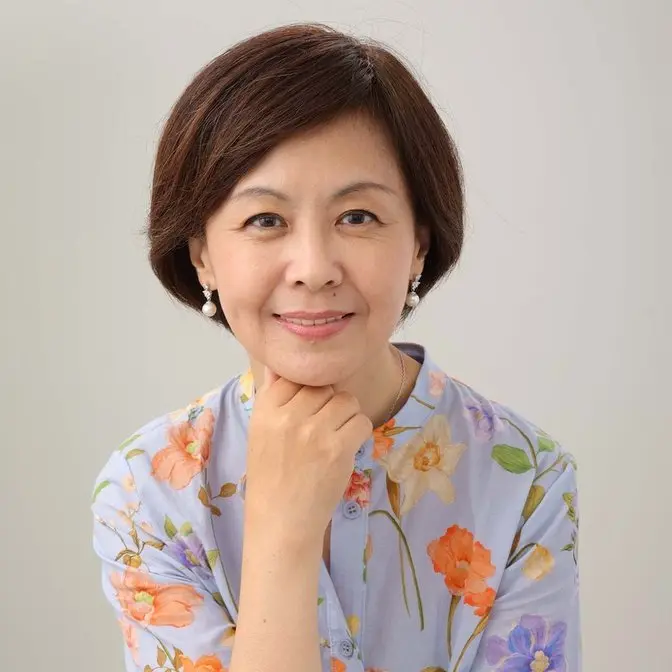
Hong Kong Writer Chip Tsao: How I View the 2020 US Election
10 Video Views·Nov 2, 2023
Hello, welcome to Focus Talk. My name is Jenny. Today is Tuesday, January the 19th.
Tomorrow is inauguration day and an end to this very tumultuous election season.
What is the impact of the new administration on world affairs?
What next for this very divided nation? What does a Biden presidency mean for the
US-China relations, especially when it comes to areas like Hong Kong and Taiwan?
We're very pleased to have Jitsoul, noted Hong Kong author and commentator with us tonight to
talk about all these issues. He is joining us on Skype. Hello, welcome to the show.
Thank you for having me.
Many Chinese viewers overseas, a big part of our audience are familiar with your writing,
so we're happy you're able to join us. Today is the last day of the Trump administration.
I think generally people are a little unsettled about this inauguration because
DC looks like it's under martial law. There are plenty of troops, but very little people.
Earlier today, Trump made his farewell speech where he thanked the American people,
listed some of his achievements, and wished the next administration well.
From your standpoint, what do you think is his greatest accomplishments, his biggest regret?
First, it's important to note that people of other countries look at Trump differently than
Americans do, just because our perspectives are different. From where I am in Hong Kong,
one very important thing which foreigners notice, but I see very little US domestic coverage,
is Trump's impact on world peace. During his administration, the world made huge strides
toward peace. If we recall, before the Trump presidency, terrorist events were rampant in the
US and Europe. The Boston Marathon attack was a very memorable one, but you had many terrorist
attacks worldwide. They've nearly completely disappeared during his administration. During
the Obama administration, North Korea was launching test missiles all over the place, over Japan,
seemingly every few weeks. That has also disappeared. Trump spearheaded the peace
agreement between Israel and four of its neighbors, something that many thought couldn't be done.
So there was finally hope for lasting peace in the Middle East. I almost never see coverage
of this in the US press, but it's important to us who live outside the US. Everybody was
railroaded by COVID. It took not just the US, but the whole world by surprise, so it's not something
you can lay entirely at Trump's feet. Until COVID, the world as a whole was on a positive trajectory
toward more peace and more prosperity. Economically, I am a proponent of free markets,
but in the last few years we've seen the very negative result of over 20 years of unfettered,
unconstrained globalism. Authoritarianism in the form of media censorship, the abuse of power by
the social media and tech giants, the impact on the next generation. I am particularly concerned
about the next generation. All they do is bury themselves in their devices. There is no family
interaction, no interpersonal interaction of any kind. This resulted from over 20 years of blindly
following the path of globalism in the name of free markets under the Bush, Clinton and Obama
administrations. It was changing the way we live in a real way, in an extremely negative way.
Trump was attempting to change some of this. He was trying to bring manufacturing back to
the US. Why? Not only does this create jobs in the short term, it is also a symbol of a return
to real, honest work, to roll up your sleeves and do-it-yourself mentality. We see young people with
no real futures. They're left without a role in the global economy, so all they do is stay with
their parents and play video games. They go on social media and criticize this and that, much of
it meaningless. What kind of society have we created for the next generation? Where are we
headed as a civilization? Trump was a businessman and he ran as an outsider, but I think he understood
this at a gut level. He knew the country, the world, was headed in the wrong direction and he wanted to
change it. Look at what's happened to freedom of speech. Does it even exist anymore with all the
tech and social media censorship? These are fundamental issues. Political correctness has
permeated education, media and entertainment and has put freedom of expression under assault.
These are things we need to fix urgently. The Trump administration also represented a return
to religious freedom. In the past 10 years or so, political correctness has also encroached more and
on religious freedom. Trump was fighting back against that. At the rate we are going, following
value-neutral globalism, we are creating a generation of youths with a religious vacuum,
morals vacuum. Let me be clear. Trump himself isn't your ideal president, but the values he
represented, the values that got him elected, are absolutely correct and exactly what we need today.
You've listed many of his accomplishments and I agree, but he was successful and he was leading
us on the right path. Why are so many Americans against him, even to the point of hatred?
Well, I'd argue that any notable political figure who's trying to affect real change will be met
with resistance. The negativity that Trump generated is also understandable because his
style is just too bombastic for many. He's not very detail-oriented and speaks off the cuff.
He's very stubborn. We have to consider his background. He was a successful businessman
for most of his life and so is used to doing things his way. He brought this into the White
House. He simplified complicated issues, so appeared to be rash and inconsiderate.
Most fundamentally, his values threatened existing institutions and arrangements.
For example, when he linked the defense bill to the threats posed by big tech and social media
companies, how do you think those tech firms felt about it? His policies weren't aligned with the
interests of powerful players like tech and big business. When he blocked shares of communist
countries from being traded on U.S. stock markets, this affected the profitability of Wall Street.
We know he's not posturing. When he threatened tariffs against China, he followed through.
So he pursued policies based on principles, but they angered a lot of powerful interests.
Another problem is that he's maybe too confident of his own charisma and says things that come
back to bite him. For example, when Trump made that statement about injecting disinfectant to
fight COVID, it was clearly a joke. Maybe a bad one, an inappropriate one, but still clearly a
joke. If he simply took back 20 similar, not well thought out tweets, he would have won
re-election. Some of the tweets were petty, vengeful, like the ones about John McCain.
So to be fair, if I were an educated, civilized U.S. citizen, I would be offended by these tweets
as well. I think you will see a sharp leftward turn by the U.S. in the next four years, driven
by the socialist ideology of the Democrats. We hear of a Truth and Reconciliation Commission
and Trump Accountability Act that seek revenge against Trump supporters.
This is very dangerous and would be poisonous for the U.S. as a whole. One thing that we don't know
is whether these views represent the majority or just a fringe of Democrats. Because of social
media and big tech abuse of power, they can adjust everyone's megaphone to their liking.
In the past, we know that the far left and far right were both fringe groups because their voices
were seldom heard. But for people outside the U.S., for people in Taiwan, China, Hong Kong,
if big tech controls the voices that are coming out from the U.S., as outsiders, we just don't
really know. Based on the latest coverage, I would have thought that the U.S. has become a socialist
country. Perhaps it has. I don't know. The truth is hidden. The greater risk is that,
based on the biased coverage, I would act on false information and perpetuate that viewpoint.
Social media exacerbates the false narrative until it actually comes to influence public opinion.
There is no longer any forum for moderate, rational debate of issues.
You mentioned the voices of the extreme left. For a prior programme, we discussed this topic
and a general feeling was that while the actual number of the extremists may be few,
their voices are loud. When Twitter suspended President Trump's account, I saw a poll where
close to 60% of the respondents agreed with Twitter's decision. So even if the media is
playing up the leftist viewpoint, my feeling is still that there are many more people on the far
left than in the past. What are your thoughts about the overall leftward movement in the U.S.?
Well, first I think we all have to remember that, as media, we need to understand our own
perspective. Media is concentrated in a few cities. New York, California, and the coasts do
not represent all of the United States. Middle America is very different from the America of
the coasts in terms of values and lifestyle. The left is powerful because they occupy the
influential posts in the media. For example, the editorial board of the New York Times and CNN
may be a handful of leftward-leaning individuals, but their views have worldwide impact. What they
choose to publish, what they cut or include, these decisions influence the judgment of millions of
people. Another example, a few years ago, a Harvard professor merely said that binary gender is based
on differences in nature. This caused a controversy and calls for his resignation. We've heard of
Berkeley University blocking conservative speakers. This probably doesn't happen at many U.S.
universities, but when it happens at renowned universities like Harvard and Berkeley,
the impact is worldwide. This is global news that influences people's thinking. I don't believe
Biden is part of the extreme left. He's had a long career and has worked with both sides,
but I do think the left will use this opportunity to push their agenda, and a lot of it is using
their control of the media to frame the conversation so it seems like it's what the American people
want. I think in the U.S., an eight-year-old can choose to identify their gender. So just because
a boy likes to play with dolls, he now has the right to become female? An eight-year-old? I'm
sorry, I find that simply unacceptable. The U.S. is all for diversity, but I caution everyone. Do not
allow their calls for this supposed diversity to take away your own judgment and your responsibility
toward your kids. Look at their schoolwork. Pay attention to what they're being taught.
Are they being told that sex change, abortion, drugs are all legal and therefore okay? I don't
care if you're a Democrat or a Republican. You owe your kids a proper upbringing based on some kind
of value system. I graduated from University of Warwick with a degree in literature. I am a writer.
Right now, there is a movement in the U.S. to cancel all of 19th century English literature
because they're all grounded in colonialism and racism. If this is the standard, then all ancient
Chinese literature should be canceled because they're all sexist. I would go so far as to say
that this is a cultural revolution with American characteristics. In this cultural revolution,
there were no Red Guards. It started on university campuses within the last two decades or so.
But once Trump became president, you saw the Red Guards. You saw student protests driven by this
self-righteous anger, not allowing free speech, condemning professors, all things that happened
during the original cultural revolution. When Biden was campaigning, I was looking carefully
for some signals from him that he was against all of this. Not only did he not condemn any of this,
he condoned and even supported it. Why do you think the U.S. has allowed the left to accumulate
this much power? The U.S. has always supported freedom of speech, debating issues openly,
with each side given the freedom to express their views. Now they're silencing everyone
they don't agree with. Where was the resistance? The freedoms were gradually curtailed.
How did we get here? The collective influence of the leading universities, mainstream media,
Hollywood, is formidable. In total, they control speech, creative thought, TV, movies, all media.
They form the opinion of the country. If you lose all three, and all three have been lost,
you've essentially lost your voice. Ever since the Renaissance, through Enlightenment,
human rights, equality, and peace have been the pillars of Western thought and civilization.
When it comes to human rights, first you liberated slaves, then women, then it was
the gay community. Once that's done, it's the trans community. So you just keep looking and
looking. The target of human rights is becoming narrower and narrower as larger groups are
liberated. When it comes to equality, the pursuit of it has reached an extreme. This is not new.
It happened during the French Revolution, during the Cultural Revolution. Their motivation is out
of goodness. It arose out of seeing great inequality and great injustice. But forced
implementation of wealth distribution leads to chaos, anarchy, and tyranny. It leads to the
pitting of one group versus another based on status and values. The differences are magnified
until there is only hatred left. This has played out in many places around the globe in the past
200 years. So why is this happening in the U.S. now? The U.S. is buffered and protected by the
two great oceans. Since its beginning, it was never exposed to this sort of extreme socialist
ideas and movements that have played out in the rest of the world. It was built on capitalism and
free markets by great capitalists like Edison, Ford, and this work. Socialism and Communism
were dirty words in America until now. Socialism has evolved and established itself in some form
in Europe, particularly in some northern European countries. These countries are characterized by
high taxes and high benefits. This imposes certain restrictions on the economy and society.
It's less dynamic. Why is the U.S. the favorite destination for immigrants? Because it supports
freedom above all. The most important is freedom of speech. The next is freedom of markets.
The final one is this idea of small government. The smaller the better. So again, leaving the
individual more space. Coupled with this, its abundant natural resources, this combination is
what made America the greatest country in the world. Like us Hong Kongers who believe in ourselves
and not handouts, this is America's defining attribute that you make your own way. You build
your own American dream. I would say this worked well until late last century when things started
to change. Gradually, the middle class dwindled as wealth became more concentrated. Other than in a
few industries supporting fewer and fewer employees like banking and high tech, it became harder and
to maintain a comfortable life to achieve the American dream. This is related to the globalism
we spoke about. If all the middle class manufacturing jobs have been outsourced to China,
what am I supposed to do? So Trump's emergence was a result of globalism. He represented the people
who have been displaced by globalism. He understood this. He was working toward this goal with his
America First agenda. Largely because of Trump's personal faults, the American people have chosen
to return to globalism, to Obama-era politics, one based on inspiring slogans and not much else.
So I think America is in a dangerous place right now. It chose the wrong turn at the intersection.
There's so much we can talk about, but we are constrained by time because this is a live
broadcast, so I am afraid we have to leave it there. We appreciate you spending the time with
us and maybe we can continue this discussion sometime in the future. Thank you. Thank you.
It was my pleasure. I want to thank Jim for his insights. Thank you for watching.