
Norman Rockwell: Imagining Freedoms - Rockwell's Four Freedoms
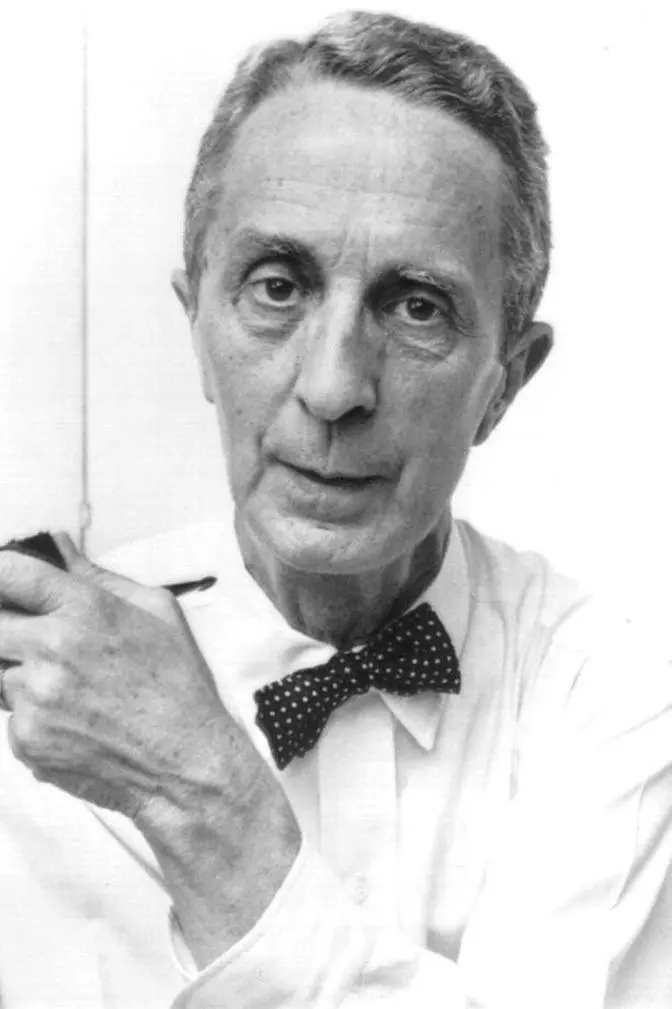
Already America's preeminent illustrator, Norman Rocco was struck by Roosevelt's ideals
and decided to depict the Four Freedoms in everyday terms that many Americans would understand
and identify with.
Two years after Roosevelt's speech and following seven months of work on Rocco's behalf, his
Four Freedoms paintings were published in the Saturday Evening Post in February and
March of 1943.
The overwhelmingly positive response to these images represented a significant turning point
as they helped Americans to envision what they were fighting for and why the war effort
should be supported.
Rocco stood over the idea of the Four Freedoms for quite some time.
He tried this and that, but nothing worked.
As he wrote in his autobiography, it was so darn high-blown, sometimes I just couldn't
get my mind around it.
Then one night, Rocco suddenly remembered how his Arlington, Vermont neighbor, Jim Edgerton,
stood up to express an opinion that opposed the ideas of many of the townspeople.
But they let him have his say and listened respectfully to his ideas.
No one shouted him down.
Rocco realized that this was the embodiment of freedom of speech.
Arlington had a high school that was built in the 1920s and in 1940 there was a fire
and the high school burned down.
So there was a movement in town to appropriate money to build a new high school and that
required the approval of the town meeting.
Jim Edgerton, who was a farmer in town, he got up at the town meeting and he spoke against
the effort to spend money to build a new high school.
He wasn't poor, but he was feeling a pinch.
And he was concerned about the expenditure of money.
He got up, he spoke his mind, and people were listening to him, other voters, other legislators
listening to him respectfully.
And then there was a vote and the vote didn't go his way, but he had his opportunity to
speak and to make his opinions known.
The paintings were a phenomenal success.
After their publication, the Post received 25,000 requests for reprints.
In May 1943, representatives from the Post and the U.S. Department of the Treasury announced
a joint campaign to sell war bonds and stamps.
They would send the Four Freedoms paintings on a national war bonds tour.
Traveling to 16 cities, the exhibition was visited by some 1.2 million people who purchased
$133 million in war bonds and stamps.
In 2018 numbers, that translates to $1.9 billion raised during the Four Freedoms war bonds
show tour.
Each person who purchased a war bond received a set of prints of the four paintings.
In addition, the Office of War Information printed 4 million sets of posters of the paintings.
Each was printed with the words, Buy War Bonds.
They were distributed in U.S. schools and institutions and overseas.
Rockwell kicked off the war bond tour at Hex Department Store in Washington, D.C. with
a state banquet attended by Washington dignitaries and socialites.
The following day, seated on a stage in the midst of a churning sea of hundreds of people,
Rockwell autographed reprints of the Four Freedoms.
People received these premiums for purchasing the war bonds in any denomination.
After the hubbub of the opening events, Rockwell tired from his notoriety and the time away
from his studio.
He quietly went back to Vermont to continue to paint covers for the Saturday Evening Post
and other clients.
Amid the turmoil of World War II, the Four Freedoms have since become one of its greatest
legacies, a testament to the paramount importance of human rights and dignity.
Brought forward by one of America's greatest presidents and immortalized by one of its
most beloved artists more than 75 years ago.