
The Most Bloodthirsty Viking _ Erik the Red
4 Video Views·Oct 5, 2023
In the 10th century, much of the world was still unknown. There was an element of mystery
and wonder across the horizon, and when the Vikings looked west, they would see a boundless
ocean with no idea what lied beyond. Erik the Red's name would go down in history
due to his restlessness, his fury, and his discoveries of lands that had never been seen
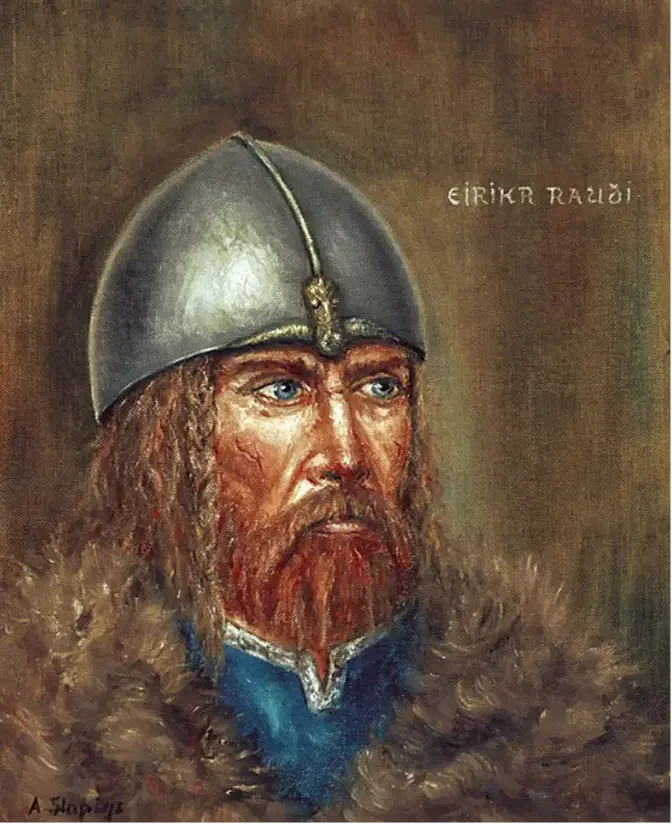
before by human eyes. This is his story. Erik the Red was born Erik Þorvaldsson in
the year 950. He spent his early childhood in Norway, but his father, Þorvald Asvaldsson,
was a very fiery man and he was exiled from Norway after he was accused of manslaughter.
Þorvald then took his young son Erik on a perilous journey to Iceland, and they would
eventually settle there. The early Viking settlements began in Iceland around the year
860, and by the time Erik would arrive with his father, much of the land there had already
been claimed. As Erik grew into a man, he was also quick to anger, and was very fiery
much like his father. He eventually married a woman named Þornhild, who came from a wealthy
family and he would come to inherit a large farm. He even built a home for he and his
wife to live, and he named the house Erikstad after himself. Erik and Þornhild would have
four children, Þorvald, Þorstein, Leif Eriksson who would go on to become a famous
explorer and Freydis, who became famous in her own right. According to the saga of Erik
the Red, he had a neighbour called Valtheof, and Erik's servants would cause a landslide
on Valtheof's farm. Outraged, one of Valtheof's relatives called Eof the Foul would kill Erik's
servants. Whether Erik's servants did this on purpose or by accident will never be known,
as they were swiftly killed. But it seems Erik had a good relationship with these men.
They had worked hard for him for many years, and he was so enraged that he confronted Eof
and murdered him. He also killed another man, called Hrathen. How Erik killed these men
is also unknown. The saga does not state if he duelled these men, but after this Erik
would be known as Erik the Red, due to the colour of his hair, and also because of his
fiery temper and rage that could not be calmed. In the year 982, Eof's family relatives
demanded his banishment from the land, and they also conducted the prosecution. In consequence,
Erik was banished from Iceland. So Erik would take his family and would move
to another settlement, on the two small islands of Oxney and Sundry, which are located in
west Iceland. The islands themselves are rather barren and landscaped with high rocky mounds,
but wherever Erik went, trouble would follow. Once Erik had settled in this new land,
he met a man called Thorgist, and he would lend him his outer diasporads, which were ornaments
which were inherited of sentimental and mystical value, which his father had brought from Norway.
Once he had finished the construction of his new home, he went to get them back,
but Thorgist didn't have them. Erik somehow managed to obtain them, but the sagas are
unclear as to how. Once he had them, Thorgist would chase him for them and the two men would
come to blows. The fight would erupt into a full-on brawl, in which Thorgist's sons would
jump in, as would other men. After the fight, both of Thorgist's sons would lay dead in the
dirt, as would a few other men. This simply shows how Erik was a wild, combative man,
being the personification of a Viking warrior. After the fight, Erik would receive considerable
support, as he was not in the wrong, but Thorgist was also backed by influential men in the land,
after an assembly was held and Erik and his people were condemned to outlawry. For the third
time in his life, Erik was exiled. He was misunderstood and was sick of his constant
misfortunes. Erik, now outlawed, was enraged at the world, but he would set his sights west and
would take his ship into the boundless ocean and would seek out a new land where he could
finally live in peace. After months at sea, he finally saw a landmass in the distance.
Once his ship landed, he began to explore the uninhabited land that he found. The region was
full of green meadows, and he wanted to share the land with other Viking would-be settlers,
so he called the land Greenland, as he believed an inviting name would motivate more people to
take the perilous journey there. However, Erik wasn't the first man to venture to this new land.
A man called Snaebjorn had unsuccessfully attempted to settle in these lands around
a century before, and had named the region Kronland. Erik would spend the winter on the
east coast, in a place he named Eriksæ, which can be translated to Erik's Island,
and in the spring, he would move further inland. It was during the summer in which he truly enjoyed
his time on the island, as he and his men could explore the uninhabited lands to the west,
without the risk of freezing to death. Erik and his fellow explorers found this land very
similar to Iceland. It would freeze over in the winter, but contained rich vegetation during the
warm summers. He took full advantage of his exile, and embraced the beauty of this empty new land,
that had barely been seen by human eyes before, or at least hadn't in over a century.
After three years had passed, Erik's banishment from Iceland had finally come to an end,
and he sailed back and arrived in the summer of the year 985. In total, Erik the Red had sailed
over 6,000 miles, and for the early medieval period, this was one of the greatest seafaring
feats of the age. When Erik got back to Iceland, he would spend the winter describing to all,
the vast and beautiful land that was Greenland. By the summer, he left to colonise the region,
along with numerous people that were swayed by his words and went with him. He took 35 ships,
and many animals in order to set up working farms. However, only 14 ships survived the journey.
Still, two colonies were established, and Erik finally made a home for himself and his family,
and Erik the Red was voted the leader of the Eastern Settlement, in Eriksvejord. Once Erik
had settled, and the farms and communities in Greenland were well established, he planned
another voyage of exploration. He discussed plans with his son Leif to travel to Vinland,
a fabled region further west, in order to gather wood, as the settlement they were in was desperately
short of it. However, in the days coming up to the voyage, Erik's horse would stumble badly.
Still believing in the Norse gods of old, Erik would take this as a bad omen that he should
remain home. His son Leif went to make the journey without his father, but on his return
to Greenland, Erik was already dead. His cause of death is unknown, although it is speculated
that he contracted some kind of disease or illness and was consumed by it. He died in his 50s,
at around the age of 53. Erik's legacy is one of bloodshed and new beginnings. He was a fiery man,
who would often find himself in serious trouble for his actions. Despite this, he turned his
misfortunes into opportunities and is honoured today with the discovery and settlement of
Greenland. His bloodline would also carry on his restless nature, as his son Leif would go on to
discover more lands to the west. I hope you all enjoyed the video. If you did, make sure to like,
subscribe and share, and hit that bell notification to not miss out on any upcoming
content. And I'll see you all soon for another history profile.