
What I've learned from 150 creative piano teaching podcasts
In this super quick presentation today,
I'm going to be trying to distill 150 episodes,
that's about 130 hours worth of content,
down into less than 20 minutes.
And I'm gonna kick it off today with one of my favorite guests.
It's this guy here, his name is John Schmidt.
He's one of the leaders of The Piano Guys,
one of the most popular groups on YouTube out there.
They've got 6.5 million subscribers,
over a billion views and counting.
And if you're not familiar with him by name,
you'll certainly recognize some of these images,
which are almost iconic now in piano circles.
And one of the first questions I actually asked John
on the podcast was, are these actually real?
And if so, how on earth have you done them?
So if you're interested to find out more about that,
then make sure you tune in and check out the episode
with him, timtobham.com slash podcast.
We'll get you the link to all of them.
So let's jump in and hear what John had to say.
You'll see, I've got a massive smile on my face
through most of this short little clip,
because John is basically outlining
what I've taught to teachers about how to go
about teaching chords,
teaching students to play what they wanna learn,
and playing by ear.
And he wraps it all up into this really short little clip.
Have a listen.
Yeah, when I had students that were struggling,
I would totally ask them, what is your favorite song?
I would show them the chords and we would play,
cause they'd heard it.
And that's actually taught me so much
is to pick songs that I really loved
and try to learn them by ear.
Because what it taught me to do is it taught me
to analyze it in a way that is much deeper
than when you're just reading dots on a page.
I gained an understanding and that taught me everything
I needed to know about composing.
And I would really encourage teachers
to give that challenge to their kids.
If there's a tune that they really enjoy,
to learn at least 30 seconds of it by ear.
And if that's too hard,
then just try to pick out the bass part by ear,
the lowest notes they hear.
And then if that's too hard,
I would have my students pick out,
or after they got the lowest ones,
then I would have my students pick out the highest notes
they heard or the melody.
Once they have the lowest and the highest
for a 30 second little spot,
I would say, now go back and try these six chords.
There's six chords that probably fit
in between the hello and the hi.
You know, and I teach them the one and the two
and the three and the four and the five and the six.
And it was just, it was so sensible for them.
John in this clip is basically
outlining my four chord composing methodology,
which I teach all teachers to explore with students
because they absolutely love it.
Taking a pop song, pulling it apart, playing it by ear,
listening to bass lines and melodies,
and learning that there are very few chords
that were gonna sound really good
with that particular melody,
because it's a pop song.
And here is one of the most famous performers
and composers of our era
talking about doing exactly the same thing.
So what I had to do in this presentation
is break down my 150 podcasts into a number of themes.
And I originally started with about 10.
I finally distilled it to three important threads
that I've seen running through a number of the presentations
and the interviews and the discussions
that I've had with my guests.
Firstly, the practice problem.
We all struggle with it.
We all want to get better at retaining our students.
Let's talk about some of those issues today.
Secondly, modern creative approaches to piano teaching.
Now, of course, this is a little bit biased.
This is the Creative Piano Teaching Podcast,
after all that we're talking about.
We'll dive into some of the ideas
from some notable players in piano pedagogy today.
And finally, I've talked a lot about,
I've recorded a lot of videos as well
about apps in particular for piano teaching.
Today, I'm gonna talk about technology
as it relates to digital, hybrid and acoustic pianos.
So let's kick it off with one of my guests from last year,
Philip Johnston.
Now, if you're not familiar with Philip,
you may know one of these books.
He's a fantastic author, really great thinker
and an amazing teacher and performer
who lives in Canberra in Australia, quite near me.
And he was talking in his podcast episode number 131,
we unpacked a number of what we called heresies
in regard to piano teaching.
And one of them was this,
daily practice is a bad idea that should just die already.
Here's what Philip had to say.
Look, the biggest reason I think it's a bad idea
and really should die already
is that it fails the triage test.
I mean, particularly in 2018,
I'll explain what I mean by that.
Kids now are really, really busy.
And the reason they're busy is that our parents
really were the first generation of people
who were told that they could do or be anything.
The kids now are being, therefore,
expected to do and be everything.
And we're terrified that we've got a little Tiger Woods here
except that they won't find that out
unless they try golf at some stage.
And so they're doing a million different activities.
I've got three kids, my two oldest are at uni,
so it's a whole different thing.
But I've got one who's still in high school
and he's doing during the week.
We've got trumpet choir, we've got debating,
we've got martial arts, not surprisingly.
He's good at maths, we've got maths extension.
There's orienteering, he does cricket, he does drama.
And he also loves computer games and whatever else.
And for anything to happen every day,
and for the requirement to be that it's every day
and spend half an hour,
it really needs to be in his top two or three.
And if it's not in your top two or three,
it's actually an unreal expectation to have.
And when that dissonance happens
between the teacher's expectation
and the fact that it's not in the student's top two or three,
the student will quit, we lose students.
I think this is a fantastic way
to reframe our job as piano teachers.
Away from the must beat the kid with a stick
to make them practice, to what we've actually got to do,
what our sole purpose is, is to try and engage,
motivate and inspire that child or adult so much
that they prioritize piano
as their number one, two or three activity.
Because that's the only way,
regardless of how much they enjoy it,
that they will actually find the time to practice.
Because kids these days are just so busy.
I had another fascinating conversation
with this guy, his name's Dave Simon.
In episode number 129,
I was actually interviewing another teacher
called Danny Thompson,
but we referenced the discussion
that the three of us had about practice.
And in this clip,
Dave is talking about some research
that he did with parents in his studio.
And what he did is he took a few groups of parents
and he asked them these questions.
He said, what are your hopes?
What are your fears?
And what does success look like
when your child is doing sport,
soccer, football versus music?
So what do you hope for your child in soccer versus music?
What are your fears around your child
in soccer versus music?
And what does success look like?
And the answers to these questions are fascinating.
Have a listen.
They would all say that their hope for their child
as to what they would gain from this,
from soccer or from karate,
was that their child would experience
some type of personal growth.
It would impact their self-esteem.
You know, they value teamwork.
And then their fear was that their child
would have a negative reaction
and it could maybe have a negative impact
on their self-esteem.
And success was solely marked by happiness.
If their kid was happy,
they would continue on pursuing this activity.
But with music, completely different.
Their hope was exactly the same.
Consistently, they all wanted their child
to experience personal growth.
Nobody said to me their hope was that their child
would become a good musician.
Their fear was that their child wouldn't practice
and success would be determined
by whether they practice or not.
So I then, from that point, challenged them on that.
And what happened is I said to them,
I said, well, why is your hope,
your hope is the same for, let's say,
soccer as it is for music,
but how come you mark success with soccer
by your child's happiness,
but you don't mark your child's success in music
through happiness but through practice?
And they all said, well, in order to get good at music,
you have to practice.
And I would call them out on it and say,
but you didn't say that was your hope.
You didn't say that your hope was that they would get good.
Okay, when you talked about soccer,
you never said your hope is
that they become a good soccer player.
They just didn't know what to say.
I mean, I really silenced quite a few of them.
And some of them said, well,
isn't that what you're supposed to do?
Don't you have to practice?
And what I have learned from all this,
my conclusion is that our industry has a practice problem.
It is the number one reason we lose students
is because they're not practicing.
And as educators, we buy into that.
We say to our students, okay, this is your first lesson.
I need you to go home and practice.
But I think the practice problem,
I think it's a myth
and that music is only accessible through practice.
I think perfecting music
is only a possibility through practice.
But as music educators and studio owners,
I think we have to ask ourselves, what is our goal?
Is our goal to produce good musicians?
I mean, yes, I mean, of course,
we all are gonna say yes to that,
but is that our primary goal
or is our primary goal to allow as many kids as possible
access to music so they can experience the enrichment
that music has?
And if that is our primary goal
to benefiting children's lives,
we need to rethink practice.
Well, there's a lot of information in there.
And what I want to take away from this
is a discussion about whether we are aligning
our own goals for students
with both the child's goals for themselves,
if they're old enough,
and also the parental expectations.
And Dave just unpacks in this,
the fact that there is a real clash often
between what parents expect
and why they're driven to have certain thoughts
about fears and success in music
and what the actual outcome is going to be.
And I really like this approach of him saying,
perhaps we have a practice problem.
And while not all of you will agree that practice,
perfecting music is only available through practice
and maybe enjoying music isn't,
I have seen that myself.
And I've got a great example of a student who,
this is Roman,
who came to me after a very difficult transition
from primary to high school.
And he really just stopped practicing.
I taught him for a good year or two before that.
He was at an intermediate level.
He was enjoying things lots.
He loved coming to lessons,
but he was doing absolutely no practice.
And I was getting more and more worked up about it.
I was getting more frustrated.
He would just continue to not do anything.
I spoke to his parents, spoke to him.
Yes, he still wanted to come.
And it was at that point where I could have said
what a lot of teachers do in this circumstance and say,
sorry, mate, I can't teach you anymore.
You just, you need to practice.
It's a waste of time.
It's a waste of money.
But because I was chatting to Dave and Danny
at that same time about this whole issue of practice,
I decided to change my approach.
And instead what I did is I said,
mate, Roman, don't practice.
Just stop practicing.
I don't want you to practice.
And I told his mom the same thing.
And you know what happened?
Suddenly it was like a burden had been lifted
from all of our shoulders,
both the child, the parent, and me.
And he was able to come to lessons and enjoy himself
without the fear of me saying,
how much have you practiced?
What have you done?
And having nothing done.
And we were able to continue our relationship.
We kept playing music.
We kept building our repertoire and playing our scales,
all that kind of stuff.
Sure, he wasn't progressing particularly fast,
but he was engaged and he was enjoying it.
And you know what?
Two years later, guess what?
He's still having lessons and he's practicing again.
And that's a prime example of why perhaps
it's time to rethink our approach to practice.
Because for students these days, as Phillip said,
they are so busy.
They are so overscheduled.
They have their own things going on.
Beating them over the head with a stick,
talking about practice might not be the best approach
to getting what we want
and the goals that we want for our students.
Let's move on to our next topic,
which is creative pedagogy.
In episode number 150,
I had the pleasure of interviewing six people live
on the show.
And I wanted to zoom in on one person in particular.
His name is Forrest Kinney.
If you haven't met him before,
make sure you check out his stuff.
And in this clip, he talks about how far we've diverted
from the original music making activities
of the Baroque era, particularly people like Bach.
Let's have a listen.
You know, I've been thinking a lot the last few years
about music history and been researching it.
And I just put out a book that is not the big book
I hope to put out someday,
but it's a smaller book that talks about the big change
that happened in music education
in the middle of the 19th century.
I mean, if you look back to Bach,
he taught his students to improvise, arrange and compose.
And when you were a musician in Bach's time,
if you couldn't improvise at a keyboard instrument,
you were not employed.
When he was 40,
there was an audition at the Hamburg Cathedral
and there was an audition.
Five out of the six requirements
had to do with improvisation.
But when the printing industry exploded
in the early 19th century
and say the well-tempered clavier was printed
for the first time in 1800,
you had suddenly all these masterworks available.
And you began to have teachers teach them,
the rise of conservatories,
all these teachers went to these European conservatories,
came back to the States, went around the world.
And this model of teaching literature
and the technique and the theory became the dominant model.
And I call it the performer paradigm.
Now there's nothing wrong with the performer paradigm,
except that it's one-sided.
We have forgotten this legacy of pedagogy that predates it.
And what I've been trying to do with my four arts
is restore what's been lost.
And in a sense, that's what Bradley's talking about,
the balancing.
I call it integration,
where we're losing,
we lost something and we're bringing it back.
I think this is a great way
to approach creativity in lessons.
It's not that improvising and arranging
are skills that have suddenly come out of nowhere
and we're just learning that they're a great thing to do.
It's what music used to be about in the 1700s.
And it's just that over the course of the last 200 years,
we've deviated way away from that,
down this road of the goal of music
is to teach people to read, perform,
and interpret the works of the masters.
And as Forrest is saying,
our approach now,
and I include me in his work as well,
and all of the teachers who are really teaching
other teachers how to be creative,
how to do more than just read and interpret
and perform music and help the students do that.
What we're trying to do is bring ourselves back
to that time of Bach when improvising was so important
and such a key part of a musical experience.
I also loved later on that Forrest said
in this same interview,
I'm hoping that in the future,
I look around the world and students everywhere
are viewing improvisation, arranging, and songwriting as,
oh, of course, that's what you do in music lessons.
You don't just play the music of others.
When you study art,
you go through a stage of copying the works of the masters,
but you do that to gain technique.
If you keep doing that, you're called a counterfeiter.
Now to bridge the gap between creativity
and the business side of things,
I interviewed David Cutler,
the author of The Savvy Music Teacher,
fantastic book for any music teacher
looking to build their income and their impact.
And here's what he said about teachers
who teach a more improvisationary approach.
One of the trends that I found throughout the book
is I interviewed a whole bunch of people.
People that teach improvisation make more money.
That was fascinating,
that people that teach you to be creative
in making your music
are more creative with the business models,
except that was my first interpretation of it.
And then I went back and I realized something different,
that not all teachers who teach improvisation
make more money.
Jazz teachers who teach improvisation
make the same amount of money as classical teachers
who don't teach improvisation.
Classical teachers who teach improvisation make more
because what they're doing is they're taking a status quo
and they're challenging that and finding their own way.
And I encourage teachers of classical backgrounds
and classical tradition
that if you do go down this path
of incorporating more creativity,
improvising, composing, and creating into your lessons,
you are able to differentiate yourself in your marketing
and set yourself apart from the teachers who don't do this.
And as David says, potentially make more income,
certainly make more impact.
And it's how I've been able to build my business
and my studio because people know
that I do things really differently in my lessons.
Onto our final theme of digital pianos.
And in this interview,
I had the beautiful Susan Ogilvie on the show in episode 106.
She's a real superstar when it comes to digital pianos
and ensemble and group teaching.
And in this discussion,
she's articulating why she really loves digital instruments
over acoustic instruments.
And a lot of the time we're trying to find ways
of explaining why an acoustic instrument
is so much better than a digital.
In this clip, she's flipping that on its head
and talking about why digitals actually in this day and age
might be better than acoustics for a lot of kids.
So many purists get pretty upset about the fact
that they aren't weighted keys.
But the opposite side of that coin is
most of them are velocity sensitive.
So if you press hard,
you're gonna get a big, full, rich tone.
And if you barely play,
you're gonna get a real puny,
little almost staccato sound.
So there's so many things you can teach about listening,
getting the kids listening to the tones,
even of different instruments.
And they don't know what a violin
is supposed to sound like,
or what a clarinet sounds like,
or what harmonics on a flute.
They have no ideas.
I love explaining to kids,
if you're gonna play staccato with a clarinet sound,
a clarinetist would never go,
do, do, do,
the way you'd play staccato on a piano.
So go deep into the key and then get off of it
like a clarinetist has to get the wind
through the instrument
before they can let go of the sound.
And that's their staccato.
And this whole new,
the light that comes on in their eyes is so exciting
because they really get the concept of staccato.
The sound palette that kids have today,
just in their regular everyday,
going to school in the car and everything is huge.
And as much as we love the tone of the piano,
I'm sorry, but that's not interesting to a lot of them.
So if they have these options of sounds,
it's gonna draw them in and keep them.
Later on, she used this beautiful quote here
in talking about our restrictions that many of us place
on the instruments that our children use.
And she said, every child deserves the right to have music.
And I've even taken on a student with no instrument at all.
I was a little bit hesitant, I'll give you that much,
but what it allowed me to do was educate the parent
in the kind of instrument that would be best
for their child.
And we all know that great grandma's 150 year old piano
that's been sitting rotting in someone's basement
and is when a child wants to learn piano,
brought up into the house and often not tuned.
And that's the instrument they're given.
Often that is the worst choice for a child
because it's not gonna be a pleasant instrument to play.
I wouldn't wanna learn on that one.
I'd much prefer that my parents spend a thousand
or $2,000 on a digital piano that feels nice, sounds good,
and is all set up for me to learn on.
So what I've learned in this process
is that flexibility is the best thing for teachers.
We don't want to cut off piano and music experience
for any child just because of the instrument they're playing.
Most parents can't afford acoustic pianos.
A lot of them don't have the room.
Many of them can't make that much noise
because they're in apartments.
So digital pianos, I'll tell you what,
they are becoming incredibly good.
And I would start to challenge teachers
who believe in an acoustic piano action
being better than a digital or certainly a hybrid
to actually go and play some hybrid pianos
and some digital pianos because the technology
is increasing and improving so rapidly
that they're really taking over.
And I believe that's a really good thing
because if we can bring music to more kids
through more access to great instruments,
then that can only be a good thing.
So what have I learned from all these interviews
that I've taken?
Well, from Dave and Phillip,
I've learned that flexibility with my approach to practice
and the things that I require of my students
is the number one way to keep them engaged
and to get through rough patches,
but also to focus on how I can get my teaching
and the students' experience of the piano
that they're learning with me
into their top one, two or three activities.
That's what's most important to me.
And from Forrest, I learned using his terms
that students really are craving to be whole.
They don't just wanna be a one-sided performer musician.
They want to be able to unpack and explore
and create their own music.
So I'm always asking myself, how can I do that in lessons?
And for me, it's balancing three parts of every lesson
between the reading, the technique
and the creative sides of what I teach students.
From David, I love this quote about teaching improv
and making more money.
It's true.
I'm able to do it and I know many of my members
who have been able to set themselves apart
by changing their approach to teaching.
So if you're a classically trained teacher,
I implore you, encourage you to look at creativity
and how you can teach that in your lessons
because you'll be able to stand apart from everyone else.
And finally, from Susan who said,
every child deserves the right to have music.
I couldn't agree more.
So I am really realistic
about my instrument requirements for students.
Now, sure, we don't want all our kids
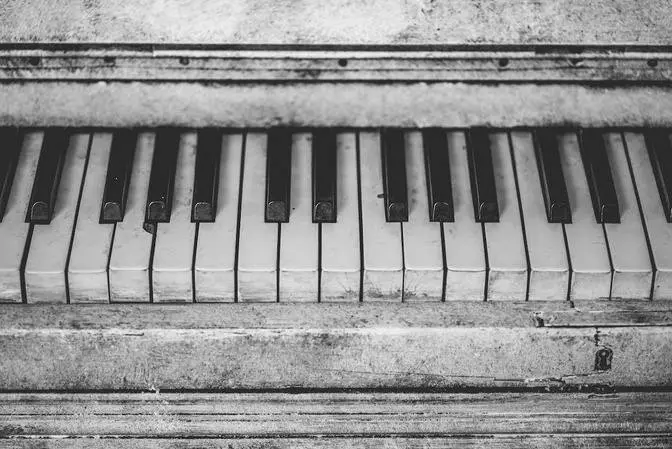
to be playing on instruments that look like this
for very long, preferably not at all.
But that opportunity that we have to teach students
and parents about good instruments
is right there in those first few weeks.
Even if they don't have the right one to start with.
And I really do encourage you,
if you have requirements that children
may only learn on acoustic instruments with you,
I really want you to question that
because there are so many great digital instruments
out there nowadays and they're gonna be just fine
for most students.
Hope you enjoyed today's presentation
and make sure you check out the podcast
at timtopham.com slash podcasts
or search for it in any of the Apple stores,
iTunes, Google Play, you'll be able to find me.
Speak to you soon.