
Discover the 6 Tea Types and a WORLD of Awesome Tea Sub-Types | Masterclass on Tea Ch. 1 of 8
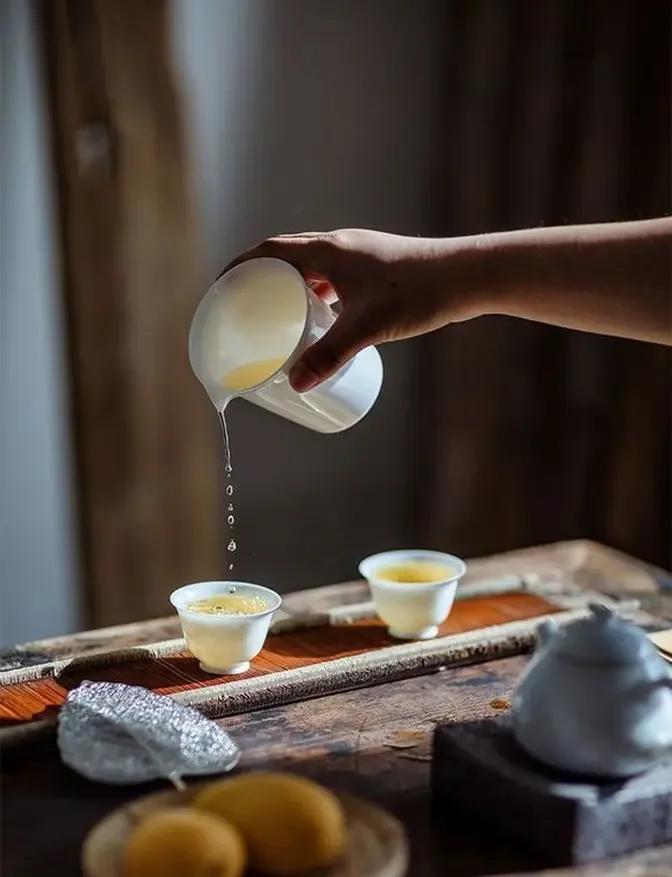
#tea #teaoftheday #thewayoftea #chinesetea #teaculture #tealover #gaiwan #lifeoftea #gongfu #gongfucha
What's up, Teacats? This is Dylan from WooMountainTea coming at you with Chapter 1 of the Masterclass on
Tea, where we are laying out terms and definitions. As you're going to see, the world of tea is so
vast. There are hundreds, if not thousands, of different varietals from different areas,
different countries. Here and now, we're going to lay out what does tea mean, and then get into some
of the types, and then some of the subtypes. Basically, with each chapter, I started off with
a one-sentence summary of all the content of the video, of the chapter, and that kind of gives you
a heads-up of what's coming, and gives you a bit of a framework to think about as we step into this
new territory. All right, so let me give you the one-sentence summary of Chapter 1. The word
tea describes two very different beverage types, herbal tea and camellia sinensis-based tea,
the latter being true tea that includes six major types, green tea, black tea, oolong tea,
white tea, yellow tea, and dark tea, which all encompass their own vast sets of subcategories.
So that's the one-sentence summary. Next, we dissect the sentence, break down all of the
details, and then catapult you out of this video with a crystal clear understanding of tea
terminology and taxonomy of tea.
So as we step into this topic, I want you to keep a visual in mind. I want you to picture a tree.
You know, if you've seen like an evolutionary tree or a family tree, it's kind of like that.
We're using the tree metaphor to symbolize how tea has these different types and then branches
off into different subtypes of those types. Let's start at the trunk of this tree. We're
going to call it the tree of tea. At the trunk of the tree of tea, we have the first major branch
point, and there's two branches that separate right here at the trunk. On one side, you have
camellia sinensis-based teas. Camellia sinensis is the scientific Latin word for the tea plant.
It's one species of plant, and that is the basis for all of the teas that we are talking about
in this chapter. That's the plant that I study, that I research, that I've dedicated my life to
so far, and that is our area of focus. The other branch is what's called herbal teas, and that is
simply when you have any non-camellia sinensis plants. For herbal tea, you can really use any
plant. Out of my window here, I see a big, beautiful pine tree. If I went and plucked
some needles off of that pine tree, dried them out, put them in hot water, I would have a pine
needle herbal tea. A couple herbal teas that you have probably heard of would be chamomile,
peppermint, ginseng. These are all different plants. They might have something interesting
about their specific water extractions, but we won't be focusing on those herbal teas in this
course. We can basically forget about herbal tea for the remainder of this masterclass.
Basically, I'm almost never talking about herbal tea. I am focusing everything on this camellia
sinensis-based tea. This camellia sinensis-based tea branch then further branches out and divides
into these six major tea types. This is super important to know. If you're in the literature,
if you're reading scientific research about true camellia sinensis teas, you'll often encounter
the six major processing types or the six major tea types. These six major tea types,
a couple of them you've almost definitely heard of. These six major tea types include green tea,
black tea, oolong tea, white tea, yellow tea, and dark tea. It's only after you pluck the leaf,
the tea leaf off of the tea plant, that you then process that raw green tea leaf differently to
produce one of the six major tea types. As we push further along with this video,
we're going to get into some of the subtypes of each of those six major tea types because each
one of these six types has its own vast, enormous network of branches and subbranches and subtypes
within them. Let's move down that branch of green tea. We're going to get into processing really
deep and in detail in chapter three. I'm not going to dive too deep into it right now, but
basically the first step you do with green tea right up front is you got to heat the tea leaves
up. And that's actually what preserves the green color and the green characteristics of taste,
aroma, and color. And there's different ways that you can create heat and apply that heat to the
leaves. The two primary ways are by steaming the leaves. That's a steamed green tea. And then the
other way is pan fired green tea. Steaming is way more popular in Japan. Almost all the Japanese
green teas are steamed. Pan firing is much more common in China. So most of the Chinese green
teas are pan fired, but you do have some steamed Chinese green teas as well. But this is a crucial
distinction because fixing, that's this first step of applying heat, is called fixing.
The different fixing process that you use to the leaves are going to drastically affect how the tea
looks, tastes, and smells. It's going to drastically affect all those quality characteristics. So for
example, the steamed green teas, they are way more vegetal, grassy, and green in general. That style
of fixing really preserves the green attributes in the green tea. The pan firing method of fixing,
that really creates different aroma characteristics. So with pan firing, you get much more of a toasty,
nutty, roasting chestnut aroma with those. Just for the hell of it, we're going to run through
one green tea type from trunk to tip of the branch. So let's run with pan fired green tea.
All right, so now we're leaving steamed green tea aside and we're going the pan fired green tea route.
At this point, the pan fired green teas will fork like five different ways about. And again, the
different branches reflect different styles of processing. And these different styles of
processing mostly have to do with the shaping of the green tea. Among these five different shapes,
you have more of a slender shape. You have a flat blade-like shape. You have a needle shape, a pearl,
kind of a rounded ball shape. A fifth and less common one is kind of like a corkscrew shape.
Okay, so let's keep going. We're going to pick the flat blade-like shape of green tea and we're
going to leave the other four shapes behind. This branch now forks three different ways,
dragon whale, dafang, and we have qiqiang. They're all flat blade-shaped pan fired green teas.
At this layer, we're getting to not just the processing, but we're also starting to incorporate
elements of region. But let's just keep pushing forward. So let's pick dragon whale. That's by
far the most famous of those three. And in fact, dragon whale is kind of known as the king of green
teas in China. So within dragon whale, blade-shaped pan fired green tea, then you have three separate
locations mostly. There are differences in processing style still, but the difference
here is mostly location-based, right? So Westlake is kind of the core, the heart, the epicenter
of dragon whale processing and creation. Then a little bit further out, you have Qiantang.
And then Yuezhou is a little bit, you know, just means further out than the Westlake area.
So now we have Westlake dragon whale flat pan fired green tea. We're going to keep running down
the branch here. And so for Westlake dragon whale, you have maybe five or six different cultivars
that are commonly used to make Westlake dragon whale. So among commonly used cultivars that are
used to make Westlake dragon whale tea, you got Longjing 43, Pingyang Tezao, Wuniuzao, Zhenong 139
and 117. Zhenong just means is the Zhejiang Agricultural University that's right in Hangzhou,
right next to Westlake. A lot of times it's these ag schools that go and do the research and
development to create these new cultivars. So those two are cultivars bred and created by that
university. And then lastly, we have what's called Chuntidrong, which is just like the native
cultivars. It's like tea plants grown from seed essentially. So these aren't ones that were
propagated through cloning, but they're just kind of your old fashioned when a mother tea plant and
a father tea plant love each other very, very much. You know, they cross pollinate with one
another and they create tea seeds that are special mixes of both of the parent genetics. You have a
bunch of tea plants that are entirely unique and then grown from seed that are also native to the
Westlake area. And those are used to make dragon well too. So let's go with Pingyang Tezao. Now
further after that cultivar, you can further differentiate based on what season, what time of
year was the tea plucked. And this is where tea really varies from something like wine in terms
of wine taxonomy, because wine you just harvest once per year in the fall. But for tea, we harvest,
it depends on the region, the climate of that area, and a few other factors, but you can harvest
four or five times for a Westlake dragon well. For these Westlake dragon wells of the Pingyang
Tezao variety, Tezao by the way, Tezao means especially early. So it's an early budding
cultivar that's used to make dragon well. So that means it's going to sprout a little bit early. So
we're looking at like early April or late March. And so that's called first flush tea, that first
growth of the tea plant of the spring, because tea plants are dormant in the winter. But then
they wake up when springtime comes and they have that first initial outgrowth of new buds and leaves.
So that is the first flush tea and it's the most flavorful and the most coveted, highly priced,
highly praised, delicious high-grade tea that you can get. You have that first flush tea. First flush
is usually before April 5th, that's called pre-ching. Now second flush is before about April 21st,
that's called pre-rain. And then the third one might be like a late spring, early summer harvest,
then you have a summer harvest, then you have a fall harvest. The later you go in the year,
the more the price drops and more the general quality of that tea type drops. Okay, so we're
on to, we have one more, one more layer to this to this branch. So beyond that, then you have the
plucking style. So what part of the tea plant are you plucking? So if you just pluck the top bud
basically and maybe one tiny first leaf off the bud, that's special grade. So that's the top of
the top, that's the best of the best. Then if you pluck a little bit more leaf, maybe one bud plus
one full leaf, that's first grade. One bud and two leaves, that's like second grade. And then one
bud, you go further down the stalk here on the tea plant, then you have fourth grade. And then
usually they don't go higher than fifth grade for a Westlake Dragonwell. Okay, so now we're at the
tip of the branch. There's no more ways to differentiate after this, but I mean, look
at how far we've strayed from the trunk of the tree of tea here. Imagine you have a first grade
Westlake Dragonwell, which is a flat blade, pan fired green tea. That's eight levels. So that
eight layered tea name that I just mentioned would be distinct and have a different price
and quality than a, say, a second grade, summer harvest Longjing 43 Westlake Dragonwell, yada, yada, yada.
So if you, if you differentiate on any of the branches of this multi-layered tree, then you
have different taste, different aroma, different color, ultimately different price, different demand,
et cetera. Okay. So I hate to have done that to you and I do apologize, but I wanted to run you
through that movement from the base of the tree, all the way down to the tip of the branch to show
you just how many layers there are and just how complex this universe of loose leaf tea really
gets moving forward here on out. I'm going to stay within like the first or second branch points of
each major tea type. We're going to give you an overview of the most notable parts of that tea
type, a couple of the big important subtypes, and then I'll name a couple of the specific
varietals from each tea type that I personally love and recommend that you go out and find.
Okay. So let's reel it back with green tea. So most of the green teas that I love are Chinese
pan fired green teas. So that includes, let's see, I love Du Yun Mao Jian, Xing Yang Mao Jian,
Huang Shang Mao Feng, Tai Ping Hou Kui, Liu An Gua Pian, obviously Dragonwell. That's the king
of green teas. Biluochun is unbelievable. Anji Baicha is fantastic too. Those are all
Chinese green teas. On the Japanese side of things, I love me a good early flush Sencha.
Gyokuro is phenomenal. If you can get the good stuff, it's extremely pricey, but if you want
to pony up the bucks and get a good Gyokuro, you will not regret it. Matcha, obviously matcha is
great. And then, you know, matcha has its own entire sub universe within it too, right? You
have all these different grades and plucks and cultivars that are used to make matcha and those
all have different flavor attributes, different aroma, taste, color, etc. So you can see in any
of those green teas that I just named, you can go all the way down to the very tip of the branch
in the same way that we just did with Dragonwell green tea. That kind of maps out a few of the
good green teas, gives you a general sense of how things split up. Before we get bogged down
too much in green tea, I want to move on. Let's go to our next tea type. Let's go with oolong tea.
The first branch point in the oolong world is a branch that goes four different ways based on
location. So there's four main oolong producing areas. You have Taiwan, you have northern Fujian,
southern Fujian, and you have eastern Guangdong. So basically all the oolong tea in the world comes
from those four areas and they all have their own, again, whole universes below them. Take
northern Fujian for example. This might actually have the most amount of subtypes. I've been in
China and I've seen someone who specializes in northern Fujian oolongs and I saw this like
sampler pack they were selling of Wuyi rock oolongs and it was a briefcase and you lift it up
and there's like 40 different types of Wuyi rock teas inside that type. Part of the reason for that
is that as you can hear in the name that word rock that kind of reflects the rocky mountainous
region of northern Fujian. And so over time in each of these valleys in between the mountains
you'll have the evolution of new breeds and new cultivars of tea and new styles of processing and
the people in those little valleys will become accustomed to that specific valley's tea and
begin to like it. It's through this kind of mountainous topography that all these different
types and subtypes evolve. So if you find yourself buying Wuyi rock teas you could look for a Da Hong
Pao which is a big red robe. You've got Rou Gui which is fantastic as well. Those are the big
ones from northern Fujian. Taiwan is distinctive because of its mountains. It's a very mountainous
region and different mountains have their own specific types of oolongs. So you have Li Mountain,
Ali Mountain, but the general style of Taiwan oolong is characterized and embodied in the Dongding
oolong tea. So all of those three that I just named are fantastic. Also Bao Zhong is a little
bit atypical from the standard Taiwan oolong tea but still definitely worth trying. Southern Fujian
the most famous is Iron Goddess of Mercy aka Tie Guan Yin. So that's a small kind of kernel
shaped very lightly oxidized oolong tea that would be worth getting if you do buy Tie Guan Yin
buy organic. There have been some issues with pesticide use in that area in the past
so make sure your Tie Guan Yin is organic. Last but not least of the oolongs we have my
home province of Guangdong. That's where I've been living the last five plus years
and our eastern region of Guangdong we produce what's called Dan Cong. That's the type of oolong
tea produced in eastern Guangdong. So Dan Cong oolong the most famous one as of recent years
is the Duck Shit Dan Cong. That one's fantastic like crazy umami, savory, herbaceous as well.
I love that tea. And then there's a there's a bunch of different types of Dan Cong oolongs as
well. You know that one breaks off into a into a ton of different cultivars and genotypes just
like the Wuyirok tea does. So that's a pretty good overview of oolong tea. Now let's let's
walk our way back up the branch. Let's move over to black tea. Okay so now we're in the black tea
territory. The main distinction the main fork in black tea right up front is CTC black tea versus
whole leaf black tea. The thing you gotta understand about black tea is that it probably represents
about 75 80 percent called 70 percent of total global tea production. Vast majority of all the
tea produced in the world is black tea. The reason is that this tea is used when you're making like
those ready to drink teas like you know if you get Arizona iced tea at the gas station that's
black tea or like boba that's all black tea because it's a bit sweeter and more mellow than the other
tea types. Black tea that's used for those industrial products are called is called CTC
black tea crush tear curl. Basically during processing you're just obliterating the leaves
crushing tearing curling it up and that kind of homogenizes the entire fermentation process
of black tea. Again wait till chapter three to learn more about the fermentation but generally
CTC teas are very low grade and not really what we're focused on in this masterclass so let's
leave that CTC branch of black tea aside and focus on the whole leaf black teas. Black tea is cool
because there's all these countries all around the world that produce black tea. The Darjeeling region
of India up in the northeast in the foothills of the Himalayas they make fantastic black tea there.
Sri Lanka, Ceylon black tea is good. Even Kenya even eastern and in Uganda some of these eastern
African countries they originally were only producing CTC black tea but in recent years
they've kind of stepped up their game and they've started making some really nice whole leaf kind
of more artisanal level black teas so keep an eye out for them. Now let's go one layer down the branch
here you have small leaf and you have large leaf so within Camellia sinensis within this species
we have two main sub varieties we have Camellia sinensis sinensis that's the small leaf type and
Camellia sinensis, Assamica that's the larger leaf type. The Assamicas grow closer to the equator
where it's hot and humid right so that's the ones that are growing in Sri Lanka, Kenya, India and
southern China in Yunnan province and then in Guangdong we also grow large leaf we grow both
where Guangdong is kind of a hybrid area but these small leaf varietals the the sinensis tea plants
they're grown in northern eastern China and Korea and Japan. They're much hardier in cold weather
they can resist a good thorough frost so when you use large leaf teas to make black tea the flavor
profile is totally different than when you're using smaller leaf varieties to make black teas.
The primary difference is is that with these larger leaf black teas you got like a much bolder
richer punch in the mouth malty is is a really common characteristic for these large leaf
black teas just a ton of really robust sweet flavor. Smaller leaf black teas are a bit more
floral a bit more fruity a bit more delicate on the palate they're not quite gonna smack you in
the mouth like a large leaf black tea would but you get these kind of interesting more like stone
fruit apricot peach notes or you might get more of a rose or floral note with these smaller leaf
black teas. Both are good. I personally love my favorite black tea is Yunnan large leaf black tea
that's my favorite they do it really good there but I drink small leaf black teas too and I drink
black teas from other countries as well but all right let's let's give you a couple black teas
to keep an eye out for if you're black tea shopping out in the world today. Like I said if you find a
good Kenyan tea they make purple they make black teas out of these unique cultivars that are have
purple tea leaves so a purple leaf black tea from Kenya could be good. High altitude Sri Lankan
Ceylon black teas are great. Darjeeling black teas from India fantastic. Yunnan black teas are
awesome. Now let's push up north actually in Guangdong in western Guangdong which is the part
closest to Yunnan of Guangdong we have a place called Yingde which which creates really good
large leaf black teas. It's kind of a copycat of Yunnan black teas so if you're gonna get the large
leaf black teas from China just get the Yunnan black teas. I'm not supposed to say that because
that's my home province but you know I don't know try it diversity is good and Yingde black tea can be
done is really good if it's done well. So those are the large leaves up pushing north and east
in China. The most famous one the emperor of these small leaf black teas would be Jin Jun Mei
another really good one that just came out like in recent years and this one comes from Hangzhou
like right in the same territory that that dragon well is coming from that we were talking about
before basically they realized that people like black tea and they don't need to use 100 percent
of their first flush tea crop for green tea production they can save a certain subset
and make really good black tea too and so black tea made from that special grade first flush
dragon well region is called Jiu Qu Hong Mei so that's just another really high-end black tea
from that area small leaf as well so we also have Keemun right that's the most famous one
that's a pretty good one there's huge variability in quality with that one just try to get yourself
a really high grade Keemun if you can last but not least we have a Lapsang Suchong that's like
a smoked black tea just like Keemun huge variability and and grade and quality with that but
and the thing with that is that it's smoked some people like to smoke some people don't
try to get one that's not like crazy over the top smoky or do if that's your thing if you like
the smell of a campfire get yourself a super smoky Lapsang but those are probably the notable ones
let's teeter on back down the uh into these six major tea types out of black tea territory
and let's get now into white tea this could be my favorite tea type hard to say i change my
favorite tea type like every month or two but white tea is really cool the processing of white
tea is very unique so tune into chapter three to get more about that but the first distinction
the first branch point with white tea when you get on the white tea branch is between Yunnan
white tea and Fujian white tea Fujian is more east and north that's going to be more small
leaf cultivars or at the most a hybrid cultivar right these these Sinensis and Assamica varieties
can hybridize with each other and make these hybrid cultivars so Fujian is different than
Yunnan white tea Yunnan white tea is all this large leaf tea material and basically within
so let's take it one level lower with white tea there's four main distinctions with white tea
you have silver needles you have Bai Mudan you have Gong Mei and then you have Shou Mei
so those are four qualities four grades of white tea and they reflect the plucking style so the
first one Bai Hao Yin Zhen that's the silver needles you're just plucking the bud of the tea
plant and nothing else so this is like the champagne of teas extremely refined extremely
delicate flavor I can't speak highly enough of silver needles I drink them all the time it's
one of my personal favorites the next one down is Bai Mudan plucking style which is one bud and two
leaves Gong Mei is more like one bud and three to four leaves and then Shou Mei is like you'll be
lucky to find a bud within the pile of leaves that you're kind of sifting through this probably
rings a bell you'll remember when we're talking about dragon well right we have the different
grades we have special grade first grade second grade which is based on plucking style same thing
here with white tea so a couple really awesome white teas to not miss would be the Bai Mudan
plucking style of Yunnan white tea and that's called moonlight white tea so it's called that
because as these large leaf cultivars go through white tea processing which is a long long
withering step the hairs of the white tea become silver or white and the leaves kind of become like
a dark gray or almost like blackish and that white on black effect of the appearance gives the name
moonlight try to find yourself some moonlight white tea that's one of my most absolute most
favorite teas it's nice to drink those silver needles but it's much more light and delicate
on the palate whereas this moonlight white tea these when you have the leaves attached to the
buds it brings so much more punch to the flavor profile so the Bai Mudan style pluck has way more
of like the sappy rich sugary sweet thick body to the tea whereas the silver needles are are much
lighter crisper more refined both are good just different so let's pop over to Fujian for a second
with their white tea they have two main white tea producing regions in Fujian you have Fuding
and you have Zhenghe. The Fuding is going to be a bit more vegetal green crisp light
right and the Zhenghe is going to be a bit more fruity sappy sweet sugary they're going to look a
lot more similar than either one of those does to Yunnan white tea because these are just like
neighboring counties in Fujian essentially but all of those white teas I just mentioned are really
worth trying again I love white tea and one of the things about white tea that's so cool is that
it ages like fine wine you can buy a white tea they usually come in these cakes and you take
these cakes and you put it aside in storage and over time the flavor profile of the tea itself
just transforms and changes and gets really like really unique new notes in it that wasn't there
in the in the fresh young tea so there's actually a really famous phrase in Chinese to describe this
aging of white tea it's 一年茶三年药七年宝 so that means in year one it's tea in year three
it's medicine in year seven it is a treasure so that kind of speaks to two things the the
compounds are evolving and changing over time and traditional wisdom says that those newly formed
age-induced compounds have more medicinal properties than the fresh tea right that's
what I say at three years it's medicine and then at seven years it's treasure because there's so
many new rich aroma and taste characteristics that have evolved in that time that it is a treasure
and you should treasure it cherish it and drink it on special occasions and enjoy it
so find yourself some aged white tea if you can let's tiptoe back out of white tea territory and
think that that aging conversation that aging topic is actually a good segue into dark tea
dark tea is also like white tea aged so the most famous dark tea that you have probably
heard of is pu-erh right and dark tea is mostly produced in China and the different provinces
of China kind of evolved their own dark tea styles over time pu-erh is the dark tea from Yunnan
province and that differentiates in the raw pu-erh and ripe pu-erh based on processing style
that we will again dive all the way into in chapter three but these other provinces in China
have their own styles of dark tea which are much lesser known but really interesting as well my
favorite non-pu-erh dark tea would be liubao tea um that's just such a unique very very unique
aroma and taste characteristics with that very hard to find though these these lesser known dark
teas are very hard to find but a couple other famous dark teas from China would be in Hunan
province you have fuzhuangcha and qianliangcha those are really interesting unique dark teas
in Hubei you have qingzhuangcha and then in Tibet you have zangcha which is kind of the local Tibetan
made dark tea type a lot of the tea used for these dark teas are from we brought this up in dragon
well conversation it's the chunti zhong it's those local seed grown seed propagated tea cultivars
which are going to be like i said each tea plant is completely unique genetic genetically from the
one standing next to it so you can imagine if each dark tea production area has their own unique
seed grown tea then the flavor profile of one region is going to be vastly different than the
next and then on top of that a big part of dark tea processing is aging so a lot of times after
these dark teas have been processed they'll be pressed into bricks and then will be set aside
to age for a while and so the aging and the storage conditions of one place right the climate and the
microbes in the air right all these things are different from one microclimate to the next so
that will greatly affect how the teas then transform through aging that's kind of also why
the the tea type in general is so kind of mysterious and special is because all these
factors that play into the creation of dark tea are also unique from one place to the next it's
almost hard and impossible to replicate the process as you move from one location to the next
so dark tea very cool tea type time-tested age-old get yourself some dark tea um i already named a
couple of the big ones if you haven't tried pu-erh gotta get yourself some pu-erh liobao tea
and then those other ones are really hard to find but um i don't know do your best let me know if
you find them okay last but not least right we're backing out of dark tea territory and we're
scooting over to the last tea type on the branch of camellia sinensis type teas our true teas
which is yellow tea all right so yellow tea is this weird little tea type it's kind of like
the black sheep of the six major tea types is hardly produced at all and almost nobody really
drinks it like the quantity of yellow tea produced annually is like 10 of the next most
tea type above it i don't know who decided to make it the major a major tea type or what
qualifications it met in order to get in the group with the cool guys the table which are the greens
and the blacks and the oolongs but anyway it's a major tea type technically so let's talk about it
you can think of it like a more like a yellowed out version of green tea it's it's somewhere in
between green tea and dark tea right so that so that aging weathering process that forms dark tea
notch that back a little bit just don't get don't don't turn it all the way brown but keep it like
in that yellow just aged a bit after green tea territory that's what yellow tea is it's it's
basically green tea characteristics but a bit more mellowed and yellowed out yellow tea
differentiates the same way that white tea does based on plucking style so you have three main
ones you have huang ya cha you have huang xiao cha you have huang da cha so huang ya cha is just
the buds huang xiao cha is usually buds plus one or two leaves huang da cha is like mostly leaf
so if you encounter any yellow teas at all give them a try um i mean it's so rare to find these
things but let's see the most famous one would be mung bing huang ya but also in china you'll see
all right so those are like six yellow tea types that you likely will never ever see or encounter
but i kind of just wanted to throw a couple at you just to show you even with the black sheep
of the tea types there's still subtypes and sub sub types right it's nuts it's wild
but this is the world of tea this is what you've gotten yourself into i'm happy that now we have
kind of gotten this mapping this taxonomy part out of the way it was long and an arduous sometimes
tedious chapter but it was entirely necessary and now we are ready to get to the really fun stuff
in chapter two we are doing tea plant biology and cultivation which is so cool this is my
favorite topic the biology of the tea plant is insanely unique and special the tea plant produces
compounds and concentrations that you see in zero other plants in the plant kingdom
and these compounds have such unique properties they taste unique they do unique things to our
bodies there and then beyond that the way that we cultivate these tea plants the way that we work
through with these tea plants through agronomy in the field changes the levels of these various
compounds changes the flavor profile of the tea there's so much to unpack with biology and
cultivation of tea i can't wait to get into it with you so you have to come back for chapter two
that's it for chapter one we went through the hole from the trunk all the way to the very tippy tippy
branch of the tree of tea we differentiated herbal from camellia sinensis we left herbal
in the dust we went into the six major tea types explored a lot of the subtypes and regions and
history behind the subtypes of those subtypes we did it all today we did it all so if you had fun
with this video if you did learn something throw me a like smash the like button maybe also smash
the subscribe button it's right next to the like button if you're smashing one you might as well
smash the other until the next video i ask you to stay healthy stay positive and keep sipping tea