
Queen Victoria's Grandchildren - Part 1 of 3
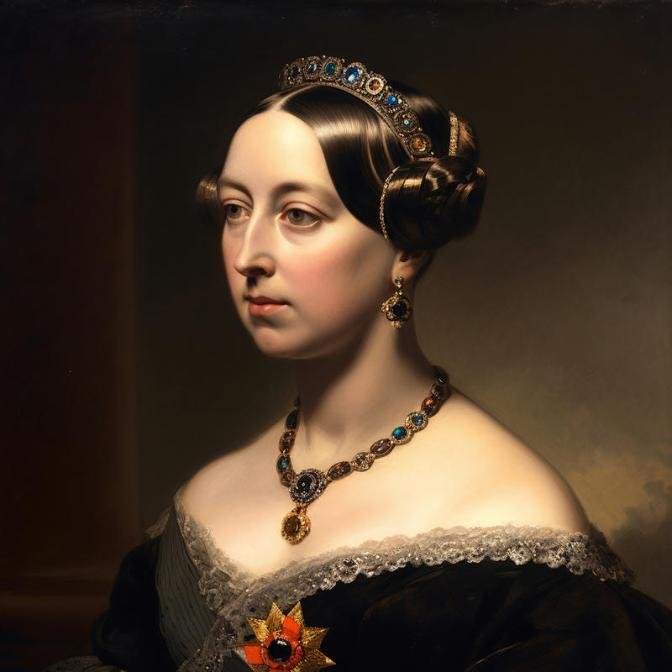
Queen Victoria's Grandchildren
Part 1. The Children of Victoria and Edward
Queen Victoria's nine children gave her 42 grandchildren. Among their ranks were a king,
an emperor, six queens, two married couples, an embarrassing number of Nazis,
and many captivating characters. They fought on both sides of world wars and spanned 122 years
of history, the first, Wilhelm, being born in 1859, and the last, Alice, dying in 1981.
Today, of the approximately 28 monarchies that still survive throughout the world,
five are occupied by descendants of Victoria. As briefly as possible, here are the stories
of Queen Victoria's 42 fascinating grandchildren. The Children of Victoria
Queen Victoria's eldest child and namesake, married Frederick, heir to the throne of Prussia.
They had eight children. As was royal custom, the elder children were raised by governesses
and tutors and were not close to their parents. But after a family tragedy, Victoria raised the
younger children herself. Following the unification of Germany, Frederick and Victoria became emperor
and empress. Wilhelm II was born during a difficult delivery which resulted in nerve
damage in his left arm. The limb was paralyzed and several inches shorter than the right.
His mother was ashamed of having a disabled child and showed him little affection. She pushed
doctors to cure him, resulting in years of torturous experimental treatments including
painful braces, electroconvulsive therapy, and even having dead animals strapped to his arm.
Rather than curing his affliction, the results were a deeply traumatized young man who learned
to hate his mother. His parents were outspoken liberals, so Wilhelm became deeply conservative
and anti-Semitic. Wilhelm married Princess Augusta Victoria of Schleswig-Holstein,
Sunderburg, and Ochstenburg, and they had seven children. He became emperor or kaiser of Germany
at the age of 29. He in turn was strongly disliked by many members of his family,
including kings of the United Kingdom Edward VII and George V. Wilhelm frequently made tactless
and alarming statements to the public. He was ruthless in his plans to build Germany up as a
dominant world power and alienated many other European nations, particularly France. Wilhelm
allied Germany with Austria-Hungary and offered military support during the crisis of July 1914,
which resulted in the outbreak of World War I. He built up the navy, putting the dreaded U-boat
into wide use. U-boat attacks on civilian ships, particularly the Lusitania on which 1,198 lives
were lost, as well as the interception of the Zimmermann Note offering Texas, New Mexico,
and Arizona to Mexico if they would attack the United States, outraged the American people and
got the U.S. to enter the war. Following the defeat of Germany in 1918, the monarchy was abolished
and Wilhelm fled to the Netherlands. In 1939, he wrote Hitler to congratulate him on the invasion
of Poland and to express his hopes that his monarchy would be restored. Wilhelm died in 1941.
Charlotte had a difficult relationship with her mother. She was a troublemaker and enjoyed
spreading gossip. At 17, she married Prince Bernhard of Saxe-Meinemann, who had a weak
personality and was easily bent to her will. They had one daughter, Theodora, who was often left in
the care of relatives while her mother enjoyed a dazzling social life. When her brother became
emperor, Charlotte was known for her mischief-making and frivolous lifestyle. Bernhard
and Charlotte lost their duchy at the end of World War I. Charlotte died a year later at 59.
It is possible that she suffered from porphyria, the genetic illness which may have caused the
madness of her great-great-grandfather, King George III. Henry married his first cousin,
Princess Irene of Hesse. The pair had three sons, two of whom suffered from hemophilia.
Henry was a lifelong naval officer and became Grand Admiral of the German Navy,
furthering his brother's ambitions for maritime dominance. Henry left the navy after the defeat
of Germany in World War I. He died at 66. Sigismund impressed his mother with his
intelligence from an early age and she had high hopes for him. When his father went to war with
Austria, every available doctor in Prussia went with him. While away, 21-month-old Ziggy
fell ill with meningitis and his mother was unable to find a doctor to save her child
or treat his suffering. Victoria was haunted by grief and regret for the rest of her life.
Following this tragedy, she played a much bigger part in the lives of her surviving children.
Victoria was devoted to her mother and embraced her Englishness.
She fell in love with Prince Alexander of Bulgaria, but her grandfather,
Emperor Wilhelm I, refused to let the couple marry for fear of offending Russia. She instead
married Prince Adolf of Schaumburg-Lippe, but the marriage was childless. He died during World War
I. In 1927, 61-year-old Victoria married Alexander Zobkov, a 26-year-old Russian dancer. He squandered
what little money Victoria had left and rarely spent time with her. She was forced to auction
off her palace and possessions and move into a one-room apartment. She intended to divorce
Alexander, who had been deported because of his scandalous behavior, when she died of pneumonia
at 63. Voldemort was a favorite of his parents. He was bright, lively, and loved animals.
Once while visiting his grandmother Queen Victoria, he let loose his pet crocodile in her
office, shocking the queen. Voldemort died at the age of 11 during the same diphtheria epidemic
that killed his aunt Alice and cousin Marie. Sophia married Prince Constantine, heir to the
throne of Greece. She had a difficult time adjusting but eventually learned to love her
new country. She was active in improving the medical care of soldiers during the wars Greece
fought at the turn of the century, founding hospitals and overseeing the training of nurses.
But her ties to Germany made Greeks suspicious of her during World War I. Now king, Constantine
was neutral in the war but was deposed by the French in favor of his son Alexander, who would
join Greece with France, the UK, and Russia against Germany. Sophia and her husband went
into exile in Switzerland. Alexander died in 1920 at the age of 27. His father was allowed back as
king only to lead Greece to defeat against Turkey and be forced to abdicate yet again in favor of
his son George. In 1924, Greece was declared a republic and the family was once again exiled.
Sophia died in 1932 aged 61. In 1935, George was reinstated as king of Greece. Upon his death,
his brother Paul seceded him. Paul's daughter Sophia married King Juan Carlos I and became
Queen of Spain. She is the mother of the current king Felipe VI. Margaret, the baby of the family,
was the most well-liked by her siblings and maintained relationships with many of her
cousins throughout Europe. She married Prince Frederick Charles of Hesse and they had a happy
marriage and six children, including two sets of twins. In 1917, Finland won its independence from
Russia and elected Frederick as their new king. He was forced to renounce the throne two months
later when Germany lost World War I. Two of Margaret's sons were killed in the war. During
World War II, she lived at her mother's castle, Friedrichshof, where she cared for many of her
grandchildren while their parents were involved in the war. Two of her sons joined the Nazi party,
hoping that Hitler would reinstate the German monarchy. One son, Philipp, was on Hitler's
personal staff but became disenchanted with the Fuhrer and used his position to provide passports
for Jews escaping Germany. When he was discovered, he was sent to a concentration camp. He survived,
but his wife perished. After the war, Margaret buried her family jewelry in the basement of
Friedrichshof before being forced to flee when the castle was occupied by the U.S. military.
American officers discovered the jewels and stole them. Margaret died in 1954 at the age of 81.
Victoria's heir married Alexandra of Denmark. Edward was a legendary playboy and had some 55
mistresses, so it is quite probable that he added some illegitimate children to his
prudish mother's family, though none were ever recognized. When Queen Victoria died in 1901,
he became Edward VII, King of the United Kingdom. His six legitimate children were…
Albert Victor, second in line to the throne, was 13 when he and his brother George were
packed up on board the HMS Britannia to be educated as naval cadets. They traveled the
world and Albert's charm made him popular overseas. As he grew, he became a playboy like his father.
He was twice embroiled in scandal, once when a homosexual brothel was discovered by police
and Albert's close friend was exposed as a client. Later it was speculated that Albert might have
been Jack the Ripper, the serial killer who mutilated five prostitutes in London and was
never identified. Albert was almost certainly not culpable in either case. He became engaged
to Mary of Teck but died of influenza shortly before the wedding. He was 28. For many years,
the popular line on Albert was that he was a wastrel who lacked intelligence and that the UK
dodged a bullet, never having him as king. But this story has recently been considered as
propaganda coming from his brother, George V. Albert certainly struggled under an abominable
tutor who tried to cover up his own shortcomings by claiming the prince was a dull student.
However, shortly before his death, the Prime Minister intended to appoint Albert as Viceroy
of Ireland, a position requiring tact and diplomacy. He was sympathetic to the Irish
Home Rule movement and he might have done a great deal for Ireland and all of the British Empire
had he lived to wear the crown. George may or may not have been more intelligent than his older
brother, but he was certainly more serious and boring. When Albert Victor died, George took his
place in the line of succession. He also took his place at the altar and married his brother's
fiancée, Mary of Teck, a notorious kleptomaniac. He became King George V of the United Kingdom in
1910 at the age of 44. In 1914, George's cousin, Kaiser Wilhelm, invaded France and Britain
declared war on Germany. George made the prudent decision to renounce all his hereditary German
titles and change the family name from Saxe-Coburg and Gotha to the more English-sounding Windsor.
With so few monarchies left after World War I, George decreed that his children need not
marry foreign royals. He signed the Home Rule Bill making Ireland its own nation and saw several
other parts of the British Empire, including Australia, Canada, and South Africa, become
legally independent. They are now the Commonwealth. They have their own governments, but the British
monarch is still nominally their head of state. George died at 70 after 26 years on the throne.
The crown went first to his son, Edward VIII, who abdicated in order to marry an American
divorcee, Wallis Simpson, and then to his second son, George VI, who was an admirable leader of his
people in World War II. His daughter is the current Queen, Elizabeth II. Louise married Scotsman
Alexander Duff, Earl of Fife, and her grandmother, Queen Victoria, promoted him to Duke of Fife.
The couple had three daughters, the first was stillborn. In 1911, Louise and her family were
sailing to Egypt when they were shipwrecked off the coast of Morocco. They survived the ordeal
and were rescued, but Alexander contracted a chest cold which killed him a few weeks later.
Louise died in 1931 at the age of 63. Victoria, known as Toria, was beautiful and had several
suitors, including King Carlos I of Portugal. However, her mother discouraged her from marrying
and she instead remained a companion of her parents. When her mother died in 1925, Victoria
moved to a country house in Buckinghamshire where she got involved with village life and was president
of the local horticultural society. Maud was a tomboy and was called Harry by her family.
She married her first cousin, Prince Karl, the second son of the King of Denmark. In 1905,
the Norwegian parliament dissolved their union with Denmark and offered the crown to Karl who
became King Håkom VII. Maud thrived in her role as Queen Consort of Norway. She was very involved
in charity work, especially benefiting children and animals, and became a fashion icon with a very
slim corseted waist. The family embraced the Norwegian lifestyle and learned to ski.
Maud died at 68 while visiting the UK. Through her only child, Olaf V, she is the grandmother
of the current King of Norway, Harald V. Alexander John was born prematurely and died 24 hours after
being born. Edward placed his infant son in his coffin personally, with tears rolling down his
cheeks. In the next episode, we'll meet the children of Alice and Alfred, among them a
Tsarina of Russia whose dependence on mystic Rasputin contributed to the fall of the Romanov
dynasty, and a Queen of Romania who helped to bring her country together.