
The Art of Brewing Chinese Tea: A Beginner's Guide
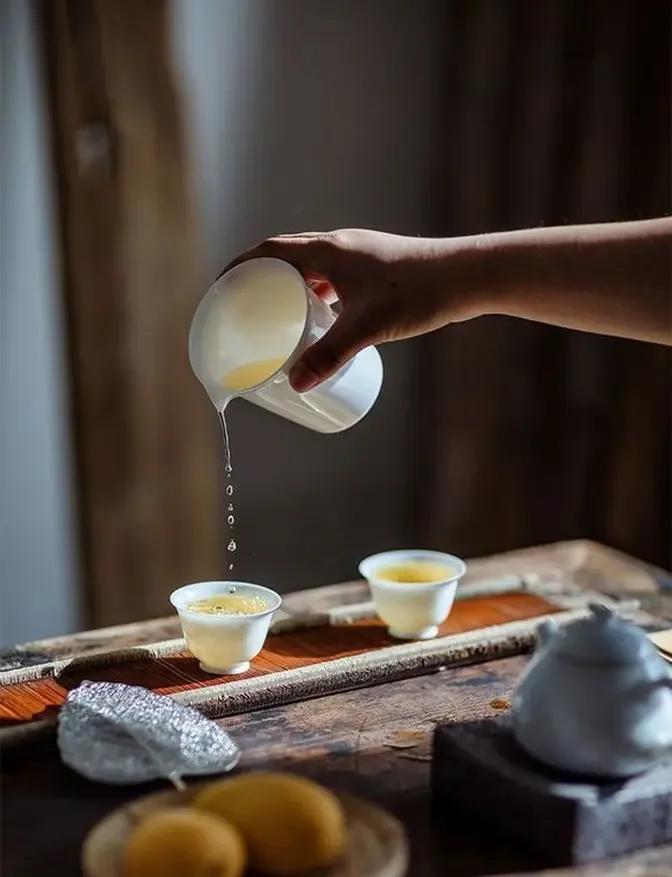
#tea #teaoftheday #thewayoftea #chinesetea #teaculture #tealover #gaiwan #lifeoftea #gongfu #gongfucha
Hey guys, did you know that Chinese tea drinking customs have had a huge impact on countries
all over the world?
In fact, the world's tea names and drinking methods all originated from China.
Chinese tea culture has spread all over the world and fused with local customs, forming
various kinds of tea drinking habits.
There are two main categories of tea drinking habits, pure tea drinking and flavored drinking.
Pure tea drinking is the traditional way of brewing tea that Han Chinese people have
been doing for thousands of years.
This method doesn't add any flavoring to the tea, so you can taste the original flavor
of the tea broth.
This method is also popular in other countries with a strong eastern cultural influence,
like Japan.
Japanese people love to drink green tea using this method.
On the other hand, flavored tea is when you add milk, sugar, liquor, spices, and other
ingredients, to the tea broth.
This is the most important feature of this way of drinking, and it's what makes teas
like flavored teas and Indian masala chai so popular.
In this video, we're going to focus on the traditional Chinese pure tea brewing method,
or you can call it Kung Fu tea brewing method.
If you're interested in learning about flavored teas, be sure to check out our subsequent
videos on how to make them at home.
Some of the famous Chinese green teas include Longjing, Biliuokun, Huangshan Maofeng, Luanguapian,
Xinyang Maojian, and more now let's start by discussing how to brew green tea.
First, we need to prepare a clean tea cup or bowl.
It's best to use a transparent glass cup, pot, or porcelain cup so that we can appreciate
the beautiful turquoise color of the tea broth and leaves.
Additionally, it's important to choose high-quality water.
We recommend using clean mineral water or purified tap water with a neutral or slightly
acidic pH.
Avoid using alkaline water, as it can affect the color and taste of the tea broth.
When boiling water for the first time, it's best to use fresh water to ensure the tea
is brewed with maximum freshness.
Now, let's talk about the water temperature for brewing green tea.
The ideal temperature is around 80 degrees Celsius, as higher temperatures can damage
the chlorophyll and tea polyphenol in the leaves, which affects the taste and aroma
of the tea.
After boiling the water, it's important to let it cool down to the right temperature.
Then, add the appropriate amount of tea leaves to a cup and brew with water at around 80
degrees Celsius.
The brewing time should be between 1 to 2 minutes.
If the time is too long, the tea broth will become bitter, while too short a time won't
release the full aroma and nutrients of the tea leaves.
There you have it, the classic Chinese green tea is ready.
If you like flavored green tea, you can add honey, lemon, or other condiments according
to your taste to enhance the flavor of the green tea.
Famous white teas include Baihao Silver Needle, White Peony Tea, Gong Mei, Shou Mei, and more
from Fujian, China.
To brew white tea, it's crucial to use high-quality water as the tea leaves are tender and thin.
The water temperature should not be too high, and we recommend keeping it between 85-90
degrees Celsius.
Using a transparent glass or bowl to brew white tea is ideal as it allows you to appreciate
its taste, aroma, and unique character of white veins and green leaves.
White Peony is a famous white tea with a delightful aroma that changes with each infusion,
from the fragrance of orchids and jade hairpin flowers to the scent of magnolia.
Drinking white peony tea is like watching a peony bloom in your cup, with each sip revealing
new layers of flavor and aroma.
By appreciating the tea in this way, you can fully experience the beauty of white tea.
Some of the well-known yellow teas include Hunan's Junshan Silver Needle, where each
leaf stands upright in the cup after steeping.
Other famous yellow teas include Mengding Yellow Bud, Huishan Yellow Bud, Guangdong
Big Leaf Green, and more.
Yellow tea is a lightly fermented tea with delicate quality.
It's important to avoid using water that's too hot, as it can scald the tea leaves.
We recommend keeping the brewing temperature between 85-90 degrees Celsius.
Depending on the size of your tea set, you can add a quarter of the yellow tea leaves
or adjust the amount according to your personal preference.
For the first infusion, we recommend brewing for 30 seconds, and then extending the brewing
time to 60 seconds for the second infusion.
The third infusion should be brewed for about 2 minutes to enhance the taste of the tea
broth.
When brewing Junshan Silver Needle Yellow Tea, we suggest using a glass or porcelain
cup so that you can appreciate the tea leaves as they unfurl and slowly rise and fall, creating
a beautiful spectacle.
Some of the main oolong teas include Wuyi Rock Tea, which is represented by Fujian Dehang
Pao, Fujian Tai Guan Yin, Taiwan Dongding Oolong, and more.
Oolong tea can be brewed using small teapots or gaiwans with a capacity of 110-150ml,
and tea accessories should be prepared.
To brew oolong tea, it's important to consider the degree of fermentation.
Lightly fermented oolong tea can be brewed using a porcelain tea set, while oolong tea
with heavier fermentation is better suited for a purple clay teapot.
The amount of tea used should also be adjusted based on the tightness and fermentation of
the tea and the number of people drinking it.
Oolong tea can be brewed multiple times, up to 8 or 9 infusions, with each infusion requiring
a controlled brewing time.
When tasting tea, you can hold the cup with your thumb and index finger, while using your
middle finger to support the bottom of the cup and letting your ring finger and little
finger bend naturally.
The lidded gaiwan brewing method is similar to the teapot brewing method, but without
the drenching the pot step and with a different gesture for holding the lidded bowl.
To brew a delicious and fragrant kung fu black tea, it's crucial to control the water temperature.
Boiling water is recommended, but it's important to let it cool for a few moments to reach
around 85 degrees Celsius.
Using boiling water can damage the vitamin C and other beneficial ingredients in the
tea and cause caffeine, tea polyphenol, and other phenolic substances to precipitate,
resulting in a sour and bitter taste.
Water temperatures below 85 degrees Celsius can cause the black tea to float on the surface,
preventing the inner substances and active ingredients from being fully infused and resulting
in a light and tasteless tea soup.
Additionally, the aroma and taste of the black tea will be negatively impacted.
For blended tea, a coffee tea set is a more appropriate choice.
The preparation method involves pouring the brewed black tea into a mixer, adding honey
and other ingredients, and shaking it several times.
The mixture is then poured into a clear glass for sipping.
Due to the tea saponin content in black tea, a beautiful layered foam is formed in the
transparent glass, which is particularly popular among young people.
Black tea is a type of naturally aged post-fermented tea that becomes more fragrant as it ages.
Not only does black tea offer remarkable benefits, but it also doesn't interfere with sleep,
making it an ideal choice for nighttime consumption.
Dark tea is a unique type of tea that combines collection, culture, and health benefits.
Anhua dark tea is a representative type of dark tea that should be brewed using boiling
water at 100 degrees Celsius.
When brewing dark tea for the first time, it's recommended to quickly wash the tea
for 10-20 seconds to remove impurities and enhance the aroma of the brewed tea broth.
Subsequent brewing times are usually 2-3 minutes.
Dark tea is typically brewed using professional tea utensils, including purple clay teapots
and gaiwans, and the amount used is generally twice that of green tea.
Pu'er tea is a type of dark tea that comes from China's Yunnan region.
It's made from fresh leaves of the Yunnan large-leaf tea tree and is known for its unique
flavor and health benefits.
Pu'er tea has been enjoyed in China for centuries and is now gaining popularity around the world.
Pu'er tea comes in different shapes, including loose tea, tu'er tea, square tea, and seven
cakes tea.
Loose pu'er tea is fat and brownish-red in color, while tu'er tea has a bowl shape, square
tea is rectangular, and seven cakes tea is round like a moon.
To make pu'er tea, you'll need to add 10 grams of tea to a teapot or covered bowl with 500
milliliters of boiling water.
It's important to wash the tea first to remove any surface impurities and foreign substances,
allowing the true flavor to fully release.
After washing the tea, steep it in boiling water for five minutes.
Then, pour the tea broth into a fair cup to smell and observe the color before drinking.
Pu'er tea has a unique aroma of aged fragrance, a bright red soup color, and a mellow and
sweet taste.
It's refreshing to drink and leaves a pleasant aftertaste.
In addition to its great taste, pu'er tea also offers many health benefits, including
aiding digestion, reducing cholesterol levels, and promoting weight loss.
Floral tea is a type of tea that combines the fragrance of flowers with the taste of
tea.
Jasmine tea from Fuzhou, Fujian, represents Chinese floral tea.
High-grade Mao Feng flower tea also has a high appreciation value due to its unique
When brewing high-grade famous flower tea, it's recommended to use a transparent glass,
with a tea dosage and water ratio of 1 to 50.
It's appropriate to use about 85 degrees Celsius boiling water for brewing and steeping
for 3 to 5 minutes.
Brewing the tea 2 to 3 times is ideal.
After brewing, you can appreciate the exquisite and chic shape of the tea embryo, through
the glass.
For example, when brewing special jasmine Mao Feng flower tea, you can enjoy the Mao
Feng buds and leaves slowly unfolding in the cup, which is unique and interesting.
For medium and low-grade tea, it's mainly about the aroma and taste.
It's generally recommended to use a clean white porcelain cup or white porcelain teapot
for brewing, with a water temperature requirement of 100 degrees Celsius and a steeping time
of 5 minutes, before drinking.
The brewing water temperature of tea leaves affects the content of various substances
in the tea broth.
Research shows that when the amount of tea invested is the same and the brewing time
is 5 minutes, the content of leached substances in the boiling water at 100 degrees is set
at 100% on the premise that the content of leached substances in the tea broth is about
80% under the condition of 80 degrees water temperature.
When there is about 45% of leached substances at 60 degrees water temperature, when brewing
famous green tea, it's important to use a lower water temperature to maintain the green
and bright color of the tea broth.
This is due to the high requirements of picking tenderness and the high content of tea polyphenol
in the tea leaves.
A water temperature of 80-85 degrees is commonly used for brewing green tea.
Oolong tea, on the other hand, can be brewed at a slightly higher temperature of 85-90
degrees depending on the raw materials used.
Oolong tea is usually brewed with boiling water, but for delicate varieties like Wenshan
Paochong or Dongding Oolong tea, a slightly lower temperature of around 90 degrees is
recommended.
Different types of tea can generally be brewed 6-7 times when the tea and water are separated.
For better and more expensive teas, brewing up to 10 infusions is possible.
The famous Fujian black tea Jin Jun Mei can even reach 13 infusions while retaining its
fragrance.
If the tea leaves have lost much of their flavor but you don't want to throw them away,
you can renew the tea.
The sweetness of the tea from the refill is often better.
Oolong tea can be brewed several times when the amount of leaves is large and the tea
leaves are coarse and old.
Black tea processed into a bag of tea is usually suitable for one-time brewing.
No matter what type of tea, the first brewing accounts for 50-55% of the total soluble matter.
The second brewing accounts for about 30%, the third for about 10%, and the fourth only
1-3%.
From a nutrient content perspective, vitamins and amino acids in tea, the first brewed 80%
of the amount is leached out, the second brewed about 15%, and after the third brewed,
almost all of it is leached out.
For tea aroma and taste, the first infusion has a fresh and cool taste.
The second infusion is rich but still fresh and cool.
By the third infusion, the aroma and taste have become lighter, and there will be no
taste if you brew it again.
The health benefits of tea come from the presence of T-polyphenol, T-pigments, T-polysaccharides,
and other beneficial components in tea.
Cardiovascular disease, aging, tumors, and other diseases are related to the body having
an excess of free radicals.
T-polyphenol have powerful antioxidant and free radical scavenging effects.
In addition, T-polyphenol have a certain repair effect on cellular DNA damage.
To drink tea in a healthy way, it's important to keep the following points in mind, 1.
Steep tea for 4-6 minutes to ensure that the active ingredients in the tea are fully extracted.
2.
Don't drink tea on an empty stomach to avoid absorbing too much caffeine, which can cause
discomfort such as panic and frequent urination.
3.
Don't drink tea within half an hour after meals to avoid affecting digestion and absorption
of food.
4.
Don't drink tea 1 hour before bedtime as there should be a 1-hour interval between
drinking medicine and tea.
5.
Black tea and green tea should be brewed 3-5 times, as over-brewing is not beneficial to
health.
Tea is a natural leaf that brings sweetness to life.
A sip of live tea can touch the soul through its taste, without being pompous or superficial.
Brewing and appreciating tea can be a wonderful experience that doesn't require any axioms,
just an open heart to experience it.
Thanks for watching this Beginner's Guide to Brewing Chinese Tea.
If you enjoyed this video and want to learn more about tea.
please consider subscribing to my YouTube channel.
Also, feel free to visit my website at www.admiringazeeland.com for a wide selection of premium tea leaves,
teaware and other related products.
I appreciate your support and hope you have a wonderful day!