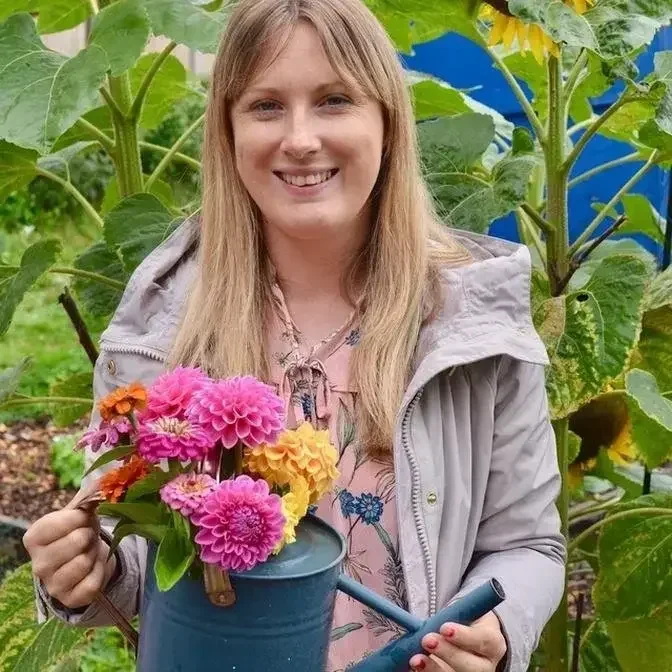
Welcome to my allotment gardening channel. My name is Emma and these vlogs are my allotment diaries. 2023 is is my forth year on my plot. I'm learning as I go and would love for you to follow my allotment gardening journey by SUBSCRIBING to my channel!
Hi guys, welcome to my channel. My name is Emma and in this video I'm going to be sharing with you all the seeds that you can sow for your allotment garden in the month of August.
Hi, my name's Emma and a few years ago I got my first allotment plot. These videos are my allotment diaries and I would love for you to subscribe to my channel.
So, at my allotment plot, which is in South London, I like to grow a mixture of things that I know how to grow and that I really like and that I know I like to eat.
But also, I like to try my hand at a few things that I've never tried before or maybe I've never even heard of before.
So I hope that this video gives you a little bit of inspiration to try something new, try whacking something in that maybe you've never even thought of growing before.
Maybe you've never even tasted it before. It is so much fun. It definitely keeps things interesting and keeps me motivated to keep sowing and keep whacking stuff in, even in these kind of later summer months.
So I hope that you find some inspiration and let's get stuck in. I'm going to start with some of the things that I do grow, almost religiously, every single August.
So these are things that I have either sown before or I know that they work really well in the month of August.
And I'm going to start with wild rocket. So wild rocket is absolutely delicious. It's great to have in salads. It's got that lovely peppery taste.
It is slower growing than cultivated rocket. So this is wild rocket. It takes a little bit longer to get going.
It also prefers cooler conditions. So either sowing it earlier in the spring, so March, April time, or later in the summer, so August, September time, is much better for it.
It has a tendency to bolt quite quickly, which means it sends flowers up and starts trying to reproduce itself, basically, when it gets under stress.
And a lot of heat, lots of heat and not enough water, puts it under stress and basically makes it bolt.
So later in the summer time, so the month of August, is a really great time to sow this directly into the ground.
You're going to get a much better crop and hopefully you're still going to get enough time for it to grow and actually get harvest out of it because, like I said, it's slower growing.
So wild rocket is a fantastic choice for this time of year. Any little gaps in your allotment plot that you've got, just whack this in.
It's going to do so good and you won't regret it. That is a firm favourite of mine.
Another firm favourite at this time of year is Pak Choi. So this is the Red Choi F1 variety.
I got it with my little Seedcraft subscription box. So if you subscribe to Seedcraft, it's a subscription box for seeds.
Just a little disclaimer here, I am sponsored by them every month, but they are great and what they send you every month can be sown that month directly into the ground.
I wasn't sure about this. I started growing this last year for the first time.
It is absolutely delicious and it's such a beautiful vegetable. It's very ornamental. It has such a lovely shape to it.
I'd actually grow it just to look at it. Basically, it is gorgeous, but it also tastes great.
It's great in a stir-fry. You just chop it up, chop it into quarters, throw it straight into a stir-fry pan.
Cooked really well, tastes absolutely delicious and it's a great time of year to whack these in.
Like I said, you can whack them in directly, but if you are worried about slugs and snails, do grow them into a module and then pot them on and plant them out when they're a little bit bigger.
Another lovely salad crop to sow at this time of year is mizuna.
It's quite a peppery taste, so it's a mustard, a mustard leaf.
I grew this last year in a pot. I think I'm going to stick it in a pot again because it just did really, really well.
Mizuna is something you can sow all throughout the winter months. It will do really well in cooler conditions.
So early autumn is a fantastic time to start some mizuna.
You can also grow mibuna as well, which I've already sown out of my allotment plot in a couple of rows.
Again, it's a really nice sort of green salad-y leaf to have and just mix it into your normal salads.
It's a little bit spicy, a little bit like peppery, but it's really delicious and it's definitely going to grow at this time of year.
So if you've got any gaps, like I said, in your allotment plot, maybe whack in some mizuna or some mibuna.
It will do really well and it will just add lots of green growth to your plots and make it look beautiful as well.
So two in one basically.
Okay, I'm going to talk about cabbages.
So when you're growing cabbages at this time of year, cabbage is quite a long-growing crop.
So you're really thinking about cabbages that can survive over the winter months and you can harvest them in the springtime.
So there's a couple of varieties that I've gone for which I think will do really well overwintering.
Overwintering sounds complicated. It's not.
It basically means you whack it in the ground in the autumn time and it will be able to survive throughout the winter months
and then you can harvest it in the spring.
So you need something that can survive the colder weather.
I have gone for the cabbage Durham Early, which I've heard is a great variety for overwintering
and this will give me a really early spring harvest as well, which is exactly what I'm looking for.
I want to get down to my allotment plot in March time, March-April and have something to pick straight away.
So Durham Early is one of the cabbages that I'm going to be sowing.
I'm also going to give this one a go, which again came with my seed craft pack
and it's called Chinese Cabbage Cuesta, I want to say.
Chinese Cabbage Cuesta. I've never heard of this one before ever.
Luckily it comes with a little bit of information all about it.
Okay, the Chinese cabbage is an excellent variety of Chinese cabbage with a medium-large frame of dark green outer leaves.
These firm heads are wrapped up and can weigh up to 1.5 kilograms.
I don't think mine will get that big, but it kind of looks a bit like that.
They kind of remind me of those lettuces, you know those sort of long, tall lettuces that you can grow.
So I'm definitely interested in trying some of these.
They're also very hardy.
So here it says, slow growth can result in the plants bolting.
Try to keep them cool when the weather warms and shady if necessary.
So again, this is something that is really great to grow in August because they're slow growing
and they don't like a lot of heat or they're going to bolt, they're going to not like it basically.
So August is a great month to try these.
And I'm going to whack them straight into the ground where they're going to grow I think.
I'm just going to go for it. I'm going to dive in.
Another brassica that I'm going to be starting in the month of August.
And this is something that I'm definitely going to start in modules
because the slugs and snails at my allotment plot absolutely love this stuff.
And it is a broccoli.
So this broccoli that I'm growing is called Raab.
R-A-A-B.
It's perfect for sowing either in the early spring or the late summer.
And I think you'll find that a lot of the crops you can sow in early spring, you can also sow in late summer.
But do double check with that because not everything will grow.
So a lot of things that just like that kind of cooler weather to get going will do really well in the late summer.
And this broccoli is one of them apparently.
So it's the perfect one to sow where it needs to grow.
So directly into the ground in early spring or late summer.
You can sow them under cloches if you're going to sow them in late winter as well.
So they will germinate well in the colder weather it does say.
It likes well-drained fertile soil, high in organic matter.
And it can tolerate slightly alkaline soil.
It needs plentiful consistent moisture.
And it can tolerate some shade as well.
So this is a great thing to whack in your plot in the month of August.
And then hopefully it will do really well in the autumn time when we're not getting as much sun.
And maybe we've got a lot more rain.
Even though we have had a lot of rain at this time of year already.
But yeah, this should do really well.
So I'm really excited to try this.
So that's kind of a mix of salad stuff and some brassicas as well.
A couple of things that I don't have that you can sow at this time of year are spring onions.
They do fantastic at this time of year.
Again it's because of the cooler kind of conditions that we should be getting going into the autumn time.
Also radishes.
Radishes will do amazing at this time of year.
There's so many different varieties to choose from.
I'm doing those little round ones.
I can't remember what they're called.
Cherry red or something like that.
But they're little round red ones.
And they are absolutely delicious.
They love this weather because it's slightly cooler.
They also like lots of moisture.
So lots of rain.
So they're going to do amazing at this time of year.
Fennel is another crop that does quite well at this time of year.
So I'm sowing this one which is Fennel Romanesco.
I'm a big fan of anything that says Romanesco.
Because they are such beautiful looking crops.
And I've never tried this variety before.
But I am excited to do it.
I have grown fennel before.
And again, fennel is a crop that really likes those slightly cooler conditions.
So not the blazing heat of summer.
August is a great time to sow fennel.
Or even in early spring as well.
So I'm definitely going to be putting some fennel in.
Here's something that I haven't ever tried sowing from seed before.
But I've had all over my garden throughout the whole of the summer.
And it's Viola.
Viola Tricolor.
Now this is one of my absolute favourite flowers of all time.
Not just because it's absolutely stunning and beautiful.
It works well in pots, window boxes.
Even just in your borders.
But also you can actually eat them.
And I love picking the little flower heads and putting them over a salad.
Or even over some avocado and toast.
They're absolutely delicious.
And they look so pretty.
So I'm going to sow these in a module.
And then I'm going to take them out when they're about 2.5cm tall.
And plant them into my allotment plot.
Or possibly into a few pots actually.
Because I think they'll do quite well.
So if you sow it in late August to October.
You will get a winter to early spring flowering.
And they flower for about 4 months before they die.
If you keep consistently picking the flowers.
If you want to sow them in the spring time.
Then you will get a late summer to early autumn flowering.
And again they'll last for 4 months if you keep picking the flowers.
So depending on what time of year you sow them.
Is when they kind of flower.
They're not like fussed really.
They just tend to flower after you've planted them really.
So you could succession sow these throughout the year.
And here's a couple more things that I have never tried sowing before.
That I'm going to try sowing this August.
This is something called shiso.
Shiso. I've never heard of this before.
So I had to use the card to figure out what on earth it is.
It has a complex flavour profile.
With hints of mint, clove, cumin and citrus.
Sounds crazy doesn't it.
Both the leaves and flower of this popular Asian vegetable.
Can be used in salads, fish dishes, tempura.
And even cocktails and fruity desserts.
So it's very very versatile.
It says that it's best sown into a tray.
And then pricked out later on.
And sown out into the garden.
So that's exactly what I'm going to do.
But this stuff looks insane.
It's sort of like.
It sounds like it just tastes of everything doesn't it.
I've never tried it before.
I love that it flowers as well and you can eat the flowers.
And the name is shiso.
S-H-I-S-O.
Shiso mixed.
So I'm going to try this.
This sounds absolutely crazy.
I think what I might do is put it in a pot.
So anything that I've never sown before.
And I'm a little bit worried about.
I tend to put in a pot.
Because I feel like I can protect it better.
And I can cater to it better.
It's like putting it in a little protective bed.
Or something you know.
So I'm really excited to try these this year.
Also something I have never ever done before.
In my life.
Is grow onions from seed.
I don't know why I've never done this.
I think it's just so easy to go out.
And just buy the onion sets isn't it.
And just whack them in.
But onions have never really done very well for me.
So I was looking at my allotment plot.
And I thought I wonder how they would do.
If I grew them from a seed.
So these are some Japanese onions.
They're called Senshu.
I cannot pronounce that.
I don't know if I'm pronouncing that right.
Definitely not to be honest.
They are a Japanese onion.
They sound absolutely amazing.
And I'm going to try sowing these from seed this year.
Like I said never grown an onion from a seed.
But August is a great month for sowing onions from seed.
So I'm going to try that.
I'm going to put it into a seed tray.
Not directly into the ground.
And if you want to sow sets of onions.
Or sets of garlic.
That's probably better to do around October time.
And then over winter them.
But it does depend on how your soil does.
So my soil at my plot.
It gets quite wet and boggy and damp.
And I don't think they like those conditions at all.
So if you've got soil like that.
It might be best to start your sets.
In modules.
And then plant them out in the spring time.
When the soil has dried out a little bit.
But if you've got quite good well draining soil.
You can definitely over winter your onions and garlic.
It's just that it's never worked for me.
But that doesn't mean it's not going to work for you.
So if in doubt whack them in.
See how they do.
Start some in sets as well.
Do both if you can.
And then just figure it out from there.
Because gardening is always just a bit of an experiment isn't it.
Absolutely beautiful day today.
So we've had a few rubbish days in the UK.
But today I've woken up.
It's beautiful sunshine. Blue skies outside.
I'm going to sow some of these seeds.
Now I get a lot of questions in these videos.
Of how to sow seeds.
You know the truth is.
You can make it as hard or as easy as you want really.
Because it is just about getting a little bit of multipurpose compost.
And whacking the seeds on.
So I've got three different containers here.
This is a seed tray.
And this is usually best for scattering smaller seeds.
And then pricking them out later on when they get bigger.
So obviously the thinner you can scatter them the better.
This is a little module.
Where you've got individual little pots here.
So you can put one or two bigger seeds.
Into each module.
And then this is an even bigger module.
For bigger plants.
So in this one here.
We're going to put in our Romanesco fennel.
Because I think it's going to be quite small and fiddly.
And I want to grow them.
Nice and big.
And then plant them out later on.
So the seeds are very very small.
Here are our seeds.
Teeny teeny tiny.
So the best thing to do basically.
Is just going to be to scatter them.
Very very thinly across the top of the tray.
Oh my god that was not thinly at all.
Look at that.
Right forget it just whack them all on now.
Because you've already done that.
So you might as well keep going.
Right and now I can't get them back in the thing.
So we've lost most of them.
So you better grow guys.
Just because you're all I've got now.
It often goes wrong like this.
I hope it sort of shows you.
That seeds don't have to be scary.
Look at the way I'm sowing them you know.
Dropping them everywhere.
What's that?
Nine times out of ten they still grow for me.
So now what I'm doing is.
I'm just putting a little bit of compost on the top.
I think this is coir actually.
This is coir product.
Which is nice and thin.
And also retains a lot of moisture.
So I'm going to give that a pat.
I don't know what all that stuff is in it.
I think it's a little bit of plant food or something.
So I'll put that in like that.
And then you can just give it a little bit of a.
A little bit of a water.
The most important thing with sowing seeds.
Particularly in like containers.
And pots and things like this.
Is to make sure it's got good contact with the soil.
Because the seed needs to touch the compost.
In order to germinate.
It can't just be floating in between.
A couple of rocks or something.
It's not going to grow.
I mean it probably would still grow to be honest.
Seeds are just so easy.
Right ok that's fennel done.
In this bigger one.
We're going to pop in our pak choy.
This is red choy.
So it's going to be a red pak choy.
Now this is very small seeds.
But I think they're going to germinate quite well.
There's a caterpillar in there.
Right remove the caterpillars.
We don't really want any caterpillars.
I just think it's going to save me hassle.
If I sow these into little modules.
Because then I can prick them out.
But then I can leave.
The one that I want to carry on growing in there.
So I'm just going to put a little pinch.
Into each one.
I've done all my brassicas this way.
Honestly I promise you.
It's so much easier.
Than trying to prick them out and then pop them on.
Because all you have to do is prick them out.
You don't have to pop them on.
It's like you're skipping a step.
Right the same concept of just covering them over.
Just want to make sure they're covered.
And then give them a little bit of a pat.
To make sure they've got good contact with the soil.
That's all you've got to do.
And then in this bigger one.
I'm going to put in our.
Durham Early cabbage.
Now I don't want many of these.
So I'm choosing.
Oh my god did they just go everywhere.
I've just lost a million seeds.
God you get loads in here.
What company is this?
Premier Seeds.
I've just got a shout out to Premier Seeds.
You get absolutely hundreds in here.
It's amazing.
Now I don't want many cabbages.
Because no one needs that many cabbages in their life.
There's a cabbage limit that everyone can tolerate.
And mine is about six.
So same process.
I'm scattering a few in each one.
With the idea being.
I'm going to prick out.
A few of them.
And let the strongest one grow on.
And I don't have to pot him on.
That's my cabbages sown.
This here is my lovely veg bed.
It was very kindly gifted to me by.
Zest Outdoor Living.
And it's been absolutely fantastic.
I've got so many crops growing in here.
But this little row here was supposed to be lettuce.
And it hasn't really come up.
So I think what I'm going to do.
Is put my wild rocket.
Along here as well.
And I think they could probably live in harmony to be honest.
So we're going to whack that in here.
So sowing directly.
Either into the ground or a planter.
Is very simple.
All you have to do is make a little drill.
I'm just going to make my drills around.
The current plants that I've got in.
Like that.
Now rocket seeds are the smallest seeds.
I've ever seen in my life.
Literally in my life.
I don't think.
You're even going to be able to see these going in.
Because they are so small.
So we'll try. Here we go.
Can you see those?
Literally the smallest seeds.
I've ever sown in my life.
We just cover it over like that.
And give it a little pat.
The pat down is to make sure there's good contact.
Between the seed and the soil.
That's all I'm doing.
I'm just making sure they're touching.
Because they're friends.
And we want them to be friends.
That's all I'm doing when I do that.
And I'll have to keep these really well watered.
Because the smaller the seeds.
The quicker they'll dry out in the sun.
So it's important to keep these really well watered.
Because rocket doesn't really like hot sun.
So I hope you enjoyed my video today.
If you did do subscribe to my YouTube channel.
For lots more allotment gardening videos.
Lots of allotment fun.
Lots of tips.
Lots of more seed sowing videos as well.
If you've been watching this wondering where my fabulous jumper is from.
You probably haven't.
Because I think you haven't probably seen it.
It's from my allotment store.
Which you can now find just below my YouTube video.
And I've got lots of jumpers.
And hoodies and t-shirts.
And bags and things that you can purchase from there.
If you like them.
And very soon I will be having.
Some mugs as well come out.
So stand by for those.
I'll let you know the second that these drop.
And you'll be able to get your hands on some of them as well.
I hope you've enjoyed the video today.
And it's inspired you to get out in the month of August.
And sow some seeds.
You can keep sowing.
You don't have to stop at this time of year.
I'll see you again in my next video.
Thank you so much for watching guys.
See you next time. Bye.