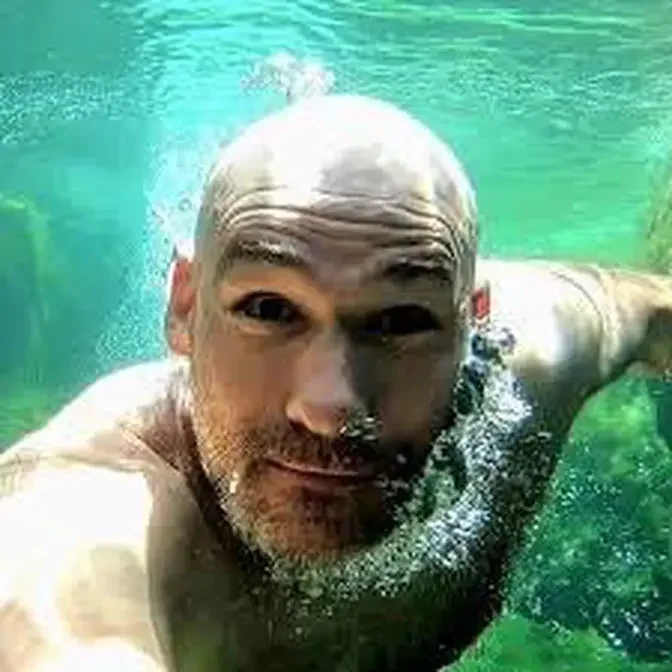
So, snorkeling on Kokud.
There's several beaches that offer pretty decent snorkeling.
They can just walk out on the rocky shoreline, like Bangbao we were at.
This one is Neverland Beach Resort, south of this white sand beach here.
Plenty of options to just do onshore snorkeling.
If you want to take a snorkel boat trip, there's two main options.
One, for a thousand baht, they will take you around the island of Kokud to several local
spots, most of which you can get to on your own by just driving to the beach and swimming
out.
Here's what the snorkeling looks like right offshore here.
Either bring your own gear or you rent some snorkel gear for 150 to 200 baht for the full
day.
The other option you have is to take a boat trip to Koh Rang, which is part of the National
Marine Park, the preservation area there.
So, is it worth 1,400 baht?
That's how much that trip costs.
1,200 plus 200 to enter the National Park.
1,400 baht, close to $50 a person.
Is it worth paying that and go here?
Now, in my opinion, if you're going to pay for a snorkel trip, better to pay for the
more expensive trip that takes you to that preservation area.
You're going to see a lot more sea life.
The reef is in much better shape.
You're going to see a lot more coral and varieties of different organisms.
The water on the Koh Rang reef is much clearer.
There's more live coral in Koh Rang, so if the goal is to see more sea life, definitely
it's worth the cost.
So with the Koh Rang trip for 1,400 baht, that includes your equipment, that includes
the additional 200 to enter the National Park, and it also includes lunch.
Also includes transportation to and from the boat.
They'll pick you up at wherever you're staying and drop you back off.
So nearly 50 bucks to enjoy some epic snorkeling in a national park here off the coast of Thailand.
But the budget backpacker may want to either bring their own goggles, borrow some gear,
or rent some gear for 150 just to snorkel in the mask, 200 including fins.
One final thing, if you want to preserve the coral and the reefs here, and anywhere for
that matter, number one thing is do not step on or touch the coral.
It damages the coral, kills it, and then most likely will not grow back.
So do not step on it, do not touch it, do not grab it, do not break it off.
Number two is this island is mainly a fishing community.
Unfortunately, some of the practices of the fishermen are not really sustainable to preserving
the coral and the reefs.
They've been known to drop their anchors directly onto a reef and damage the coral.
So long term, by not eating seafood here, you're discouraging that practice, I would
hope, because then it's less fishermen out in the water catching fish for you.
The third thing would be don't wear sunblock or bug spray.
It's hard, I know, when you're outside swimming all day long, you don't want to get burned
on your back.
The best thing you can do is wear like a rash guard or something that gives you some protection
on your back.
That way, you're not introducing these man-made chemicals like bug spray and sunblock into
the area around the reef.
Another way you can help to preserve the coral is by not feeding the fish.
If you feed the fish, that prevents the fish from feeding on the algae, which in turn allows
the algae to overgrow and smother the coral.
The fish also normally will eat the eggs of coral predators, and by feeding the fish from
humans, this prevents that and allows the overgrowth of coral predators.
One of the biggest predators on coral reefs is crown-of-thorns sea stars.
Normally fish will eat the eggs of these predators, however, if they're fed by humans, the fish
are less likely to consume the eggs of those predators, thus allowing the growth of coral
predators and ultimately leading to the destruction of the coral reefs.
Infamous.