
Giovanni Battista Grazioli (1746-1820) - Sonata in F, No.12
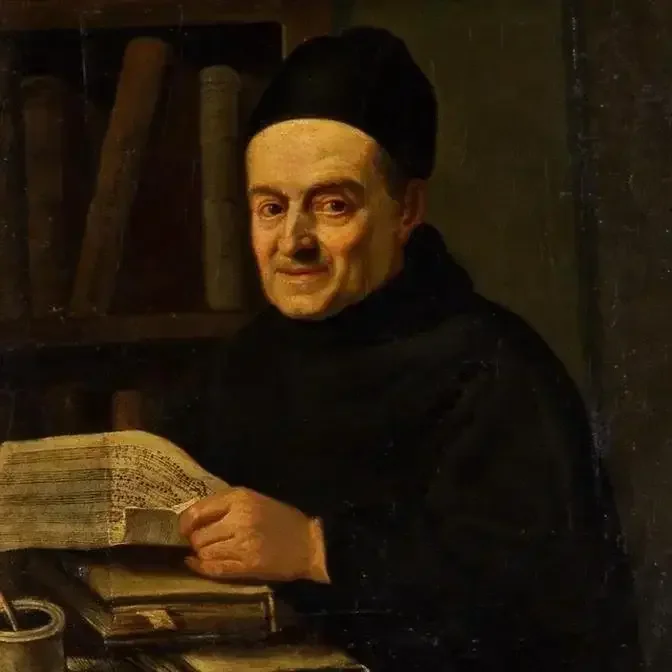
★ Follow music ► https://www.instagram.com/reciclassicat/
Composer: Giovanni Battista Ignazio Grazioli (1746-1820)
Work: Sonata in F, No.12
Performers: Edwаrd Smіth (cembalo)
Drawing: Giovanni Antonio Canal (1697-1768) - Capriccio with a Roman Triumphal Arch
Further info: https://www.amazon.es/Sonata-clavecimbalo-Edward-Smith/dp/B000025CIR
Listen free: https://open.spotify.com/album/7LvJ9GfPXsMKytsEejpfcC
---
Giovanni Battista Ignazio Grazioli
(Bogliaco, 6 July 1746 - Venezia, 6 February 1820)
Italian composer and organist, father of the composer Alessandro Grazioli. He moved at an early age to Venice, where he studied with Bertoni. In 1778 he temporarily replaced Bertoni as organist at S Marco when the latter was granted a leave of absence to go to Paris and London. On 28 May 1782 he became second organist and on 21 January 1785, first organist, when Bertoni was made maestro di cappella; he remained in this post until 1789. Grazioli composed a large number of sacred vocal works, most of which survive only in manuscript. It is his three sets of six keyboard sonatas opp.1–3, however, that have attracted the greatest interest among musicologists, even though they clearly display the limitations of a school of composers in decline. While there are some more modern features in his music (the sonatas op.3, for example, have violin accompaniment), Grazioli’s works displays conservative influences. These include monothematicism and the expressive use of a recitative style still closely based on opera, as in the introduction to sonata op.3 no.1, which still clearly preserves the use of a basso continuo. The sonatas are all in major keys and are in three movements, usually in the sequence fast-slow-fast. The middle movement is always in a contrasting key, in eight cases the subdominant, in three the relative minor, and in one the tonic minor. All movements are in binary form, usually rounded by a more or less exact return of the opening material. The first movement generally presents a strong thematic profile, while the second contains the most expressive writing. In the first two movements frequent melodic decorations recall the galant style. The third movement is usually more straightforward, with regular phrasing and melody clearly derived from passage-work. The texture of the sonatas is predominantly homophonic with a persistent use of the Alberti bass. Frequent echo repetitions of short phrases contribute to the clarity of structure. Contrary to Caffi’s assertion, it is clear from Blondeau’s writing that Grazioli also composed for the theatre. Fétis credited G.B. Grazioli with the composition of 20 organ sonatinas, but these are actually the work of his son Alessandro. #ClassicalMusic