

Jakub Jan Ryba (1765-1815) - Chvalozpěv k sv. Janu Nepomuckému (1803)
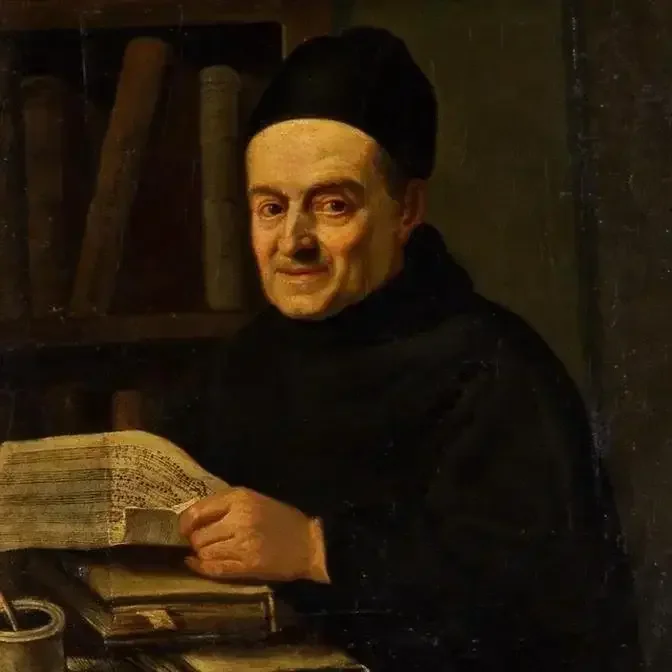
★ Follow music ► https://www.instagram.com/reciclassicat/
Composer: Jakub Jan Ryba (1765-1815)
Work: Chvalozpěv k sv. Janu Nepomuckému (1803)
Performers: LudmiIa Vernerová (soprán); PavIa Kšicová (kontraalt); Richard Sporka (tenor); Jiří KaIendovský (bas); Czech Chamber Chorus; Virtuosi di Praga
Painting: Francisco Bayeu (1734-1795) - El Olimpo batalla con los gigantes (1764)
Image in high resolution: https://flic.kr/p/2iMFBtj
Further info: https://imslp.org/wiki/Category:Ryba,_Jakub_Jan
Listen free: https://open.spotify.com/album/77xKv76itjtCjwma6vhVDb
---
Jakub (Šimon) Jan Ryba [Poisson, Peace, Ryballandini, Rybaville]
(Přeštice, 26 October 1765 - Rožmitál pod Třemšinem, 8 April 1815)
Czech teacher, composer, choirmaster and writer on music. He was the son of Jakub Ryba (1732-1792), a cantor (schoolmaster) and organist who worked at Rožmitál, Přeštice and Nepomuk, and probably also a composer. After studying singing, thoroughbass, the piano, organ and violin with his father at Nepomuk, he attended the Piarist Gymnasium in Prague (1781-84), where he continued to teach himself (the cello, organ and theory) and began to compose. He returned to Nepomuk to assist his ailing father, and from 1786 worked as an assistant teacher at Mníšek. On 11 February 1788 he was appointed assistant teacher and on 23 May 1788 cantor and church choirmaster at Rožmitál. He was a dedicated promoter of Enlightened education policies promulgated by Imperial legates such as Ferdinand Kindermann, but the struggle may have proved too much for he committed suicide in 1815. Artistically, Ryba was one of the most prominent 18th-century Czech cantors; though he devoted himself assiduously to his teaching duties (see his school diaries), he wrote a large number of compositions (at first under various pseudonyms), of which the sacred ones survive far more completely than the secular. They develop the church idiom of J.L. Oehlschlägel, F.X. Brixi and J.B. Vaňhal. Most of his compositions require modest forces, though some, such as the Christmas masses, call for woodwind in addition to the usual strings, trumpets, timpani and organ. His Solemn Mass in E (Němeček’s catalogue no.378) circulated under the name of Joseph Haydn, and is one of several Ryba masses to remain in the repertory of Bohemian church choirs today; the Christmas Mass of 1796, Hej, mistře, technically not a mass but a quasi-narrative series of pastorellas with Czech texts, remains his best-known work. The numerous Czech pastorellas are undoubtedly the most vivid part of his output, a judgment corroborated by the large number of late 18th- and 19th-century manuscript copies extant throughout Czech-speaking areas (see Berkovec, 1987); they display a highly individual amalgamation of Czech folksong elements and a simplified Classical texture. He was one of the earliest composers to introduce Czech into solo art song. In his theoretical treatise Ryba attempted to establish Czech musical terminology; though his terms were not accepted into common use, the treatise is notable as the second of its kind printed in Czech (after Jan Blahoslav's Musica, 1558). He also wrote hymn texts, didactic poetry and prose, occasional and gratulatory poems, and translated Latin and Greek works into Czech. #ClassicalMusic