

Franz Johannes Gleissner (1761-1818) - Missa I aus Missae Breves, Op.I (1793)
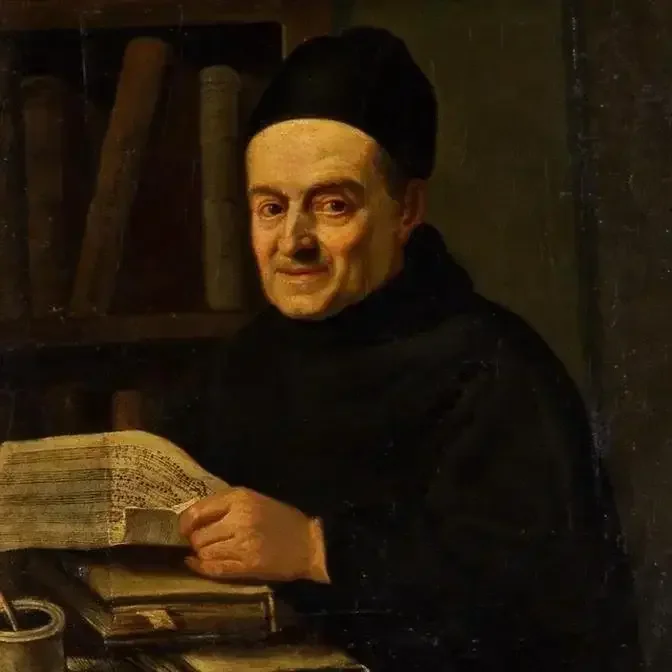
Original source ► https://www.youtube.com/c/KirchenchorStGeorgNeustadtadWaldnaab/videos
Composer: Franz Johannes Gleissner (1761-1818)
Work: Missa I aus Missae Breves, Op.I (1793)
Performers: Solists, Chor und Orchester der Stаdtpfаrrkirche St. Georg, Neustаdt an der Wаldnааb
Painting: Corrado Giaquinto (1703-1766) - El Paraíso
Image in high resolution: https://flic.kr/p/2jKgbbg
Further info: https://imslp.org/wiki/Category:Gleissner,_Franz/Collections
Listen free: https://www.youtube.com/watch?v=sEgScWLbYxs
---
Franz Johannes Gleissner
(Neustadt, 1759 - Munich, 18 Sept 1818)
German composer and lithographer. After early training in the seminary at Amberg he moved to Munich, where he continued studies in music and philosophy and became a court musician. There he met Alois Senefelder, the inventor of lithography, initially when he was commissioned to compose some songs in connection with Senefelder's theatrical activities. In 1796 Gleissner was approached by Senefelder to make commercial use of his method of relief printing from stone for the publication of music. Gleissner was the first to see the possibilities of this and had his 12 neue Lieder produced by it the same year. This was the beginning of a partnership that lasted over 20 years. Between 1796 and 1798 Senefelder and Gleissner printed music from etched stones, but in 1798 or early in 1799 Senefelder developed a chemical method of printing from stone, for which he and Gleissner were granted a 15-year privilege on 3 September 1799 by Maximilian Joseph of Bavaria. This was the planographic process now called lithography. An announcement of the privilege in a Munich newspaper on 26 September 1799 was seen by Johann Anton André, and within a month André entered into an agreement with Senefelder and Gleissner to set up a lithographic workshop in Offenbach. Lithographical music began to come off André’s presses early in 1800. As the first lithographer with a knowledge of music, Gleissner probably instructed André’s music engravers in the new process. Senefelder soon fell out with André over the latter’s business plans, and in August 1801 he left for Vienna, where he set up the Chemische Druckerey, eventually securing a privilege to print by lithography in Lower Austria on 18 January 1803. Gleissner apparently ran the Chemische Druckerey on a day-to-day basis. The press was not successful, either technically or commercially, and produced some music printing of very poor quality. Its output included compositions by Gleissner, stocks of which remained unsold when Senefelder disposed of the press to Sigmund Anton Steiner, probably in 1805 (see Haslinger). Gleissner and Senefelder returned to Munich in October 1806 to establish a new press for G.J. Vogler and Johann Christoph Freiherr von Aretin. Vogler soon withdrew from the arrangement, but for some years Gleissner and Senefelder ran the press, producing a variety of work. In October 1809 Senefelder and Gleissner were offered posts at the lithographic press of the Bavarian cadastral office, with permission to continue running their own press. Gleissner was a composer of some merit, and wrote instrumental and vocal works, many of which are among the earliest examples of lithography. However, what remains significant today is his role in promoting the use of lithography for music printing. #ClassicalMusic