
Archimedes: The Greatest Mind in Ancient History
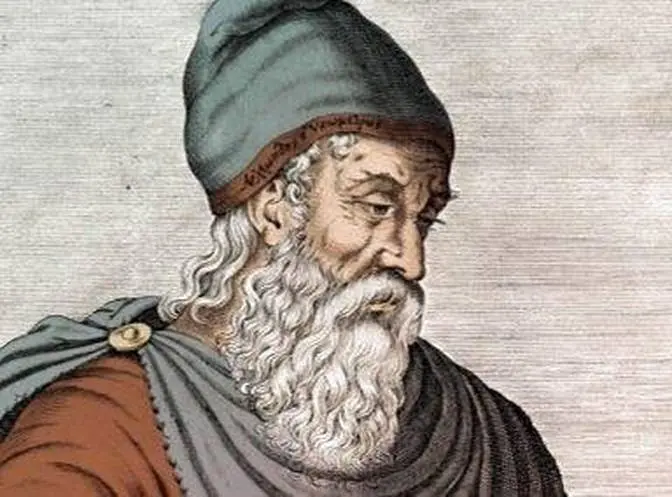
6 Video Views·Mar 20, 2023
Comments are disabled for this video.
Early Life Archimedes was the ancient Greek inventor and
mathematician who is remembered for being one of the greatest minds in all of human
history.
His theorems became laws of physics, and his equations became essential for future generations
of scientists and engineers.
While his great passion in life was the study of geometry, Archimedes also used his mind
to invent weapons of war that successfully defended the city of Syracuse from Roman invaders.
On today's Biographics, we tell the story of a man whose legacy has lasted for thousands
of years.
Early Life Archimedes was born in 287 BC in the city
of Syracuse, which is located on the east coast of the island of Sicily.
He was the son of Phidias, a renowned mathematician and astronomer.
When he completed his basic education in Sicily, Archimedes traveled to Egypt to complete his
education.
At the time, the city of Alexandria was known for being one of the greatest places to receive
an education in the entire world.
Of course, not everyone can afford to send their child to Egypt for school, which leads
people to believe that he may have descended from nobility.
Many scholars claim that he was a relative of King Herion II, who was the ruler of Syracuse
at that time.
When Archimedes returned to Syracuse after completing his education, he arrived with
the object that is credited as one of his first inventions.
This was known as the Archimedes Screw.
Scholars believe that Archimedes could have borrowed the idea from something that had
already existed in Egypt, but bringing it to Greece truly revolutionized life for people
living in Syracuse.
This was a spiral-shaped device that could be placed into a river or ditch of water and,
when you turn the handle, water travels uphill.
This made it incredibly easy to fill a bucket with water and to drain an underground well
or ditch.
The device is now named after him.
It would later be used to water the Hanging Gardens of Babylon, which became one of the
Seven Wonders of the Ancient World.
The Archimedes Screw is so efficient that it is still sometimes used to irrigate fields
to this very day.
Aside from these details of his achievements, we don't know very much about the personal
life of Archimedes.
He actually did give the details of his life to his friend and biographer, Heraclides,
but the text was lost over the course of time.
We don't even know if he was ever married or had any children.
But the stories of his greatest achievements were passed down through the years, which
is how they survived to this day.
Many of these stories seem so outlandish that they are often debated and some historians
consider them legends.
At the very least, we do know Archimedes' personality.
According to Greek biographer Plutarch, Archimedes was so hyper-focused on his work that it became
the most important thing in his life.
He often forgot to take care of his basic human needs.
Archimedes would forget his food and neglect his person to the degree that when he was
occasionally carried by absolute violence to bathe or have his body anointed, he used
to trace geometrical figures in the ashes of the fire and diagrams in the oil on his
body.
He was in a state of entire preoccupation and, in the truest sense, divine possession
with his love and delight in science.
One of the most famous stories about Archimedes is that of the Golden Crown.
This story was originally recorded during the 1st century BC by a Roman architect named
Vitruvius.
It's based on a tale that had been passed down for generations by word of mouth.
It has been retold again and again ever since.
As the story goes, a local goldsmith in Syracuse was commissioned to create a golden wreath
crown out of pure gold.
These crowns were placed on the heads of the statues of the Greek gods and goddesses in
order to pay tribute to them.
However, once King Heron got the crown back, he was surprised by its weight.
He believed that the goldsmith possibly swindled him out of some of his gold by creating the
crown using silver and then plating it with gold.
However, he had no way to prove it without damaging the crown.
Archimedes was given the task of figuring out if a golden crown was truly made of pure
gold or if it was simply gold plating on a cheaper metal.
After he was given the problem to solve, he became obsessed with it.
This was all he could think of, day and night.
He would write down mathematical equations without positive results.
Just like always, he stopped eating, sleeping, and bathing while he tried to solve the problem.
Eventually, his students dragged him to the bathhouse to clean himself because he was
beginning to seriously reek.
When he laid down in the bath, some of the water splashed over the edge of the tub.
He realized that the weight of his body dispersed the water and the excess had to leave the
tub in order to accommodate his body.
Suddenly, he realized that he could use this to solve the issue of the golden crown.
Apparently, he was so excited by this discovery that he jumped out of the bathtub and ran
down the streets shouting, Eureka, I have found it, without ever bothering to get dressed.
People gasped and covered their children's eyes while others laughed at the eccentric
genius they all knew and loved.
Some historians believe that the last part was exaggerated and that it may have just
been a silly story told for fun.
Even so, the practice of shouting the phrase Eureka after a huge discovery is still used
today.
Vitruvius wrote, The solution, which occurred when he stepped into his bath and caused it
to overflow, was to put a weight of gold equal to the crown and known to be pure into
a bowl which was filled with water to the brim.
Then the gold would be removed and the king's crown put in its place.
An alloy of lighter silver would increase the bulk of the crown and cause the bowl to
overflow.
Once Archimedes proposed this solution to the king, they compared the containers of
water side by side and it was clear that the goldsmith had, in fact, taken a lot of the
gold for himself and given the king a gold-plated crown.
They had sufficient evidence to find him guilty of stealing from the king.
In modern times, there are some scholars who believe this story has been oversimplified
throughout the years and that Archimedes may have used a more complex method in order to
figure out the solution to the golden crown.
Others say that it was a symbolic story and that the incident never happened at all.
But what we do know is that these experiments resulted in the creation of the Archimedes
Principle.
This discovery would later become a law of physics and began the basis of fluid mechanics
and is still used by engineers today.
Now, just before we get into Archimedes' inventions and discoveries, let me tell you
about today's sponsor, Brilliant.
Brilliant believe that learning maths, science, and computer science doesn't have to be
dull.
To that end, they've put together courses that are all about storytelling, interactive
challenges, and solving problems.
It's a hands-on approach that is really an excellent way to learn and, currently,
they have over 50 interactive courses.
So, look, you're halfway through this video, so you're probably already the curious type
and Brilliant can be a great way to expand that curiosity, take it a step further, and
understand the world even more.
For example, you could check out their course on Geometry Fundamentals, rather appropriate
for today's video, where you'll learn things like angle axioms, 3D geometry, coordinates,
and much more.
It's a great introduction into how geometry is used in the real world.
Look, effective learning is all about problem solving and Brilliant help you to learn and
practice that.
It's just a great compliment to videos like this.
It's all good to learn something here, but take it a step deeper on Brilliant.
on the second continued to bring his requests to Archimedes, and he was often challenged
to use his mind to create the impossible.
The King commissioned him to build a vessel known as the Syracusea.
It was said to have been one of the largest boats that was ever built in ancient times
and required the same amount of material that would normally go into building 60 ships.
It took over 100 men to assemble it over one year.
According to the historian Mossion of Veselas, the interior of the Syracusea was so extravagant
it would even impress people in modern times.
The boat was constructed of exotic wood and marble.
It had watchtowers staffed with soldiers, statues of the gods, fresh water baths, a
massive dining hall serving the finest food, a gymnasium, a library, and a temple.
Objects were made of ivory and gold.
One of the largest pieces of original artwork that was commissioned for the ship was an
illustration of the entire Epic of the Iliad along the walls of the ship that had been
hand-assembled in mosaic tiles.
King Heron wanted to do more than just pleasure cruise along the coast.
He planned to take it across the Mediterranean Sea.
So the question came to be, how can something so heavy actually float?
Archimedes figured out the law of buoyancy and hydrostatics to make it all work.
The king wanted the impossible, but Archimedes was able to make it happen yet again.
Without his calculations and the law of buoyancy, modern day cruise ships and mega yachts may
not exist.
Once the ship was finally finished, the people of Syracuse celebrated its completion and
nearly 2,000 people were allowed on board.
There was just one problem.
It was so large that it could not fit into any of the harbors of Syracuse.
So the king gave it as a gift to Ptolemy, the king of Egypt, and it was renamed the
Alexandria.
However, after its maiden voyage from Sicily to Egypt, no one knows what happened to this
famous ship.
Aside from figuring out how luxury cruise liners can float, Archimedes invented some
pretty incredible things that we still use to this very day, like the law of the lever
and balance.
He told the king that he could lift any object, no matter how heavy it was.
He was quoted as saying to the king, give me a place to stand and I will move the earth.
Impressed and slightly skeptical, the king asked to see him lift a ship out of the sea.
Through a series of cogs and pulleys, Archimedes was able to sit at one end of the lever and
lift a ship that was full of heavy gear.
While we take them for granted today, his simple machine inventions of the lever, pulley
and screw were completely revolutionary and would be essential to building modern society.
All of this was incredibly impressive, but his favorite achievements might surprise you.
They were his geometric equations.
In one of his publications called Method, he explained how he was testing various levers
with geometric shapes.
He would see how weights balanced against one another with the center of gravity.
Sometimes he would see that something worked, but that wasn't enough.
He needed to use maths to prove step by step why it worked.
These were some of the world's first geometric proofs.
Archimedes was so obsessed with calculating maths problems that he would carry around
a tray of sand with him so that he could trace calculations with his fingers.
One of his most significant contributions to math came from his publication called On
the Measurement of the Circle, where he figured out the ratio of a circle's circumference
to its diameter at being pi, or 3.14, etc.
He worked on calculating the volume and surface area of various shapes and objects.
He even created the system of using exponents to describe large numbers.
Before this time, Greek scientists would perform an experiment and draw conclusions from it
afterwards.
Archimedes would begin with maths first, and then perform experiments in order to attempt
to see what would happen in reality.
Through this form of experimentation, Archimedes was responsible for so many theorems that
would eventually be classified as laws of physics.
Because of this, his mind has been compared to that of Einstein's.
His brain was a truly remarkable level of genius that you rarely see but once in a lifetime.
In the 3rd century BC, the Mediterranean basin was split between the Carthaginians in the
West while the Greeks were in the East.
The Romans controlled Rome, of course, but they were getting ready to invade the surrounding
territory to build their empire.
The Romans and the Carthaginians fought the First Punic War from 264 to 241 BC.
The war ended with Rome taking victory over Carthage.
This meant that Sicily was now a Roman territory.
King Heron II was able to maintain peace with Rome and remain an independent city, so long
as they paid tribute in the form of goods.
This all changed in 218 BC, when the Second Punic War began.
In 215 BC, King Heron II died and King Heronymus became the new ruler of Syracuse.
He chose to switch the city's loyalty from Rome and became rivals with Carthage instead.
Clearly, this was a huge mistake.
From 214 to 212 BC, the city of Syracuse now had to fend off Roman invaders.
So far in this story, you might think that Archimedes was more of a nerdy type who was
only concerned with maths.
If you were to put him in a fight, you wouldn't exactly bet on him.
But when the King gave him the task of inventing unstoppable war machines to fight the Roman
Empire, his mind delivered.
Archimedes may have been an old man in his 70s, but his mind was still as sharp as a
tack.
Yet again, he was able to achieve the impossible.
He created defense weapons that successfully defended the city for at least two years.
One of his most powerful weapons was known as the Archimedes Claw.
The claw was attached to his pulley system.
The claw would grab onto the front of a Roman boat, lift it up in the air, and drop it back
into the sea.
This would capsize the ship, dumping the crew and all of its weapons into the Mediterranean.
The Roman commander Marcellus was quoted as saying,
Archimedes uses my ships to ladle seawater into his wine cups.
But he didn't stop there.
Archimedes also created both large and small catapults that were able to blast holes through
Roman ships.
According to Plutarch,
When Archimedes began to ply his engines, he at once shot against the land forces all
sorts of missile weapons and immense masses of stone that came down with incredible noise
and violence against which no man could stand, for they knocked down those upon whom they
fell in heaps, breaking all their ranks and files.
Archimedes has also been credited for helping Syracuse use burning mirrors, which reflected
the sunlight onto the sails of Roman ships, causing them to catch fire.
The following scene was described in a 12th century text called the Book of Histories.
The old man, Archimedes, constructed a kind of hexagonal mirror, and at an interval proportionate
to the size of the mirror, he set similar small mirrors with four edges, moved by links
and by a form of hinge, and made it the center of the sun's beams.
Its noon-tide beam, whether in summer or in midwinter.
Afterwards, when the beams were reflected in the mirror, a fearful kindling of fire
was raised in the ships, and at the distance of a bow shot, he turned them into ashes.
The defensive weapons were so successful that they were responsible for killing thousands
of Roman soldiers.
So long as they continued to go after Syracuse, the men were killed by these machines.
Commander Marcus Claudius Marcellus decided that it was futile to attack Syracuse, so
they waited until they could find their perfect moment to conquer the city.
By 1212 BC, Syracuse could not defend itself much longer.
According to some historians, the citizens of the city were beginning to starve, because
they were surrounded by the Romans and could not get their supplies.
This starvation forced them to surrender.
According to others, Syracuse refused to surrender, and Archimedes' weapons were strong enough
to hold them off.
But the Romans managed to take advantage of a weak spot in one of their land-facing defensive
walls while everyone was busy celebrating a religious festival.
Either way, Rome finally captured Syracuse, and ultimately won the Second Punic War.
Marcellus Claudius Marcellus knew that Archimedes was responsible for those glorious weapons,
and he knew that he could be an asset to the Roman Empire.
Once they captured the city, he gave strict orders that this genius was an asset and must
not be harmed.
He gave the order to bring Archimedes to him.
The only issue was that the Roman soldiers had no idea what Archimedes looked like.
Now, the finer details of the story of his death change depending on the source, but
what we do know is that Archimedes was in the middle of working on his geometry on the
beach.
He was tracing images of circles and mathematical equations in the sand.
A Roman warrior walked over the top of his geometric drawings, which scattered all of
his work.
Archimedes was outraged and seemed to be totally oblivious to the fact that this was a Roman
soldier.
According to legend, his last words were, do not disturb my circles, before being cut
down by the man's sword.
He was 75 years old.
After his death, Archimedes was buried in a large tomb that represented his mathematical
achievements.
Even though he destroyed so many Roman ships, they still had a tremendous amount of respect
for him and scholars would pay homage to his great mind.
At the tomb, there was a statue of a sphere and a cylinder.
This represented what Archimedes considered to be his greatest achievement.
If a sphere is inscribed in a cylinder, then the sphere is two-thirds of the cylinder in
both surface area and volume.
Years later, the famous Roman statesman named Cicero wrote that he wanted to pay his respects
to the tomb of Archimedes.
After searching for hours, he finally found it in Syracuse.
It was overgrown with vegetation and it was clear that no one had bothered to visit it
in a very long time.
Cicero cleaned the area and wrote down the inscriptions that he found on the tomb so
that it would never be forgotten to history.
In modern times, people have theories as to where the location of the tomb might be, but
no one knows for sure.
In the 1960s, the Hotel Panorama claimed that they had discovered the tomb of Archimedes
during construction and that they had preserved it in their courtyard.
However, some people believe that this was just a publicity stunt to attract more guests
to the hotel.
Years after his death, the works of Archimedes have been rewritten, passed down by scribes
over and over again.
As tragic as it sounds, there must be countless numbers of notes and texts that Archimedes
created from his lifetime of work that have been lost or destroyed over time.
Even though it was nearly impossible to find one of these missing original texts, it did
happen in 1906.
A lost work known as the Archimedes Palimpsest was discovered buried in an old Christian
text.
Way back in 1229 AD, a man named Johannes Moranus was reusing parchment from old books
and he unwittingly covered up the original work of Archimedes and replaced it with prayers.
In 2008, the text was purchased by its present owner, who was open to the idea of allowing
it to be dissected for research purposes.
A group called the Friends of Archimedes got together to restore the Third Codex.
A team from a variety of different professional backgrounds spent over four years restoring
the manuscript.
One of the scholars, William Knoll, explains in his TED Talk that they had to go through
a painstaking process of removing glue and examining the pages one by one under various
light sources in order to reveal the hidden works.
This group did not do this project for the money, but rather for the love of knowledge
and out of respect for Archimedes' mind.
They believed that this information should be free to the public, so they made the entire
Third Codex available to read online for free.
The only catch is that you need to know how to read in Ancient Greek.
The odds that we will find more discoveries like this are slim to none, but the works
we do remember from Archimedes have been enough to revolutionize modern day maths, science
and engineering.
Without his brilliant mind, the world truly would be a different place.