
Agapanthus | How To Grow Agapanthus Plants
33 Video Views·Feb 20, 2023
Acropanthus are one of my all-time favourite mid to late summer flowering plants for the garden,
and these ones that we've got here in the garden at Blakeney are just at their very best
this week. We're just coming into the first week of August and this very delicate white variety,
pure white but just with a speckling of pinky mauve, this one, just on the outer aspect of the
the distant petals. It's really pretty. They're held really well on around three foot tall
spikes. This one's a little droughted at the moment which I think is why it's so droopy and
soft. It's growing in a pot and we've just had a two-week let in the garden so it hasn't been
watered I doubt for two weeks. We're going to give this a water and a feed today to keep it going.
Let's have a look at some others that we've got here in the garden. This is another one we've got
growing in a pot here over at Blakeney. Beautiful, deep almost cobalt blue this.
Big flower heads held again if you just draw back around three foot up. This is pot grown again,
slightly larger leaf, a larger base if we just work our way in there and just look at the lovely
bud formation that you get with this plant. Not as free flowering as the white variety with the
smaller flowers but worth growing as those open up they'll form spectacular bulbs of blue.
This smaller flowered version has actually been planted out into the gravel and is absolutely
loving it here. To flourish like this they really do need very little in the way of competition
around the base where the leaves are growing and the sunnier position you can give them in the UK
the better. They really do like to get baked in full sun and have a little bit of feed and water.
They'll do this every year throughout August. You'll see this one in a far sunnier position,
it's already setting some seed on these flower heads, the flower's fading away but that will
continue to flower and give us a blaster colour from a distance for around a further two weeks
before it fades. This is yet another variety of the agapanthus we've got here and if we just
come in you can see the variety that you can get with the different variations.
It's almost got a striation, well it has, right the way down the middle of each petal
fading away to white on the sides with this dark blue centre line. Absolutely gorgeous.
This one's growing actually in full shade under this fig tree so in late summer here it really
is in dappled shade for most of the day. As a consequence we've got quite a proliferation of
leaf growth at the base of here. I think what we'll probably do this year is dig this up and
move it into a more sunnier spot because it really has been outgrown by this quite massive
fig tree. What we've got here on the Norfolk coast, just by its side we've also got this much
smaller flower variety and the leaf on this is fine, longer, very much different form,
obviously the same genus of plants. This one's only growing to around two, two and a half feet.
Again it's getting a bit more light here but still getting some dappled shade
from the fig tree so again this would benefit from going into a sunnier position but I think
we'll leave it here for another year or so because it's still doing well. What we'll probably do is
cut back the fig tree to give it a bit more light earlier in the season. One of my favourite
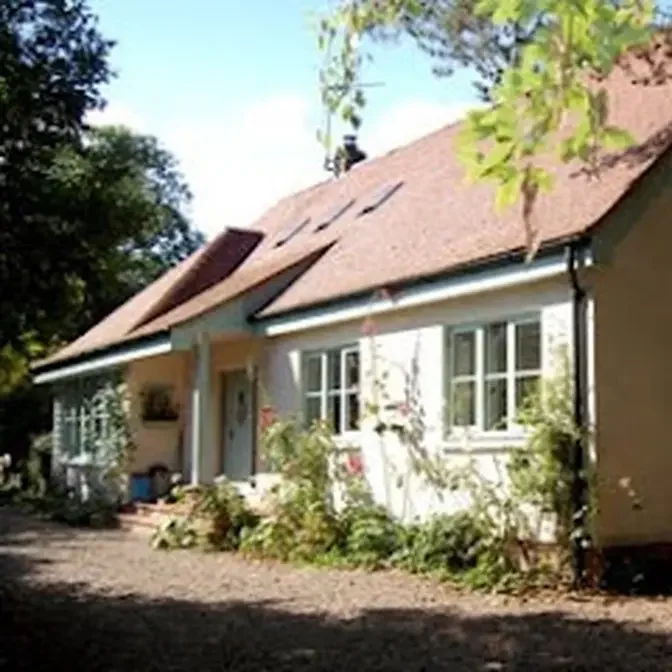
plantings of Agapanthus is here on the back of the cottage. This is a west-facing wall and you
can see that although these plants are growing really nicely and flowering well, all the flower
is coming away from the wall towards the light. Now these plants were planted here about two to
three years ago and they were initially planted as five or six separate plants into this quite
compacted and dry gravel at the base of this very warm wall. This really does get baked in the summer
afternoon sun here but the planting I just love and the leaf growth on this is part of the joy
in watching these as well as the buds as they come up through the leaf but it just forms a
beautiful architectural bank of greenery against what would otherwise be quite uninteresting
junction between the gravel and the brick wall. Above it we've got the wisteria which flowers with
really long bracts all the way down into this planting earlier in the season and this blue
variety of Agapanthus really is absolutely stunning particularly in low levels of light
it just pops and this will flower here in England for around about two to three weeks
peaking now about the first week in August going through these flowers will gradually fade away
and form seed pods. We will deadhead these because we don't want it to seed out into this gravel we
want to keep it retained against this brick wall so it gives us this feature year after year
and it's a reliable planting which gives you both architectural foliage and this beautiful splash
of blue just at the time when you're sitting out and going to enjoy it when you're having a barbecue.
I've just got a lovely bit of sun on this back wall now on the west face of the cottage where
we showed you the Agapanthus earlier and I just want you to come out and do a short
follow-on section just to show you why this planting works so well in this position.
Look at the beautiful deep blue in the shade that still pops
and then the ones that are just catching the sunlight in the evening light
and then in the foreground this large leafed hosta which we've got growing in a pot just as
a contrast to the upright foliage on the Agapanthus works so well as a companion planting.
I just love this something about the aesthetics of those tall stems leaning forward towards the light
and the colours are just fantastic.
So a planting for you to hopefully copy and reproduce somewhere in your own gardens.