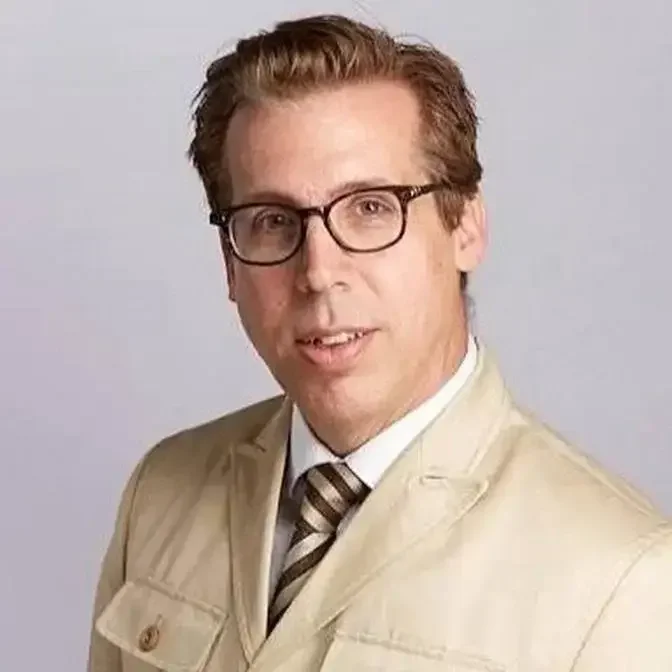
Leaving aside the common tourist routes, David Miano and Natalie Hilder venture deep into the Nile Delta, looking for ancient remains from the now-extinct cities of Sais, Buto, and Xois. See Egypt as you have never seen it before.
Thank you for watching this episode of the #antiquitiestravelguide. We hope you enjoy it as much as we enjoyed making it.
►LEAVE A COMMENT Be respectful and courteous to other commenters. Challenge the argument, not the person. Claims that are backed by evidence will get more traction. If your comment does not appear, try again with different words. YouTube sometimes glitches and comments don't go through. Or they might flag your comment as potentially inappropriate.
►SUBSCRIBE to the World of Antiquity YouTube Channel for regular ancient history content.
► SUPPORT THIS CHANNEL Supporters get access to behind-the-scenes videos, early-release videos, course discounts and more! http://www.patreon.com/worldofantiquity
FTC Disclaimer Notice: Some of the links here may be affiliate links, meaning that if you click on them and purchase something on another website, I get a small commission. It doesn't cost you any extra, but I thought you should know! It does help support the channel.
Ah yes, my expedition to Egypt, land of the pharaohs. Thank you for asking.
Well, since we're on the subject, let me tell you all about it.
Let's see, it was right after my recovery from those wounds I received from that Bengal tiger attack.
Well, it was more of a calico, but it scratched my leg.
But anyway, my travels on the Nile constituted an adventure I will never forget.
Temples, pyramids, sand dunes, tombs, and something they call Ramsey's Revenge.
Let's just say it was a memorable experience.
This is how it all began.
Welcome to the Antiquities Travel Guide, a helping hand for visiting historic places.
Follow us to different countries as we search for ancient artifacts.
If you too wish to explore the ancient past through travel,
we'll help you plan where to go, what to see, and how best to enjoy what you encounter.
In this series of the ATG, you can accompany Natalie and me on our trek through Egypt,
homeland of the ancient Egyptians, Kushites, Libyans, Asiatics, and Greeks.
Come on, let's go.
Should I bring the hat? Should I not bring the hat?
This is what was going through my mind as I packed the last few items and headed to the airport.
It took me slightly more than 24 hours to get to Egypt from my home state of Florida.
I took a transatlantic flight from Tampa to London and from there to Istanbul,
where I met my fellow travelers Natalie Hilder, a historian, student of archaeology,
and Noah Fraser, our cameraman, who you can thank for the beautiful footage you will see in this series.
And yes, I wore the hat.
From there it was a quick hop across the Mediterranean Sea to Alexandria.
What an amazing city.
We met up with a new friend of mine, Alicia Johnson, a marine archaeologist based there,
and she took us to a fabulous French restaurant called Delice for lunch.
It was French, but we ordered Egyptian food. We couldn't wait.
Ah, but for dessert, the pastries were all French.
Delice has been there for a hundred years.
Alexandria is not as cosmopolitan as it once was,
but back in the day, there was a significant French population here,
as well as Greek, Armenian, and others.
That evening we walked around to get a taste of downtown.
Look at those tight pants. Do you think they'd look good on me?
For supper, Alicia took us to the San Giovanni Hotel.
We sat right on the water. It was a gorgeous spot.
But we stayed at the Plaza Grand Hotel in the section of town called Smouha.
At my income level, I generally choose middle-of-the-road hotels as far as pricing is concerned.
Plaza Grand was on the upper end for me, but it was a beautiful place.
The staff were friendly and accommodating, and they spoke English.
The hotel also had a really nice continental breakfast included.
This is my breakfast this morning.
The Egyptian pound was based originally on the British pound,
but it has declined in value over the years.
Right now, an Egyptian pound is worth about 3.6 cents in U.S. money.
I recommend getting a bunch of cash because you will need it for tipping.
There's a lot of tipping in Egypt. They call it bakshish.
In the morning, we met our tour guide, Ehab, and our driver, Adel.
Traveling Egypt is not for beginners.
I do not recommend just flying here and driving around yourself.
If you want the very best experience, hire a driver and a licensed guide.
It is well worth it.
Driving here is challenging if you don't know what you're doing.
And the guide is important not only because he will be able to speak the language fluently and translate for you,
but he will get you into places you might not otherwise be able to get into.
He also will be able to get you deals on hotels.
Ehab is knowledgeable, friendly, well-connected, and he took really good care of us.
Living thousands of years after the fact, and in many cases hundreds if not thousands of miles away,
we are alienated from the ancient people who once resided in this land.
We do not speak their language, we have never met any of them,
and we have only a hazy understanding of their customs and beliefs.
Even the people who live in Egypt, though they understand the land better than we do
and have inherited some of the legacy of the past,
are separated from their ancient forebears by a vast reach of time.
Enough time for memories to fade.
Much has happened between then and now.
So this is why research and investigation are so necessary
if we really want to know what happened, when it happened, how it happened, and why it happened.
But when we practice rational methods of inquiry, the results can be illuminating and rewarding.
And that is why I love my job as an ancient historian so much.
On this trip, we will be focusing on the northern part of Egypt, commonly called Lower Egypt,
because of its lower elevation, and it is the area to which the Nile River descends.
Yes, the Nile flows south to north.
The ancient Greeks Hecateus and Herodotus refer to the land as a gift of the river.
And how true that is.
A large and complex society wouldn't exist, couldn't exist, without it.
And the history of Egypt is impossible to comprehend without reference to the river
and is barely intelligible if one ignores the ancient ecology in which this civilization grew and developed.
The rise and fall of the Nile and the agricultural cycle of the seasons
became a primary focus of Egyptian religion.
You can see the flora and fauna all over Egyptian art.
And in real life, when you visit.
So you're not lost when we discuss artifacts and ruins from various periods in Egyptian history,
I think it might be helpful to give you a quick overview.
An easy way to remember is to think of the main kingdoms of Egypt.
The Old Kingdom, the Middle Kingdom, and the New Kingdom.
We sometimes refer to a Late Kingdom as well.
These are the times when Upper and Lower Egypt were united under a single ruler.
In between these are intermediate periods, when Egypt was not united.
Prior to the Old Kingdom was the pre-dynastic period, when Upper and Lower Egypt were developing separately,
and the early dynastic period, when the country was moving towards unification.
After the Late Kingdom, we have the periods of conquest,
the Persian period, the Hellenistic or Ptolemaic period, and the Roman period.
The end of the Roman period marks the end of Egypt's ancient history.
Over the next two days, we're going to be traveling through the Nile Delta.
One of the destinations is going to be investigating the only royal tomb that was discovered intact.
Now you might say, wait a minute, I thought that was King Tut's tomb, that's the only intact royal tomb, right?
No! A lot of people don't know this, but the tomb of Tutankhamun was disturbed at least twice in ancient times.
It was not fully intact when it was discovered by Howard Carter.
No, we're going to another tomb where three kings were buried,
and the treasures were all there in the tomb, found undisturbed.
Intrigued? Well, you're going to find out more later.
The royal tombs are on the eastern side of the delta.
We first have to make a few stops along the way.
Extending roughly 400 kilometers across and 200 kilometers north to south,
the delta, which gets its name because its shape resembles the Greek letter delta,
represented 63% of the inhabited area of ancient Egypt.
Its terrain is mostly flat and featureless.
Several channels of the Nile run through the delta, major and minor,
spreading out to the sides as the water flows into the Mediterranean Sea.
And this is why most of the land is green.
Today, there are two principal branches of the Nile, the Damietta and the Rosetta.
But in ancient times, there were three principal channels,
known as the Water of Prey, the Water of Ptah, and the Water of Amun,
each named for an important god.
Minor channels came and went over time, never staying quite the same.
There are three major lakes in the delta, Lake Manzala, Lake Berylis, and Lake Edku.
Two of the more important ancient cities on the western side of the delta are Sa'u and Perwajit,
better known by their Greek names Sa'is and Buto.
The site of Sa'u, Sa'is, Sa'is in English usually, called Sa-el-Hagar today,
is probably best known for being the capital of Egypt during the Saite dynasty, that's Dynasty 26,
which ruled from 664 to 525 BCE.
But the city was there for a very long time before that.
Very little has been found archaeologically at Sa'is, and there's hardly anything to see there today.
But you may be interested to know that two obelisks,
one now standing in the Piazza della Minerva in Rome and the other in Urbino, Italy,
are said to have come from this great city, brought there by the Roman emperor Diocletian.
It is also the place that Critias, a character in one of Plato's dialogues,
says that the Greek statesman Solon visited on his travels during the time of the Saite dynasty,
and there heard the fantastical tale about a war between Athens and Atlantis.
Perwajit, Buto, called Tel Afar-in today,
is believed to have been the archaic capital of Lower Egypt before even the first dynasty.
It appears to have formed from the merging of two early twin cities, known as Pe and Dep.
These are known from pharaonic inscriptions and early dynastic seal impressions.
In the pyramid texts, which we will show you in person in a later episode,
there is mention of the souls of Pe and Neken.
Neken was the capital of Upper Egypt in early times,
so Pe and Neken were seen as counterparts.
Pe in the north, Neken in the south.
The mound of Buto is large, but limited archaeological work has been done there.
I decided not to visit the site because there isn't much to see there.
Instead, we are going to the Kafr el-Sheikh Museum,
where some of the more interesting finds from Buto are housed.
As we drove eastward towards our destination of Kafr el-Sheikh,
Natalie and I looked out over the countryside
and thought about what this all may have looked like in ancient times.
One of the things you will note is how,
although there is certainly modern tech being used here,
many of the old ways have stuck.
The tools and methods employed here in agriculture are much the same as they were in antiquity.
This helped us better to picture what it was like.
I really do notice the difference between Egypt and other Arab cultures,
like what you were saying.
Actually, a lot of the methods we still use now,
like the ancient one, like this countryside,
you're going to see a lot of tools that used to be used back in the day,
same, still the same, doesn't change a lot.
Yeah, it's really easy to picture them thousands of years ago.
Yeah, easy going.
It feels like you're going back in time.
We've classified all of our archaeological sites and museums into categories.
Category 1 means the site is large and has a lot to see.
It's the top tier.
Category 2 is middle tier, which means it's medium-sized.
And then Category 3 would be a minor site.
You'll see the category number come up when you see the name of the site on screen.
So we just arrived at the Khafre El Sheikh Museum.
It's about 80 Egyptian pounds to get in, and I think that's 325 U.S.
It's supposed to have an amazing collection of ancient Egyptian artifacts.
So come with me and let's take a look.
The Khafre El Sheikh Museum is rarely visited by foreigners,
so when our tour bus pulled up,
there was a look of amazement on some of the locals' faces.
And as we approached the entrance and a group of students was exiting,
we came to realize just how much we stuck out.
The museum is fairly new. It opened its doors in 2019.
Its hours of operation are 9 to 4 every day.
Khafre El Sheikh Museum displays artifacts from this particular area of the delta.
It's a great way to get a taste for the region's history,
and particularly of Bhutto and another ancient city called Khasut,
Khois in Greek, and Saqqa today.
This city came to prominence as a Hyksos city during the 14th dynasty.
And it sits very near Khafre El Sheikh.
Oh, Coptic manuscript.
I would say it would take the average visitor about an hour to see everything here.
This sarcophagus belonged to the hereditary prince Hor Wega Nthal,
a chief priest and administrator during the Late Kingdom in ancient Egypt.
Look at this sarcophagus. Look at this.
This is made of black granite, and it's from the 26th to 30th dynasty.
It's an official, not a royal tomb.
The sides of it feature scenes representing doctrines
associated with Osiris, the god of the dead.
Look at the detail of the features on the faces and bodies.
Fantastic work.
You'll often hear people say that the quality of the sarcophagus itself
is superior to the quality of the hieroglyphs,
but you can see some very fine work here of how they've etched in,
say, the tree here and the hieroglyphs themselves.
This is very well done.
Obviously, it's old, and it's been battered somewhat.
From the body, you can tell that there are four high priests
and one lady in the middle.
They're all catching her hand, traveling through the night time.
If you look here, it's presenting Nut, god of the sky.
Here, another high priest, but he's coming in two forms.
Here he's sitting, and in this side you can see the tree.
Here he's opening his hand, welcoming the other high priest from the other side.
And if you go more deep, a little bit, you can see the shape of his eyes.
It's really perfect here at this side.
And here, they have the incense to make a good smell.
Incense, yeah.
So they usually put the incense and blow it, so it gives a good smell.
See those circular symbols?
Those are shen rings, looped ropes.
You might have seen some that are elongated
so that royal names can be fit inside them,
and those we call cartouches.
But these are the simple forms, and they represent eternity,
and we're believed to have the power of protection.
Two representations of the jackal god Anubis sit on top platforms.
Ihab points out a boat with four figures, Isis, her sister Nephthys,
the king, Osiris, wearing the double crown,
and Horus with the headdress of Osiris.
We spent some time talking about the art and symbolism of the sarcophagus.
We could have done it for another hour.
You're going to see from this side that it used to have a fake beard.
Yeah, yeah.
But, yeah, it's hollow, and here also these lines,
it used to be filled with color to color the eyes
and make the shape of the eyes look nice.
Rahorakti, yeah.
So Horus and Ra mixed together.
Mixed together.
There's a writing on the back, too.
New Kingdom, black granite.
Yeah, black granite.
And look at how nicely polished it is.
The Egyptians were masters of stonecraft,
working with granite, very hard stones.
This is from Bhutto.
Bhutto is one of the nearby archaeological sites,
and it's supposed to be one of the oldest settlements in Egypt
because in the Egyptian legends it goes all the way back,
and there was a great civilization there.
But this is from the time of Ramses.
This is another artifact from Bhutto.
Black granite.
Again, showing how the Egyptians really were good at working with granite.
Sometimes you'll hear these theories that people will espouse on YouTube
about how, oh, the Egyptians just found this beautiful black granite object,
they didn't make it themselves,
and then they just put their hieroglyphs on it.
But you have to keep in mind that an object like this,
this is a stela, was meant to be written on.
It is like a pad, right?
This is supposed to have hieroglyphs on it.
It was designed to be written on,
so it wasn't like there were different people that made the hieroglyphs
than that made the stela.
You can see this red granite statue.
Now, what's interesting about it is that it was originally made
for Amenemhet I in the Middle Kingdom.
Then in the New Kingdom, Ramses II decided to use it for himself,
so he put his name on it and made some alterations.
And then sometime after that, it was ritually defaced.
Literally.
Someone knocked off the faces.
You can always tell Imhotep when you see him.
He has a very distinct look.
This is all the oil.
You can see the tablet of all the oils.
Seven sacred oils.
Old Kingdom.
What do you do after an intense visit to a museum?
You get something to eat.
We walked across the street to see what we could find.
There are no crosswalks.
You just have to go.
Sometimes you'll hear people mistakenly say that Egyptians are Arabs.
If you say this around an Egyptian, you're liable to cause offense.
Yes, the Egyptians speak Arabic,
but the vast majority of them are no more Arabs than I am English.
Egypt has been conquered many times in history.
The Persians conquered them, the Macedonians, the Romans, and the Arabs.
But none of these replaced the Egyptians.
Egyptian commoners have always been here.
The ruling parties may have changed,
and they may have brought migrants into the country with them,
but they did not kick everyone else out or genocide them all.
Yes, the cultures of the conquerors affected and influenced the Egyptians,
and immigrants intermarried with them.
The Romans turned most of them Christian.
The Arabs turned most of them Muslim.
The Persians turned most of them Muslim,
but the descendants of the ancient Egyptians are still here.
Word got around that we were in town, so the police showed up.
In Egypt, there is a special police force
that work for the Ministry of Tourism and Antiquities,
and their job is to protect archaeological sites and tourists.
They have stations all over the country.
Often, they will insist on escorting tourists from place to place,
especially in areas outside Cairo, even if you don't want it.
We were just contacted by the local police
that they're going to escort us to our next destination,
just trying to make sure that we're safe.
But Ehab says we are safe, we don't need them, but they want to help us.
Yeah.
We were planning to go to the site of Bebit el-Hagar,
but we found out it was closed.
So Ehab made some inquiries and heard about an ancient Christian church nearby.
So we decided to go check it out.
This is the Church of the Virgin Mary in Saqqa,
which is a stop on the route of a famous tour that Christians take,
the tour of the Holy Family in Egypt.
What is it all about?
Well, it's based on words found in the Gospel of Matthew,
which speak of Joseph and Mary taking the child Jesus to Egypt
to flee the wrath of King Herod of Judea.
Over the centuries after the Gospel was written,
the story grew and was embellished,
and now there's a whole itinerary that Jesus' family was supposed to have taken,
and the site of this church is said to be one of the places they stopped.
Every year on the 1st of June,
the church celebrates the memory of the Holy Family's arrival here,
and it is common for Christian pilgrims to follow this route.
Legend also has it that Mark, the traveling companion of the Apostle Paul,
brought Christianity to Egypt in the first century.
That cannot be verified,
but it is likely that Christianity entered Egypt very early.
One of the interesting things about Christianity here
is that services are held partly in the Coptic language,
hence the name Coptic Church.
Coptic is a language that descends from ancient Egyptian,
and in fact was the form of Egyptian probably spoken here in Roman times.
The survival of the Coptic language
enabled scholars to decipher hieroglyphs in the 1800s.
How old is this church?
It appears to have been built in the 3rd century
and, having undergone modifications,
stood until the 16th century when it was destroyed.
It was rebuilt in 1846,
and that is the church we are visiting.
But remnants of the original church are still here.
This, you see the black stone?
Oh, yes.
This, this tree, and the wall here.
The other side.
That wall there?
Yeah, no, the wall on the other side.
Oh, the firewall, okay.
That was the original?
Yeah, this is the original.
Otherwise, everything is new.
Oh, I see, okay.
The guide at the church spoke in Arabic to Ehab,
and Ehab translated for us what he was saying.
So, Jesus, when he was a baby, he was two years and a half.
You can see the baby's foot and the four marks.
Oh, the toes?
And the toes, yeah.
On the stone?
On the stone, yeah.
The black, like the dark side.
Oh, I see.
So, they're saying that that was the foot print of the baby Jesus.
The foot print of Jesus when he was two years and a half.
I see.
We have a place in Egypt.
It's called Akhlim.
It's in Upper Egypt, okay?
So, this is the relic that they found from there.
Like, people that sacrificed themselves for God, you know?
Martyrs.
Yeah, so this is like the relic.
Of their actual body?
Yeah, it's him.
Oh, okay.
All right.
This is a hand.
Oh, it's someone's hand.
Yeah.
Okay.
It's interesting because the style of the artwork seems medieval,
but it's more recent than that.
It's like they continued the same style.
Just like with the hieroglyphs, how they didn't change for so long.
When we were talking about archaizing and when you try to make something look old.
Right.
Yeah, yeah.
That's right, yeah.
I asked if the Coptic Christians were persecuted in Egypt by Muslims,
and they told me emphatically that this was not the case,
and relations are very friendly between the two groups here.
Ehab said that when there is trouble,
it is usually stirred up by extremists that come from other countries.
Egyptians, for the most part, stick together.
Introduction?
Okay, so is this part?
This is the Arabic part.
Okay.
This is the Coptic part.
Oh, this is the Coptic part here.
Oh, this is so cool.
This is like the Rosetta Stone.
Yeah, yeah, yeah.
And there is Coptic Arabic, so I guess this is Coptic Arabic.
Okay.
Yeah.
Oh, okay, so this is Arabic, Coptic Arabic, and Coptic.
Okay, wow.
I would love to get one of these.
How much is this?
180, okay.
Okay.
One day when I know how to read Arabic and Coptic, I can read it.
Okay.
Thank you so much.
You're welcome.
Well, I guess now I have more motivation to learn Arabic and Coptic Arabic and then Coptic.
Yes, you've got a lot of work.
So I can read the prayer book.
You've got your work cut out for you.
Yeah, I've got my work cut out for me.
It is true, though.
Every time you see a cool manuscript or something, you want to be able to read it, right?
It's so cool.
It's like, yeah.
So, yeah, I've got to learn that language, too.
Absolutely.
I'd love to go to one of these services sometime, too.
That would be so interesting.
It would be very interesting.
We then headed to Mansoura, where we planned to stay the night.
It's not a city with many places to stay, but I managed to score a nice Airbnb,
which was large enough to hold all five of us.
Me, Natalie, Noah, Ehab, and Adil.
We just arrived in Mansoura, and we're at our Airbnb, so we're going to check it out.
There's a lot of tall buildings here, so Mansoura is kind of a big city, I guess.
So I was thinking it would be like a smaller town, but I was completely wrong.
The host, Mohamed, spoke no English, but he was very friendly and hospitable.
We were all famished, so it was time to go out for some supper.
We happened upon a fabulous restaurant right on the Damiyata branch of the Nile,
which I just have to tell you about, called El Mohamedy.
The food here was so delicious, and provided a great sampling of what Egyptian food is like.
It was one of my favorite restaurants of the trip. Highly recommended.
This is a bunch of herbs and spices?
Yeah, it's usually the water of the salad.
Water of the salad?
It's good, I like it.
And it's a little spicy?
One of my favorite parts of traveling is sampling the local cuisine.
Yes, Egypt has its McDonalds' and KFC's, but whenever possible, I like to go authentic,
because food is a great way to understand a culture better.
Thank you. Yeah, it's good.
So, you have, this is actual cow intestines?
Yeah.
Well, it's going to be interesting.
Let's try it.
Okay.
You wouldn't know.
Really? Okay.
It's good.
You can sort of see the veins or whatever this is, but...
If no one told you, you wouldn't know.
If no one told you, yeah.
It's really good.
Mombar.
Cow intestines.
It's really, really good.
Stop.
Yeah.
Look at this, huh?
Beautiful.
Like, is this awesome or what?
I think I'm going to get full real fast.
So, some kafta, some kebabs, rice. I don't even know where to start.
Now, what about the royal tomb I spoke about earlier?
We're getting there.
It's on the eastern side of the delta, which we arrived at the next day.
So, I will tell you about that in the next episode.
Make sure to subscribe and stay tuned.
If you're looking for a good book on the history of ancient Egypt,
I will leave some recommendations for you in the description below this video.