
The tomb of AKBAR - Sikandara | Agra Heritage Walk | Hindi | Links to all episodes in description
6 Video Views·Jan 23, 2023
Welcome back friends to our current, recent series of heritage exploration at Agra.
In the last episode we went to Mariam's tomb, that is the the tomb of the mother of Jahangir.
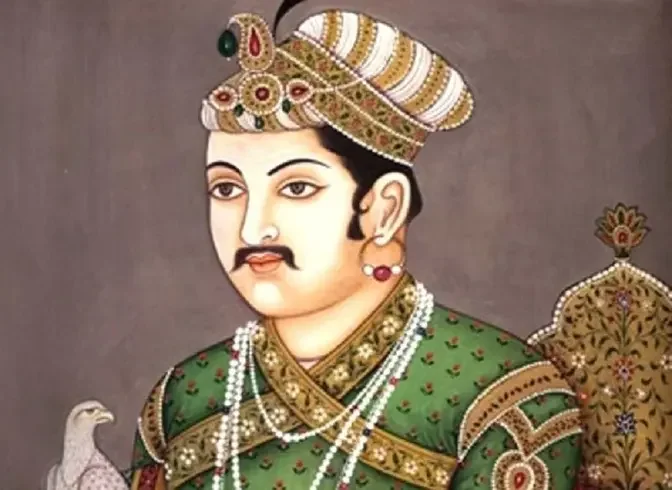
In this episode we are heading towards the tomb of Akbar the Great.
The complex, in the beginning of the complex there is an unknown tomb from the Lodi era.
Further ahead in the complex is the Kanch Mahal which has some very beautiful artwork on the
surface. And then as we proceed there is a gateway that is the most ornamented and most decorative,
most beautiful place in the whole complex. The gateway to the tomb of Akbar that you
would see here on the screen. It's a really beautiful piece of architecture and art
which has motifs from the fusion of Indo-Islamic architecture and artwork.
Further ahead lies the main tomb which has five stories. The topmost story is made in marble,
so that was made by Jahangir. The rest of the stories like from ground to the fort
are in sandstone and most of this work was already done while Akbar was still alive.
He chose this place for his tomb and got the construction started. It was completed by
Jahangir. The complex also houses a safe enclosure for so many deers that was a really
nice pleasant sight. We then proceed towards the main tomb. We go through a tunnel and reach the
main grave and you'll be surprised to see that the grave of such a great emperor is really a
simple one. One interesting thing inside that chamber is that if you talk loudly it echoes
at least three to four times I guess. There's also beautiful artwork outside the main chamber.
You'll see like a lot of Pietradora work and inlay work in marble and tile work and decoration
with natural colors. It's really beautiful and there's also there are two lamps which were
gifted by the the Britishers. They're still there. It's a grand and beautiful complex
so I would urge you to enjoy this episode. In the next one we'll be going to a very interesting place
called the Red Taj. If you like this series I would request you to
go ahead and explore the other videos on the channel. You can go to the playlist section and
take a look at the other series. We've covered Madhya Pradesh, Rajasthan, of course a lot of Delhi
even Mussoorie and Landor and so many other places. There's food, there's architecture,
there's heritage and similar entertaining stuff. Please do like the video and drop in your
comments below and subscribe to the channel and most importantly please share it with other
like-minded people who might like it. Students of history, heritage, architecture and anyone
who might like it. Happy exploring!
Its gate is the most beautiful. Its construction period is 1602 and it's completed in 1612.
The bottom part is the construction of Akbar. But the four minarets were built by Jahangir.
So the total white and red combination is of the era of Akbar and Jahangir.
And there are a lot of names written in it. We'll go inside and see.
They are the names of God. The nine names of God. They are all written in it.
And the building inside has five floors. It has five floors and in it
the tomb of Mughal Emperor Akbar is built. The bigger the emperor, the simpler his tomb is built.
As we saw in Tanjore, there's a great work of carving in Shah Jahan's tomb and in Mumtaz's tomb as well.
But Akbar's tomb is the simplest and the simplest. It's made of white marble.
There's no work of carving in it.
The design of the mat is made of white marble.
The whole building is Indo-Islamic. Whether it's Akbar's tomb, Maryam's tomb or Taj Mahal, it's all in Indo-Islamic culture.
Indo-Islamic architecture.
Architecture.
The 99 names of God are in the Quran. The same 99 names are written on the gate.
In which portion?
Yes, it starts from here.
It starts from the front.
This is the back side.
The whole 99 names are written here.
Okay.
As soon as Akbar was alive, he started the construction of this building.
After his death, his son completed it.
At this time, deer are kept here.
There are a lot of monkeys as well.
You won't be able to see them because of the fog.
But you can see the deer very easily in the garden.
You can see a lot of deer there.
Sometimes, they come up here.
Do they run a water channel here?
No, they don't run a water channel here.
At that time, there was a water system here.
But the Yamuna river is a little far from here.
That's why there are wells here.
Water is taken from these wells.
Water was run through these wells.
This is a five-story building.
You can see the bottom part.
You can see five floors.
One, two, three, four, five.
The lower floors were completed by Akbar.
But the upper white floor was completed by Jahangir.
There are a lot of graves of his family members inside.
You will see a grave in every room.
But the main grave is of Akbar.
We go to the basement of a tunnel.
There is a grave there.
It is a very simple white marble grave.
You can see a well inside the garden.
There is a well here.
There is a well in the garden on the other side.
There are four patterns.
As I said, there is a building in the middle.
There is a garden on all four sides.
You can see the whole pattern of Mughal architecture.
This is also Mughal architecture.
This is also a mat design.
This is a mat design.
There is a swastika design here.
This is an Indo-Islamic architecture.
This gate is also made in the time of Akbar.
No, no, all these are made in the time of Akbar.
Only the white minaret is made by Jahangir.
The most beautiful part of this building is its gate.
Look at this.
It's so old.
They have tried to make the structure in an octagonal shape.
Then they will make a small dome inside.
There is a beautiful painting here.
It is a gold painting.
It is the best shining painting.
This painting was made in the time of Akbar.
You can see some blue and some orange colors.
The colors inside are all natural colors.
There is no chemical color.
They have put a lot of fragrance.
Today is Thursday.
This is going to the basement.
These five lamps were given by the British.
Lord Krishna gave these lamps in the Mughal buildings of Agra.
Two lamps are in Sikandra.
One is inside and the other is on the gate.
Two lamps are inside the Taj Mahal.
One is hanging on Shah Jahan's cloth.
The other is inside the royal gate.
One lamp is in Fatehpur Sikri.
These five lamps were given by Lord Krishna.
We saw how much the voice was echoing inside.
This is the most peaceful place.
The voice is echoing five times.
They have made it in such a way that it echoes.
This is Lord Krishna's room.
What is this?
This is the room of his family.
I don't know whose room this is.
This is also inlay work.
This is my room.